
Indian Polity & Governance
Administrative Shake-up in Kerala Over Sabarimala Pilgrimage Healthcare Deployment:
Context: The Government of Kerala abruptly relieved its Director of Health Services (DHS) from duty following administrative friction over the department’s sudden announcement that it could no longer deploy medical staff for the annual Sabarimala pilgrimage due to acute personnel shortages.
-
- Travancore Devaswom Board (TDB): The TDB is an autonomous, statutory body created under the Travancore-Cochin Hindu Religious Institutions Act of 1950, tasked with administering the Sabarimala temple and 1,200 others.
- Executive Accountability: The swift removal of the Director of Health Services demonstrates the State Executive’s supreme authority to manage and penalize senior bureaucratic lapses to avoid socio-political unrest.
- State vs Statutory Bodies: The incident underscores the administrative interdependence between state line departments (Health) and statutory religious boards (TDB) during mass public events.
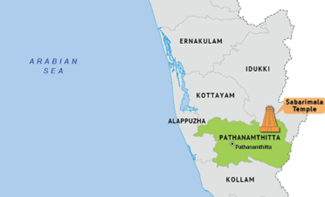
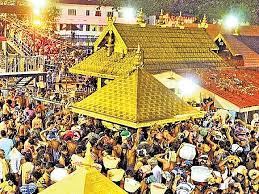
- Sabarimala Temple Location: The shrine is located inside the Periyar Tiger Reserve in the Western Ghats mountain ranges of Pathanamthitta district, Kerala.
-
- Geographical Features: The temple sits atop a hilltop surrounded by dense forests, making real-time disaster management and healthcare delivery an acute administrative challenge.
- Pilgrimage Character: Dedicated to Lord Ayyappa, the pilgrimage season (Mandala-Makaravilakku) attracts millions of devotees annually, ranking it among the largest seasonal mass gatherings in the world.
- Article 25 & 26 Implications: The temple’s administration has frequently been at the center of landmark constitutional jurisprudence regarding the right to manage religious affairs versus state regulatory oversight.
- Public Health Obligations: Under the Constitution, ‘Public Health and Sanitation’ is a State List subject (Entry 6, List II, Seventh Schedule), making the state government ultimately responsible for medical care during public events.
- Administrative Friction: The department’s initial refusal stemmed from severe shortages of medical officers and paramedics, highlights the broader challenge of human resource management within state health systems.
- Crisis Management: To maintain public order and safety, the state government can utilize emergency powers under the Disaster Management Act, 2005, to compel inter-departmental cooperation for mass public safety.
(TNIE)
Economy
Retail Inflation Creeps Up to 3.9% in May 2026:
Context: Data released by the Ministry of Statistics and Programme Implementation (MoSPI) reveals that India’s headline retail inflation rose to 3.9% in May 2026, driven primarily by higher prices in food, beverages, and transportation.
-
- Target Range: Despite the marginal uptick to 3.9%, the overall retail inflation remains well within the Reserve Bank of India’s (RBI) flexible inflation targeting mandate of (i.e., 2% to 6%).
- Rural vs. Urban Divide: The data highlights a distinct geographical divergence: rural inflation rose significantly to 4.25% in May (from 3.85% in April), while urban inflation stood lower at 3.53%.
- Food Inflation: Food inflation, measured independently via the All-India Consumer Food Price Index (CFPI), touched a notable high of 4.78% in May.
- Primary Drivers: MoSPI cited price hikes in food and beverages, personal care, social protection, restaurants and accommodation services, and tobacco/intoxicants as primary culprits for the upward momentum.
- Fuel Shock: A significant contributing factor was the rise in petrol and diesel prices, which caused transport-sector inflation to scale up by 176 basis points to 1.8% in May.
- Supply Chain Bottlenecks: External global shocks and exchange-rate fluctuations are beginning to structurally pass through to India’s Consumer Price Index (CPI).
- Index Compilation: Retail inflation in India is calculated using the Consumer Price Index (CPI-Combined) and is officially released monthly by the National Statistical Office (NSO), under MoSPI.
- Base Year: The current base year used for the compilation of the Consumer Price Index (CPI) numbers is
- Monetary Policy Anchor: The RBI’s Monetary Policy Committee (MPC) uses CPI-Combined (not the Wholesale Price Index – WPI) as its nominal anchor to formulate monetary policy and adjust repo rates.
- Weightage Insight: Within the CPI-Combined index basket, the ‘Food and Beverages’ group holds the highest weightage, accounting for roughly 86% of the total weight.

(TH+IE)
Science & Technology
DRDO Conducts Successful Flight-Tests for Multi-Layered Ballistic Missile Defence:
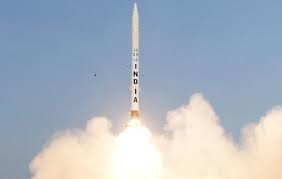
Context: The Defence Research and Development Organisation (DRDO) successfully demonstrated India’s next-generation strategic capabilities by conducting three consecutive flight-tests on June 10 and 11, 2026, evaluating multi-layered Ballistic Missile Defence (BMD) and anti-ship capabilities.
-
- Multi-Layered Architecture: The successful trials reinforce India’s sovereign multi-layered Ballistic Missile Defence (BMD) system designed to intercept incoming hostile threats at varying altitudes.
- Dual-Threat Neutralisation: The tests specifically targeted and validated intercepts against both long-range ballistic missiles and medium-range anti-ship missile threats.
- Indigenous R&D: The entire array of technologies, including propulsion, tracking radars, and seeker guidance systems, was designed and developed end-to-end by DRDO laboratories.
- Exo and Endo Atmospheric Concepts: India’s BMD program is structurally divided into two layers: the Prithvi Air Defence (PAD) / Pradyumna for exo-atmospheric (outside atmosphere) intercepts and the Advanced Air Defence (AAD) / Ashwin for endo-atmospheric (inside atmosphere) intercepts.
- Strategic Significance: Achieving full operational capability in multi-layered BMD places India into an elite club of nations (including the US, Russia, and Israel) possessing indigenous active missile shields.
- Network-Centric Warfare: The tests successfully validated the integration of long-range tracking radars, real-time command & control communication nodes, and mobile launcher units.
- Phase-I vs Phase-II: While Phase-I of the BMD system handles threats of up to 2,000 km range, these next-gen trials pave the way for Phase-II, capable of intercepting Intermediate-Range Ballistic Missiles (IRBMs) with ranges up to 5,000 km.
- Anti-Ship Capability: The validation of medium-range anti-ship missile defence addresses vital sea-lane protection protocols across the Indian Ocean Region (IOR).
- Kill Mechanism: The interception technologies utilize ‘Hit-to-Kill’ technology, where kinetic energy from the direct physical collision destroys the incoming warhead.
- Test Range Location: These critical strategic interception flights are typically instrumented and executed from the Integrated Test Range (ITR) at APJ Abdul Kalam Island off the coast of Odisha.
(PIB)
Defence
Raksha Mantri Launches ‘Mission Sudarshan Chakra’ Air Defence Initiative:
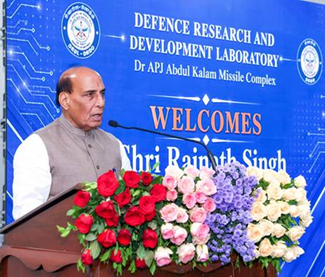
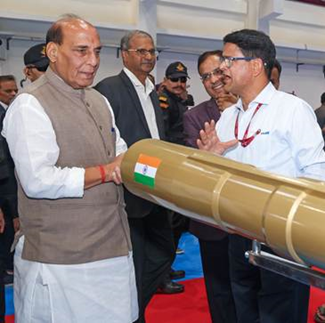
Context: Raksha Mantri Rajnath Singh inaugurated an Advanced Weapon System Complex at DRDO’s Defence Research & Development Laboratory (DRDL) in Hyderabad and formally announced the government’s commitment to create a multi-level integrated missile shield dubbed ‘Mission Sudarshan Chakra’.
-
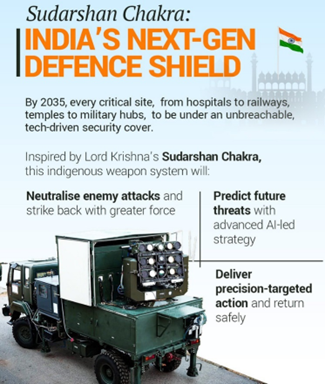
- Core Objective: ‘Mission Sudarshan Chakra’ is conceptualised as a comprehensive, multi-level integrated air and missile defence umbrella designed to safeguard the nation from diverse aerial threats.
-
- Operational Catalyst: The initiative draws lessons from the exemplary operational performance of indigenous missile weapon systems during India’s recent strategic operations, codenamed Operation Sindoor.
- Technological Components: The mission integrates cutting-edge precision-strike capabilities, integrated air defence networks, hypersonic weapon systems, autonomous platforms, artificial intelligence, and advanced electronic warfare (EW).
- The Twin Pillars: The strategy explicitly prioritises ‘Resilience’ (the structural capacity of armed forces to absorb strategic shocks and recover) and ‘Deterrence’ (the ability to project retaliatory capabilities to discourage aggression).
- Ecosystem Transition: The mission emphasises transitioning advanced defence technologies quickly from the R&D prototype stage to large-scale industrial manufacturing.
- Node Location: The newly inaugurated Advanced Weapon System Complex is located at the DRDL, which forms a vital part of the prestigious Dr. APJ Abdul Kalam Missile Complex in Hyderabad, Telangana.
- Institutional Integration: It mandates a structural ecosystem coupling DRDO (R&D), the tri-services (operational users), and domestic defence public and private industries (production agencies).
- Indigenous Missile Pedigree: DRDL is historically celebrated as the nodal laboratory for the Integrated Guided Missile Development Programme (IGMDP), which birthed the Agni, Prithvi, Akash, Trishul, and Nag systems.
- Geopolitical Context: The policy shift highlights global lessons learned from contemporary conflict zones in the Middle East, proving that dense, multi-layered air defence systems are critical to modern nation-state sovereignty.
- Strategic Autonomy: The overarching long-term goal of the mission is to systematically reduce technological dependency on foreign military imports while ensuring real-time operational readiness.
(PIB)
Internal Security
Ministry of Home Affairs Implements Enhanced Security Layout for National Examinations:
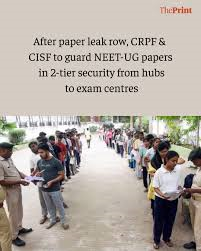
Context: To eliminate leaks and logistics vulnerabilities, the Ministry of Home Affairs (MHA) has overhauled exam logistics, tasking elite Central Armed Police Forces (CAPFs) specifically the CRPF and CISF with securing question paper shipments in transit.
-
- Paramilitary Escort: For the first time, the Central Reserve Police Force (CRPF) and Central Industrial Security Force (CISF) have been explicitly mandated to guard sensitive examination materials during transit.
- MHA Oversight: The operational directive comes straight from the Ministry of Home Affairs, highlighting that securing national competitive examinations is now classified as a critical internal security priority.
- Inclusivity Adjustments: In tandem with security upgrades, the exam layout has been physically altered to double the number of rough sheets provided, ensuring candidates who write with their left hand are not structurally disadvantaged.
- Scale of Operation: The immediate logistical deployment is designed to secure high-stakes examinations involving over three lakh candidates simultaneously across diverse geographies.
- The Role of CISF: While the CISF traditionally guards critical infrastructure like airports, aerospace installations, and nuclear power plants, its deployment here emphasizes the classification of national exam papers as critical state assets.
- The Role of CRPF: The CRPF’s deployment leverages its vast rural and semi-urban presence to guarantee safe passage through regions with challenging law-and-order situations.
- Standard Operating Procedure (SOP): The new security protocols follow international aviation accident investigation standards, mimicking security parameters laid out in Annex 13 of the International Civil Aviation Organization (ICAO) to maintain chain-of-custody integrity.
- Chain-of-Custody Protocols: Every single movement of exam consignments requires biometric verification, GPS tracking, and armed CAPF handovers to completely eliminate localized administrative leakage.
- Public Trust Factor: The policy shift addresses a string of institutional vulnerabilities in state-level recruitment exams, elevating security protocols to match those used for vital national security operations.
- Statutory Backing: These enhanced security measures operate in conjunction with the Public Examinations (Prevention of Unfair Means) Act, which imposes harsh criminal penalties for paper leaks and systemic cheating.
(IE)
Government Schemes & Initiatives
A Status Review of the PM-JANMAN Scheme:
Context: With the scheduled timeline of the Pradhan Mantri Janjati Adivasi Nyaya Maha Abhiyan (PM-JANMAN) moving through its final phases, recent data assessments highlight the implementation progress and bottlenecks across isolated tribal communities.
-
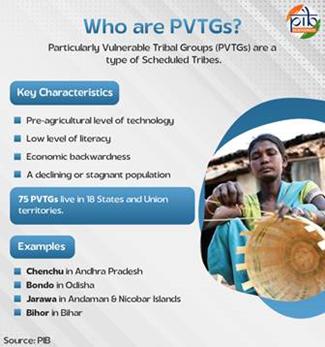
- Target Group: The PM-JANMAN scheme specifically targets Particularly Vulnerable Tribal Groups (PVTGs), who represent the most marginalized and socio-economically isolated communities within India’s tribal populace.
- Demographic Footprint: There are currently 75 designated PVTG communities spread across 18 States and the Union Territory of Andaman and Nicobar Islands.
- Spatial Distribution: The scheme is designed to impact approximately 22,000 habitations scattered across 800 blocks and 200 districts nationwide.
- Financial Outlay: The total budget outlaid for the scheme stands at ₹24,104 crore, with a Centre-State fund sharing formula of ₹15,336 crore (Central share) and ₹8,768 crore (State share).
- Inter-Ministerial Convergence: A key structural feature of PM-JANMAN is the absolute convergence of 9 central ministries (such as Tribal Affairs, Rural Development, Jal Shakti, Power, and Health) to deliver targeted interventions seamlessly.
- Key Sectoral Targets: The program addresses 11 critical interventions, including the construction of permanent housing (PM Awas Yojana-Gramin), piped clean water supply, grid/solar electrification, mobile medical units, and telecom connectivity.
- Nodal Ministry: The Ministry of Tribal Affairs acts as the primary coordinating and nodal ministry for the planning and overarching monitoring of the scheme.
- Current Bottlenecks: Policy assessments identify major hurdles, including slow completion rates for sanctioned rural housing, connectivity barriers in extreme terrains, and uneven cross-state performance.
- Data Challenge: A major operational challenge confronting the scheme is the lack of real-time, updated demographic and population data for PVTGs, as they are often unaccounted for in standard decadal census metrics.
- Criteria for PVTGs: The Dhebar Commission (1960-61) originally created this sub-category. The criteria include a pre-agricultural level of technology, stagnant or declining population, extremely low literacy, and a subsistence level of economy.
(PIB)
Sports news
Passing of Indian Shooting Legend Jaspal Rana:
Context: Jaspal Rana, one of India’s most iconic sports figures and a legendary shooting coach, passed away in New Delhi following cardiac complications after a sudden heart attack.

-
- Pioneering Icon: Jaspal Rana is widely regarded as the “father figure” of modern Indian competitive shooting, credited with putting India on the global map in the sport during the 1990s.
- Breakthrough Moment: Hailing from Uttarakhand, Rana shot to national fame as a teenager when he clinched a gold medal at the 1994 Asian Games in Hiroshima.
- Signature Event: His competitive dominance was primarily centered around the 25m Center Fire Pistol and 25m Rapid Fire Pistol categories.
- Coaching Legacy: After retiring from active competition, he transitioned into an elite coach, mentoring several of India’s contemporary world-class shooters.

-
- Coached Bhaker: He famously served as the personal coach and mentor to double Olympic medalist Manu Bhaker, guiding her to historic podium finishes on the global stage.
- National Recognition: For his extraordinary contributions to Indian sports, he was honoured with the prestigious Arjuna Award early in his career and later received the Dronacharya Award for excellence in sports coaching.
- Asian Games Haul: Over his career, Rana won multiple gold, silver, and bronze medals across various editions of the Asian Games and Commonwealth Games, inspiring a generation of shooters.
- National Games Record: He held long-standing records for the highest individual medal hauls in India’s domestic National Games competitions.
- State Origin: Born and raised in Uttarakhand, Rana was instrumental in setting up advanced sports infrastructure and shooting academies in northern India to scout rural talent.
- Institutional Impact: His long career helped transform competitive shooting from an elite pastime into a well-funded, highly successful mainstream sport for India at the Olympic Games.
(TNIE)
Spread the Word