
Indian Polity & Governance
Supreme Court Order on Bhojshala-Kamal Maula Mosque Dispute:
Context: The Supreme Court of India issued an ad hoc interim order regarding the disputed Bhojshala-Kamal Maula Mosque complex in Dhar district, Madhya Pradesh.

-
- The dispute centers around an 11th-century protected monument under the Archaeological Survey of India (ASI). The Hindu community worships it as a temple dedicated to Goddess Saraswati, while Muslims hold it as the Kamal Maula Mosque.
- Supreme Court Bench: The batch of appeals was heard by a three-judge Bench headed by Chief Justice of India Surya Kant.
- High Court Judgment Challenged: The appeals challenge a May 15 ruling by the Madhya Pradesh High Court, which declared the complex to be a temple and barred Friday namaz.
- Interim Prayer Space: The SC directed the State of Madhya Pradesh to identify an open space adjacent to the disputed site for the Muslim community to offer Friday namaz between 1 p.m. and 3 p.m..
- No Structural Alterations: The apex court strictly prohibited the ASI from carrying out or allowing any structural alterations to the monument without its prior permission.
- Ad Hoc Nature: The CJI clarified that this arrangement is strictly ad hoc and subject to the final outcome of the petitions.
- Sensitive Expressions: The Court urged restraint and caution in public comments, warning that sensitive religious disputes can be easily misinterpreted.
- Places of Worship Act, 1991: Section 3 of the Places of Worship (Special Provisions) Act, 1991, bars the conversion of any place of worship and mandates that its religious character must remain what it was on August 15, 1947.
- ASI’s Protective Role: The monument is a protected site under the Ancient Monuments and Archaeological Sites and Remains (AMASR) Act, 1958.
- Writ Jurisdiction Limitation: The appellants argued that the High Court made its sweeping declaration on a writ petition without allowing cross-examination of the ASI survey teams.
(TH)
Bihar Proposes Legislative Overhaul of University Governance:
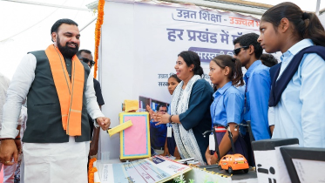
Context: The Bihar state government plans to introduce a new education bill in the upcoming state assembly session that will strip the state’s Governor of administrative authority over undergraduate colleges, bringing them under direct state government department control.
-
- The Proposed Law: Under the proposed Bihar Education Bill, undergraduate (UG) colleges will no longer report to the Governor of the state.
- Shift in Authority: The administrative, financial, and regulatory control of these colleges will shift directly to the state’s Department of Education.
- Governor as Chancellor: By convention and state legislative statutes (not the Constitution), the Governor of a state acts as the ex-officio Chancellor of state universities.
- The Friction Point: This move is part of an ongoing national trend where various state governments (such as West Bengal, Kerala, and Tamil Nadu) are seeking to curb the Chancellor-Governor’s role in university appointments and governance.
- Constitutional Provisions on Education: Education is a subject under the Concurrent List (Entry 25) of the Seventh Schedule of the Constitution of India, meaning both the Parliament and State Legislatures can legislate on it.
- Punchhi Commission Recommendations: The Justice Madan Mohan Punchhi Commission on Centre-State Relations (2010) recommended that Governors should not be burdened with statutory positions such as Chancellors of Universities, as it invites unwanted political controversies.
- Administrative Streamlining: The state government argues that removing the Governor’s office from routine college operations will expedite administrative decisions and reduce delays in starting academic sessions.
- University vs. College Division: While UG colleges are proposed to be insulated from the Chancellor’s office, state universities themselves may continue to retain the Governor as Chancellor under modified rules.
- Legislative Competence: Since university governance is governed by state acts, state assemblies are fully competent to amend the provisions designating the Chancellor and defining their powers.
- Assent of the Governor: For this bill to become law, it will ultimately require the assent of the Governor under Article 200 of the Constitution, setting up a potential constitutional check.
(IE)
Admissibility of Secret Chat Recordings as Evidence (Chhattisgarh HC Ruling):
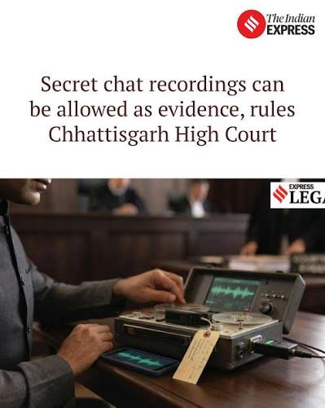
Context: The Chhattisgarh High Court passed a landmark ruling declaring that secret chat recordings can be admitted as evidence in judicial proceedings, weighing the Right to Fair Trial against the Right to Privacy.
-
- The Court’s Stance: The Chhattisgarh High Court ruled that secretly recorded electronic chat logs or voice recordings can be legally admitted as evidence in a court of law.
- The Legal Dilemma: The ruling addresses a key conflict: does admitting a recording obtained without a party’s consent violate their fundamental Right to Privacy under Article 21?
- Admissibility vs. Consent: The High Court clarified that even if evidence is gathered through questionable means or without mutual consent, its admissibility is not automatically barred if it is highly relevant to establishing the truth.
- Indian Evidence Act vs. Bharatiya Sakshya Adhiniyam: Under section 65B of the old Indian Evidence Act (now mapped to the new Bharatiya Sakshya Adhiniyam, 2023), electronic records are admissible in courts subject to strict certification verifying the integrity of the device and data.
- Puttaswamy Test of Proportionality: The ruling references the landmark S. Puttaswamy v. Union of India (2017) case, which established that the Right to Privacy is not absolute and can be restricted if the state action is proportionate, has a legitimate aim, and is backed by law.
- Precedence of Fair Trial: The High Court emphasized that in criminal or highly contested civil matters, an accused or litigant’s right to a fair trial and the discovery of truth can override the privacy concerns of the recorded individual.
- Checks on Fabricated Evidence: To prevent misuse, the court mandated that the opposing party retains the absolute right to challenge the authenticity, tampering, or context of such recordings during cross-examination.
- Forensic Verification: Any secretly recorded digital conversation submitted as evidence must undergo thorough verification by a certified Forensic Science Laboratory (FSL) to rule out deepfakes or AI alterations.
- Narrow Application: The court cautioned that this does not grant a blanket license for illegal surveillance or wiretapping, which remain punishable offences under the Information Technology Act, 2000.
- Broader Impact: This judicial precedent is expected to significantly impact matrimonial disputes, anti-corruption traps, and digital white-collar crime investigations across India.
(IE)
International Relations
India-UK Comprehensive Economic and Trade Agreement (CETA) Comes into Force:
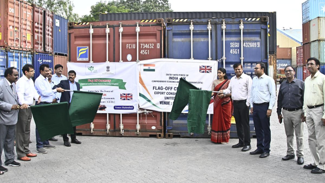
Context: The historic India-UK Comprehensive Economic and Trade Agreement (CETA) and its companion pact, the Double Contribution Convention (DCC), officially took effect on July 15, 2026.
-
- Historical First: CETA is India’s first comprehensive free trade agreement (FTA) signed with a major G7/developed western economy.
- Immediate UK Tariff Elimination: The UK has eliminated customs duties on 99% of Indian tariff lines, covering nearly 97.7% of India’s export value, on day one.
- Beneficiary Indian Sectors: Tariffs as high as 12-70% have been removed on Indian exports like textiles, marine products, processed foods, leather, footwear, and auto components.
- India’s Phased Openings: India has opened 89.5% of its tariff lines (91% of UK export value), but only 24.5% of this value gets immediate duty-free access, with the rest phased over 5, 7, or 10 years to protect ‘Make in India’ initiatives.
- Key UK Concessions (Scotch & Cars): India slashed day-one tariffs on Scotch whisky and gin from 150% to 75% (phasing down to 40% over 10 years within a quota) and reduced car tariffs from over 100% to 10% under a restricted quota.
- Sensitive Sectors: To protect domestic interests, India completely excluded dairy, cereals, millets, pulses, edible oils, gold, jewellery, and smartphones from any tariff concessions.
- Rules of Origin: A simplified, modern Rules of Origin mechanism has been instituted, allowing self-certification of origin by registered exporters to reduce red tape.
- Double Contribution Convention (DCC): Signed on February 10, 2026, this social security pact took effect alongside CETA, exempting Indian professionals on short-term UK assignments (up to 5 years) from paying dual social security contributions.
- Joint Committee Governance: Implementation of CETA will be monitored by an India-UK Joint Committee consisting of specialized sub-committees covering rules of origin, mobility, IP, and gender.
- GATT Article XXIV: Free Trade Agreements are negotiated under the legal cover of Article XXIV of the General Agreement on Tariffs and Trade (GATT) under the WTO, which permits FTAs as an exception to the ‘Most Favoured Nation’ (MFN) non-discrimination principle.
(PIB/TH)
Economy
Amendment of Foreign Trade Policy 2023 regarding “Forced Labour” Imports:
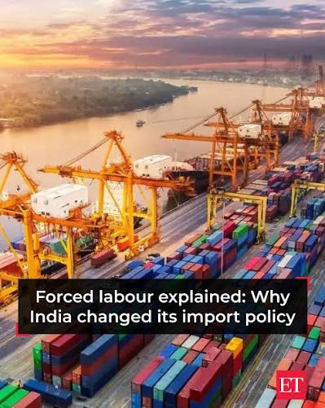
Context: The Directorate General of Foreign Trade (DGFT), under the Ministry of Commerce and Industry, issued a gazette notification amending the Foreign Trade Policy (FTP) 2023. The amendment prohibits the import of goods produced or manufactured, wholly or in part, through the use of forced labour.
-
- The Amendment: The DGFT inserted Paragraph 2.20B into the Foreign Trade Policy 2023, legally prohibiting imports tied to forced labour.
- Effective Date: The newly amended provisions will formally come into effect 30 days after their publication in the official gazette.
- ILO Standards Alignment: The definition of “Forced Labour” adopted in the FTP (under Chapter 11) strictly matches the International Labour Organization’s (ILO) Forced Labour Convention, 1930 (No. 29).
- ILO Definition: It defines forced labour as all work or service exacted from any person under the menace of any penalty and for which the said person has not offered himself voluntarily.
- DGFT: The DGFT is an attached office of the Ministry of Commerce and Industry, responsible for formulating and implementing the FTP under the Foreign Trade (Development and Regulation) Act, 1992.
- No Immediate Blanket Ban: Rather than implementing an instantaneous ban, the order establishes a regulatory and legal framework to investigate and notify specific banned goods over time.
- Inquiry Procedure: The DGFT is empowered to conduct inquiries into the import of goods suspected to use forced labour, using procedures detailed in the Handbook of Procedures, 2023.
- Geopolitical Triggers: The move occurs amid ongoing U.S. Trade Representative (USTR) Section 301 investigations into forced labour across 60 countries (including India).
- Impact on Tariffs: The U.S. had proposed additional duties of up to 12.5% on nations failing to actively enforce bans on forced labour imports.
- Trade Negotiation Leverage: Establishing this domestic policing mechanism strengthens India’s legal standing in key Bilateral Trade Agreements (BTAs) and market-access talks.
(IE/PIB)
The Union Cabinet Approves National Investment Policy for Urea-2026 (NIPU-2026):
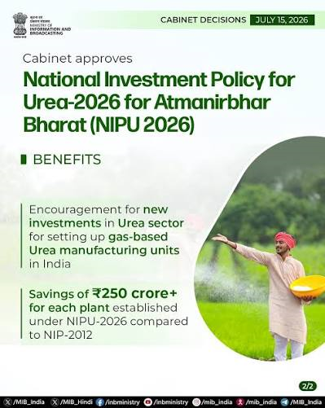
Context: The Union Cabinet, chaired by PM Modi, approved the “National Investment Policy for Urea-2026” (NIPU-2026) to facilitate the setup of 8-9 new gas-based plants. The target is to add 10 million tonnes of annual capacity to achieve absolute self-reliance in urea production.
-
- Target Capacity: NIPU-2026 aims to set up 8-9 gas-based greenfield/brownfield plants, boosting domestic urea production by 10 million metric tonnes (MT).
- The Demand-Supply Gap: India’s annual urea consumption is ~40 MT, while domestic production stands at ~30 MT, with the deficit of 10 MT currently bridged through imports.
- Old Policy Transition: This policy succeeds the New Investment Policy (NIP) 2012, whose active investment window closed in October 2019.
- Separation of Costs: In a major pricing reform, the new policy strictly separates fixed costs and variable costs in the financial framework for greater transparency.
- Return on Equity (RoE) Band: NIPU-2026 guarantees a viable RoE band for investors with a floor rate (minimum) of 12% and a ceiling (maximum) of 16%.
- Foreign Exchange Risk Mitigation: To insulate investors, foreign exchange risks are addressed by converting dollar-denominated fixed costs into Indian Rupees after 4 years of operation.
- Fiscal Savings: The structural changes under NIPU-2026 are estimated to save over ₹250 crore per plant in comparison to the older NIP-2012 framework.
- Current Operational Landscape: India currently operates 33 urea-manufacturing units with an installed capacity of 26.94 MT, including 6 plants set up in the last decade.
- Sector Neutrality: The incentives and pricing rules under NIPU-2026 apply uniformly to projects across public, private, and cooperative sectors.
- Urea Subsidy: Despite rising global gas and urea prices, the government maintains a statutory maximum retail price of ₹242 per 45-kg bag of urea to shield farmers, absorbing the rest as fertilizer subsidy.
(TH/PIB)
RBI Overhauls Corporate Governance Framework for Banks:
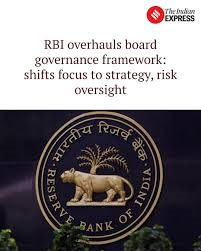
Context: The Reserve Bank of India (RBI) issued extensive amendments to its Master Direction on Corporate Governance, aiming to shift from a compliance-heavy, micro-managed regime to a strategic, principle-based governance framework.
-
- Statutory Power: The RBI issued these amendments exercising powers under Section 35A of the Banking Regulation Act, 1949.
- Effective Date: The revised corporate governance framework is slated to take effect from October 1, 2026.
- Core Objective: The overhaul aims to prune routine, non-strategic agenda items from board meetings, allowing bank boards to focus deeply on strategy, risk management, and long-term viability.
- Primary Responsibility: The Chairperson of the Board holds the primary responsibility for setting the board meeting’s agenda.
- Delegation of Powers: The board can delegate operational or administrative matters to designated Board Committees or Management Committees, backed by robust reporting structures.
- Oversight of PSB Subsidiaries: Boards are mandated to strictly monitor exposures, lending, and investment in subsidiaries and related entities, specifically reviewing their asset classification.
- Abolition of Scattered Circulars: The RBI deleted several redundant compliance provisions previously scattered across multiple circulars, replacing them with a unified, principle-based framework.
- Appended Guidelines: Dedicated appendices have been added to clearly specify which policies require mandatory board-level approval and which can be delegated to executives.
- Applicability: While directly targeting public sector banks (PSBs), the guidelines will apply to private sector banks with minor modifications.
- Section 35A: Section 35A empowers the RBI to issue binding directions to banking companies to prevent their affairs from being conducted in a manner detrimental to depositors or the bank’s own interests.
(IE)
Science & Technology
IIT Bombay’s Discovery in “Organ-on-Chip” Drug Testing (OrganoMic):
Context: Researchers at the Indian Institute of Technology Bombay (IIT Bombay) have made a breakthrough in developing advanced in-vitro (lab-based) organ-on-chip platforms, named “OrganoMic,” which will make global drug discovery faster, cheaper, and ethically sustainable.

-
- Addressing Clinical Trial Failures: Nearly 90% of prospective drug candidates fail during human clinical trials because conventional animal testing models cannot accurately predict human biological reactions.
- Organ-on-Chip (OoC) Tech: Organ-on-chip technology integrates microfluidics, tissue engineering, and mechanobiology to replicate the physical and chemical microenvironments of human organs in the laboratory.
- The OrganoMic Innovation: Developed at the M-Lab of IIT Bombay, OrganoMic utilizes chemical engineering first-principles to build modular, high-throughput testing systems.
- Multi-Spheroid Generators: The platform includes proprietary multi-spheroid generators that can grow uniform 3D cell cultures to mimic human tissues.
- Microfluidic Gradient Generators: These components establish stable, precise drug concentration gradients to study dose-dependent cellular responses over time.
- Barrier-on-Chip Modelling: OrganoMic has successfully engineered chip interfaces modelling highly complex physiological barriers, including the blood-brain barrier, skin, lung, and placenta.
- Real-time Molecular Transport: The platform enables scientists to analyze the transport and absorption of drug molecules under both static and fluid-perfused (circulating) conditions.
- Ethical Sustainability: By offering human-relevant New Approach Methodologies (NAMs), the technology significantly reduces the pharmaceutical industry’s reliance on ethical-sensitive animal testing.
- Validation Milestone: The project gained national prominence and early validation after being selected among the top deep-tech innovations under the Ministry of Education’s “Bharat Innovates 2026” initiative.
- Microfluidics: Microfluidics is the science of manipulating and controlling extremely small volumes of fluids (typically to liters) using networks of micro-channels, crucial for simulating blood capillaries on a chip.
(IE)
History, Art & Culture
President of India Inaugurates “Saushrutam 2026”:
Context: On the occasion of Sushruta Jayanti, Smt. Droupadi Murmu, the President of India, inaugurated “Saushrutam 2026” a three-day international seminar on Ayurvedic surgery at the All India Institute of Ayurveda (AIIA) in New Delhi.

-
- Sushruta Jayanti: Sushruta Jayanti is observed annually on 15 July to celebrate the birth anniversary and contribution of Acharya Sushruta.
- The seminar was hosted by the All India Institute of Ayurveda (AIIA), New Delhi, an autonomous body functioning under the Ministry of Ayush.
- Acharya Sushruta’s Legacy: Historically recognized as the “Father of Surgery” (and Father of Plastic Surgery), Sushruta pioneered surgical techniques in ancient India.
- Innovations of Sushruta: His contributions included pioneering methods in rhinoplasty (plastic surgery), cataract surgery, lithotomy (stone removal), and treating tumours.
- Sushruta Samhita: Authored by Sushruta, the Sushruta Samhita is one of the foundational Sanskrit texts of Ayurveda (the Brihat Trayi, alongside Charaka Samhita and Astanga Hridaya). It describes over 120 surgical instruments and 300 surgical procedures.
- Inauguration of MRI facility: Alongside the seminar, the President inaugurated the advanced Magnetic Resonance Imaging (MRI) section of AIIA.
- “Saushrutam 2026” focuses on integrating ancient Shalya Tantra (Ayurvedic surgery) with contemporary modern surgical developments.
- The event emphasizes validating traditional Ayurvedic surgical methods using modern, globally accepted scientific benchmarks and standardized clinical documentation.
- Evidence-Based Research: The President urged young scholars to adopt high-quality evidence-based practical research in Ayurveda.
- International Collaboration: The seminar acts as a global platform for surgeons, researchers, and policymakers from India and abroad to advance collaborative clinical research.
(PIB)
Government Schemes & Initiatives
CAG Audit Finds Misallocation in Chhattisgarh’s District Mineral Foundation (DMF) Trusts:
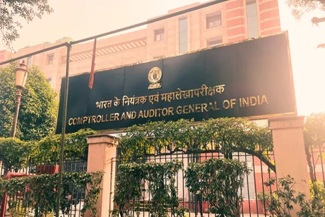
Context: A performance audit report by the Comptroller and Auditor General (CAG) of India on the Pradhan Mantri Khanij Kshetra Kalyan Yojana (PMKKKY) and DMF Trusts was tabled in the Chhattisgarh Assembly, revealing massive diversions and under-coverage.
-
- District Mineral Foundation (DMF) is a non-profit trust set up under the Mines and Minerals (Development and Regulation) (MMDR) Amendment Act, 2015, to benefit communities affected by mining.
- Exclusion of Mining-Affected Villages: The CAG found that 44% (754 out of 1,734) of villages directly affected by mining in 11 sampled districts were completely excluded from DMF-funded works.
- Huge Expenditure without Planning: Even though DMF trusts spent ₹4,536.58 crore (81% of available funds), the spending was done without master plans, vision documents, or mandated annual plans.
- Delayed Identification: Mining-affected areas were identified and declared 5 to 65 months after the DMF trusts were established.
- Allocation without Notification: Projects worth ₹1,060.70 crore were allocated during this transition phase without formally notifying the directly affected village list under DMF rules.
- Unfruitful Expenditure: The audit flagged ₹41.80 crore of wasteful/unfruitful expenditure on incomplete or unutilized projects like art centres and poultry facilities due to poor feasibility checks.
- Diversion of Priority Funds: Around ₹30.73 crore of DMF funds was illegally spent on decorating, renovating, and constructing government offices, which falls outside PMKKKY priority rules.
- Violations of Centre’s Orders: The state transferred ₹1.68 crore to its state-level DMF cell in direct violation of a July 2021 Union Ministry of Mines directive prohibiting such transfers.
- Transparency and Accountability Failures: Essential transparency requirements were ignored; mandatory websites in 12 sampled districts failed to publish basic updates like contributions, trust composition, and meeting minutes.
- PMKKKY: Launched in 2015 by the Ministry of Mines, the PMKKKY mandates that at least 60% of DMF funds must be utilized for “High Priority Areas” (like drinking water, healthcare, education, environment control) and the remaining 40% for “Other Priority Areas” (like physical infrastructure, energy).
(IE/TH)
Spread the Word