
Indian Polity & Governance
Justice Balakrishnan Commission Finishes Study on SC Status for Dalit Converts:
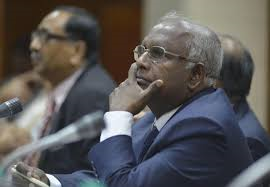
Context: The three-member Justice (Retd.) K.G. Balakrishnan Commission, appointed by the Union Government in October 2022, has completed its study and finalized its report regarding the possibility of granting Scheduled Caste (SC) status to Dalit converts to religions other than Hinduism, Buddhism, and Sikhism.
-
- The Mandate: The Commission was tasked with examining whether SC status can be extended to new persons who historically belonged to the Scheduled Castes but have converted to other religions like Christianity or Islam.
- Current Legal Boundary: The Constitution (Scheduled Castes) Order, 1950, stipulates that only individuals professing Hinduism, Sikhism, or Buddhism can be recognized as members of Scheduled Castes.
- Historical Amendments: Initially, the 1950 order applied only to Hindus. It was amended in 1956 to include Sikhs and in 1990 to include Buddhists, following the rationale that their social backwardness stems from historical untouchability.
- The Divergent View on Abrahamic Faiths: Opponents argue that Islam and Christianity do not recognize the caste system or untouchability in their scriptural traditions; hence, converts cannot claim SC reservation benefits.
- The Counter-Argument: Proponents argue that social exclusion and caste-based discrimination persist practically within converted Christian and Muslim Dalit communities in India, denying them economic mobility.
- Article 341 of the Constitution: This Article empowers the President to specify the castes, races, or tribes deemed to be Scheduled Castes in relation to a State or Union Territory, after consultation with the Governor.
- Parliamentary Authority: Any subsequent amendment or inclusion/exclusion of a caste from the Presidential SC list can only be done through a law enacted by Parliament (Article 341(2)).
- Article 15 and 16 Frameworks: SC status directly links to reservation benefits in public employment (Article 16(4)) and admissions to educational institutions (Article 15(4)).
- The Balakrishnan Panel Composition: It is a three-member Commission of Inquiry constituted under the Commissions of Inquiry Act, 1952, featuring judicial and administrative experts.
- Implications for Judicial Review: The submission coincides with ongoing petitions in the Supreme Court that have challenged the exclusion of Dalit Christians and Dalit Muslims from the SC protective umbrella for over two decades.
(TH)
Indian Society & Social Justice
SC Stresses Strict Enforcement of PCPNDT Act to Curb ‘Patriarchal Preference’:
Context: The Supreme Court of India emphasized the absolute necessity for strict and unyielding enforcement of the PCPNDT Act, noting that the deep-rooted “patriarchal preference for a male child” continues to distort India’s demographic equilibrium.
-
- Statutory Core: The Pre-Conception and Pre-Natal Diagnostic Techniques (PCPNDT) Act was enacted in 1994 to ban the use of sex-selection techniques before or after conception and to prevent the misuse of pre-natal diagnostic tools for female foeticide.
- Key Prohibition: Under the Act, no genetic counselling centre, laboratory, or clinic can conduct or assist in pre-natal diagnostic techniques unless registered, and absolutely no sex determination can be communicated to pregnant women or relatives.
- The Supreme Court’s Mandate: The top court warned that lax implementation by state authorities defeats the welfare legislation, urging courts not to take a lenient view on procedural lapses by clinics.
- Child Sex Ratio (CSR): CSR is defined as the number of females per 1,000 males in the 0–6 years age group. Skewed CSR leads to long-term demographic disasters, violence against women, and human trafficking.
- Constitutional Nexus: Skewed gender preferences directly undermine Article 14 (Equality before law) and Article 21 (Right to life and dignity) of female unborn children and mothers forced into sex-selective abortions.
- Central Supervisory Board (CSB): Created under the Act, the CSB is chaired by the Union Minister of Health and Family Welfare. It advises the Central Government on policy implementations and reviews the working of the Act.
- Appropriate authorities: The Act mandates the appointment of an Appropriate Authority (with the help of an Advisory Committee) at State, District, and Sub-district levels to grant, suspend, or cancel registrations of genetic clinics.
- Cognizable and Non-Bailable: All offences under this Act are cognizable, non-bailable, and non-compoundable, ensuring high deterrence.
- Complementary Government Initiatives: The enforcement of the PCPNDT Act acts as the legislative backbone to social behavioural campaigns like Beti Bachao Beti Padhao (BBBP).
- The Technology Challenge: The SC and executive panels are continuously dealing with the evolution of medical technology, such as portable ultrasound machines and online kits, which make tracking illicit sex-selection harder.

(IE)
International Developments
U.S. Maritime Blockade off Oman and Strategic Vulnerability of Kharg Island:
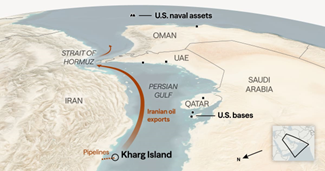
Context: Following escalating tit-for-tat exchanges between the U.S. and Iran, the deaths of three Indian seafarers on a merchant tanker off the coast of Oman highlighted the intensifying U.S. naval blockade near the Strait of Hormuz. Though U.S. President Donald Trump announced a temporary pause in active missile strikes on June 11, the threat to target Iran’s Kharg Island remains a global economic flashpoint.
-
- Strategic Location of Kharg Island: Kharg Island is a continental island in the northeastern Persian Gulf belonging to Iran. It acts as Iran’s primary maritime oil export terminal, handling over 90% of the country’s crude exports.
- The Strait of Hormuz Chokepoint: Located between Oman and Iran, the Strait of Hormuz connects the Persian Gulf with the Gulf of Oman and the Arabian Sea. It is the world’s most critical energy chokepoint, through which roughly one-fifth of global oil consumption passes.
- Impact on Indian Seafarers: The fatalities occurred on the Palau-flagged merchant tanker MT Settebello, highlighting the high vulnerability of civilian merchant navy crews (of which India is a major global provider) in geopolitical crossfires.
- International Law of Blockades: Under international maritime law, a naval blockade prevents vessels of all states from entering or leaving specified coastal areas of an enemy. It requires formal declaration, enforcement, and must not completely cut off humanitarian aid.
- Freedom of Navigation: The U.S. naval actions and Iranian retaliations challenge the principle of Freedom of Navigation as enshrined under the United Nations Convention on the Law of the Sea (UNCLOS).
- Economic Shockwaves: Any threat to or destruction of Kharg Island immediately causes spikes in global Brent crude prices, impacting India’s macro-stability by swelling its current account deficit (CAD).
- The Strait of Hormuz Geography: At its narrowest point, the strait is only about 33 kilometers wide, with the shipping lanes in either direction being just 3 kilometers wide, separated by a 3-kilometer buffer zone.
- Strategic Crude Oil Reserves: Events like these underscore India’s push to build Strategic Petroleum Reserves (SPRs) at locations like Padur, Mangaluru, and Visakhapatnam to guard against global supply chain disruptions.
- Diplomatic Balancing Act: India must maintain delicate diplomatic channels with both Washington (a key strategic defence partner) and Tehran (essential for the International North-South Transport Corridor and access to Central Asia).
- Flag of Convenience (FoC): The targeted ship carried a “Palau flag.” This highlights the maritime practice of registering a merchant ship in a sovereign state different from that of the ship’s owners to exploit lower taxes or lighter regulations.
(IE+TH)
International Relations
Piyush Goyal Visits Switzerland to Implement India-EFTA TEPA:
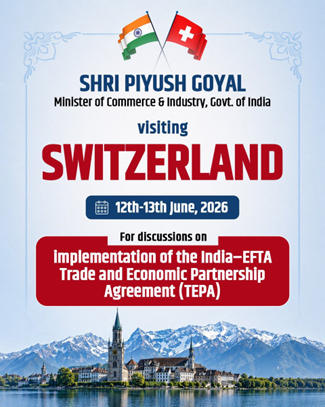
Context: Union Minister of Commerce and Industry, Shri Piyush Goyal, commenced an official visit to Berne, Switzerland, on June 12, 2026, aimed at accelerating the implementation of the landmark India-EFTA Trade and Economic Partnership Agreement (TEPA).
-
- EFTA Blocs Identity: The European Free Trade Association (EFTA) is an intergovernmental organization comprising four non-EU nations: Switzerland, Norway, Iceland, and Liechtenstein.
- TEPA Timeline: India and the EFTA states signed the Trade and Economic Partnership Agreement (TEPA) in March 2024, and the agreement formally entered into force in October 2025.
- Investment Commitment: TEPA features an unprecedented, legally binding commitment where EFTA nations aim to invest $100 billion into India over 15 years, targeting the generation of 1 million direct jobs.
- The Swiss Focus: The 2026 bilateral talks heavily feature discussions with the Swiss pharmaceutical industry, focusing on ease of doing business, clinical trials, and intellectual property frameworks.
- IPR Balance: A major point of ongoing negotiation under TEPA involves balancing patent protection for high-end Swiss pharmaceuticals without undermining India’s domestic generic drug manufacturing ecosystem.
- Departmental Backup: The Minister’s delegation is supported directly by senior officials from the Department for Promotion of Industry and Internal Trade (DPIIT) and the Ministry of Health and Family Welfare.
- Tariff Concessions: Under TEPA, India offers tariff concessions on high-quality Swiss machinery, watches, chocolates, and medical devices, while EFTA offers duty-free market access for most Indian industrial goods.
- Strategic Diversification: The agreement helps India diversify its trade relationships away from heavy reliance on any single trading bloc (like the EU or China), integrating India deeper into European supply chains.
- Rules of Origin: A key operational issue being sorted out during this June 2026 visit involves finalizing strict ‘Rules of Origin’ to ensure third-party countries do not route products through EFTA nations to exploit tariff cuts.
- Services Sector Gains: TEPA facilitates easier visa access and movement for Indian professionals (Mode 4 under GATS) in sectors like IT, audio-visual services, and engineering within EFTA states.
(PIB)
Economy
NITI Aayog Governing Council Pushes for District GDP Estimates:
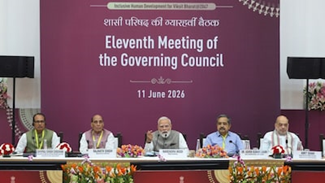
Context: During the NITI Aayog Governing Council meeting chaired by Prime Minister Narendra Modi, the Union government urged all states to formulate localized District GDP (Gross Domestic Product) estimates to drive bottom-up economic growth.
-
- The core directive: Moving away from macro-state figures, the creation of District Gross Domestic Product (DGDP) is aimed at capturing micro-level economic activities, disparities, and developmental bottlenecks.
- Structure of NITI Aayog Governing Council: It comprises the Prime Minister of India (as Chairperson), Chief Ministers of all States, Chief Ministers of Union Territories with Legislatures, and Lieutenant Governors of other UTs.
- Cooperative Federalism: The Council serves as a premier platform for operationalizing “Cooperative Federalism” by fostering institutionalized, regular dialogue between the Centre and the States.
- Data Aggregation Challenges: Compiling DGDP presents severe challenges, primarily due to the lack of granular data on the informal sector, inter-district trade flows, and localized services.
- Chief Ministers’ Demands: Alongside economic metrics, several Chief Ministers used the platform to advocate for subsidized, affordable, and clean energy transitions to protect local manufacturing units.
- NITI Aayog’s Evolution: Established on January 1, 2015, via an executive resolution to replace the Planning Commission, NITI Aayog operates as a think-tank without the power to allocate public funds.
- Decentralized Planning (73rd & 74th Amendments): The push for DGDP strengthens the constitutional mandates of District Planning Committees (DPCs) under Article 243ZD, enabling data-backed local planning.
- Resource Allocation: Accurate DGDP indicators will allow both the Centre and State Finance Commissions to fine-tune horizontal devolution criteria based on localized backwardness.
- Subsidiarity Principle: The policy leverages the economic principle of subsidiarity, which dictates that a central authority should only perform tasks that cannot be performed effectively at a more immediate or local level.
- Focus on Aspirational Districts: This granular data tracking will directly feed into expanding programs like the Aspirational Districts and Aspirational Blocks Programmes.
(IE)
Geography
Delhi Preps Plan for 1 Lakh Flats for Yamuna Riverbed O-Zone Dwellers:
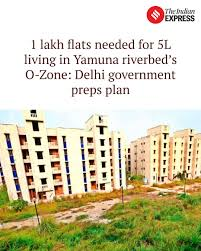
Context: The Delhi Government has initiated a comprehensive urban rehabilitation plan to construct 1 lakh flats aimed at resettling approximately 5 lakh people currently living illegally on the vulnerable Yamuna Riverbed, structurally categorized as the “O-Zone”.
-
- What is the ‘O-Zone’? The ‘O-Zone’ refers to the designated riverfront and active floodplains of the Yamuna River in Delhi, marked by environmental bodies as strictly no-construction zones to protect the river ecology.
- Ecological Functions of Floodplains: Floodplains act as natural cushions for absorbing excess water during monsoons, recharging local groundwater aquifers, and sustaining unique riparian biodiversity.
- Consequences of Encroachment: Concrete encroachments in the O-Zone reduce the river’s carrying capacity, leading to severe urban flooding in adjacent city areas during periods of high discharge from upstream barrages (like Hathnikund).
- Groundwater pollution: Informal settlements without proper sewage infrastructure directly dump untreated liquid and solid waste into the riverbed, exacerbating the toxic chemical and organic load of the Yamuna.
- The National Green Tribunal (NGT) Role: The rehabilitation push is driven by continuous monitoring from the NGT, which has repeatedly issued directives to clean the Yamuna and evict illegal structures from its active floodplains.
- Urban Heat Island Effect: Encroaching upon green and blue spaces (rivers/lakes) inside cities worsens the Urban Heat Island (UHI) effect, cutting off natural cool air corridors.
- Right to Housing vs. Eco-Conservation: The policy tries to balance Article 21 (Right to shelter and clean environment) by removing citizens from hazardous flood zones and providing them structured, low-cost housing.
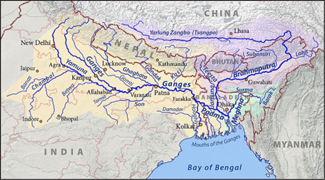
- The Yamuna’s Flow Dynamics: The Yamuna is a major tributary of the Ganga River, originating from the Yamunotri Glacier. The 22-km stretch through Delhi constitutes less than 2% of the river’s length but contributes over 70% of its total pollution load.
-
- In-Situ vs. Ex-Situ Rehabilitation: This plan represents an ex-situ resettlement approach, completely shifting the population away from ecologically sensitive zones to formal urban sectors with civic amenities.
- Siltation issues: Encroachments stabilize illicit silt piles, altering the natural morphology and meandering path of the river, which permanently damages the local riverine ecosystem.
(IE)
Science & Technology
PWD Approves Structural Audit Consultant for Delhi’s Signature Bridge:
Context: The Public Works Department (PWD) has given the formal nod to hire a specialized external consultant to conduct a comprehensive structural health audit of the iconic Signature Bridge in Delhi to evaluate long-term load bearing capacity and safety.
-
- Engineering marvel: Opened in 2018, the Signature Bridge is India’s first asymmetrical cable-stayed bridge, featuring a pylon that acts as a major geometric and structural anchor.
- What is a Cable-Stayed Bridge? Unlike suspension bridges (where cables hang vertically from a main suspension cable), a cable-stayed bridge consists of towers/pylons from which cables run directly to the bridge deck to support the load.
- Structural Health Monitoring (SHM): SHM involves the continuous or periodic assessment of structural integrity using sensors (fiber-optic, accelerometers) to detect internal micro-fissures, rust, or stress before visible damage occurs.
- Forces at Play: The bridge structure balances intense forces of tension (stretching forces borne by the high-tensile steel cables) and compression (squeezing forces borne by the concrete pylons and piers).
- Aeroelastic Instability: Large cable-stayed bridges are highly susceptible to wind-induced vibrations (vortex shedding, flutter). Structural audits evaluate if dampers are functioning correctly to minimize these oscillations.
- Corrosion of High-Tensile Steel: Moisture and atmospheric pollutants (highly prevalent in urban environments) cause electrochemical degradation of the internal steel strands within the cables, reducing their yield strength.
- The Role of Non-Destructive Testing (NDT): Structural audits employ NDT methods such as Ultrasonic Testing, Radiography, and Magnetic Particle Testing to inspect concrete and steel health without damaging the structure.
- Load Devolution: In an asymmetrical design, the pylon is dynamically inclined to counterbalance the weight of the main span, transferring the cumulative dead and live loads deep into the riverbed foundations through piles.
- Thermal Expansion Management: Changes in ambient temperature cause expansion and contraction of the steel and concrete. Structural audits ensure that expansion joints and bearings are performing as designed.
- Public Safety Standards: The Bureau of Indian Standards (BIS) prescribes codes (like IS 456 for concrete, IS 800 for steel) that dictate the mandatory periodic timelines for auditing public transport infrastructure.

(IE)
IRCTC Captcha System Overhaul Promised by Railway Ministry:
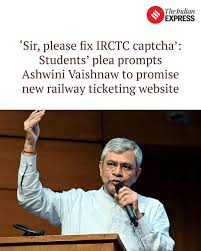
Context: Responding to massive complaints from students and daily travellers regarding frustrating CAPTCHA errors during peak booking hours, Union Railway Minister Ashwini Vaishnaw promised a complete overhaul of the Indian Railway Catering and Tourism Corporation (IRCTC) ticketing system, including the launch of a faster, next-generation website.
-
- What is a CAPTCHA? CAPTCHA stands for Completely Automated Public Turing test to tell Computers and Humans Apart. It is a security mechanism designed to protect websites from bots, automated scripts, and malicious cyber-attacks.
- The Bot Problem on IRCTC: Illicit automated ticket-booking bots used by unauthorized travel agents can fill forms within milliseconds during Tatkal hours, cornering tickets before genuine human users can input data.
- Evolution of CAPTCHA: Moving away from standard distorted text-based CAPTCHAs, modern e-governance systems use advanced risk-analysis engines (like reCAPTCHA v3 or hCaptcha) that track user behaviour (mouse movements, clicking patterns) without requiring disruptive manual inputs.
- Turing Test Principle: It is based on the classical computing concept pioneered by Alan Turing, which tests a machine’s ability to exhibit intelligent behaviour equivalent to, or indistinguishable from, that of a human.
- Server Concurrency Challenges: During peak reservation times, the IRCTC infrastructure deals with millions of concurrent hits per second. A heavy, unoptimized CAPTCHA script adds computational load to the central server, leading to page timeouts and payment failures.
- Digital India Mission Link: Improving critical public infrastructure like IRCTC aligns with the Digital India vision of providing seamless, hassle-free digital delivery of public services to the masses.
- Cybersecurity Defence: Beyond preventing ticket cornering, CAPTCHAs protect the ticketing database from Distributed Denial of Service (DDoS) attacks, which can crash the entire railway network infrastructure.
- Accessibility issues: Standard visual CAPTCHAs present significant barriers to visually impaired or elderly citizens, necessitating the integration of accessible Audio-CAPTCHAs or biometric validation paths.
- API Integration: The proposed next-gen platform will revamp Application Programming Interfaces (APIs) to safely integrate third-party payment gateways, speeding up the checkout process without compromising financial security.
- Data Privacy Framework: Any new authentication framework adopted by IRCTC must comply strictly with the provisions of the Digital Personal Data Protection (DPDP) Act, ensuring traveller data is not leaked or commercialized.
(IE)
Internal Security
Jammu & Kashmir Taps Senior Cops for ‘Mentor’ Initiative in Policing:
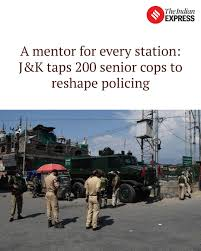
Context: In a major structural shift to redefine public policing and boost local counter-insurgency networks, the Jammu & Kashmir administration has deployed 200 senior police officers to act as “mentors” for police stations across the Union Territory.
-
- The Mentorship Program: Under this initiative, senior officers (SPs, SSPs, and DIGs) are assigned specific police stations to guide junior staff, streamline criminal investigations, and enforce human rights protocols.
- Community Policing Interface: A core objective of the program is to bridge the trust deficit between the local populace and security forces, transitioning from an iron-fisted law enforcement image to public-centric service.
- Counter-Radicalization: By improving local intelligence gathering at the grassroots level (the police station), the initiative seeks to identify and neutralize asymmetric threats and hybrid militancy early.
- Aligning with Prakash Singh Directives: The initiative aligns with the spirit of the landmark Prakash Singh v. Union of India (2006) judgment by the Supreme Court, which pushed for structural insulation, accountability, and professional efficiency in police forces.
- Intelligence-Led Policing: The mentors will supervise the deployment of technological tools, cyber-forensics, and digital tracking data at the station level to replace outdated manual monitoring systems.
- Enhancing Investigation Quality: Historically, poor charge-sheeting at the police station level leads to low conviction rates. Senior oversight ensures legally sound investigations under the new criminal codes.
- Law and Order vs. Investigation Separation: The presence of senior mentors helps distinctively manage local law-and-order maintenance duties from complex criminal investigations within the same station limits.
- Status of J&K Police: Operating in a highly volatile internal security theater, the J&K Police function alongside Central Armed Police Forces (CAPFs) and the Indian Army, making inter-agency coordination at the station level vital.
- Human Rights Sensitization: Mentors are mandated to monitor custodial practices, ensuring strict compliance with the K. Basu guidelines to eliminate custodial torture and arbitrary detentions.
- Institutional Memory Transfer: The project facilitates the transfer of crucial field experience and operational counter-terrorism strategies from veteran officers directly to rookie Sub-Inspectors and Station House Officers (SHOs).
(IE)
History, Art & Culture
Archaeological and Vedic Importance of ‘Tithi’ Calendars:
Context: The precise mathematical calculations of the traditional Hindu Panchang highlight the lasting historical, cultural, and astronomical legacy of India’s ancient calendar systems.
-
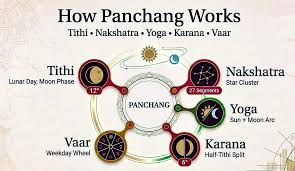
- Definition of a Tithi: In Vedic astronomy, a Tithi is a lunar day, defined precisely as the time duration in which the Moon increases or decreases its longitudinal distance from the Sun by exactly 12 degrees.
- The Synodic Month Structure: A complete lunar month consists of 30 Tithis, split into two fortnights: the Shukla Paksha (waxing phase, leading to the full moon or Pournami) and the Krishna Paksha (waning phase, leading to the new moon or Amavasya).
- Variable Duration: Unlike a fixed 24-hour solar day, a Tithi’s duration varies because the speeds of both the Earth and the Moon vary in their elliptical orbits. A Tithi can last anywhere between 19 to 26 hours.
- The Five Elements of a Panchang: The word Panchang translates to “five limbs”. These five astronomical elements are: Tithi (Lunar day), Vaara (Weekday), Nakshatra (Lunar mansion), Yoga (Solilunar angular relationship), and Karana (Half of a Tithi).
- Vedanga Jyotisha: The ancient scientific backing of these calculations comes from the Vedanga Jyotisha, one of the six auxiliary disciplines (Vedangas) associated with the Vedas, compiled systematically by ancient astronomer Lagadha.
- The Five Tithi Classifications: Tithis are historically categorized into five structural groups based on their nature and ritual significance: Nanda (Prosperous), Bhadra (Auspicious), Rikta (Empty/Avoided for new ventures), Jaya (Victorious), and Purna (Complete).
- National Calendar of India: While local rituals rely on the lunar Panchang, India’s official civil calendar is the Saka Calendar, which is solar-based, introduced officially on March 22, 1957, with Chaitra as its first month.
- Harappan Connections: Archaeological findings of uniform ring stones and unique geometric markings suggest that rudimentary tracking of solstices, equinoxes, and lunar phases dates back to the Indus Valley Civilization.
- Mathematical Achievements: The calculation of the 12-degree lunar shift demonstrates that ancient Indian mathematicians independently mastered spherical geometry and trigonometry long before Western contact.
- Socio-Economic Utility: Beyond religious rituals, the primary historical function of the Tithi-based Panchang was agricultural allowing farmers across dynastic India to precisely predict monsoon patterns, tides, and optimal harvesting seasons.
(TH)
Spread the Word