Indian Polity & Governance
Election Commission and Model Code of Conduct (MCC):
Context
With elections approaching and ongoing in certain states, the Election Commission of India reiterated enforcement of the Model Code of Conduct (MCC).
-
- MCC is a set of guidelines, not a statutory law.
- It comes into force immediately after election dates are announced.
- It regulates:
- Political parties
- Candidates
- Government conduct.
- Government cannot announce new schemes or policy decisions during MCC.
- MCC aims to ensure free and fair elections.
- It is enforced by the Election Commission under Article 324.
- Violations may lead to:
- Censure
- Campaign bans
- FIRs under other laws.
- MCC does not have direct legal backing but relies on moral authority and existing laws.
- Use of official machinery for campaign purposes is prohibited.
(TH)
International Relations
India–Japan Strategic Cooperation:
Context
India and Japan strengthened cooperation in defence, infrastructure, and Indo-Pacific strategy.
-
- India and Japan are part of the Quadrilateral Security Dialogue (QUAD).
- QUAD includes:
- India
- Japan
- USA
- Australia.
- The Indo-Pacific concept emphasizes free, open and inclusive maritime region.
- Japan is a major investor in infrastructure projects in India.
- Defence cooperation includes:
- Joint exercises
- Technology sharing.
- India-Japan ties are classified as Special Strategic and Global Partnership.
- Both countries support rules-based international order.
- Maritime security is a key focus due to critical sea lanes.
(IE)
Economy
India’s Retail Inflation Trends:
Context
Recent data indicated trends in India’s Consumer Price Index (CPI)-based inflation, influencing monetary policy outlook.
-
- CPI measures changes in retail prices paid by consumers.
- Inflation targeting in India is governed by Monetary Policy Framework Agreement.
- RBI aims to maintain inflation at 4% ± 2%.
- CPI basket includes:
- Food
- Fuel
- Core sectors.
- Food inflation has a significant weight in CPI.
- Core inflation excludes food and fuel components.
- Inflation affects:
- Purchasing power
- Interest rates
- Economic growth.
- Persistent inflation may lead to tightening of monetary policy.
- Disinflation refers to slowing rate of inflation, not negative inflation.
(ET)
Fiscal Deficit and Government Borrowing:
Context
Discussions around India’s fiscal deficit trajectory and borrowing programme gained attention amid budgetary management concerns.
-
- Fiscal deficit is the difference between total expenditure and total receipts (excluding borrowings).
- It indicates the borrowing requirements of the government.
- High fiscal deficit may lead to:
- Inflationary pressures
- Higher interest rates
- Crowding out of private investment.
- Government borrows through:
- Treasury Bills
- Government Securities (G-Secs).
- Fiscal Responsibility and Budget Management (FRBM Act) aims to ensure fiscal discipline.
- Revenue deficit is a subset of fiscal deficit.
- Primary deficit = Fiscal deficit – Interest payments.
- Sustainable deficit depends on GDP growth and debt levels.
- Excessive borrowing can increase public debt burden.
(ET)
India’s Foreign Exchange Reserves Dynamics:
Context
India’s foreign exchange reserves trends were highlighted amid global currency volatility.
-
- Forex reserves include:
- Foreign currency assets
- Gold
- SDRs
- Reserve Tranche Position.
- Managed by the Reserve Bank of India.
- Used to:
- Stabilize currency
- Manage external shocks.
- SDRs are issued by the International Monetary Fund.
- High reserves improve investor confidence.
- Forex reserves help manage balance of payments crises.
- Currency depreciation may lead RBI to use reserves for intervention.
- Gold forms a smaller but stable component of reserves.
- Forex reserves include:
(ET)
Geography, Mapping, Ecology & Environment and DM
Glacier Retreat and Himalayan Hydrology:
Context
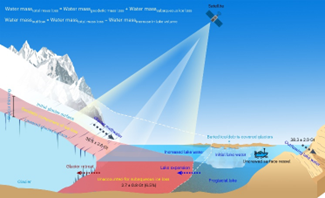
Reports highlighted accelerating glacial retreat in the Himalayas, impacting river systems and water security.
-
- Glaciers act as freshwater reservoirs.
- Himalayan rivers like:
- Ganga
- Brahmaputra
depend on glacial melt.
- Rising temperatures accelerate glacier melting.
- Glacial retreat can lead to Glacial Lake Outburst Floods (GLOFs).
- GLOFs occur due to sudden release of water from glacial lakes.
- Climate change is the primary driver of glacier retreat.
- Initial melting increases water flow, but long-term leads to water scarcity.
- Himalayan ecosystem is fragile and climate-sensitive.
(TOI)
Soil Health and Sustainable Agriculture:
Context
Government emphasized improving soil fertility through scientific interventions and sustainable practices.
-
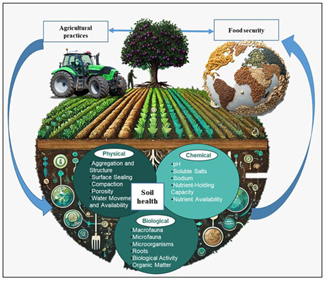
- Soil health depends on:
- Nutrient content
- Organic matter
- Microbial activity.
- Overuse of fertilizers leads to:
- Soil degradation
- Nutrient imbalance.
- Soil organic carbon is crucial for soil fertility.
- Crop rotation improves soil health.
- Soil erosion reduces productivity.
- Soil Health Card Scheme provides nutrient status to farmers.
- Sustainable agriculture includes:
- Organic farming
- Integrated nutrient management.
- Soil acts as a carbon sink.
- Soil health depends on:
(PIB)
Science & Technology
Advances in Quantum Computing Research:
Context
India is expanding research in quantum technologies for computing, communication, and cryptography.
-
- Quantum computing uses qubits instead of classical bits.
- Qubits can exist in superposition, representing multiple states simultaneously.
- Quantum entanglement allows correlated states across distances.
- Quantum computers can solve certain problems much faster than classical computers.
- Applications include:
- Cryptography
- Drug discovery
- Optimization problems.
- Quantum communication offers highly secure data transmission.
- India has launched National Quantum Mission.
- Quantum systems are sensitive to decoherence and noise.
(TH)
India’s Nuclear Energy Expansion:
Context
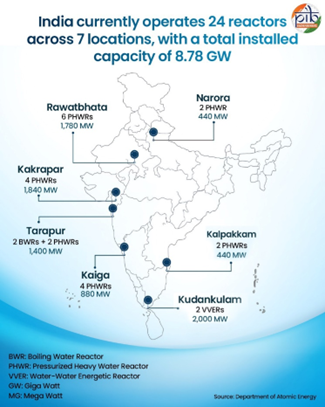
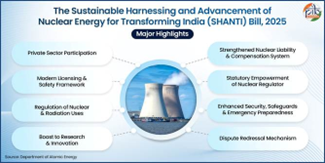
India is expanding nuclear energy capacity as part of its clean energy transition strategy.
-
- Nuclear energy is generated through nuclear fission.
- India follows a three-stage nuclear programme:
- Uranium-based PHWRs
- Fast Breeder Reactors
- Thorium-based reactors.
- India has large thorium reserves.
- Nuclear energy is considered low-carbon energy source.
- It provides base-load power, unlike intermittent renewables.
- Safety concerns include:
- Radiation leaks
- Waste disposal.
- Nuclear reactors in India are regulated by the Atomic Energy Regulatory Board (AERB).
- India is not a signatory to the Nuclear Non-Proliferation Treaty (NPT).
- India is a member of Nuclear Suppliers Group? → No (important trap).
(IE)
History, Art & Culture
UNESCO Cultural Heritage Discussions:
Context
Discussions on preservation of cultural heritage sites under the UNESCO framework gained attention.
-
- UNESCO stands for United Nations Educational, Scientific and Cultural Organization.
- World Heritage Sites are classified into:
- Cultural
- Natural
- Mixed.
- Sites are selected based on Outstanding Universal Value (OUV).
- The World Heritage Committee oversees inscriptions.
- India has 40+ World Heritage Sites.
- Sites can be placed on “List of World Heritage in Danger”.
- UNESCO also recognizes Intangible Cultural Heritage.
- Conservation requires international cooperation and funding.
- World Heritage status boosts tourism and global recognition.

(UNESCO)
Government Schemes & Initiatives
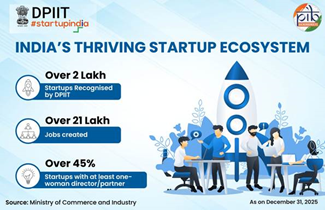
Government Push for Start-up Ecosystem:
Context
Government highlighted initiatives to promote innovation under Startup India.
-
- Startup India launched in 2016.
- It aims to promote:
- Innovation
- Entrepreneurship
- Job creation.
- Benefits include:
- Tax exemptions
- Simplified compliance
- Funding support.
- DPIIT recognizes eligible startups.
- Startups are defined based on:
- Turnover threshold
- Innovation component.
- India has emerged as one of the largest startup ecosystems globally.
- Startups play a key role in digital economy growth.
(PIB)
Miscellaneous
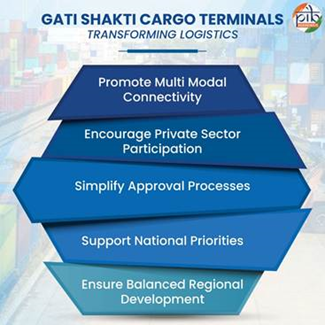
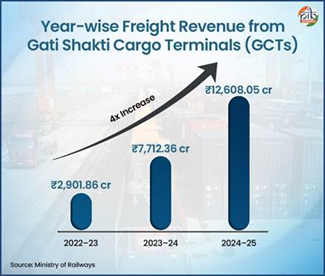
India’s Logistics Sector and Gati Shakti:
Context
Government reviewed progress under PM Gati Shakti for integrated infrastructure development.
-
- PM Gati Shakti is a national master plan for multimodal connectivity.
- It integrates:
- Roads
- Railways
- Ports
- Aims to reduce logistics cost in India.
- Uses GIS-based digital platform.
- Promotes coordinated planning among ministries.
- Logistics efficiency is crucial for export competitiveness.
- High logistics cost reduces industrial efficiency.
- Infrastructure gaps lead to supply chain inefficiencies.
(PIB)
Spread the Word