International Relations
BRICS NSA Meet:
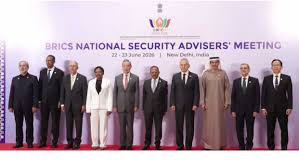
Context: The National Security Advisers of BRICS nations met in New Delhi to discuss global security, the West Asia crisis, and counter-terrorism.
-
- Original members: Formed as BRIC in 2006 (Brazil, Russia, India, China) and became BRICS with the addition of South Africa in 2010.
- BRICS+ expansion (2024): Officially expanded to include Egypt, Ethiopia, Iran, and the United Arab Emirates (Saudi Arabia’s status is officially pending finalization, while Argentina declined).
- Secretariat: BRICS does not have a permanent secretariat. The chairmanship rotates annually among members in the B-R-I-C-S order.
- New Development Bank (NDB): Formed by BRICS at the 2014 Fortaleza Summit. Headquartered in Shanghai, China.
- NDB membership: Open to all UN members. Non-BRICS members like Bangladesh and Uruguay have joined NDB.
- Contingent Reserve Arrangement (CRA): Established alongside the NDB to provide a financial safety net during balance of payment crises.
- NSA meetings: The NSA-level dialogue is the primary security-focused track within BRICS, operating outside the economic tracks.
- Counter-Terrorism: BRICS has a dedicated Counter-Terrorism Working Group (CTWG) with sub-groups focusing on capacity building and deradicalization.
- Global GDP share: With its expanded membership, BRICS+ now accounts for roughly 30% of global GDP and 45% of the world’s population.
- Fortaleza Declaration: The founding document that explicitly stated BRICS would act as an alternative to the Bretton Woods institutions (IMF/World Bank).
(TH)
Economy
Kisan Credit Card (KCC) & RBI Agri-Loan Updates:
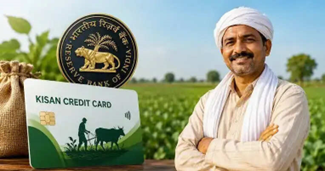
Context: The RBI issued updated frameworks, standardizing crop seasons and removing strict collateral constraints for small farmers to boost agricultural credit.
-
- Inception: KCC was introduced in 1998 based on the recommendations of the R.V. Gupta Committee.
- Target audience: Available to farmers, tenant farmers, oral lessees, and sharecroppers.
- Recent RBI Mandate: Banks must waive collateral security and margin requirements for agricultural and allied sector loans up to ₹2 Lakhs.
- Scope expansion (2019): KCC facilities were extended to include Animal Husbandry and Fisheries farmers.
- Implementing agencies: Commercial Banks, Regional Rural Banks (RRBs), Small Finance Banks, and Cooperatives.
- NABARD’s Role: Acts as the apex refinancing agency for RRBs and Cooperative Banks for KCC loans.
- Coverage: Provides credit for post-harvest expenses, produce marketing loans, and consumption requirements of farmer households.
- Interest subvention: Government provides interest subvention (usually 2%) and Prompt Repayment Incentive (usually 3%) on short-term crop loans up to ₹3 lakh.
- Insurance linkage: KCC holders are mandatorily covered under the Pradhan Mantri Fasal Bima Yojana (PMFBY) for notified crops.
- Rupay Card: Beneficiaries receive a Rupay-enabled KCC, operating like a standard ATM-cum-Debit card for agricultural purchases.
(ET)
Geography
The Strait of Hormuz & Maritime Geopolitics
Context: The US and Iran held high-level talks amid tensions in the Middle East, highlighting the vulnerability of the Strait of Hormuz, a critical global trade chokepoint.
-
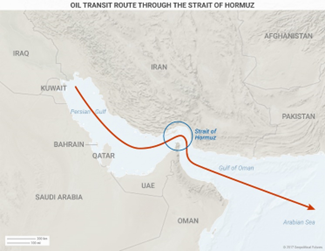
- Geographical location: A narrow body of water linking the Persian Gulf to the Gulf of Oman and the Arabian Sea.
- Bordering nations: Bounded by Iran to the north and the UAE and Oman (specifically the Musandam Peninsula enclave) to the south.
- Global trade dominance: It handles approximately 20-30% of global oil consumption, making it the world’s most important oil transit chokepoint.
- India’s dependence: Over 60% of India’s crude oil imports and a vast majority of its LNG imports transit through this strait.
- Chabahar port link: India’s Chabahar Port in Iran is strategically located near this strait on the Gulf of Oman, bypassing Pakistan.
- Gwadar port: Pakistan’s Gwadar port, operated by China (CPEC), is located just 72 km away from Chabahar on the same coastline.
- Alternative routes: To bypass the strait, Saudi Arabia uses the East-West Pipeline (Petroline) to the Red Sea, and the UAE uses the Habshan-Fujairah pipeline.
- UNCLOS rules: Under the United Nations Convention on the Law of the Sea, foreign vessels have the right of “transit passage” through international straits.
- Persian gulf members: 8 nations border the Persian Gulf: Bahrain, Iran, Iraq, Kuwait, Oman, Qatar, Saudi Arabia, and the UAE.
- Operation sankalp: The Indian Navy’s ongoing maritime security operation deployed in the Gulf region to protect Indian-flagged merchant vessels.
(TH)
Ecology & Environment and DM
India’s first private-sector Hybrid 2G Ethanol Project:
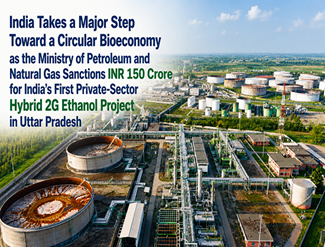
Context: The Ministry of Petroleum and Natural Gas approved funding for India’s first private-sector Hybrid Second-Generation (2G) Ethanol Biorefinery located at Wave Sugar, Dhanaura, UP.
-
- Scheme objective: PM JI-VAN (Jaiv Indhan- Vatavaran Anukool fasal awashesh Nivaran) aims to provide financial support for Integrated Bio-ethanol Projects using lignocellulosic biomass.
- Nodal ministry: Ministry of Petroleum and Natural Gas (MoPNG).
- 1G vs 2G biofuels: 1G uses food crops (sugarcane, corn); 2G uses agricultural waste/residues (stubble, cotton stalk) and non-food biomass.
- Implementation agency: Centre for High Technology (CHT), a technical body under MoPNG.
- Funding mechanism: Supported through the Viability Gap Funding (VGF) model for commercial and demonstration projects.
- EBP Target: India achieved the target of 10% ethanol blending in petrol in 2022 and advanced its target for 20% blending (E20) to 2025-26.
- Stubble burning solution: By monetizing agricultural waste, 2G ethanol plants directly disincentivize farmers from burning stubble.
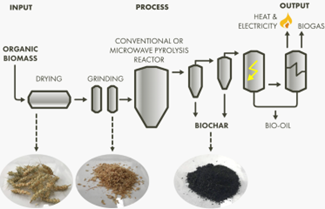
- By-products: 2G biorefineries also produce bio-CNG and Biochar as highly valuable secondary products.
- National Policy on Biofuels (2018): Categorizes biofuels to enable targeted financial incentives.
- Greenhouse gas reduction: 2G ethanol has a significantly lower carbon footprint compared to fossil fuels and 1G ethanol.
(ET)
Ammonia Gas Leak & Industrial Safety:
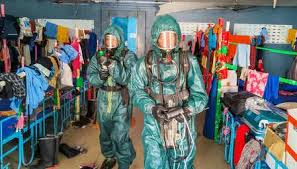
Context: A gas leak at a seafood-processing unit highlighted industrial hazards involving Ammonia ().
-
- Chemical properties: Ammonia is a colourless gas with a distinct, pungent, suffocating Odor. It is lighter than air.
- Solubility: It is highly soluble in water, forming ammonium hydroxide, which is a weak base.
- Industrial uses: Primarily used in manufacturing nitrogenous fertilizers (Urea) and extensively used as an industrial refrigerant gas.
- Refrigeration: Used in seafood processing and cold storage because it is highly efficient and has a zero Ozone Depletion Potential (ODP).
- Toxicity: Exposure to high concentrations burns the eyes, respiratory tract, and skin, potentially leading to blindness, lung damage, or death.
- First Aid (Static Fact): In case of skin or eye contact, the immediate response is flushing the area with large amounts of water due to its high water solubility.
- Regulatory framework: Covered under the Manufacture, Storage and Import of Hazardous Chemicals Rules, 1989 (under Environment Protection Act, 1986).
- Factories Act, 1948: Mandates safety protocols, emergency disaster management plans, and occupational health rules for units handling hazardous gases.
- Haber-Bosch process: The primary industrial method for synthesizing ammonia from nitrogen (from the air) and hydrogen.
- Corrosion risk: Ammonia is highly corrosive to copper, zinc, and their alloys; hence, industrial systems use steel piping.
(TH)
Science & Technology
Biochar (‘Black Gold’):
Context: Scientific reports highlighted Biochar as a sustainable solution to farm fires and soil degradation.
-
- Definition: Biochar is a highly porous, stable, carbon-rich substance resembling charcoal.
- Production Process: Created through Pyrolysis, heating biomass (crop residue, wood) at high temperatures in the absence (or strict limitation) of oxygen.
-
- Carbon sequestration: It locks carbon into a stable form that can remain in the soil for hundreds or thousands of years, preventing it from entering the atmosphere as .
- Soil health: Its porous structure acts like a sponge, dramatically improving the soil’s ability to retain water.
- Nutrient leaching: Prevents essential soil nutrients (like Nitrogen and Phosphorus) from washing away into groundwater.
- pH buffer: Biochar generally has an alkaline nature, making it excellent for neutralizing acidic soils.
- Stubble burning: Converting crop residue into biochar directly prevents the release of methane and black carbon associated with open field burning.
- Microbial Life: Provides a physical habitat that promotes beneficial soil microbes and mycorrhizal fungi.
- Not a Fertilizer: Biochar is a soil amendment, not a fertilizer itself, though it enhances the efficiency of fertilizers applied with it.
(TH)
Defence
Tri-Commissioning of Naval Vessels (INS Dunagiri, INS Sanshodhak, and INS Agray):
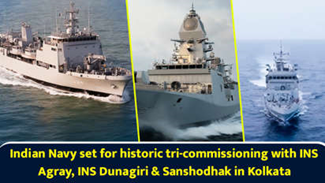
Context: Three indigenously built naval ships- INS Dunagiri, INS Sanshodhak, and INS Agray were commissioned at Kolkata.
-
- INS Dunagiri: The fourth stealth frigate built under Project 17A by Garden Reach Shipbuilders & Engineers (GRSE), Kolkata.
- Project 17A Scope: Involves building seven advanced guided-missile stealth frigates (4 at Mazagon Dock, Mumbai; 3 at GRSE, Kolkata).
- Naming Convention (P17A): Ships are named after mountain ranges in India (e.g., Nilgiri, Himgiri, Udaygiri, Dunagiri).
- INS Sanshodhak: The fourth ship of the Survey Vessel (Large) Its name means “Researcher.”
- SVL Function: Designed for full-scale coastal and deep-water hydrographic surveys to map ocean depths and navigational channels.
- INS Agray: A vessel under the Anti-Submarine Warfare Shallow Water Craft (ASW-SWC) project.
- ASW-SWC Purpose: Designed for coastal operations, sub-surface surveillance, and anti-submarine operations in shallow waters.
- Nodal Builder: GRSE is a Miniratna Category-I Defence PSU operating under the Ministry of Defence.
- Indigenization Rate: These vessels boast over 75-80% indigenous content, significantly boosting MSME defence supply chains.
- Strategic Shift: Reflects the Indian Navy’s shift from a ‘Buyer’s Navy’ to a ‘Builder’s Navy’.
(PIB)
Government Schemes & Initiatives
Ashtalakshmi Model & NE India:
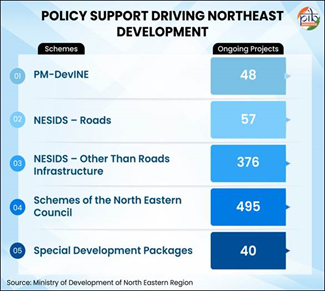
Context: The government highlighted the socio-economic transformation of the eight North-Eastern states under the Ashtalakshmi development model.
-
- The 8 States: Assam, Arunachal Pradesh, Meghalaya, Manipur, Mizoram, Nagaland, Tripura, and Sikkim.
- Sikkim’s Status: Sikkim was not an original ‘Seven Sister’ but was added to the North Eastern Council (NEC) in 2002.
- Nodal Ministry: Ministry of Development of North Eastern Region (MDoNER), established in 2001.
- Act East Policy: The Northeast acts as India’s land bridge to ASEAN nations, transitioning from the older “Look East” policy.
- Kaladan Multi-Modal Project: Connects Kolkata Port to Sittwe Port (Myanmar), then inland to Mizoram via the Kaladan river.
- IMT Trilateral Highway: Connects Moreh (Manipur, India) to Mae Sot (Thailand) via Myanmar.
- International Borders: Arunachal Pradesh, Assam, Meghalaya, Nagaland, Manipur, Mizoram, Tripura, and Sikkim all share international borders (approx 99% of the NE boundary is international).
- Siliguri Corridor: The narrow “Chicken’s Neck” (approx. 22 km wide) connecting the Northeast to mainland India.
- Biodiversity Hotspots: The region is part of two global biodiversity hotspots: the Himalaya Hotspot and the Indo-Burma Hotspot.
- North Eastern Council (NEC): A statutory advisory body constituted in 1971; the Union Home Minister is its ex-officio Chairman.
(PIB)
Miscellaneous
National Organ Donation Movement (NOTTO):
Context: India crossed a milestone of 5 lakh organ donation pledges due to sustained awareness campaigns.
-
- Apex Body: National Organ and Tissue Transplant Organization (NOTTO) operates under the Ministry of Health and Family Welfare.
- Headquarters: Located at Safdarjung Hospital, New Delhi.
- Statutory Framework: Functions under the Transplantation of Human Organs and Tissues Act (THOTA), 1994 (amended in 2011).
- Three-tier structure: NOTTO at the national level, ROTTOs (Regional), and SOTTOs (State level).
- Rule change (2023): The Union Government removed the 65-year upper age limit for registering to receive an organ.
- Domicile rule: The requirement for state domicile to register on an organ waiting list has been scrapped to create a unified national registry.
- Opt-in vs. Opt-out: India follows an “Opt-in” system (explicit consent required), unlike countries like Spain which follow “Opt-out” (presumed consent).
- Types of Donations: Living donation (kidney, part of liver) and Deceased donation (brain death/cardiac death).
- Commercial trade: THOTA strictly prohibits the commercial trade of organs; only altruistic donation is permitted.
- ABHA Linkage: The organ pledge registry is now linked to the Ayushman Bharat Health Account (ABHA) for seamless digital tracking.
(PIB)
Spread the Word