
Indian Polity & Governance
Rollout of Viksit Bharat Youth Parliament 2026:
Context: The Ministry of Youth Affairs and Sports launched the national grand finale of the Viksit Bharat Youth Parliament 2026, running from June 15 to 17 at the Central Hall of Parliament in New Delhi.
-
- Nodal Executing Body: The entire institutional framework of this massive democratic exercise is run by MY Bharat (Mera Yuva Bharat), an autonomous body under the Ministry of Youth Affairs and Sports.
- The Inception Stage (District Nodal Rounds): Deliberations were held across 757 Nodal Universities/Institutions focusing strictly on the academic theme: “50 years of Emergency: Lessons for Indian Democracy”.
- The Legislative Stage (State Rounds): Conducted inside the physical premises of various State Legislative Assemblies, presided over directly by State Speakers and Governors, focusing on the “Union Budget 2026: Yuva Shakti Driven Budget”.
- National Round Anchor Themes: The selected top delegates converged in the Central Hall to deliberate on “Nari Shakti Vandan: Catalysing Inclusivity” and “Viksit Bharat 2047”.
- Parliamentary Literacy: The prime structural objective is to demystify legislative processes, committee oversight, amendments, and the decorum of policy formulation for youth.
- Inaugural Authority: The event was officially inaugurated by the Speaker of the Lok Sabha.
- The Central Hall Significance: It is the historic space where the Constituent Assembly of India met to deliberate and draft the Constitution of India between 1946 and 1949.
- Joint Sittings: Under Article 108 of the Constitution, joint sittings of both houses of Parliament (called by the President and presided over by the Lok Sabha Speaker) are historically held in the Central Hall.
- Mera Yuva Bharat (MY Bharat) Portal: Launched as an artificial intelligence-backed digital platform to act as a single-window “phygital” (physical + digital) resource aggregator for youth development and community leadership.
- Youth Parliament Schemes: The concept traces back to the recommendations of the All-India Whips Conference. The Ministry of Parliamentary Affairs has traditionally promoted the National Youth Parliament Scheme across schools and universities to build democratic temper.
(PIB)
Indian Society & Social Justice
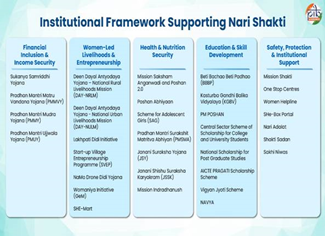
Focus on Nari Shakti Vandan in Local Governance Models:
Context: The opening plenary of the National Youth Parliament on June 15, 2026, ignited extensive legislative debate regarding the execution blueprint of Nari Shakti Vandan principles within regional and local governance structures.
-
- The Core Mandate: Evaluating the developmental dividends of reservation policies for women across diverse legislative tiers, specifically leading up to the target goals of Viksit Bharat 2047.
- Beyond Tokenism: Debates prioritized institutional training programs designed to prevent the socio-political phenomenon of Sarpanch Pati (where husbands exercise actual power behind elected women).
- Economic Inclusivity Linkage: Linking formal political representation directly to regional budget allocations for women-led micro-enterprises and self-help groups (SHGs).
- Data-Driven Outcomes: Case studies showed that panchayats led by women invest significantly more capital into drinking water infrastructure, sanitation, and primary school education monitoring.
- Capacity Building: The Ministry of Panchayati Raj highlighted expanding digital literacy bootcamps designed exclusively for elected women representatives (EWRs).
- The 73rd and 74th Constitutional Amendment Acts (1992): These landmark acts mandated the reservation of not less than one-third (33.3%) of the total number of seats for women in both rural (Panchayats) and urban (Municipalities) local bodies.
- State-Level Enhancements: While the constitutional minimum is 33.3%, more than 20 Indian states (such as Bihar, Madhya Pradesh, and Himachal Pradesh) have progressively raised legal reservations for women to 50% in their respective Panchayati Raj Institutions (PRIs).
- Article 243D: This article explicitly ensures reservation of seats for Scheduled Castes (SCs), Scheduled Tribes (STs), and women in Panchayats, applying both to direct elections and the offices of chairpersons.
- The Nari Shakti Vandan Adhiniyam (128th Constitution Amendment Bill / 106th Constitutional Amendment Act): It aims to reserve one-third of all seats for women in the Lok Sabha and State Legislative Assemblies. The implementation is legally tied to the formal publication of the first census conducted after the commencement of the act and the subsequent delimitation exercise.
- Article 243I: Mandates the composition of a State Finance Commission every five years by the Governor to review the financial position of the Panchayats and recommend devolution principles, ensuring financial autonomy for local women leaders.
(IE)
International Relations
Prime Minister’s State Visit to Slovakia (Historic First):
Context: The PM of India commenced a State Visit to the Slovak Republic from June 14–16, 2026, marking the first-ever visit by an Indian Prime Minister to Slovakia since its independence in 1993.
-
- Historic Precedent: This visit marks a watershed diplomatic milestone, concluding over three decades without a prime ministerial bilateral visit to Bratislava.
- The Diplomatic Loop: The visit directly builds upon the Slovak President’s participation in the AI Impact Summit held in New Delhi earlier in February.
- Core Sectors of Bilateral Talks: High-level talks centered on boosting trade, defence integration, heavy automobile engineering, and sophisticated railway components manufacturing.
- Strategic Central European Positioning: Slovakia acts as an essential manufacturing powerhouse within Central Europe and serves as a gateway to the wider European Union market.
- Supply Chain Resiliency: The focus remains on de-risking advanced industrial supply chains by creating direct joint ventures between Indian auto-component companies and Slovak factories.
- Global South Consensus: Discussions included seeking Slovakia’s support on multilateral reforms at the United Nations and expanding the Global South dialogue.
- Consular & Diaspora Push: New bilateral mobility arrangements were discussed to streamline visas for Indian tech-professionals and engineering students moving to Central Europe.
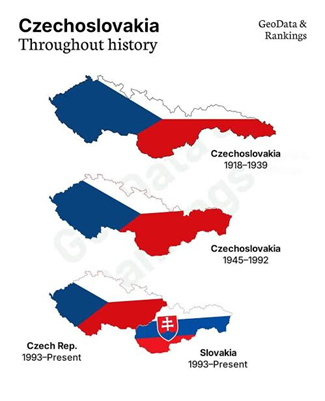
- Velvet Divorce: Slovakia became an independent nation on January 1, 1993, following the peaceful dissolution of Czechoslovakia, an event historically known as the Velvet Divorce.
-
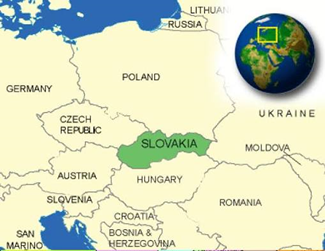
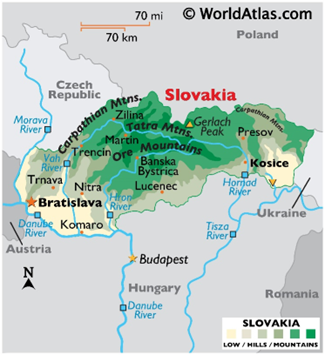
- Landlocked Geography: Slovakia is a strategically positioned, completely landlocked country in Central Europe. It is bordered by Poland (North), Ukraine (East), Hungary (South), Austria (South-West), and the Czech Republic (West).
-
- Danube Drainage: The major river Danube flows through its capital, Bratislava, linking it directly into the black-sea trading routes, a critical geographical feature for Central European trade.
(PIB)
Launch of ‘Bharat Innovates’ Initiative in Nice:
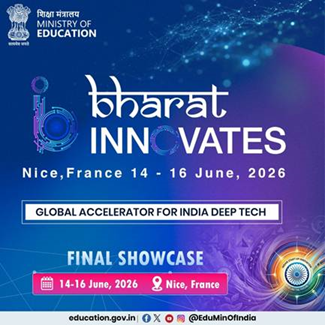
Context: During the first leg of his European tour in Nice, France, the Indian PM alongside French President Emmanuel Macron jointly inaugurated the signature ‘Bharat Innovates’ event.
-
- The Core Mandate: This high-profile global event brings together the top-tier venture capital (VC) funds, deep-tech startups, and technology policymakers from India, France, and Europe.
- Context of Timing: The summit is a key anchor of the designated India-France Year of Innovation, cementing the upgrade of relations to a Special Global Strategic Partnership.
- The Philosophy: The PM highlighted that India’s digital philosophy is anchored on “Innovation with Inclusion” emphasizing human impact over mere financial valuations.
- Key Technology Pillars: Discussions explicitly prioritized five frontier sectors: Artificial Intelligence, Quantum Computing, Biotechnology, Space Technologies, and Advanced Materials.
- Platform for Indian Ecosystem: Organizers provided a global launchpad for Indian Drone Didis and rural tech entrepreneurs to showcase scalable, cost-efficient tech solutions.
- Focus on Co-Development: India explicitly moved its pitch from being a mere tech-adopter to a tech-provider, seeking joint R&D, co-creation, and shared manufacturing frameworks with Europe.
- Institutional Architecture: The Indian side was heavily anchored by the Board of IIT Delhi, underlining the deep integration of premium academic research institutes with international VC circles.
- India-France Science Ties: Bilateral science collaboration is historically rooted. Landmark initiatives like the Indo-French Centre for the Promotion of Advanced Research (CEFIPRA) established in 1987 have been instrumental in joint state-funded research.
- Science Diplomacy Structures: CEFIPRA is funded equally by the Department of Science & Technology (DST), Government of India, and the Ministry for Europe and Foreign Affairs, France.
- Strategic Geometry of Nice: Nice is a major coastal city located on the Mediterranean coast of France, resting in the region known as the Côte d’Azur (French Riviera), vital for maritime logistics and European blue economy dialogues.
(MEA+PIB)
Ecology & Environment and DM
Global Wind Day 2026 Conference:
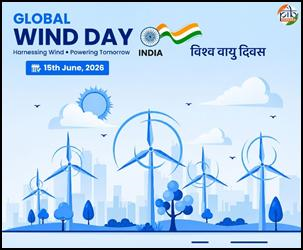
Context: On Global Wind Day (June 15), India hosted the Global Wind Day 2026 Conference in Goa under the theme “Wind Energy: From Ambition to Acceleration”, charting a clear roadmap to cross of wind energy deployment.
-
- The Theme: The 2026 conference centered specifically on transition strategies, infrastructure grid readiness, and multiplying domestic turbine manufacturing capabilities.
- Key Document Released: An industry-defining technical report titled “Elevating India’s Wind Turbine Exports for Global Markets” was officially unveiled at the summit.
- High Indigenization Levels: India’s wind manufacturing sector has achieved an impressive 70–80% indigenization across major core components like blades, towers, and complex gearboxes.
- Viability Gap Funding (VGF): The Union Government approved an allocation of ₹6,853 crore under VGF specifically for of pioneering Offshore Wind Projects split evenly between Gujarat and Tamil Nadu.
- Generation-Based Incentive (GBI): Over ₹500 crore was formally disbursed under the ongoing GBI scheme to incentivize wind producers on actual grid feeding.
- Contracts for Difference (CfD) Pilot: India launched its initial pilot project based on the CfD model to shield green investors from volatile tariff fluctuations.
- Geographical Expansion: The government highlighted geographical diversification into non-traditional, emerging wind states including Madhya Pradesh, Telangana, and Odisha.
- India-UK Offshore Wind Taskforce: Formally operationalized under the bilateral Vision 2035 framework to collaborate directly on deep-sea port infrastructure and green finance structures.
- India-Belgium Green Taxonomy: At global platforms, India and Belgium solidified collaboration agreements specifically linking European capital to India’s domestic offshore wind leases.
- Institutional Framework: The National Institute of Wind Energy (NIWE), situated in Chennai, is an autonomous R&D institution under the Ministry of New and Renewable Energy (MNRE). It acts as the nodal body for wind resource assessment, standard testing, and certification in India.
(PIB)
History, Art & Culture
Prime Minister Highlights Diversity in Innovation via Sanskrit Subhashitam:
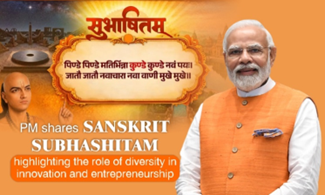
Context: On June 15, 2026, the PM shared a profound Sanskrit Subhashitam (aphorism) to illustrate how cultural diversity, individual viewpoints, and localized adaptations drive global entrepreneurship and modern technical innovation.
“पिण्डे पिण्डे मतिर्भिन्ना कुण्डे कुण्डे नवं पयः।
जातौ जातौ नवाचाराः नवा वाणी मुखे मुखे॥”
-
- The Core Philosophy: The aphorism posits: “Every mind possesses a different intellect; every pond holds distinct waters; every community brings unique innovations, and every mouth speaks a new tongue.”
- Contextual Application: The government repurposed this classical philosophical verse to define India’s decentralized startup model, where different regions tackle unique grassroots problems.
- Pluralistic Foundations: The usage underlines that standardizing human thought hinders innovation; rather, it is the intersection of varied methodologies that creates disruptive technology.
- Intellectual Heritage: Subhashitas represent a vital genre of Sanskrit didactic literature, conveying deep epistemological and ethical insights in concise, rhyming stanzas.
- Epistemology in Indian Philosophy: Indian philosophy (Darshana) addresses diversity of thought through the lens of Pramana (sources of valid knowledge). Systems like Anekantavada (the doctrine of non-absolutism in Jainism) systematically echo this view that reality is perceived differently from multiple viewpoints.
- The Astika vs. Nastika Divide: Classical Indian philosophy is structurally divided into Astika (orthodox-accepting the authority of Vedas: Nyaya, Vaisheshika, Samkhya, Yoga, Mimamsa, Vedanta) and Nastika (heterodox-rejecting Vedic infallibility: Charvaka, Buddhism, Jainism).
- Traditional Water Harvesting (Kunde): The reference to Kunde (local water bodies) aligns with historical environmental engineering. India’s historic texts emphasize localized water conservation structures like Baolis (stepwells), Zings (Ladakh), and Ahar-Pynes (Bihar).
- Promotion of Sanskrit: Under Article 351 of the Directive Principles of State Policy (DPSP), it is the duty of the Union to promote the spread of the Hindi language so it may serve as a medium of expression for all elements of the composite culture of India, drawing primarily on Sanskrit for its vocabulary.
- Eighth Schedule Status: Sanskrit is one of the 22 languages listed in the Eighth Schedule of the Constitution and was designated as India’s first official Classical Language in 2004 due to its ancient antiquity and independent literary tradition.
- Classical Languages Criteria: To qualify as a Classical Language, a language must have high antiquity of early texts over 1500–2000 years, a body of ancient literature considered a valuable heritage, and an original literary tradition not borrowed from another speech community.
(PIB)
Miscellaneous
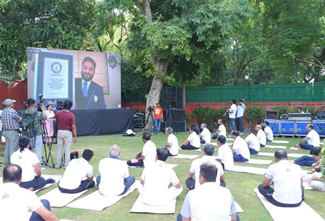
Global Record Attempt for International Day of Yoga (IDY) Outreach:
Context: As a massive curtain-raiser leading up to IDY 2026, the Ministry of Ayush organized a global online yoga event on 14 June 2026 aiming to break the world record for the largest-ever viewership of a live yoga stream.
-
- Institutional Execution: The landmark digital event was executed via a collaborative partnership between the Ministry of Ayush, the Morarji Desai National Institute of Yoga (MDNIY), and tech partner Habuild.
- Global Digital Footprint: The synchronized digital streaming event witnessed active, registered live participation from enthusiasts spanning across more than 130 countries.
- Leveraging Digital Public Infrastructure (DPI): The event utilized automated WhatsApp API integrations to distribute instant, unique digital Participation Certificates across global time zones.
- The Soft Power Mandate: The primary strategic intent is expanding India’s cultural diplomacy, projecting Yoga as a scientifically sound, universal, non-sectarian lifestyle tool for holistic health.
- Inclusivity Metrics: Registrations were crowdsourced through open missed-call numbers and accessible zero-cost digital portals to democratize public wellness tracking.
- Institutional Setup of MDNIY: MDNIY operates as a premium autonomous organization under the Ministry of Ayush, acting as a focal center for advanced yoga research, therapeutic education, and clinical standardization.
- Origin of UN IDY Resolution: The United Nations General Assembly (UNGA) established June 21 as the International Day of Yoga via a historic resolution in December 2014, supported by a record 177 co-sponsoring nations.
- Summer Solstice Connection: June 21 represents the Summer Solstice in the Northern Hemisphere, the longest day of the year which holds deep cultural and astronomical significance across many ancient civilizations.
- The Definition of AYUSH: The acronym AYUSH represents traditional and non-allopathic medical systems: Ayurveda, Yoga & Naturopathy, Unani, Siddha, and Homeopathy.
- Constitutional Provisions for Public Health: Under the Seventh Schedule of the Indian Constitution, “Public health and sanitation; hospitals and dispensaries” is primarily a subject under the State List (List II), whereas legal frameworks governing medical professions fall under the Concurrent List (List III).
(PIB)
Spread the Word