
Indian Polity & Governance
ECI Workshop on Risk Management and Electoral Resilience:
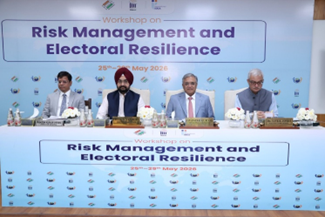
Context: The Election Commission of India (ECI) commenced a five-day global workshop on “Risk Management and Electoral Resilience” in New Delhi.
-
- Collaborative Agency: Organized alongside International IDEA (Institute for Democracy and Electoral Assistance) under India’s 2026 Chairship Programme.
- Venue: Hosted at the institutional campus of the India International Institute of Democracy and Election Management (IIIDEM) in New Delhi.
- Leadership Panel: Addressed directly by Chief Election Commissioner Gyanesh Kumar alongside Election Commissioners Dr. Sukhbir Singh Sandhu and Dr. Vivek Joshi.
- Global Footprint: Attended by 32 high-level delegates representing Election Management Bodies (EMBs) across 12 countries.
- Primary Objective: Aims to help EMBs identify, assess, and mitigate systemic institutional vulnerabilities to prevent breakdowns in democratic continuity.
- Core Thematic Pillars: Covers foundational electoral integrity, crisis management structures, inter-agency operational coordination, and strategic communication.
- ERM Tool Integration: Features hands-on training on the Electoral Risk Management (ERM) Tool, tracking threats like technological hacking or infrastructure decay.
- RAR Framework: Deploys Risk and Action Registers (RAR) as a standardized protocol for real-time monitoring during active voting periods.
- Council Chairship: Aligns with India’s 2026 role leading the Council of Member States of International IDEA, an intergovernmental body based in Stockholm.
- Field Exposure: Includes localized ground visits to study India’s strict field-level security mapping and polling booth management systems.
(PIB)
Civil Investiture Ceremony for Padma Awards 2026:
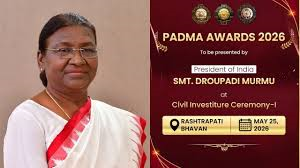
Context: President Droupadi Murmu conferred the Padma Awards for 2026 at a formal Civil Investiture Ceremony at Rashtrapati Bhavan.
-
- Constitutional Status: Established in 1954, they are among India’s highest civilian honors, announced annually on Republic Day Eve.
- Three-Tier Hierarchy: Awarded in three broad categories: Padma Vibhushan (exceptional service), Padma Bhushan (distinguished service of high order), and Padma Shri (distinguished service).
- Article 18 Constraints: Under Article 18(1) of the Constitution, these awards function strictly as distinctions and cannot be used as prefixes or suffixes to the recipient’s name.
- Selection Committee: Nominations are vetted by the Padma Awards Committee, constituted by the Prime Minister every year, headed by the Cabinet Secretary.
- No Monetary Grant: The awards do not carry any monetary allowance, cash prize, or direct material facility; they include a Sanad (certificate) and a medallion.
- Annual Cap: The total number of awards given in a single calendar year cannot exceed 120, excluding posthumous awards and those given to NRIs/PIOs/Foreigners.
- Posthumous Conditions: Ordinarily, the awards are not conferred posthumously unless highly exceptional, deeply deserving cases are identified.
- Self-Nomination Allowed: The nomination process is institutionalized via an open public model where self-nomination is permitted via the official portal.
- Fields of Recognition: Spans a massive gamut of activities including Art, Social Work, Public Affairs, Science & Engineering, Trade & Industry, Literature, and Sports.
(PIB)
Gauhati High Court Landmark Verdict on UAPA Dissent Limits:
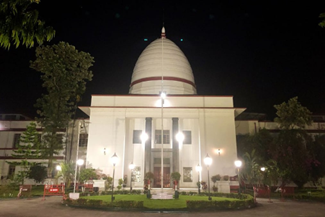
Context: The Gauhati High Court quashed stringent Unlawful Activities (Prevention) Act (UAPA) provisions in a long-standing case regarding historical anti-CAA protests, directing trial via ordinary laws.
-
- Dissent vs. Terrorism: The court re-established that standard civic agitations and blockades do not automatically fit the legal definition of a ‘terrorist act’ under UAPA.
- Section 43D(5) Scrutiny: Section 43D(5) creates an absolute bar on bail if the court finds prima facie truth in police case diaries, making this judicial filter critical.
- Regular Court Referral: Ordered the processing of charges solely under ordinary penal statutes via a standard trial court.
- Constitutional Validation: Strongly upheld the foundational protection of Article 19(1)(a) (freedom of expression) and Article 19(1)(b) (peaceful assembly).
- Intent Threshold: The ruling outlines that a prosecution under UAPA requires explicit, clear intent to threaten the sovereignty or territorial integrity of India.
- Federal Division: Highlights the legal boundaries between localized public order breakdown (State List Item) and national security threats (Union List Item).
- Investigative Discipline: Mandates that central investigative bodies must provide concrete evidence of organized terror connections, rather than inferring them from public protests.
- UAPA Section 15 Clarity: Clarifies the limits of Section 15, which defines a terrorist act, preventing its overly broad application to economic strikes or civil disruptions.
- Judicial Precedent Value: Serves as a vital benchmark for all high courts evaluating civil liberty petitions involving anti-terror laws.
(IE)
Notification of National Sports Governance Board & Tribunal Rules:
Context: The Central Government officially notified the National Sports Governance (National Sports Board) Rules, 2026 and the National Sports Governance (National Sports Tribunal) Rules, 2026.
-
- Parent Legislation: Notified under the statutory enabling provisions of the National Sports Governance Act, 2025.
- National Sports Board (NSB): Mandated as the apex supervisory body to oversee recognition, corporate governance, and ethical standards across National Sports Federations (NSFs).
- NSB Board Composition: Rules prescribe a streamlined executive setup consisting of a Chairperson and two expert members appointed directly by the Central Government.
- Search-cum-Selection Committee: Members will be selected via a specialized committee constituted under the National Sports Board Rules, 2026.
- National Sports Tribunal (NST): Established to ensure a speedy, independent, and cost-effective mechanism for resolving sports disputes.
- Dispute Jurisdiction: NST handles structural gridlocks including athlete selection complaints, ethical violations, and internal NSF management deadlocks.
- De-bureaucratization: Designed to minimize athletes’ reliance on prolonged, expensive litigation in high courts for sports disputes.
- WADA/NADA Compliance: Integrates strict clauses ensuring that standard anti-doping disputes are processed fast to preserve India’s international standings.
- Financial Transparency: Grants the NSB statutory powers to audit the balance sheets and public funds allocated to non-complying sports bodies.
- Term Conditions: Regulates terms of office, salary limitations, and service removal procedures for members, ensuring administrative insulation from political influence.
(PIB)
International Developments
US-Iran Peace Talks and Abraham Accords Mandate Expansion:
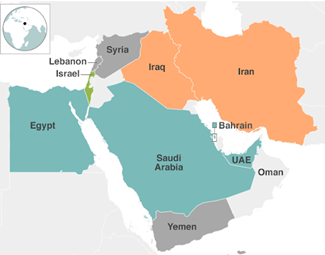
Context: US President Donald Trump linked ongoing security talks with Iran to a mandatory mass sign-up of key regional nations to the Abraham Accords.
-
- Accords Definition: The Abraham Accords are a series of joint normalization agreements brokered originally by the US to formalize diplomatic ties between Israel and Arab/Muslim nations.
- New Target Nations: The US administration listed Qatar, Pakistan, Egypt, Jordan, and Turkey as target countries to join the expanded peace model.
- Geopolitical Choke Point: Tensions flared concurrently with three mysterious explosions reported near Bandar Abbas, a vital port city near the strategic Strait of Hormuz.
- Strait of Hormuz Significance: A critical global maritime choke point separating the Persian Gulf and the Gulf of Oman, handling over 20% of the world’s petroleum liquids.
- Self-Defence Strikes: US Central Command (CENTCOM) confirmed it executed tactical self-defence strikes against specific missile launch units and mine-laying boats in southern Iran.
- Restrained Ceasefire: US military officials clarified that the strikes were targeted defensive actions and did not signify a breakdown of the active ceasefire protocol.
- Market Volatility: Global gold futures climbed significantly to a historic high of ₹1.59 lakh per 10 grams on the MCX due to fluctuating West Asian stability updates.
(TH)
International Relations
1st BRICS 2026 Tourism Working Group (TWG) Meeting:
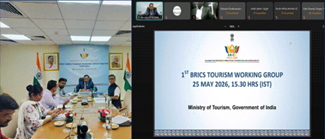
Context: Under India’s BRICS 2026 Chairship, the 1st Tourism Working Group meeting was successfully held in virtual mode.
-
- Chairship Status: India officially holds the rotating strategic BRICS Chairship for the calendar year 2026.
- Central Theme: Convened under the overarching framework: “Building for Resilience, Innovation, Cooperation and Sustainability”.
- Administrative Leadership: The inaugural session was chaired by the Joint Secretary (Tourism), Ministry of Tourism, Government of India.
- Priority Matrix 1: Focuses on the adoption of Artificial Intelligence (AI) in tourism data curation and destination marketing platforms.
- Priority Matrix 2: Emphasizes environmental longevity via “Sustainability and Responsible Tourism” protocols to reduce carbon foot-printing.
- Priority Matrix 3: Prioritizes systemic “Tourism Skilling and Capacity Building” to align hospitality workers across member nations with digital economies.
- Priority Matrix 4: Focuses on “Tourism Exchanges and Seamless Travel Facilitation” via simplified structural travel regulations.
- Expanded Bloc Dynamics: Serves as the introductory platform integrating new expanded member nations who entered the BRICS group recently.
- Next Strategic Milestone: The upcoming 2nd physical TWG meeting is scheduled to be held on August 19–20, 2026, in Jaipur, Rajasthan.
(PIB)
Quad Foreign Ministers’ Meeting at New Delhi:
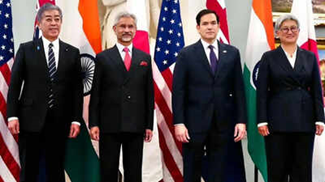
Context: External Affairs Minister S. Jaishankar hosted the Quad Foreign Ministers’ Meeting at Hyderabad House in New Delhi to discuss maritime security and regional stability.
-
- Diplomatic Cohort: Features EAM S. Jaishankar along with US Secretary of State Marco Rubio, Australian FM Penny Wong, and Japanese counterpart Toshimitsu Motegi.
- Strategic Focus Area: Placed maritime domain awareness, critical technological defense supply chains, and safe maritime trade at the top of the agenda.
- Indo-Pacific Public Goods: Reaffirmed the grouping’s core operational goal: providing concrete development assistance, telecom infrastructure, and humanitarian aid to smaller regional nations.
- Counter-Terrorism Alignment: Debated new-age cross-border asymmetric security threats, re-affirming a zero-tolerance policy against state-sponsored terror networks.
- IPMDA Expansion: Reviewed the expansion of the Indo-Pacific Partnership for Maritime Domain Awareness (IPMDA), tracking dark shipping and illegal fishing activities.
- Global Choke Points: Held direct security consultations regarding maritime disruptions impacting shipping in the Indian Ocean and the Red Sea.
- Strategic Independence: India utilized the platform to reiterate its commitment to strategic autonomy while reinforcing deep technical alliances with partner democracies.
- Underlying Concept: Formulated on protecting a “Free, Open, Inclusive, and Rules-based Indo-Pacific” anchored firmly on international laws like UNCLOS.
- Non-Military Coalition: The FMs emphasized that while security coordination is growing, the Quad is not a military pact or an Asian NATO.
(IE+TH)
Economy
RBI Risk Buffer Optimization and Fiscal Dividend Surge:
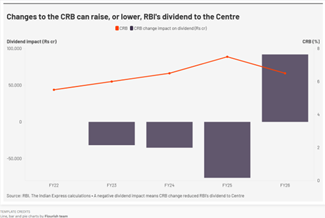
Context: The Reserve Bank of India (RBI) lowered its contingent risk buffer based on healthy macroeconomic indices, unlocking a ₹92,000 crore boost in surplus dividend transfer to the Central Government.
-
- Statutory Mechanism: Governed strictly under Section 47 of the RBI Act, 1934, which mandates that the central bank’s profits be allocated to the government after provisions.
- Jalan Committee Mandate: Operates under the structural guidelines of the 2019 Bimal Jalan Economic Capital Framework (ECF).
- CRB Boundaries: The ECF dictates that the Contingent Risk Buffer (CRB) must be maintained dynamically within a tight band of 5% to 6.5% of RBI’s total balance sheet.
- Macro Trigger: The decision to lower the risk buffer reflects India’s high forex reserves, robust commercial banking asset health, and strong GDP outlook.
- Fiscal Deficit Mitigation: This massive non-tax revenue windfall significantly eases the government’s fiscal deficit compression pathway.
- Income Inflow Streams: The surplus is driven heavily by earnings from foreign asset investments, domestic open market operations (OMO), and liquidity management under the Liquidity Adjustment Facility (LAF).
- Revaluation Accounts Excluded: Unrealized gains in gold and foreign currency valuation accounts remain locked in separate balance sheet heads and cannot be distributed as dividends.
- Market Liquidity Impact: Large surplus deposits into government accounts systematically influence short-term banking liquidity matrices.
- No Direct Money Printing: Unlike monetization of deficit, this transfer represents authentic accrued operating profits and optimized risk capital reserves.
- Economic Capital Components: RBI capital composition uniquely clusters into Paid-up Capital, Reserve Fund, Contingency Fund, and Asset Development Fund.
(IE)
Geography, Envt & Eco, DM
Supreme Court Observations on Green Activism vs. Infrastructure:
Context: Citizen collectives and environmental groups pushed back against recent Supreme Court remarks regarding green activists allegedly stalling critical infrastructure projects in the PIPAVAV Project case.
-
- The Friction: Highlights the growing legal and policy conflict between fast-tracking mega infrastructure assets and conducting comprehensive environmental impact reviews.
- Judicial Observation: The Apex Court expressed concern that persistent, repetitive public interest litigations (PILs) filed by activists could lead to major project delays and cost overruns.
- Citizen Pushback: Environmental groups argued that public interest litigation serves as the only structural check against ecocide and improper environmental clearances.
- Pipavav Context: Involves critical port, coastal, and logistics infrastructure modifications requiring extensive maritime and coastal regulation zone (CRZ) clearances.
- Precedent Analysis: Relates to landmark environmental rulings where the SC previously used the Precautionary Principle and the Polluter Pays Principle.
- Development Costs: Highlights how prolonged litigation can lead to project delays, directly impacting India’s ease of doing business and logistics competitiveness.
- Article 21 Balance: The case highlights the ongoing judicial challenge of balancing the right to a clean environment against the right to economic development, both rooted in Article 21.
- EIA Notification Violations: Activists argue that bypassing or fast-tracking Environmental Impact Assessments (EIAs) increases systemic risk for surrounding local communities.
- National Green Tribunal (NGT): Re-emphasizes the role of the NGT as a specialized body designed to handle technical environmental disputes before they escalate to the Supreme Court.
- Sustainable Development Framework: The ongoing debate underscores the need for clear, objective legal standards to prevent both frivolous litigations and environmental degradation.
(IE)
History, Art & Culture
Cultural Preservation Initiatives at Bhojshala Complex:
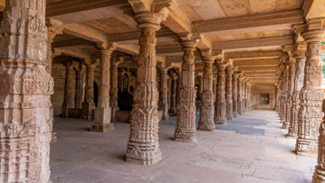
Context: The Madhya Pradesh state administration announced plans on May 25, 2026, to establish a new cultural research hub and a Saraswati Corridor at Dhar.
-
- Geographic Center: Located at the historic town of Dhar in the Malwa region of southwestern Madhya Pradesh.
- Historical Lineage: The complex is traditionally associated with the visionary Paramara Dynasty patron, King Bhoja, who ruled the territory in the 11th century CE.
- Architectural Profile: Represents a complex structural design that showcases shifting architectural influences over several centuries of regional rule.
- Educational Heritage: Historically recognized as a premier center for Sanskrit learning, classical literature, and philosophical studies.
- Corridor Objective: The planned Saraswati Corridor aims to preserve ancient inscriptions, facilitate historical research, and improve heritage tourism.
- Archaeological Oversight: The site is classified as a protected monument under the strict legal mandate of the Archaeological Survey of India (ASI).
- Epigraphic Records: The complex walls house rare stone inscriptions featuring classical Prakrit grammatical texts and literary verses.
- Statutory Framework: All restoration activities must follow the guidelines of the Ancient Monuments and Archaeological Sites and Remains (AMASR) Act, 1958.
- Communal Arrangements: The site operates under a unique, decade-old ASI arrangement that balances multi-community access for weekly worship.
- Wider Cultural Landscape: The project links into a broader regional tourism circuit that connects Dhar with the heritage sites of Mandu and Maheshwar.
(TH)
President’s Visit to the Namgyal Institute of Tibetology:
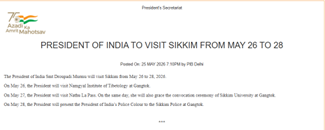
Context: President Droupadi Murmu began an official visit to Sikkim on May 26, 2026, starting with a tour of the historic Namgyal Institute of Tibetology (NIT) in Gangtok.
-
- Institutional Profile: Established in 1958, the NIT is a leading world center for research into Tibetan language, history, art, and Mahayana Buddhism.
- Foundation History: The institute’s foundation stone was laid by the 14th Dalai Lama, and it was officially inaugurated by India’s first Prime Minister, Jawaharlal Nehru.
- Royal Patronage: Named in honor of the late Chogyal (King) of Sikkim, Sir Tashi Namgyal, who granted the land and funds for its construction.
- Rare Manuscripts: The institute houses one of the world’s largest collections of Tibetan literature, rare manuscripts, and xylographs (woodblock prints).
- Mahayana Archives: Serves as a vital repository for rare texts across various schools of Tibetan Buddhism, including Nyingma, Kagyu, Sakya, and Gelug.
- Iconography Collection: Contains a priceless collection of Thangkas (traditional painted or embroidered Buddhist scrolls) and historic bronze statuettes.
- Lepcha Heritage: Beyond Tibetology, the institute maintains a dedicated section for researching the language, indigenous knowledge, and culture of the Lepcha tribe.
- Strategic Border Culture: Located in Sikkim, the institute plays an important role in preserving the unique cultural heritage of India’s eastern Himalayan borderlands.
- Academic Framework: Affiliated with major universities to offer research fellowships, translations, and publications in classical Tibetan and Himalayan studies.
- State Visit Context: The President’s wider three-day visit includes tours of the strategic Nathu La pass and presenting the President’s Police Colour to the Sikkim Police.
(PIB)
Spread the Word