Indian Polity & Governance
Stricter FCRA Regulations Imposed on NGOs:
Context: The Union Home Ministry introduced the FCRA Amendment Bill 2026 and overhauled the accompanying FCRA Rules, drastically expanding state oversight over foreign contributions, NGO asset management, and spending transparency.
-
- Introduction of Purpose-Based Registration: NGOs seeking foreign funding must now state a highly restrictive, predefined list of exact activities and specify the precise geographical areas of operation.
- Creation of a “Designated Authority”: The 2026 framework introduces a government-notified Designated Authority. If an NGO’s FCRA registration is cancelled, surrendered, or expires, all its foreign contributions and assets provisionally vest in this Authority.
- Asset Disinvestment Restrictions: Once assets are permanently seized by the Designated Authority, no key functionary of that defamed NGO can directly or indirectly re-acquire or claim any interest in those assets during their liquidation.
- Religious Restrictions: While faith-based cultural and welfare activities are permitted, the 2026 rules explicitly bar any proselytisation (religious conversion activities) from receiving or utilizing foreign money.
- Foreign National Limitations: Organizations where foreign nationals (excluding OCIs and PIOs) function as board members or key executive decision-makers will ordinarily be denied foreign funding approval.
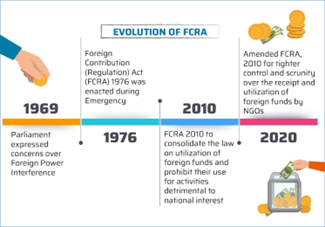
- Origin of FCRA: The Foreign Contribution (Regulation) Act was first enacted in 1976 during the Emergency to prevent foreign interference in India’s domestic political affairs. It was completely reenacted in 2010 and amended in 2020.
- The Parent Ministry: Unlike most civil society laws regulated by the Ministry of Corporate Affairs or Finance, the FCRA is strictly administered by the Ministry of Home Affairs (MHA) due to its direct links to internal security.
- Ultimate Donor Disclosure: Under the updated transparency protocols, NGOs must maintain absolute transparency regarding the “ultimate beneficiary” or final donor, alongside declaring details of their active social media presence.
- The FATF Conflict (International Relations): The government defends these rigorous laws citing the Financial Action Task Force (FATF) Recommendation 8, which targets terrorism financing through non-profits. However, civil society groups argue that the 2026 rules exceed FATF’s recommendation of a “targeted, risk-based approach.”
- The 2020 Precedent (Static Continuity): The 2026 changes build on the 2020 amendment, which banned the sub-granting of foreign funds to other NGOs, capped administrative expenses at 20%, and made a dedicated SBI New Delhi Main Branch account mandatory for all foreign inflows.
(TH)
International Developments
Massive Evacuation Operation in the Persian Gulf:
Context: Due to escalating naval blockades and regional war in West Asia, the International Maritime Organisation (IMO), in coordination with Iran, Oman, and the United States, launched an emergency evacuation protocol to extract 11,000 stranded seafarers and ships from the Persian Gulf.
[ PERSIAN GULF ]
│
▼
[ STRAIT OF HORMUZ ] <── Choke Point
│
▼
[ GULF OF OMAN ]
│
▼
[ ARABIAN SEA ]
-
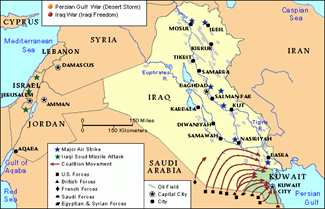
- Geopolitical Choke Point: The evacuation centers around the Strait of Hormuz, a hyper-critical global maritime choke point that connects the Persian Gulf (west) with the Gulf of Oman and the Arabian Sea (east).
- The UNCLOS Debate: The crisis involves a legal clash under the UN Convention on the Law of the Sea (UNCLOS). While international law classifies the Strait as an international waterway enjoying “transit passage,” Iran and Oman seek a joint mechanism to tightly regulate vessel traffic.
- Strategic Transit Volume: The Strait of Hormuz is the world’s most critical oil transit artery. Roughly one-fifth (20%+) of the world’s total petroleum consumption passes through this narrow corridor daily.
- Shoring Up Energy Supply Chains: The US Treasury issued a temporary 60-day sanctions waiver to stabilize the region. India relies heavily on this corridor for its energy security; disruptions have driven New Delhi to rapidly spike LPG/crude imports from the US to record highs.
- IMO: The International Maritime Organisation is a specialized agency of the United Nations established in 1948 (headquartered in London). It is responsible for regulating global shipping safety, security, and preventing marine pollution.
- Bordering Nations of the Persian Gulf (Mapping Drill): The states bordering the Persian Gulf are Oman, UAE, Saudi Arabia, Qatar, Bahrain, Kuwait, Iraq, and Iran.
- Strait of Hormuz Boundaries: The strait itself is bordered specifically by Iran to the north and Oman (the Musandam exclave) and the UAE to the south.
- Maritime Security Law (Static): Under UNCLOS, “Transit Passage” means ships and aircraft of all nations enjoy the uninterrupted right of navigation solely for continuous and expeditious transit through an international strait.
- Impact on Indian Diaspora: India is a major provider of global seafaring merchant crews. This mass evacuation directly impacts thousands of Indian citizens working aboard commercial container ships and oil tankers in the gulf.
- India’s Defensive Response: Historically, during Persian Gulf crises, the Indian Navy deploys Operation Sankalp, maritime security operations involving stealth frigates and destroyers to safely escort Indian-flagged merchant vessels through the Gulf of Oman and Persian Gulf.
(TH)
Geography
Critical Mineral Blocks Auctioned Successfully:
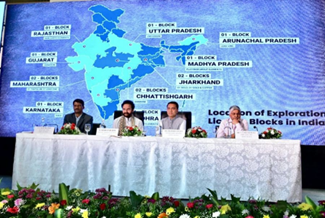
Context: The Ministry of Mines successfully concluded the Seventh Tranche of critical mineral auctions, bringing the total number of successfully auctioned critical and strategic mineral blocks in India to 56, alongside 11 Exploration Licence (EL) blocks.
-
- Geographical Expansion: For the first time, critical mineral blocks were successfully auctioned in Gujarat, Uttarakhand, and Telangana, widening India’s domestic exploration footprint.
- Targeted Minerals: The auctioned blocks contain vital green-transition resources, including Graphite, Rare Earth Elements (REE), Vanadium, Titanium, Glauconite, and Rock Phosphate.
- The Regulatory Base: The auctions are legally mandated under the provisions of the Mines and Minerals (Development and Regulation) Act, 1957 (MMDR Act) and the Mineral (Auction) Rules, 2015.
- Exploration Licence (EL) Regime: The 11 EL blocks represent a new regime introduced via the MMDR Amendment Act, 2023, designed specifically to facilitate private sector investment in the reconnaissance and high-risk exploration of deep-seated minerals.
- Deep-Seated vs. Surficial Minerals: Unlike surficial minerals (like iron ore or bauxite), deep-seated minerals (like gold, silver, copper, and REEs) require advanced, capital-intensive drilling and geophysical tech.
- National Critical Mineral Mission: The initiative directly feeds into the National Critical Mineral Mission, aiming to reduce India’s near-100% import dependency on countries like China for critical technological raw materials.
- End-Use Sectors: These minerals are fundamentally indispensable for manufacturing Lithium-ion batteries (EV mobility), solar PV modules, semiconductors, and advanced defence equipment.
- Centre vs. State Rights: Under the MMDR Act, State Governments receive the mineral royalties and auction revenues for blocks located within their boundaries, even though the Central Government frames the auction rules for major/critical minerals.
- What makes a mineral “Critical”? A mineral is classified as critical when it faces high supply-chain vulnerability/risk and plays an irreplaceable role in a nation’s core economic development and national security.
- Global Alliance Linkage: To secure these assets internationally, India joined the US-led Mineral Security Partnership (MSP) and operates KABIL (Khanij Bidesh India Ltd), a joint venture PSU tasked with acquiring strategic mineral assets overseas (e.g., Lithium blocks in Argentina).
(PIB)
Ecology & Environment and DM
Exclusive Postal Identity for Khavda Renewable Energy Park:
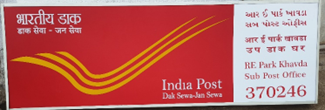
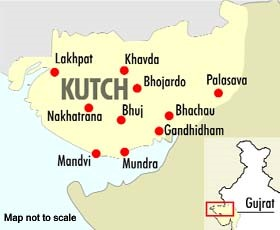
Context: The Gujarat Postal Circle formally created a distinct postal identity by activating a brand-new delivery post office with an exclusive PIN Code 370246, for the Hybrid Renewable Energy Park in Khavda, Great Rann of Kutch.
-
- The Geographical Setting: The Khavda Renewable Energy Park is situated deep within the highly arid, saline mudflats of the Great Rann of Kutch in Gujarat, a strategic and ecologically unique international borderland.
-
- Scale of the Project: Khavda is slated to be the world’s largest renewable energy installation, designed to generate a staggering 30 Gigawatts (GW) of clean solar and wind energy upon completion.
- The Logistical Purpose: Due to the park’s immense size and distance (70 km from Khavda town), the dedicated PIN Code was necessary to establish an independent financial and logistical hub for thousands of developers and workers.
- How PIN Codes Work: The Postal Index Number (PIN) is a 6-digit code introduced in India in 1972.
- 1st digit = Region (Gujarat falls in Region 3 along with Rajasthan).
- 2nd digit = Sub-region.
- 3rd digit = Sorting district.
- Last 3 digits = Specific delivery post office.
- “Phygital” Governance Delivery: The facility acts as a model for physical-meets-digital delivery, providing secure, remote borderland access to checking, savings, and direct benefit transfers (DBT) via the India Post Payments Bank (IPPB).
- Solar-Wind Hybrid Systems (Static): Hybrid plants alternate peak generation periods, solar peaks during the daytime, while wind generation frequently peaks late evening/night. This significantly smoothens out grid instability compared to standalone plants.
- The Kutch Ecosystem (Static Environment): The Great Rann of Kutch is a seasonal salt marsh. It experiences seasonal flooding during monsoons and dries up into a vast salt crust. It acts as a vital breeding ground for the Greater Flamingo (Phoeniconaias roseus).
- Strategic Border Security Infrastructure: The project sits right at the frontier. Blending large industrial energy complexes with civic postal infrastructure helps fortify India’s border area development.
- India’s RE Commitments: The rapid scaling of Khavda is vital for achieving India’s ambitious COP26 Panchamrit target attaining 500 GW of non-fossil fuel energy capacity by 2030.
- Nodal Jurisdiction: The postal setup operates directly under the Ministry of Communications, while the energy site development is overseen by the Ministry of New and Renewable Energy (MNRE).
(PIB)
Government Schemes & Initiatives
MY Bharat Launches ‘Vande Mataram Camps’ Nationwide:
Context: The Department of Youth Affairs, under the Ministry of Youth Affairs and Sports, launched the nationwide ‘Vande Mataram Camps’ via its flagship digital platform, MY Bharat (Mera Yuva Bharat). The inaugural 7-day camp commenced in Kolkata, West Bengal, on June 24, 2026.
-
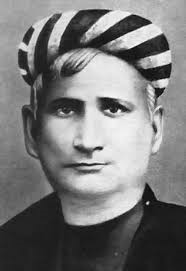
- Historical Significance of Launch Date: The first camp’s commencement on June 24 directly coincides with the birth anniversary of Bankim Chandra Chatterjee, the composer of India’s national song, Vande Mataram.
-
- Core Objective: It is designed as an immersive, 7-day residential framework targeting national integration, leadership development, civic literacy, and appreciation for India’s constitutional values.
- Scale of the Initiative: The scheme comprises 20 distinct camps setup across identified districts nationwide, collectively training nearly 3,000 selected youths.
- Strict Demographics & Inclusivity: Each camp caps participation at 150 youths (aged 15–29 years). Crucially, regulations mandate that at least 50% of participants must be women and individuals from socially disadvantaged sections.
- Cross-Regional Diversity: Every camp hosts youth representing six different States, with a compulsory representation from the Northeastern states to facilitate deep cultural exchange.
- Bankim Chandra Chatterjee was a prominent Bengali novelist. He wrote Vande Mataram in the 1870s, which was later included in his famous 1882 novel Anandamath, set against the backdrop of the Sanyasi Rebellion.
- Political History of Vande Mataram: The song became the primary political anthem of the Indian National Movement during the 1905 Anti-Partition (Swadeshi) Movement. It was first sung on a political platform by Rabindranath Tagore at the 1896 Calcutta session of the Indian National Congress (INC).
- About the “MY Bharat” Platform: Launched on National Youth Day (October 31, 2023), Mera Yuva Bharat operates as an autonomous, tech-driven “phygital” institutional mechanism.
- MY Bharat Mandate: It serves as a single-window aggregator to bridge the gap between youth aspirations and government youth-development programs, shifting the governance model from “development of youth” to “youth-led development”.
- Vision 2047 Alignment: The camps explicitly align with the broader governance objectives of Viksit Bharat @2047, emphasizing civic responsibilities (Kartavya) alongside constitutional rights.
(PIB)
Spread the Word