
Indian Polity & Governance
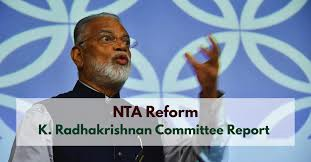
K. Radhakrishnan Committee Recommendations on Examination Reforms:
Context: Following recurrent national administrative concerns regarding NEET-UG transparency, the Ministry of Education highlighted findings from the high-level K. Radhakrishnan Committee.
-
- Vulnerability mapping: The panel explicitly flagged local transit, storage vaults, and physical human handling as the weakest structural links prone to leaks.
- Technology shift: It recommended shifting national testing formats away from traditional paper models to a Computer-Based Testing (CBT) paradigm.
- Hybrid mechanism: For areas where CBT is unviable, it suggested a Computer-Assisted Secure Pen-and-Paper system where encrypted papers are sent digitally and printed locally moments before an exam.
- Institutional restructuring: The report mandated an extensive overhaul of the National Testing Agency (NTA), ordering a transition from contract manpower to regular, permanent professional staff.
- Audit enforcement: The panel recommended deploying Aadhaar-based biometric verification, GPS-tracked transport logistics, and centralized real-time digital command logs.
- Data Security Protocol: The committee advised enforcing advanced digital locks alongside zero-trust protocols across all data transmission endpoints during the test delivery lifecycle.
- Psychological infrastructure: Recommendations extended to standardizing fallback server centers to minimize panic caused by intermittent software or power blackouts.
- Mock interventions: It suggested establishing year-round public mock computer labs in Tier-2 and Tier-3 cities to bridge the digital literacy gap among rural candidates.
- Legal shielding: The panel recommended that any security violations be tried directly under the newly instituted public examination anti-malpractice statutory penal framework.
(TH)
Tenth Schedule and the Subash Desai Judgment on Factional Politics:
Context: A decisive floor test in the Tamil Nadu Assembly invoked intense constitutional scrutiny under the Anti-Defection Law after rebel legislators defied a party whip.
-
- The 10th Schedule Rule: Legislators face absolute disqualification if they vote or abstain contrary to any direction issued by the political party they belong to without prior permission.
- The merger threshold: Under current constitutional provisions, an exemption from defection disqualification is recognized only if at least two-thirds of the legislature party members agree to a formal merger with another entity.
- The Subash Desai legal rule: The Supreme Court’s landmark Subash Desai (2023) Constitution Bench judgment firmly established that only the political party (not the split legislature faction) holds the sole right to appoint the whip and leader.
- Whip seniority: A legislative faction cannot independently issue a valid counter-whip if it lacks recognized authorization from the parent political organization’s executive body.
- Speaker’s adjudicating jurisdiction: The Speaker must determine who the real political party is by examining the party constitution and leadership structures before adjudicating disqualification petitions.
- Split protection repeal: The 91st Constitutional Amendment completely deleted the erstwhile provision that protected a one-third split faction from disqualification penalties.
- Judicial review bounds: While the Speaker’s final order under the Tenth Schedule is subject to judicial review, courts generally do not intervene at any stage prior to the Speaker making a formal decision.
- Voluntary relinquishment: Giving up membership is not limited to formal resignations; a legislator’s conduct outside the house can imply a voluntary relinquishment of party membership.
- Independent status: An independent legislator faces complete disqualification from the house if they formally join any political party after their election.
(TOI)
Sabarimala Review: Scope of Article 25 and 26 Arguments:
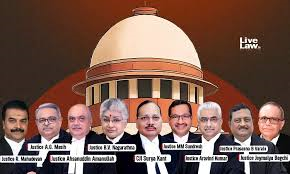
Context: A nine-judge Constitution Bench of the Supreme Court conducted regular hearings on constitutional references derived from the historic Sabarimala review petitions.
-
- The ambit dispute: The Union government argued that constitutional protection under Article 25 is not strictly restricted to “essential religious practices,” but covers broader safe practices unless explicitly checked by text restrictions.
- Explicit article restrictions: Freedom of conscience and the right to freely profess, practice, and propagate religion are explicitly subject to three constitutional restrictions: Public Order, Morality, and Health.
- The Burden of Proof: Legal interpretations presented before the bench affirmed that the absolute burden of proof rests on the challenger to establish that a specific practice directly harms public safety, state morality, or health standards.
- Denominational autonomy: Article 26 guarantees religious denominations the right to manage their own affairs in matters of religion, independent of external legislative modifications.
- Individual vs. Collective Rights: A major point of constitutional friction is determining whether the individual’s right to equality (Article 14) overrides a religious group’s collective right to manage its practices (Article 26).
- The secular ambit: Article 25(2) empowers the State to regulate or restrict financial, economic, political, or other secular activities associated with religious practices.
- Social reform mandate: The Constitution allows the State to provide for social welfare and reform, including throwing open Hindu religious institutions of a public character to all classes of Hindus.
- Judicial determination standard: The “Essential Religious Practices” doctrine was first evolved by the Supreme Court in the Shirur Mutt case (1954) to separate core religious duties from superficial rituals.
- Constitutional morality: The bench is evaluating whether “morality” under Articles 25 and 26 means subjective religious morality or the objective overarching morality embodied within constitutional principles.
(TH)
Special Intensive Revision (SIR) Phase-III of Electoral Rolls:
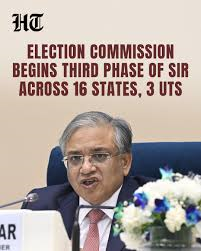
Context: The Election Commission of India (ECI) directed the immediate implementation of Phase-III of the Special Intensive Revision (SIR) of electoral rolls across 16 States and 3 Union Territories.
-
- Census alignment: The timing and deployment of the SIR Phase-III machinery are systematically synchronized with the ongoing house-listing operations of the national Census.
- Geographic exceptions: The ECI explicitly deferred the electoral roll revision operations in Himachal Pradesh, Jammu & Kashmir, and Ladakh owing to prevailing adverse seasonal weather conditions.
- Constitutional mandate: The ECI carries out the preparation and periodic revision of electoral rolls under the direct powers vested by Article 324 of the Constitution and the relevant clauses of the Representation of the People Act, 1950.
- Qualifying dates: Following recent amendments, the ECI utilizes four qualifying dates in a calendar year (January 1, April 1, July 1, and October 1) to register citizens turning 18, instead of a single annual date.
- Field verification model: The revision relies on Booth Level Officers (BLOs) conducting physical door-to-door visits to verify dead, migrated, or duplicate electors listed on the rolls.
- De-duplication Software: The ECI utilizes advanced biometric and demographic de-duplication engines to isolate and remove duplicate entries across different legislative constituencies.
- Aadhaar linking choice: Electors can voluntarily provide their Aadhaar numbers via Form 6B to link with their voter profile, a step designed to strengthen roll authentication without making it mandatory.
- Public scrutiny: Draft electoral rolls are mandatorily published at polling stations for a fixed statutory period to allow citizens to file claims, corrections, or objections.
- Service voter roll: The revision process runs parallel to updating the separate classified roll for service voters (armed forces personnel) who utilize the Electronically Transmitted Postal Ballot System (ETPBS).
(TH)
International Relations
Kimberley Process Intersessional Meeting 2026 hosted in Mumbai:
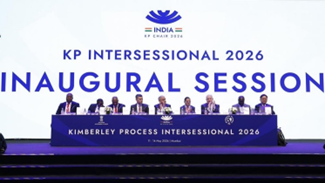
Context: India hosted the key global Kimberley Process (KP) Intersessional Meeting in Mumbai in its official capacity as the international Chair.
-
- Institutional role: India is serving as the Chair of the Kimberley Process for the year 2026.
- Core definition: The Kimberley Process Certification Scheme (KPCS) is a joint government, industry, and civil society initiative established explicitly to prevent the flow of “conflict diamonds” (blood diamonds) into the mainstream market.
- Conflict diamond criteria: The process defines conflict diamonds strictly as rough diamonds used by rebel movements or their allies to finance military conflicts aimed at undermining legitimate governments.
- Scope exclusion: The mandate of the KPCS applies solely to rough diamonds and does not regulate finished jewellery, cut gemstones, or retail diamond products.
- Legal foundation: The KPCS was formally operationalized in 2003 following the historic United Nations General Assembly (UNGA) Resolution 55/56.
- Global footprint: The framework currently encompasses 60 major participants representing 86 distinct countries, with the European Union participating as a single unified bloc.
- Market coverage: The unified tracking mechanism covers roughly 99.8% of the global rough diamond production pipeline.
- Domestic enforcement: In India, the Department of Commerce acts as the nodal agency, and the Gem & Jewellery Export Promotion Council (GJEPC) serves as the designated KPCS Import-Export Authority.
- Peer review system: The scheme mandates rigorous periodic peer-review visits to member states to inspect local internal verification systems, production sites, and transit protocols.
(DD)
Economy
Cabinet Approves ₹37,500 Crore Surface Coal Gasification Incentive Scheme:
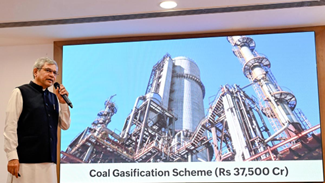
Context: The Union Cabinet formally greenlit a financial package worth ₹37,500 crore to promote surface coal and lignite gasification technologies to reduce import bills.
-
- Core process: Coal gasification converts physical coal or lignite into Synthesis Gas (Syngas), a mixture primarily consisting of carbon monoxide, hydrogen, carbon dioxide, methane, and water vapour.
- Downstream production: Syngas acts as a direct feedstock to produce vital industrial chemicals, including urea, ammonia, methanol, synthetic natural gas (SNG), and dimethyl ether (DME).
- Import substitution target: India aimed to curb its massive ₹2.77 lakh crore vulnerability in chemical imports by transitioning toward domestic syngas reliance.
- Target milestones: The initial mandate targets the successful gasification of 75 million tonnes of coal and lignite, aligning with the broader 100 MT milestone by 2030.
- Incentive caps: Financial aid covers up to 20% of plant and machinery costs, strictly capped at ₹5,000 crore for general projects and ₹9,000 crore for targeted SNG or urea projects.
- Entity ceiling: A single corporate entity or group cannot claim total incentives exceeding ₹12,000 crore across multiple projects.
- Policy security: The scheme provides 30-year long-term coal linkages to assure fuel supply stability for heavy capital investments.
- Disbursement model: Funds are disbursed in four distinct, equal installments directly tied to the verification of specific project benchmarks.
- Environmental impact: While reducing fuel imports, the process generates high domestic CO2 volumes, increasing the domestic industry requirement for Carbon Capture, Utilisation, and Storage (CCUS) infrastructure.
(TH)
Doubling of Gold and Silver Import Duties to 18.4%:
Context: The Union Government issued two emergency notifications raising the effective import duties on precious metals to mitigate rising Current Account Deficit (CAD) pressures.
-
- Tariff restructuring: The total dynamic tariff on gold and silver imports jumped from 9.2% to 18.4%.
- Component breakdown: The structural components of the tariff include a base Basic Customs Duty (BCD) hiked to 10% and an Agriculture Infrastructure and Development Cess (AIDC) elevated to 5%.
- AIDC scope: The AIDC is an import-stage levy introduced in Budget 2021-22, earmarked exclusively for developing rural agri-infrastructure, applied uniquely on both specific crops and select commodities like gold.
- Macroeconomic trigger: Geopolitical instabilities in West Asia prompted severe depreciation pressures on the Indian Rupee and risk to macro stability.
- CAD rationale: Gold remains one of India’s largest non-essential import items; curbing its volume directly preserves foreign exchange reserves under stress.
- Historical arbitrage risks: Expert consensus highlights that raising duties beyond a critical threshold typically expands illicit gold smuggling channels rather than altering cultural domestic demand.
- Trade agreement friction: High tariffs create unique structural friction with existing trade agreements, notably the UAE Comprehensive Economic Partnership Agreement (CEPA), which provides lower duty pathways.
- Inflationary Pass-through: Higher initial land border landing costs inherently boost internal domestic spot rates for jewellery retailers, feeding secondary festive inflation.
- Fiscal cushion: The revenue collection derived from cesses like AIDC goes entirely to the Consolidated Fund of India and is not distributed among states via standard Finance Commission devolution.

(TH)
Science & Technology
India’s Nuclear Energy Roadmap and SMR Focus:
Context: A newly released comprehensive report by The Energy and Resources Institute (TERI) outlined the investment and regulatory framework required to achieve India’s 2047 nuclear target.
-
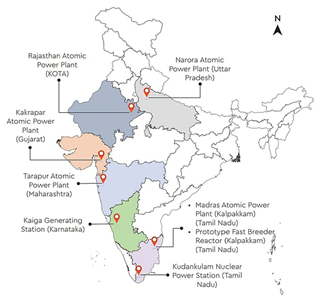
- Target capitalization: To elevate installed nuclear energy capacity from the current 8.8 GW to 100 GW by the year 2047, India requires investments ranging between ₹23 lakh crore to ₹25 lakh crore.
- Small Modular Reactors (SMRs): SMRs are defined internationally as advanced nuclear reactors with a generation capacity capped strictly below 300 MWe per module.
- Domestic models: India is actively advancing research on its proprietary 200 MWe Bharat Small Modular Reactor, alongside a compact 55 MWe module and a 5 MWth high-temperature gas-cooled design.
- Strategic target: The government has established a target to fully operationalize at least 5 indigenous SMR units by 2033.
- Stage two milestone: The Prototype Fast Breeder Reactor (PFBR) at Kalpakkam achieved full criticality, representing the core milestone of the second stage of India’s three-stage nuclear energy programme.
- Fuel transition: While Pressurised Heavy Water Reactors (PHWRs) in stage one relies on natural uranium, the stage two breeder models pave the ultimate structural pathway toward tapping India’s vast thorium reserves.
- Industrial application: SMR units are uniquely suited to provide clean, high-temperature process heat for heavy industries, including steel mills, chemical complexes, and green hydrogen generation plants.
- Grid flexibility: Unlike large-scale gigawatt reactors, modular units can rapidly ramp up or scale down output, making them ideal to balance intermittent solar and wind grids.
- Regulatory sandbox: Establishing dedicated industrial nuclear parks with relaxed safety perimeters is under active inter-ministerial study to simplify private sector participation.

(DTE)
Bodies in news
Central Bureau of Investigation (CBI) Director Tenure Extension:
Context: The Appointments Committee of the Cabinet (ACC) officially approved a further one-year service extension for the serving Director of the Central Bureau of Investigation.
-
- Parent ministry: The CBI functions administratively under the Ministry of Personnel, Public Grievances and Pensions, Government of India.
- Statutory roots: The CBI derives its core investigative and policing powers from the Delhi Special Police Establishment (DSPE) Act, 1946.
- The appointment mechanism: The CBI Director is appointed based on the binding recommendation of a high-powered statutory selection committee.
- Committee composition: The panel is comprised of the Prime Minister (as Chairperson), the Leader of the Opposition in the Lok Sabha (or leader of the single largest opposition party), and the Chief Justice of India (or a Supreme Court Judge nominated by the CJI).
- Tenure flexibilities: While the DSPE Act initially marks a fixed two-year tenure, subsequent amendments permit annual extensions for up to a maximum total period of 5 years to ensure continuity in complex probes.
- Legal nature: The CBI is not a constitutional body, nor is it an independent statutory corporation; it is a specialized police wing operating under central legislative authorization.
- Jurisdiction bounds: The CBI requires the explicit prior consent of a state government (“general consent” or “case-specific consent”) to investigate crimes within that state’s territorial boundaries.
- Santhanam committee linkage: The establishment of the CBI was recommended by the Santhanam Committee on Prevention of Corruption (1962–1964) to combat cross-state economic offenses.
- Exclusion from RTI: The CBI is placed in the Second Schedule of the Right to Information (RTI) Act, 2005, granting it general immunity from disclosure rules, except for allegations of corruption and human rights violations.
(TH+IE)
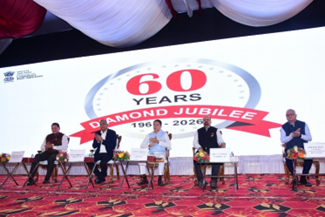
Indian Institute of Packaging Celebrates Diamond Jubilee:
Context: The Indian Institute of Packaging (IIP) officially launched its national Diamond Jubilee year celebrations in Mumbai, marking 60 years of technical service.
-
- Nodal Ministry: The IIP is an autonomous body functioning directly under the administrative jurisdiction of the Ministry of Commerce and Industry, Government of India.
- Core mandate: Established in 1966, the institute is tasked with upgrading national packaging standards, undertaking research on sustainable and biodegradable materials, and testing export packaging to verify global compliance.
- Trade linkage: The modernization of packaging standards directly determines India’s agricultural and MSME export competitiveness by curbing logistics-phase damages and meeting stringent global phytosanitary norms.
- UN-recognized testing: The IIP is authorized by the Directorate General of Shipping to test and certify packaging used for the transport of hazardous and dangerous goods by sea.
- Laboratory footprint: The institute operates centralized Testing and Evaluation laboratories across strategic export hubs including Mumbai, Delhi, Kolkata, Chennai, Hyderabad, and Ahmedabad.
- Eco-packaging focus: Current research priorities focus on creating active and smart packaging solutions, reducing single-use plastic, and introducing bio-based polymers for agricultural preservation.
- Global affiliation: The IIP is a founding member of the Asian Packaging Federation (APF) and actively participates in the World Packaging Organisation (WPO) to harmonize international trade norms.
- Skill development: The institute conducts professional post-graduate diploma programs to build specialized human resource capacity for the domestic and global logistics sectors.
- MSME upgradation: IIP operates dedicated outreach clinics to help small-scale agro-processors upgrade their packaging designs to access high-value international retail shelves.
(PIB)
Spread the Word