Indian Polity & Governance
Maharashtra Freedom of Religion Bill, 2026:
Context
Maharashtra Freedom of Religion Bill, 2026, was passed by both Houses of the Maharashtra Legislature.
-
- Meaning of Religious Conversion
-
-
- Adoption of a new religion involving change in beliefs and practices
- Can be voluntary or involuntary (force, fraud, inducement)
-
-
- Constitutional provisions
-
-
- Article 25: Freedom of conscience; right to profess, practice, propagate religion
- Article 14 & 21: Equality and personal liberty
- Forced conversion not protected under fundamental rights
-
-
- Key issues
-
-
- Conflict between:
- Individual freedom to convert
- State’s duty to prevent coercion and maintain public order
- Conflict between:
-
-
- Factors driving conversion
-
-
- Personal faith/spiritual choice
- Marriage (interfaith)
- Social discrimination or marginalisation
- Economic incentives
- Coercion or fraudulent practices
-
-
- Anti-Conversion Laws in India
-
-
- No central law; state-specific laws exist
- First law: Odisha (1967)
- Present in states like MP, Gujarat, UP, Uttarakhand, Himachal, etc.
-
-
- Key features of laws
-
-
- Prohibit conversion by:
- Force, fraud, inducement
- Conversion for marriage, may be declared void
- Provision for complaints by victim/family
- Stricter punishment for vulnerable groups (women, SC/ST, minors)
- Prohibit conversion by:
-
-
- Important supreme court judgements
-
-
- Rev. Stanislaus vs State of Madhya Pradesh: Right to propagate does not include right to convert forcibly
- Shafin Jahan vs Asokan K.M.: Right to choose religion and partner upheld
- Justice K.S. Puttaswamy vs Union of India: Personal autonomy and privacy protected
-
(TH)
International Relations
WTO Dispute Settlement Crisis:
Context
Ongoing paralysis of WTO Appellate Body remained in focus.
-
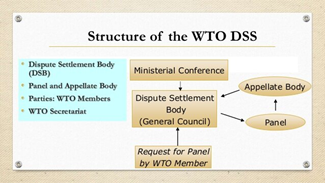
- WTO dispute settlement includes a two-tier system: panel + appellate body.
- The Appellate Body has been non-functional since 2019.
- The U.S. blocked appointments, causing institutional paralysis.
- This weakens rules-based global trade order.
- Developing countries rely on WTO for fair dispute resolution.
- Interim mechanisms like MPIA exist but are limited.
- India advocates restoring the full dispute settlement mechanism.
- Affects disputes related to agriculture subsidies and tariffs.
- WTO headquarters is in Geneva, Switzerland.
- Important for global governance + trade system.
(TH)
Geography, Mapping, Ecology & Environment and DM
Heatwave Alerts by IMD:
Context
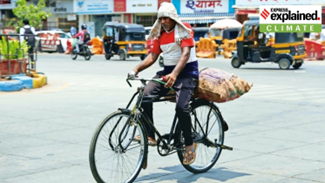
India Meteorological Department (IMD) issued warnings of rising temperatures and early heatwave conditions.
-
- Heatwave criteria:
-
-
- ≥40°C in plains
- ≥37°C in coastal areas
- ≥30°C in hilly regions
-
-
- IMD uses colour-coded alerts (Yellow, Orange, Red) for warnings.
- Heatwaves are linked to climate change and El Niño conditions.
- Impacts include crop stress, water scarcity, and health risks.
- Wet-bulb temperature is crucial for assessing human survivability.
- Urban areas experience intensified heat due to Urban Heat Island effect.
- India has developed Heat Action Plans in multiple cities.
- NDMA classifies heatwaves under disaster management framework.
- Early warnings reduce mortality and economic damage.
- Important for climate change + disaster preparedness.
(IE)
Forest Fire Incidents:
Context
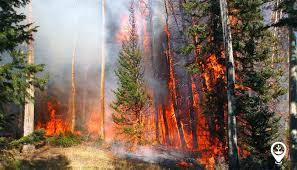
Reports of rising forest fire incidents in parts of India during dry season.
-
- Forest fires are common in summer months (March–May).
- Types: Surface fire, Crown fire, Ground fire.
- Causes include dry vegetation, human negligence, and climate change.
- India uses Forest Fire Alert System (FFAS) based on satellite data.
- Fires lead to loss of biodiversity and carbon emissions.
- Particularly frequent in Himalayan and central Indian forests.
- NDMA provides guidelines for forest fire management.
- Controlled burning may be used for forest management.
- Community participation is crucial for prevention.
- Important for ecosystem conservation + disaster management.
(IE)
Defence
INS Dunagiri:
Context
The Indian Navy received its latest indigenous stealth frigate, INS Dunagiri, under Project 17A, marking a major boost to Aatmanirbharta in warship building.
-
- Nilgiri-Class Stealth Frigate: INS Dunagiri is the fifth ship of Project 17A, a series of seven advanced stealth guided-missile frigates designed for the Indian Navy.
- Aatmanirbhar Defense: Standing as a symbol of self-reliance, the ship boasts 75% indigenous content, involving over 200 MSMEs and supporting thousands of jobs.
- Indigenous Craftsmanship: It was built by Garden Reach Shipbuilders & Engineers (GRSE) in Kolkata and designed by the Navy’s own Warship Design Bureau.
- Historical Successor: It carries the legacy of the erstwhile INS Dunagiri (Leander-class), which served the nation for 33 years from 1977 to 2010.
- Superior Stealth: Compared to the previous P17 (Shivalik) class, the P17A frigates feature improved stealth features, advanced weapons, and high-tech sensors.
- Lethal Firepower: The vessel is armed with a potent mix of BrahMos supersonic cruise missiles, MRSAM (Medium Range Surface-to-Air Missiles), and a 76mm Super Rapid Gun Mount (SRGM).
- Sub-Surface Defense: For anti-submarine warfare, it is equipped with indigenous rocket launchers and torpedo launchers, ensuring 360-degree combat capability.
- Advanced Propulsion: It utilizes a CODOG (Combined Diesel or Gas) system, allowing it to switch between diesel engines for endurance and gas turbines for high-speed combat maneuvers.
- Smart Automation: The ship features an Integrated Platform Management System (IPMS), which uses high-level automation to reduce crew workload and enhance operational efficiency.
- Multi-Mission Versatility: Designed for Blue-Water operations, it can handle air, surface, and sub-surface warfare, ranging from fleet escort duties to Humanitarian Assistance and Disaster Relief (HADR).

(PIB)
Personalities in news
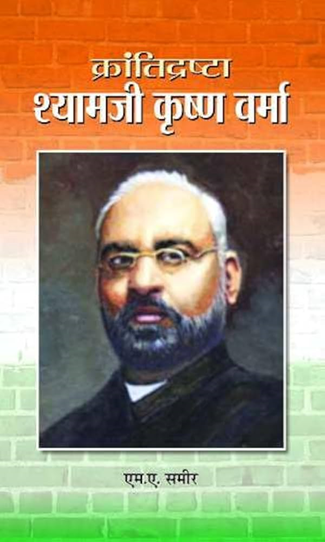
Shyamji Krishna Varma:
Context
The Prime Minister of India has paid homage to Shyamji Krishna Varma on his death anniversary.
-
- Early Brilliance: Born in 1857 in Mandvi, Gujarat, he overcame a humble background to become a scholar of Sanskrit and English, eventually becoming the first Indian M.A. at Oxford University.
- Spiritual & Nationalist Roots: He was deeply influenced by Swami Dayanand Saraswati and served as the first President of the Bombay Arya Samaj, blending Vedic values with nationalist fervour.
- Legal & Administrative Career: Before fully committing to the freedom struggle, he practiced law at the Bombay High Court and served as a high-ranking minister in several princely states.
- The London Hub (India House): In 1905, he established India House in London, which became the premier overseas nerve center for Indian revolutionaries and students.
- Institutionalizing Resistance: He founded the Indian Home Rule Society in London in 1905 to bridge the gap between Indian intellectuals and the struggle for self-governance on British soil.
- The Radical Press: He published and edited The Indian Sociologist, a monthly journal used to critique colonial policies and spread the message of Indian independence across Europe.
- Pioneer of Swaraj: Varma was one of the earliest leaders to demand Purna Swaraj (complete independence) and advocate for non-cooperation long before these ideas became mainstream in India.
- Mentor to Giants: He provided scholarships and guidance to legendary revolutionaries, including V.D. Savarkar, Lala Hardayal, and Madam Bhikhaiji Cama.
- International Activism: Due to British surveillance, he moved his operations to Paris and later Geneva, ensuring the Indian cause maintained a strong diplomatic presence in Europe until his death in 1930.
- Coming Home: Though he died in Switzerland, his ashes were repatriated to India in 2003. His legacy is now enshrined at the Kranti Teerth memorial in Mandvi, inaugurated in 2010.
(PIB)
Spread the Word