
Indian Polity & Governance
Special Court Sentences 44 Somalian Pirates Under Anti-Piracy Law:
Context: A special court in Mumbai sentenced 44 Somalian nationals to life imprisonment in two separate cases following anti-piracy operations executed by the Indian Navy in the Western Indian Ocean.
-
- Legal Framework: Prosecuted under the Maritime Anti-Piracy Act, 2022, enacted to give effect to the United Nations Convention on the Law of the Sea (UNCLOS).
- Jurisdiction: The Act applies to the High Seas, Exclusive Economic Zones (EEZ), and waters beyond the territorial jurisdiction of any country.
- Punishment Provisions: Prescribes life imprisonment for piracy and the death penalty if the act of piracy causes death or an attempt to cause death.
- Extraterritorial Jurisdiction: Authorizes designated courts in India to try offences committed on the high seas by any person, regardless of nationality.
- UNCLOS Provisions: Defines international waters, territorial sea (up to 12 nautical miles), contiguous zone (up to 24 nautical miles), and EEZ (up to 200 nautical miles).
- Role of Indian Navy: Designated as an authorized officer agency alongside the Indian Coast Guard to arrest suspect pirates and seize vessels on the high seas.
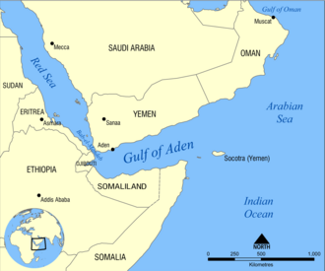
- Gulf of Aden and Arabian Sea are critical Maritime Lines of Communication (SLOCs) connecting the Red Sea to the Indian Ocean.
-
- Operation Sankalp: Indian Navy’s ongoing maritime security operation deployed in the Persian Gulf and Gulf of Oman to ensure safe passage of Indian-flagged vessels.
- Information Fusion Centre – Indian Ocean Region (IFC-IOR): Based in Gurugram, tracks maritime domain awareness and coordinates real-time security information across the region.
(TH)
Bill Introduced in Lok Sabha to Increase Supreme Court Judge Strength:
Context: On the opening day of the Monsoon Session, the Union Law Minister introduced a Bill in the Lok Sabha to replace an Ordinance seeking to raise the sanctioned strength of Supreme Court judges from 34 to 38.
-
- Constitutional Provision: Under Article 124(1) of the Constitution, Parliament has the exclusive power to increase or alter the number of Supreme Court judges by law.
- Original Strength: The original 1950 Constitution provided for a Chief Justice of India (CJI) and 7 other judges (total 8).
- Historical Expansion: Parliament previously raised the strength via amendments in 1956, 1960, 1977, 1986, 2009, and 2019 (when it was raised to 34 including CJI).
- Ordinance Route: Enacted under Article 123 (President’s power to promulgate Ordinances during parliamentary recess), requiring legislative approval within 6 weeks of reassembly.
- Appointment Process: Judges are appointed by the President of India under Article 124(2) after consultation with the Collegium.
- Supreme Court Collegium: Comprises the Chief Justice of India and the four senior-most judges of the Supreme Court.
- Qualifications for SC Judge: Must be a citizen of India and either a High Court judge for 5 years, an advocate of a High Court for 10 years, or a distinguished jurist in the opinion of the President.
- Tenure & Removal: Holds office until age 65; removed only by Presidential order following an address by Parliament supported by a special majority under Article 124(4).
- Jurisdiction: Enjoys Original (Article 131), Writ (Article 32), Appellate (Articles 132–134), Advisory (Article 143), and Review (Article 137) jurisdictions.
(TH/PIB)
International Relations
Entry into Force of India-UK Comprehensive Economic and Trade Agreement (CETA):
Context: implementation of the India-UK Comprehensive Economic and Trade Agreement (CETA) and the accompanying Social Security Agreement
-
- Agreement Nature: Comprehensive Free Trade Agreement (FTA) covering goods, services, rules of origin, digital trade, intellectual property, and government procurement.
- Social Security Agreement (SSA): Avoids double social security contributions for Indian professionals working temporarily in the UK (detachment principle).
- Vision 2035 Roadmap: The bilateral trade and strategic roadmap aiming to double bilateral trade and enhance cooperation across climate, defense, and health tech.
- Tariff Reductions: Provides duty-free or concessional access for Indian exports like textiles, footwear, gems & jewelry, and marine products.
- Rules of Origin (RoO): Criteria used to determine the national source of a product to prevent third-party re-routing (transshipment) from gaining preferential tariff benefits.
- Services Mobility: Facilitates temporary movement of skilled professionals under Mode 4 of the General Agreement on Trade in Services (GATS).
- Trade Balance: India’s key exports include textiles, pharmaceuticals, and software; key imports include machinery, high-tech devices, and spirits.
- Difference from CEPA/CECA: CEPA/CETA generally covers regulatory aspects and investment alongside trade in goods and services, whereas basic FTAs focus primarily on tariff cuts for goods.
- WTO Compliance: Governed under Article XXIV of GATT 1994 and Article V of GATS allowing preferential regional trade arrangements among member states.

(PIB)
Economy
Internationalization of UPI:
Context: India’s flagship digital payment framework, the Unified Payments Interface (UPI), achieving a global milestone with integrating or adopting UPI-based cross-border transaction networks.

-
- Developer Agency: Developed by the National Payments Corporation of India (NPCI), launched in 2016.
- NPCI Ownership: NPCI is an umbrella organization for operating retail payments and settlement systems, created by RBI and the Indian Banks’ Association (IBA) under the Payment and Settlement Systems Act, 2007.
- NPCI International Payments Ltd (NIPL): Wholly-owned subsidiary of NPCI tasked with deploying UPI and RuPay outside India.
- Underlying Technology: Real-time payment system operating on the Immediate Payment Service (IMPS) infrastructure.
- Key Mechanism: Uses Virtual Payment Addresses (VPA) and 2-Factor Authentication, allowing instant inter-bank peer-to-peer (P2P) and person-to-merchant (P2M) transfers 24/7/365.
- Cross-Border Integration: Facilitates real-time remittances and merchant payments without requiring traditional SWIFT messaging rails for retail transactions.
- Cross-Border Linkage Example: Linked with Singapore’s PayNow, UAE’s AANI, and Mauritius’s POP.
- Financial Inclusion Impact: Drives India’s digital public infrastructure (DPI), commonly referred to as the India Stack (Aadhaar, UPI, e-KYC, DigiLocker).
- Regulatory Oversight: Supervised directly by the Reserve Bank of India (RBI).
(IE/PIB)
Geography
Freedom of Navigation Concerns Following Odessa Port Merchant Vessel Attack:
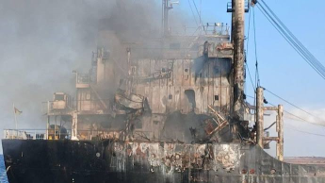
Context: India issued a formal statement affirming the importance of Freedom of Navigation following an missile/drone attack on a commercial merchant vessel in the Black Sea near Odessa Port.
-
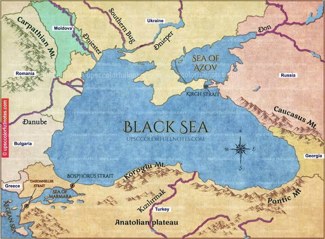
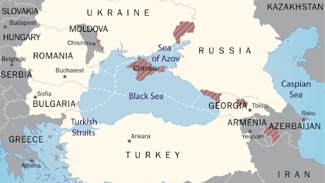
- Geographical Location: Odessa is a major port city in Ukraine located on the northwestern shore of the Black Sea.
- Adjacent Water Bodies: The Black Sea connects to the Sea of Azov via the Kerch Strait and to the Mediterranean Sea via the Bosporus Strait, Sea of Marmara, and Dardanelles Strait.
- Montreux Convention (1936): Regulates maritime traffic through the Turkish Straits (Bosporus and Dardanelles), giving Turkey control over warships entering the Black Sea during wartime.
- Freedom of Navigation (FON): Principle of customary international law codified under UNCLOS (Article 87) guaranteeing high seas freedom for all flag states.
- Innocent Passage (UNCLOS Article 17): Ships of all states enjoy the right of innocent passage through territorial seas, provided it is not prejudicial to the peace, good order, or security of the coastal state.
- Grain Corridor Context: Black Sea ports serve as primary transit points for global agricultural commodities (wheat, sunflower oil, barley) exported to Africa and Asia.
- Rivers Draining into Black Sea: Danube, Dnieper, Dniester, and Don (via Sea of Azov).
-
- Bordering Countries of Black Sea: (Bulgaria, Ukraine, Russia, Georgia, Romania, Turkey).
-
- Marine Environment: The Black Sea is the world’s largest meromictic basin (the deep water layers do not mix with upper layers), resulting in anoxic conditions below ~150 meters.
(TH)
PMO Reviews El Nino Readiness & Agricultural Impact:
Context: High-level review meetings were conducted by the executive branch to assess sectoral preparedness and mitigation measures for climate fluctuations related to El Nino dynamics.
-
- El Nino Phenomenon: Abnormal warming of sea surface temperatures (SST) in the central and eastern equatorial Pacific Ocean.
- Impact on Indian Monsoon: Weakens the Southwest Monsoon winds, frequently causing deficient rainfall or drought conditions across India.
- Southern Oscillation: The atmospheric companion to El Nino, measuring pressure differences between Tahiti (Central Pacific) and Darwin (Australia/Western Pacific).
- ENSO Cycle: El Nino-Southern Oscillation comprises three phases: El Nino (warm phase), La Nina (cool phase), and ENSO-Neutral.
- La Nina Effect: Characterized by unusually cool ocean temperatures in the equatorial Pacific, typically leading to normal or above-normal rainfall during the Southwest Monsoon in India.
- Indian Ocean Dipole (IOD): The difference in sea surface temperature between the western tropical Indian Ocean and the eastern tropical Indian Ocean.
- Positive IOD: Warmer western Indian Ocean relative to the east; can neutralize the adverse drought-inducing impacts of an El Nino event on the Indian monsoon.
- Walker Circulation: An east-west atmospheric circulation cell over the equatorial Pacific; weakens or reverses during an El Nino event.
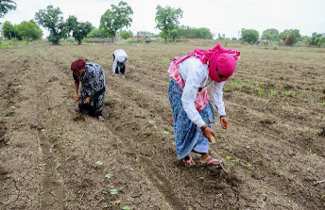
- Agricultural Impact: Threatens Kharif crops (rice, pulses, oilseeds, sugarcane) dependent on rainfed farming systems.
(TH)
Environment & Ecology
Flash Floods Trigger Suspenion of Amarnath Yatra in Jammu & Kashmir:
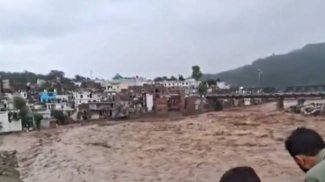
Context: Heavy torrential rainfall triggered sudden flash floods and landslips in the higher reaches of the Himalayas in Jammu & Kashmir, leading to the temporary suspension of the annual Amarnath Yatra.
-
- Location & Altitude: The Holy Amarnath Cave is located at an altitude of ~3,888 meters in the Anantnag district of Jammu & Kashmir.
- Glacial Cave Formation: Famous for the naturally occurring ice stalagmite (Shivling) formed by water dripping from the roof of the cave and freezing.
- Trekking Routes: Accessible via two traditional routes: Pahalgam (longer, traditional route via Sheshnag and Panjtarni) and Baltal (shorter, steeper route along the Sindh river).
- Geomorphology: Located in the Greater Himalayas (Himadri) range, characterized by fragile young fold mountains prone to mass wasting and cloudbursts.
- Cloudburst Definition: Extreme rainfall event where of rain falls per hour over a localized area of approximately .
- Flash Floods: Sudden, rapid flooding of low-lying areas caused by heavy rain associated with a severe thunderstorm, hurricane, or tropical storm, or runoff from ice/snow melt.
- Western Disturbances: Extratropical storms originating in the Mediterranean region that bring sudden winter and post-monsoon precipitation to the northwestern parts of the Indian subcontinent.
- Disaster Management Architecture: Managed under the Disaster Management Act, 2005, with the Prime Minister heading the National Disaster Management Authority (NDMA).
- NDRF Deployment: National Disaster Response Force constituted under Section 44 of the DM Act, 2005 for specialized response during natural/man-made disasters.
(IE)
Science & Technology
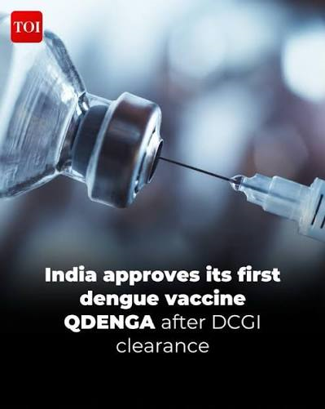
DCGI Approves India’s First Dengue Vaccine (QDENGA / TAK-003):
Context: The Drugs Controller General of India (DCGI) granted market authorization to Takeda’s QDENGA (TAK-003), marking it as the first dengue vaccine approved for use in India.
-
- Vaccine Type: QDENGA is a live-attenuated tetravalent vaccine designed to protect against all four serotypes of the dengue virus (DENV-1, DENV-2, DENV-3, DENV-4).
- Target Group: Approved for individuals aged 4 to 60 years.
- Dosing Schedule: Administered as a two-dose regimen given 3 months apart.
- Causative Agent: Dengue is caused by an RNA virus of the Flaviridae family, transmitted primarily by female Aedes aegypti mosquitoes (and secondarily Aedes albopictus).
- Vector Characteristics: Aedes mosquitoes are daytime biters and also transmit Zika, Chikungunya, and Yellow Fever viruses.
- Serotypes & Antibody-Dependent Enhancement (ADE): Infection by one serotype provides lifelong immunity against that specific serotype, but subsequent infection with a different serotype increases the risk of severe dengue (Dengue Hemorrhagic Fever) due to ADE.
- Regulatory Body (DCGI): Heads the Central Drugs Standard Control Organization (CDSCO) under the Ministry of Health and Family Welfare.
- CDSCO Functions: Grants drug approvals, conducts clinical trials control, and lays down standards for drugs under the Drugs and Cosmetics Act, 1940.
- National Vector Borne Disease Control Programme (NVBDCP): The central nodal agency for prevention and control of vector-borne diseases in India.
(TH)
Organisations in News
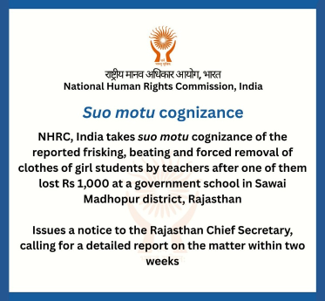
NHRC Takes Suo Motu Cognizance of Human Rights Violation in Rajasthan:
Context: The National Human Rights Commission (NHRC) issued notices to the Rajasthan state government taking suo motu cognizance of reports regarding fundamental rights violations of school students.
-
- Establishment: Setup under the Protection of Human Rights Act (PHRA), 1993 (amended in 2006 and 2019).
- Statutory Nature: NHRC is a non-constitutional, statutory body serving as the watchdog of human rights in the country.
- Composition: Consists of a Chairperson (a retired Chief Justice of India OR a Supreme Court Judge) and 5 members (including at least one woman).
- Ex-Officio Members: Chairpersons of National Commissions for SCs, STs, OBCs, Minorities, Women, Protection of Child Rights, and the Chief Commissioner for Persons with Disabilities.
- Appointment Committee: Appointed by the President on the recommendations of a 6-member committee: Prime Minister (Head), Lok Sabha Speaker, Deputy Chairman of Rajya Sabha, Leaders of Opposition in both Houses, and Union Home Minister.
- Tenure: Holds office for a term of 3 years or until attaining 70 years of age (eligible for reappointment).
- Powers of Civil Court: While investigating, NHRC possesses all the powers of a civil court trying a suit under the Code of Civil Procedure (CPC).
- Suo Motu Power: Can inquire into human rights violations either suo motu (on its own initiative) or on a petition presented to it by a victim.
- Advisory Nature: Recommendations are purely advisory; it lacks the authority to award punishment or financial relief directly to the victim.
- Limitation Period: Cannot investigate any matter if it is brought after the expiry of one year from the date of the alleged violation.
(PIB)
Miscellaneous
Draft Telecommunications Rules, 2026 Open for Stakeholder Consultation:
Context: The Ministry of Information and Broadcasting published the draft Telecommunications (Television, Radio and Associated Services) Rules, 2026, issuing clarifications regarding stakeholder consultations.
-
- Parent Legislation: Drafted under the regulatory powers conferred by the Telecommunications Act, 2023.
- Statutory Repeal: The Telecommunications Act, 2023 replaced archaic laws including the Indian Telegraph Act, 1885 and the Wireless Telegraphy Act, 1933.
- Spectrum Allocation: Establishes administrative allocation of spectrum for specific non-commercial and public interest sectors, while retaining auctions for commercial telecom services.
- Digital Bharat Nidhi: Replaced the Universal Service Obligation Fund (USOF) to fund telecom access in rural and remote areas and foster research and development.
- Regulatory Body (TRAI): Telecom Regulatory Authority of India established under the TRAI Act, 1997 as a statutory body to regulate telecommunication services.
- TDSAT: Telecom Disputes Settlement and Appellate Tribunal hears appeals against TRAI decisions and resolves operator-consumer disputes.
- Right of Way (RoW): Provides statutory protection and uniform rules for laying telecom infrastructure on public and private properties.
- Broadcasting Regulation: Streamlines authorization procedures for direct-to-home (DTH), cable TV, and Over-The-Top (OTT) communication services.
- National Security Provisions: Allows the Central Government to suspend services or intercept messages during public emergencies or in the interest of public safety.

(PIB)
Spread the Word