
Indian Polity & Governance
Women-led Panchayati Raj Highlighted at BRICS Meeting:
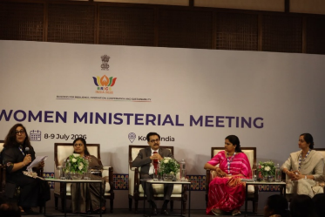
Context: India showcased its women-led Panchayati Raj Institutions (PRIs) as a global model for inclusive grassroots governance during the BRICS Women Ministerial Meeting under India’s 2026 BRICS Chairship.
-
- The Ministry of Panchayati Raj detailed the Sashakt Panchayat Netri Abhiyan, an active capacity-building program targeting elected women representatives.
- Model Villages: In collaboration with the United Nations Population Fund (UNFPA), 744 Gram Panchayats are being developed as models for gender-responsive local governance.
- Data Assessment: The government highlighted the Panchayat Advancement Index (PAI), which utilizes nearly 150 indicators to benchmark structural local development.
- Localizing SDGs: India has successfully structured global Sustainable Development Goals (SDGs) into 9 localized, citizen-centric themes for panchayats.
- Panchayati Raj Institutions were constitutionalized via the 73rd Constitutional Amendment Act, 1992, adding Part IX and the 11th Schedule to the Constitution.
- Article 243D: Mandates a minimum of one-third (33.3%) reservation for women in PRIs, applicable to both membership seats and office-bearer posts at all tiers.
- State Deviations: While the central mandate is 33.3%, more than 20 Indian states have legally raised the women’s reservation quota to 50% in local bodies.
- The 11th Schedule: Covers 29 functional subjects transferred to Panchayats, including health, sanitation, primary education, and women and child development.
- Three-Tier Architecture: Balwant Rai Mehta Committee recommended the 3-tier system: Gram Panchayat (village), Panchayat Samiti (block), and Zilla Parishad (district).
- BRICS Context: BRICS is an informal grouping representing over 40% of the world’s population; India holds the rotating chairship for the year 2026.
(PIB)
International Relations
India-Australia Summit Focuses on Indo-Pacific and West Asian Geopolitics:
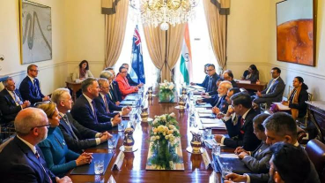
Context: PM Modi and Australian PM Anthony Albanese held the 3rd India-Australia Annual Summit, calling for immediate de-escalation of maritime hostilities in West Asia.
-
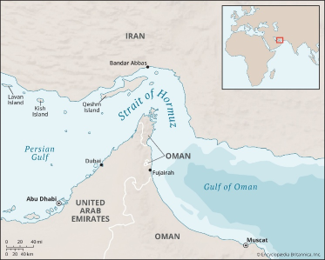
- West Asia Conciliation: Both nations issued a joint statement urging restraint due to renewed US-Iran tensions near the vital Strait of Hormuz.
- The Strait of Hormuz is a critical chokepoint linking the Persian Gulf with the Gulf of Oman and the Arabian Sea.
-
- Indo-Pacific Alignment: The summit reinforced the concept of a “free, open, and rules-based Indo-Pacific” to manage regional maritime hegemony.
- Institutional Tie-up: Both nations are prominent members of the QUAD (Quadrilateral Security Dialogue) alongside the US and Japan.
- Defence Cooperation: Australia participates regularly in the Malabar Naval Exercise hosted alongside India, the US, and Japan.
- 2+2 Dialogue: India and Australia maintain a ‘2+2’ Ministerial Dialogue involving their respective Defence and Foreign Ministers.
- Economic Pact: The bilateral trade is anchored by the Economic Cooperation and Trade Agreement (ECTA), targeting tariff reductions.
- Supply Chain Initiative: Both nations, along with Japan, launched the Supply Chain Resilience Initiative (SCRI) to reduce reliance on single-source suppliers like China.
- Mutual Logistics: Governed by the Mutual Logistics Support Agreement (MLSA), allowing reciprocal access to military bases for logistics.
- Migration Pact: The MATES (Migration and Mobility Partnership Arrangement) provides structured pathways for young professionals between both nations.
(TH)
Geography
Teesta River Management and Feasibility Disputes:
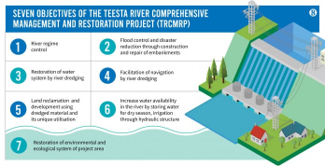
Context: Diplomatic focus shifted to the Teesta River Comprehensive Management and Restoration Project (TRCMRP) following recent bilateral negotiations.
-
- TRCMRP involves building reservoirs, embankments, and dredging projects to manage seasonal floods and dry-season scarcity.
- Both India and China have expressed strategic and financial interests in funding this mega-hydraulic management framework.
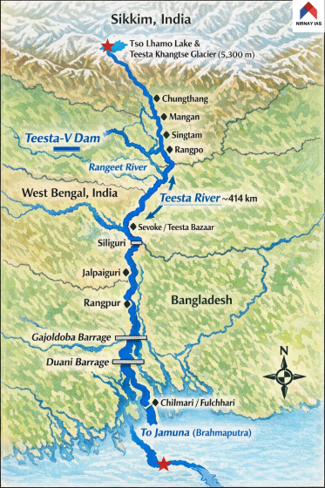
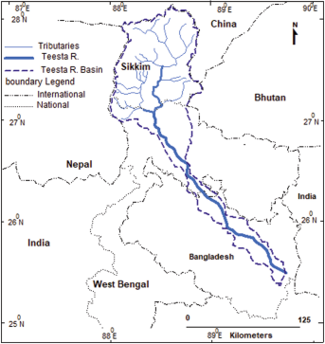
- The Teesta River originates from Tso Lhamo (Cho Lhamo) Lake and Pauhunri glacier in the North Sikkim region of the Eastern Himalayas.
-
- It flows southward through Sikkim and the northern plains of West Bengal before entering Bangladesh.
-
- It acts as a major right-bank tributary of the Brahmaputra River (known as the Jamuna River in Bangladesh).
- Key Tributaries: Major tributaries include the Rangpo River, Rangeet River (famous for its hydel potential), and Kanaka River.
- The Rangeet River joins the Teesta at Melli, right before the river leaves the hills and enters the plains.
- Ecological Hotspot: The Teesta basin spans across parts of the Khangchendzonga National Park (a UNESCO Mixed World Heritage Site).
- The Teesta Water Sharing Agreement has been stalled since 2011 due to objections regarding minimum water flow requirements during lean dry seasons.
- Under Article 262 of the Indian Constitution, Parliament can adjudicate disputes relating to waters of inter-State rivers; under Article 253, it has powers for international treaties.
(TH/IE)
Promotion of Regional Connectivity at the Tripura Business Conclave 2026:
Context: The Union Government inaugurated the Tripura Business Conclave 2026 in Agartala to fast-track investments and cross-border connectivity frameworks.
-
- Strategic Focus: Aims to convert investment intents from the Rising Northeast Investors Summit into physical industrial production assets.
- Policy Alignment: The conclave is tied closely to the Act East Policy, positioning the North East as India’s gateway to ASEAN markets.
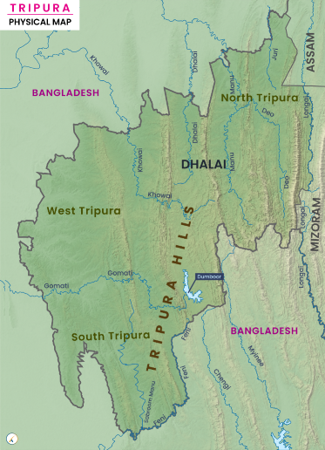
- Geography of Tripura: Tripura is surrounded by Bangladesh on three sides (North, South, and West), making cross-border ties vital.
-
- International Boundary: The border between Tripura and Bangladesh is highly porous and known as the ‘Zero Line’.
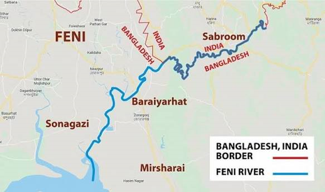
- Key River Project: The Feni River forms the international boundary between Tripura and southeastern Bangladesh.
-
- Maitri Setu: The 1.9 km long Maitri Setu bridge is built over the Feni River, linking Sabroom in Tripura directly with Chittagong Port in Bangladesh.
- Rail Linkage: The Agartala-Akhaura Rail Link serves as a vital cross-border rail connection, reducing travel times between the Northeast and Kolkata via Bangladesh.
- National Highways: NH-8 serves as the primary lifeline highway connecting Tripura with the rest of mainland India via Assam.
- Act East vs Look East: ‘Act East’ (launched in 2014) focuses on action-oriented security, economic, and institutional connectivity, expanding from the economic focus of the 1991 ‘Look East’ policy.
- Special Economic Zone: Tripura’s first-ever SEZ is established at Paschim Jalefa, Sabroom, specializing in agro-based food processing industries.

(PIB)
Environment and Ecology & DM
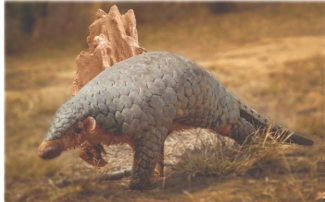
Revalidation of the Himalayan Pangolin as a Distinct Species:
Context: International genetic and morphological research revalidated the Himalayan Pangolin (Manis aurita) as a completely distinct, separate extant species rather than a mere subspecies of the Chinese Pangolin.
-
- Taxonomic Shift: Long conflated with Manis pentadactyla (Chinese Pangolin), genetic sequencing proved structural isolation in the Himalayan range.
- Physical Traits: Known for their distinct keratinized scales covering their body, which act as a defense mechanism against predators.
- Dietary Role: Pangolins are insectivorous, primarily consuming ants and termites; they are often called “myrmecophages” or natural pest controllers.
- Threat Profile: Heavily targeted by illegal wildlife trade networks for their scales (used in traditional medicine) and meat.
- IUCN Status: The Himalayan Pangolin is categorized as Critically Endangered on the IUCN Red List of Threatened Species.
- Indian Wildlife Protection Act: Listed under Schedule I of the Wildlife (Protection) Act, 1972, granting it the highest level of legal protection in India.
- CITES Status: Placed in Appendix I of CITES, which strictly bans commercial international trade of the species or its parts.
- Indian Habitat: Found primarily in the sub-Himalayan tracts, northeastern states, and broadleaf evergreen forest patches.
- Burrowing Behaviour: They are fossorial (burrowing) animals that dig deep burrows for sleeping and nesting, playing a vital role in soil aeration.
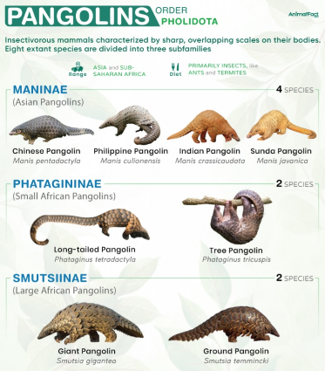
- There are eight species of pangolins globally (4 Asian and 4 African); India is home to two: the Indian Pangolin (Manis crassicaudata) and the Himalayan/Chinese species.
(TH/IE)
Science & Technology
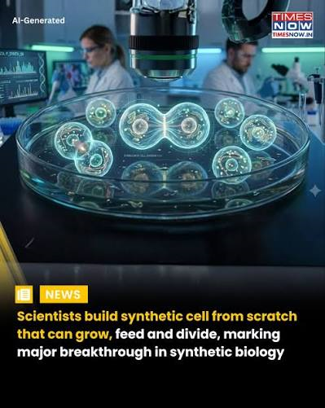
Science Behind Lab-Made Synthetic Cells (SpudCell):
Context: Scientific reports highlighted breakthrough research on SpudCell, a lab-made synthetic cell platform capable of undergoing managed artificial natural selection.
-
- The Breakthrough: Researchers successfully introduced genetic mutations into artificial systems, proving they can reproduce and outcompete original strains.
- Applications: Target areas include programmable targeted drug delivery mechanisms, biomanufacturing, and environmental plastic cleanup.
- Synthetic Biology: An interdisciplinary field combining engineering principles with biology to design and construct new biological parts, devices, and systems.
- Cellular Structure: Unlike natural cells with complex homeostatic structures, synthetic cells usually contain stripped-down, minimal genomes.
- Top-Down Approach: Involves taking a living organism’s genome and stripping away non-essential genes until a minimal genome is left.
- Bottom-Up Approach: Involves assembling non-living chemical components (lipids, proteins, artificial DNA) together from scratch to create an active cell.
- Chassis : In biotechnology, the host cell or basic physical structure that serves as the foundation for genetic manipulation is called a cellular chassis.
- Xenobiology: The subfield of synthetic biology that studies forms of life incorporating exotic genetic codes or non-canonical amino acids.
- Biosecurity Concerns: Synthetic biology raises regulatory issues under the Cartagena Protocol on Biosafety, which deals with Living Modified Organisms (LMOs).
- Indian Regulatory Framework: Governed by the Genetic Engineering Appraisal Committee (GEAC) under the Ministry of Environment, Forest and Climate Change (MoEFCC).
(TH/IE)
History & Culture
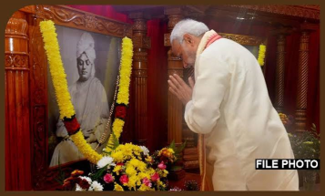
Prime Minister’s Tribute to Swami Vivekananda on Nirvana Day:
Context: The PM paid homage to Swami Vivekananda on his Nirvana Day, highlighting his lifelong contribution to Indian spiritual consciousness and cultural heritage.
-
- Commemoration: The day remembered his teachings on national integration, self-reliance, and youth empowerment.
- Historical Event: Born Narendranath Datta, he was the chief disciple of the 19th-century mystic Ramakrishna Paramahamsa.
- 1893 Parliament of Religions: Gained global fame for his historic speech at the World’s Parliament of Religions held in Chicago in 1893.
- Philosophy: Propounded the philosophy of Neo-Vedanta, interpreting Advaita Vedanta through a practical, social-service-oriented lens.
- Institution Building: Founded the Ramakrishna Mission in 1897 to engage in humanitarian relief, education, and social work.
- Monastic Order: Established the Ramakrishna Math at Belur, West Bengal, to structure a monastic lineage focused on self-realization.
- Literary Works: Authored books like Raja Yoga, Jnana Yoga, Karma Yoga, and Bhakti Yoga, which systematized yogic philosophies.
- Journals: Inspired journals like Prabuddha Bharata (Awakened India) in English and Ubodhan in Bengali to propagate social-cultural thoughts.
- Historical Visit: In 1892, he meditated on a rocky islet off Kanyakumari for three days, now known as the Vivekananda Rock Memorial.
- National Youth Day: His birth anniversary (January 12) is celebrated annually in India as National Youth Day to honor his vision.
(PIB)
Defence
Security Architecture of INS Mahendragiri Highlighted:
Context: Key defensive metrics of INS Mahendragiri (F38), a modern stealth frigate, were reviewed amidst evolving maritime security dimensions.
-
- Project Framework: Built under Project 17A (Nilgiri-class stealth frigates) for the Indian Navy.
- Naming Convention: Named after a mountain peak located in the Eastern Ghats of Orissa.
- Stealth Features: Employs advanced radar-cross section reduction techniques, composite materials, and low-acoustic signatures.
- Primary Weaponry: Equipped with BrahMos supersonic anti-ship and land-attack cruise missiles.
- Air Defence Network: Integrates the Barak-8 Long-Range Surface-to-Air Missile (L-SAM) system for multi-layered air defense.
- Indigenization Focus: Features over 75% indigenous content, aligned with the ‘Atmanirbhar Bharat’ policy frameworks.
- Manufacturer: Constructed by Mazagon Dock Shipbuilders Limited (MDL) in Mumbai.
- Project 17A Predecessor: Successor to the Project 17 Shivalik-class frigates, incorporating better stealth, weapon systems, and platform management.
- Sonar Capabilities : Integrates advanced indigenous hull-mounted sonars and towed array sonar systems for anti-submarine warfare.
- Strategic Importance: Bolsters the Indian Navy’s net security provider capabilities across the critical Indian Ocean Region (IOR).

(TH/PIB)
Miscellaneous
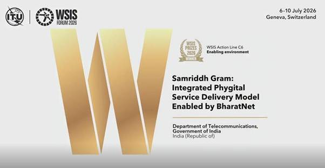
Department of Telecommunications’ ‘Samriddh Gram’ Project Wins WSIS Prize 2026:
Context: The Department of Telecommunications (DoT) was announced as the Global Winner of the prestigious World Summit on the Information Society (WSIS) Prizes 2026 under the ‘Enabling Environment’ category.
-
- Winning Project: The award was given for “Samriddh Gram: Integrated Phygital Service Delivery Model Enabled by BharatNet”.
- Awarding Authority : The WSIS Prizes are organized by the International Telecommunication Union (ITU), a specialized UN agency.
- Project Concept: It combines physical infrastructure with digital access points (“phygital”) to deliver services directly to remote rural settlements.
- Services Offered: Integrates Tele-health ATMs, PM Jan Aushadhi Kendras, smart virtual classrooms, and IoT-based soil testing devices under one rural roof.
- Core Digital Backbone: The project relies entirely on BharatNet, one of the world’s largest rural broadband infrastructure initiatives.
- BharatNet Milestones: Has successfully connected and made online over 17 lakh Gram Panchayats across the country.
- Implementation Agency: BharatNet is implemented by Bharat Broadband Network Limited (BBNL), now merged with BSNL, via a special purpose vehicle model.
- Funding Source: Funded via the Universal Service Obligation Fund (USOF), which receives capital through a non-lapsable levy on telecom operators.
- ITU Profile: Established in 1865 as the International Telegraph Union, making it one of the oldest operational intergovernmental organizations.
- HQ & India Presence: ITU is headquartered in Geneva, Switzerland. India recently established an ITU Area Office and Innovation Centre in New Delhi.
(TH)
TRAI Directives on Spam and Call Regulation Apps:
Context: Legal and corporate friction arose between major caller identification platforms and the Telecom Regulatory Authority of India (TRAI) over newly enforced spam filtering mandates.
-
- The Conflict: Caller ID companies argued that strict regulatory oversight on whitelisting limits independent crowd-sourced spam detection.
- Mandated Number Series: TRAI enforced rules requiring all promotional calls to exclusively use the 140-series and banking/financial transactions to use the 160-series.
- TRAI Status: Established as a statutory body under the Telecom Regulatory Authority of India Act, 1997.
- Core Objective: Set up to regulate telecom services, protect consumer interests, and ensure fair competition in the telecommunications sector.
- Composition: Consists of a Chairperson, and not more than two whole-time members and two part-time members appointed by the Central Government.
- TDSAT: The Telecom Disputes Settlement and Appellate Tribunal (TDSAT) was created by a 2000 amendment to take over the adjudicatory and dispute functions from TRAI.
- Nature of Recommendations (Static): Recommendations made by TRAI regarding the entry of new service providers or technical parameters are not binding on the Central Government.
- Financial Autonomy: Maintained through the Telecom Regulatory Authority of India General Fund, which receives fees and charges levied by the body.
- CNAP Initiative: TRAI recently advocated for the Calling Name Presentation (CNAP) service to display KYC-registered names on mobile screens.
- Parent Ministry: Administratively reports directly to the Ministry of Communications, Government of India.

(TH)
Spread the Word