Indian Polity & Governance
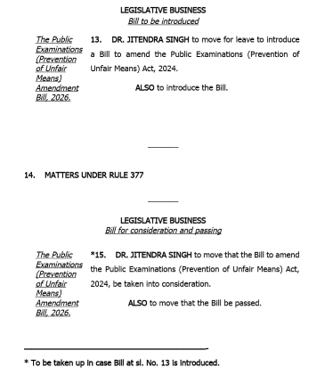
Public Examinations (Prevention of Unfair Means) Bill Introduced in Parliament:
Context: The Central Government introduced new legislative measures during the Monsoon Session of Parliament to impose stricter penalties against organized syndicates involved in competitive exam paper leaks.
-
- Targeted Focus: Aims to deter organized crime syndicates, compromised service-provider agencies, and unauthorized test centers from tampering with public recruitment exams.
- Protection for Candidates: Bona fide candidates appearing for exams are explicitly exempted from criminal liability under anti-leak statutory provisions unless proven to be involved in organized syndicates.
- Non-Bailable Nature: Unauthorized disclosure of question papers, system hacking, and leaking answer keys are categorized as non-bailable, cognizable offences.
- Service Provider Penalties: Private testing agencies found guilty of malpractice face financial penalties up to ₹1 crore alongside a mandatory 4-year ban from conducting exams.
- Investigating Authorities: Investigations are restricted to officers not below the rank of Deputy Superintendent of Police (DSP) or Assistant Commissioner of Police (ACP), or central agencies like the CBI.
- National Technical Advisory Group: Mandates setting up an expert advisory body to recommend fail-safe technological protocols for Computer-Based Tests (CBT).
- Covered Bodies: Applies to public examinations conducted by UPSC, SSC, NTA, RRB, and IBPS.
- Monsoon Session Mechanics: Article 85 empowers the President to summon each House of Parliament; the maximum gap between two sessions cannot exceed 6 months.
- Parliamentary Motions: Adjournment motions and notices under Rule 267/Rule 56 allow the opposition to raise urgent public matters during active sessions.
- Constitutional Right to Assembly: Article 19(1)(b) guarantees the right to assemble peaceably without arms, subject to reasonable restrictions under Article 19(3) regarding public order and sovereignty.
(TH)
Society & Social Justice
Viksit Vibrant Village Programme 2026 & ‘MY Bharat’ Platform:
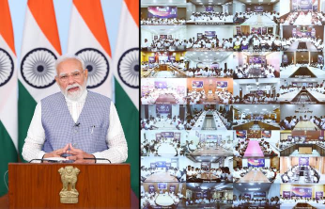
Context: PM Modi interacted with youth participants of the Viksit Vibrant Village Programme 2026, highlighting the expansion of the ‘Mera Yuva Bharat’ (MY Bharat) platform to foster border area growth and youth-led governance.
-
- Vibrant Villages Programme (VVP): Centrally Sponsored Scheme approved in 2023 for comprehensive development of selected border villages along India’s northern border.
- Geographic Coverage: Encompasses border blocks across 5 northern states/UTs: Himachal Pradesh, Uttarakhand, Arunachal Pradesh, Sikkim, and Ladakh.
- Core Mandate: Prevent distress migration from border villages, enhance local economic livelihoods, build infrastructure, and improve national security.
- ‘MY Bharat’ Platform: An autonomous body established by the Ministry of Youth Affairs and Sports in 2023 as a technology-driven platform for youth development and community leadership.
- Scheme Convergence: Merges existing central schemes (e.g., PMGSY, Jal Jeevan Mission, MGNREGA) without overlapping the Border Area Development Programme (BADP).
- Strategic Significance: Populated border settlements serve as a “first line of defense” and assist security agencies in border surveillance.
- Panchayati Raj Role: Village Action Plans are formulated in consultation with Gram Panchayats to ensure bottom-up development planning.
- Focus Areas: Infrastructure, road and digital connectivity, off-grid solar energy, skill building, and eco-tourism promotion.
- Demographic Dividend: Channels youth energy toward civic engagement and rural entrepreneurship through digital volunteer registration.
- Constitutional Alignment: Implements principles embedded in Article 40 (Organization of Village Panchayats) and Article 38 (Promoting the welfare of the people).
(PIB)
International Relations
Nepal Eases Rules on High-Denomination Indian Currency Notes:
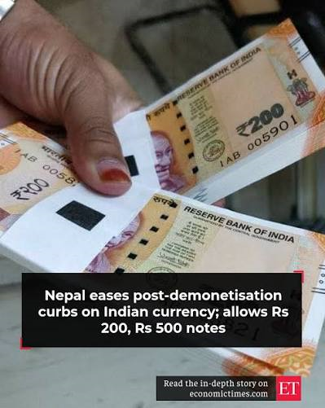
Context: Nepal eased regulations governing the usage and possession of higher denomination Indian Rupee notes (₹200 and ₹500) for cross-border travellers and local traders.
-
- Regulatory Relaxation: Nepal Rastra Bank (Central Bank of Nepal) removed restrictions on carrying ₹200 and ₹500 Indian currency notes to facilitate cross-border commerce and tourism.
- Currency Peg: The Nepalese Rupee (NPR) is officially pegged to the Indian Rupee (INR) at a fixed exchange rate ().
- 1950 Treaty of Peace and Friendship: Forms the foundation of Indo-Nepal relations, allowing free movement of citizens, open borders, and equal socio-economic rights.
- Cross-Border Digital Payments: NPCI International Payments Ltd (NIPL) collaborated with Nepal’s digital network to enable UPI-based QR transactions across the border.
- Trade Dependency: India remains Nepal’s largest trading partner, primary source of Foreign Direct Investment (FDI), and main transit corridor for international trade.
- Major Integrated Check Posts (ICPs): Raxaul-Birgunj, Jogbani-Biratnagar, and Sonauli-Bhairahawa serve as key transit points for trade.
- FEMA Framework: India’s Foreign Exchange Management Act (FEMA), 1999, regulates the movement of domestic and foreign currency outside Indian territorial borders.
- Religious Tourism Circuit: Easing currency rules facilitates pilgrimage travel along the Pashupatinath–Muktinath and Ramayana Circuits.
- Strategic Counterweight: Financial normalization reduces dependence on informal remittance routes (hawala) and promotes formal banking channels across the open border.
- Bilateral Cooperation Platforms: Joint Commission co-chaired by Foreign Ministers, Joint Committee on Water Resources (JCWR), and Joint Working Group on Border Management.
(IE)
Economy
Non-Life Insurers Demand Revision in Motor Third-Party Premiums:
Context: General insurance companies have formally pushed IRDAI and MoRTH for a revision in Motor Third-Party (TP) insurance premium rates, the first in four years citing mounting underwriting losses and altered court compensation metrics.

-
- Statutory Requirement: Motor Third-Party Insurance is mandatory for all motor vehicles operating in public spaces under the Motor Vehicles Act, 1988 (amended in 2019).
- First-Party vs. Third-Party: First-Party (Own Damage) covers damage to the policyholder’s own vehicle; Third-Party (TP) covers legal liability for bodily injury, death, or property damage caused to third parties.
- Regulatory Process: Premium rates for the TP segment are recommended by IRDAI and formally notified by the Ministry of Road Transport and Highways (MoRTH).
- IRDAI Profile: Insurance Regulatory and Development Authority of India is a statutory body established under the IRDAI Act, 1999, headquartered in Hyderabad.
- Underwriting Loss Concept: Occurs when the sum total of claims paid out and operational expenses incurred exceeds the total premium collected in a specific line of business.
- Impact of Judicial Rulings: Recent Supreme Court judgments mandated valuing the economic contribution of unpaid domestic work by homemakers when calculating tribunal compensation payouts, increasing liability costs.
- Loss Ratio Indicator: Measures claims paid against premiums collected; an elevated loss ratio indicates financial stress on general insurers.
- Motor Vehicles Amendment Act, 2019: Introduced increased penalties, compulsory automated vehicle testing, and the Motor Vehicle Accident Fund for hit-and-run victims.
- Insurance Penetration Metrics: Insurance penetration (ratio of premium to GDP) and density (ratio of premium to population) serve as key benchmarks for financial inclusion.
- No-Claim Bonus (NCB): A reward discount given on Own Damage (OD) premiums for every claim-free year during the policy term.
(IE)
Environment & Ecology
International Day for Conservation of Mangrove Ecosystems & State Restoration Initiatives:
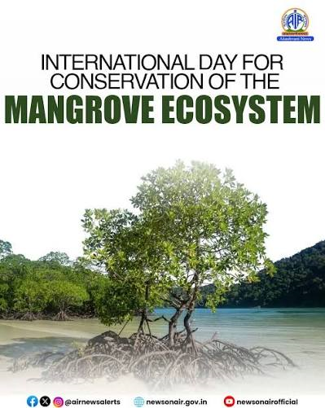
Context: Observed globally on July 26, the International Day for the Conservation of the Mangrove Ecosystem highlighted extensive coastal conservation initiatives, such as Andhra Pradesh’s plan to restore 4,000 additional acres of mangroves under its “Great Green Wall” framework.
-
- UNESCO Declaration: Proclaimed by the UNESCO General Conference in 2015 to raise awareness of mangrove ecosystems as a unique, valuable, and vulnerable natural habitat.
- Ecological Role: Serve as natural coastal barriers against storm surges, tsunamis, and shoreline erosion while nurturing rich marine biodiversity.
- MISHTI Scheme: Government of India launched MISHTI (Mangrove Initiative for Shoreline Habitats & Tangible Incomes) in Union Budget 2023–24 to restore mangrove cover across coastal districts using CAMPA funds and MGNREGA.
- Blue Carbon Storage: Mangroves act as key carbon sinks, sequestering carbon up to 4–5 times faster than terrestrial forests and storing it in submerged soils for centuries.
- India State of Forest Report (ISFR) Data: Total mangrove cover in India stands at 4,992 sq km (~0.15% of the country’s total geographical area). West Bengal has the largest cover, followed by Gujarat and Andaman & Nicobar Islands.
- Botanical Adaptations: Mangroves are halophytes featuring specialized adaptations like pneumatophores (respiratory air roots), stilt roots, salt-excreting leaves, and viviparous seed germination.
- Key Ramsar Sites: Sundarbans (West Bengal), Bhitarkanika (Odisha), Coringa (Andhra Pradesh), and Point Calimere (Tamil Nadu) are major mangrove wetlands designated as Ramsar Sites of International Importance.
- Sundarbans Ecosystem: The largest contiguous mangrove forest on Earth and a UNESCO World Heritage site, housing the Royal Bengal Tiger.
- Threats to Mangroves: Coastal aquaculture expansion, industrial discharge, climate-induced sea-level rise, and altered freshwater flows.
- Global Mangrove Alliance (GMA): An international coalition of NGOs, scientific bodies, and local communities aiming to increase global mangrove cover by 20% by 2030.
(TH/PIB)
Global Assessment on Decline of Migratory Bird Species:
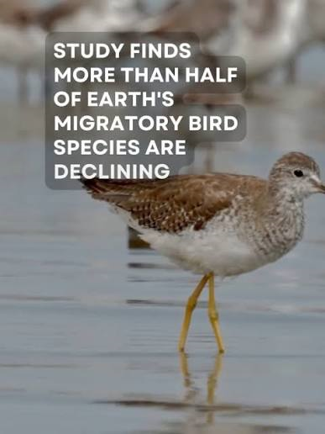
Context: International ecological studies released on July 26 highlighted that nearly half of the world’s migratory bird species are facing population declines due to habitat loss and climate disruptions along global flyways.
-
- CMS (Bonn Convention): The Convention on the Conservation of Migratory Species of Wild Animals is an intergovernmental environmental treaty under UNEP signed in 1979.
- Central Asian Flyway (CAF): Encompasses a large swath of Eurasia between the Arctic and Indian Oceans; India provides major wintering grounds along the CAF.
- Ramsar Wetland Connection: Migratory waterfowl rely on interconnected networks of inland and coastal wetlands for roosting and feeding during seasonal migrations.
- State of India’s Birds Report: Scientific assessment flagging high-conservation-concern species, including wetland and grassland avian fauna.
- Critically Endangered Migratory/Grassland Birds: Great Indian Bustard (CR), Spoon-billed Sandpiper (CR), Lesser Florican (CR), and Sociable Lapwing (CR).
- Amur Falcon Conservation: Nagaland’s Pangti village and Doyang Reservoir are globally recognized as the “Amur Falcon Capital of the World” for hosting millions of roosting falcons during their annual migration from Siberia to Southern Africa.
- Threat Factors: Habitat fragmentation, conversion of wetlands into urban spaces, high-voltage powerline collisions, chemical pesticides, and light pollution.
- Important Bird and Biodiversity Areas (IBAs): Sites identified by BirdLife International using standardized global criteria to safeguard avian populations.
- Wild Life Protection Act (WPA), 1972: Schedules I to IV provide legal protection to wild fauna; the 2022 amendment aligned domestic law with CITES appendices.
- National Action Plan for CAF: India’s strategic plan to conserve migratory birds, restore critical stopover habitats, and strengthen cross-border ecological research.
(TH)
Defense
Commemoration of 27th Kargil Vijay Diwas:
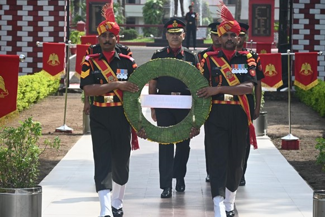
Context: India commemorated the 27th anniversary of Kargil Vijay Diwas on 26 July 2026, honoring the valor and supreme sacrifice of the Indian Armed Forces during the 1999 Kargil War (Operation Vijay).
-
- Historical Significance: Marks the successful culmination of high-altitude military operations in 1999 to evict Pakistani regular troops and infiltrators from icy heights along the Line of Control (LoC) in the Kargil-Drass sector.
- Operation Vijay: Code name for the Indian Army’s land offensive to retake military outposts along the high-altitude ridgelines.
- Operation Safed Sagar: Code name for the Indian Air Force (IAF) joint strike operations, marking the first large-scale deployment of air power at altitudes above 16,000 feet.
- Operation Talwar: Code name for the Indian Navy’s strategic blockade in the Arabian Sea to cut off maritime supply lines and put naval pressure on the enemy.
- Geography of the Region: Kargil and Drass lie in the high-altitude cold desert of Ladakh, near National Highway 1 (NH-1, connecting Srinagar to Leh).
- Highest Military Honors: Param Vir Chakra (PVC)—India’s highest wartime gallantry award—was awarded to Captain Vikram Batra, Lieutenant Manoj Kumar Pandey, Subedar Major Yogendra Singh Yadav, and Subedar Sanjay Kumar.
- Kargil Review Committee (KRC): Chaired by K. Subrahmanyam; its recommendations led to major defense reforms, including the creation of the Chief of Defence Staff (CDS), Defense Intelligence Agency (DIA), and Integrated Defence Staff (IDS).
- Line of Control (LoC): Military control line dividing J&K and Ladakh; demarcated following the 1972 Simla Agreement, unlike the Line of Actual Control (LAC) with China.
- Drass – Extreme Climate: Known as the “Gateway to Ladakh,” Drass is recognized as one of the coldest inhabited places on Earth.
- High-Altitude Warfare Doctrine: The conflict underscored specialized high-altitude mountain warfare tactics, leading to further expansion of the High Altitude Warfare School (HAWS) in Gulmarg.
(PIB)
History, Art & Culture
Establishment of Nashik-Trimbakeshwar Simhastha Kumbh Mela Authority:
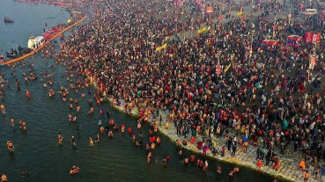
Context: The Maharashtra State Government approved a ₹22,425.39 crore Development Plan and established the dedicated Nashik-Trimbakeshwar Simhastha Kumbh Mela Authority for infrastructure execution and inter-departmental planning.
-
- Four Kumbh Locations: Held on a 12-year rotation cycle across four sacred river sites: Prayagraj (Triveni Sangam), Haridwar (Ganga), Ujjain (Shipra), and Nashik-Trimbakeshwar (Godavari).
- UNESCO Cultural Heritage: Kumbh Mela was inscribed on UNESCO’s Representative List of the Intangible Cultural Heritage of Humanity in 2017.
- Simhastha Kumbh Alignment: Celebrated at Nashik-Trimbakeshwar when Jupiter enters the zodiac sign of Leo (Simha) and the Sun enters Aries or Leo.
- Origin of River Godavari: Originates at Trimbakeshwar near Nashik in the Sahyadri range (Western Ghats) of Maharashtra; referred to as the Dakshin Ganga.
- Godavari Hydrography: India’s second-longest river (~1,465 km) and the largest peninsular river basin. Major tributaries include Pranhita, Indravati, Manjira, Sabari, and Pravara.
- Trimbakeshwar Temple: Houses one of the 12 sacred Jyotirlingas of Lord Shiva, uniquely featuring a three-faced lingam representing Brahma, Vishnu, and Shiva.
- Panchavati Historical Link: Panchavati in Nashik is historically connected to the Ramayana as the site of Lord Rama’s exile (Vanavas).
- Statutory Special Purpose Vehicle: The new Authority coordinates multi-departmental funds, urban logistics, river front cleaning, and environmental safety.
- Central Assistance Framework: The Ministry of Tourism provides Central Financial Assistance (CFA) to state governments for cultural tourism infrastructure under schemes like Swadesh Darshan.
- Crowd Management Protocols: Aligns with National Disaster Management Authority (NDMA) guidelines on managing mass gathering events, river sanitation, and emergency logistics.
(PIB)
Sports
Anahat Singh Wins World Junior Squash Championship:
Context: Indian teenager Anahat Singh scripted history by becoming the first Indian athlete to win the World Junior Squash Championship title.

-
- Historic Milestone: First Indian player to capture a gold medal at the World Junior Squash Championship across male or female categories.
- World Squash Federation (WSF): The global governing body for the sport of squash, established in 1967 and headquartered in Hastings, UK.
- Olympic Inclusion (LA28): Squash has been officially included in the Olympic Sports Programme for the upcoming Los Angeles 2028 Olympic Games (LA28).
- Multi-Sport Event Inclusion: Squash is a medal event in both the Commonwealth Games (CWG) and Asian Games.
- Target Olympic Podium Scheme (TOPS): Flagship scheme initiated by the Ministry of Youth Affairs and Sports to provide top-tier training and assistance to elite Indian athletes.
- Khelo India Scheme: National program designed to revive sports culture at the grassroots level and identify young talent across rural and urban India.
- Sports Authority of India (SAI): Apex national sports body established in 1984 under the Ministry of Youth Affairs and Sports to develop sports infrastructure and manage academies.
- Asian Squash Federation (ASF): Regional governing body responsible for organizing continental squash tournaments in Asia.
- National Sports Awards Framework: Junior world titles qualify athletes for national incentives, cash awards, and consideration for the Arjuna Award.
- Sport Dynamics: High-intensity racket sport played on a four-walled court requiring explosive mobility, cardiovascular endurance, and spatial perception.
(IE)
Miscellaneous
High-Powered Task Force on Examination Reforms :
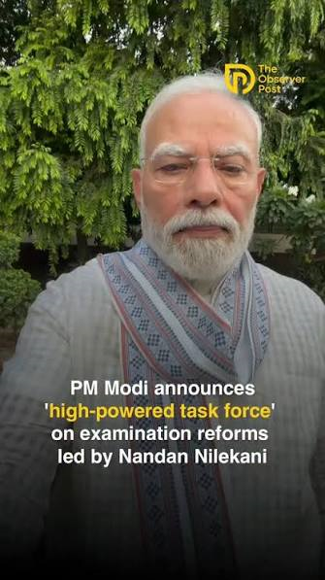
Context: PM announced the constitution of a High-Powered Task Force on examination reforms. Chaired by Nandan Nilekani (former UIDAI Chairman), the panel is mandated to recommend structural and technological solutions to make India’s public examination system leak-proof, transparent, and digitally secure.
-
- Task Force Leadership: Led by Nandan Nilekani, architect of Aadhaar and former Chairman of the Unique Identification Authority of India (UIDAI).
- Objective: Formulate end-to-end digital and administrative protocols to eliminate paper leaks, systemic fraud, and operational vulnerabilities in national competitive exams.
- Public Examinations (Prevention of Unfair Means) Act, 2024: Enacted to prevent malpractices in public examinations conducted by central testing agencies (UPSC, SSC, NTA, RRB, IBPS).
- Legal Nature of Offences: Under the 2024 Act, offences involving paper leaks or system tampering are cognizable, non-bailable, and non-compoundable.
- Punishment & Penalties: Individuals face 3 to 5 years of imprisonment with fines up to ₹10 lakh.
- Organized Rackets: Involvement of organized crime syndicates carries 5 to 10 years of imprisonment and a fine up to ₹1 crore.
- National Testing Agency (NTA): Registered in 2017 as an autonomous, self-sustained premier testing organization under the Societies Registration Act, 1860.
- UIDAI Statutory Status: UIDAI was established as a statutory authority under the Aadhaar (Targeted Delivery of Financial and Other Subsidies, Benefits and Services) Act, 2016, under MeitY.
- Core Technological Reform Focus: Integration of end-to-end encrypted question banks, biometric verification, and AI-driven remote proctoring.
- Constitutional Provision: Article 320 defines the duties of Public Service Commissions (UPSC/SPSCs) to conduct examinations for appointments to the services of the Union and States.
(TH)
Spread the Word