
Indian Polity & Governance
Statehood Concerns Raised Over Jammu and Kashmir’s Administration:
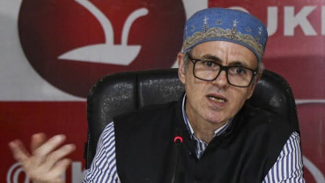
Context: Chief Minister Omar Abdullah raised statements regarding the timelines and constitutional mechanics involved in restoring full Statehood status to Jammu and Kashmir.
-
- Political Stance: The local executive urged the Union government to define clear parameters for transitioning the region away from its current Union Territory status.
- The Reorganization Act: The modern state structure was altered via the Jammu and Kashmir Reorganization Act, 2019, which bifurcated the state into two Union Territories: J&K and Ladakh.
- Article 3 Structure: The Parliament of India holds exclusive power under Article 3 of the Constitution to form new states, alter areas, boundaries, or names of existing states.
- Parliamentary Discretion: Under Article 3, a bill can only be introduced on the prior recommendation of the President, who refers it to the affected state legislature for views within a specified period.
- Non-Binding Nature: The views expressed by the state legislature under Article 3 are completely non-binding on both the President and the Parliament.
- J&K Legislative Framework: Unlike Ladakh, the Union Territory of Jammu and Kashmir was designed with a Legislative Assembly under the provisions of Article 239A (similar to Puducherry).
- Delimitation Commission: The legislative constituencies were redrawn by a dedicated Delimitation Commission headed by a retired Supreme Court judge.
- Federal Balance: The absolute conversion of a full-fledged State into a Union Territory was an unprecedented event in Indian constitutional history, raising major federalism debates.
- Supreme Court Judgment: In its landmark 2023 ruling, the Supreme Court upheld the abrogation of Article 370 but explicitly directed the Union to restore Statehood at the earliest appropriate timeline.
- Public Order and Police: Under the current Union Territory framework, critical subjects like ‘Public Order’ and ‘Police’ remain under the direct control of the Central Government via the Lieutenant Governor.
(TH)
Social Justice / Governance
Growth Trends in Private Higher Education Institutions under AISHE Data:
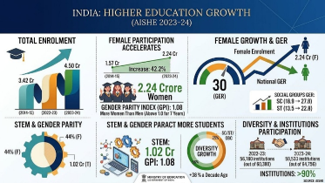
Context: The latest All India Survey on Higher Education (AISHE) data indicated that private universities have grown significantly by nearly 149%, with Gujarat recording the highest absolute state-wise increase.
-
- Institutional Distribution: While private universities grew exponentially, government institutions continue to enroll the clear majority of the total student volume.
- Survey Authority: The AISHE is an annual statistical exercise conducted by the Ministry of Education since 2011.
- Survey Scope: It covers all higher education institutions in India, categorizing data across parameters like Gross Enrolment Ratio (GER), gender parity, and teacher-pupil ratios.
- Gross Enrolment Ratio (GER): Measures the percentage of the population in the eligible age group (18–23 years) enrolled in higher education.
- National Education Policy (NEP) 2020 Target: Aims to raise the higher education GER to 50% by 2035.
- Regulatory Architecture: Higher education institutions are regulated centrally by the University Grants Commission (UGC), a statutory body established under the UGC Act, 1956.
- Constitutional Provision: Education is a subject listed under the Concurrent List (List III) of the Seventh Schedule, allowing both Center and States to legislate on it.
- Funding Streams: The rise of private entities highlights a shift toward self-financed institutional models, raising debates around equity and access for marginalized sections.
- Gender Parity Index (GPI): A key AISHE metric calculated as the ratio of female GER to male GER; a value of 1 or higher indicates gender equality in access.
- National Institutional Ranking Framework (NIRF): Run parallel by the Ministry, it ranks higher education institutions using specialized structural methodology parameters.

(IE)
International Relations
India-New Zealand Elevate Ties to a Strategic Partnership:
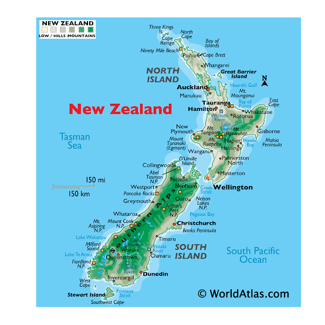
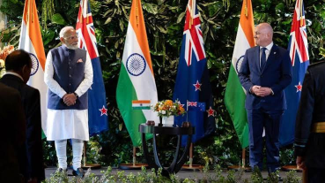
Context: PM Modi concluded his official visit to New Zealand, during which both nations formally elevated their bilateral relationship to a Strategic Partnership.
-
- Diplomatic Context: New Zealand was the final destination of a three-nation diplomatic tour that also included Indonesia and Australia.
- Focus Areas: The upgraded framework emphasizes deeper cooperation across digital trade, space technology, agricultural science, and people-to-people ties.
- Indo-Pacific Synergy: Both nations share convergence on maintaining a rule-based order, freedom of navigation, and maritime safety in the Indo-Pacific zone.
- Bilateral Institutional Mechanisms: Anchored by Foreign Office Consultations (FOC) and the Joint Trade Committee (JTC) established under the 1986 Trade Agreement.
- Commonwealth Connection: Both nations are members of the Commonwealth of Nations, an association of 56 member states, mostly former territories of the British Empire.
- FTAs and CEPAs: While a full Free Trade Agreement (FTA) remains under negotiation, current trade is driven by specific sector-wise economic relaxations.
- Space Collaboration: New Zealand’s advanced commercial space launch frameworks present potential partnership paths for ISRO and NewSpace India Limited (NSIL).
- International Fora: Both nations cooperate within ASEAN-led architectures, including the ASEAN Regional Forum (ARF) and the East Asia Summit (EAS).
- The Dairy Dilemma: A major historical sticking point in bilateral trade talks has been New Zealand’s demand for dairy tariff reductions and India’s resistance to protect its domestic farming ecosystem.
- Indian Diaspora: The growing presence of over 250,000 people of Indian origin acts as a vital cultural and economic bridge, highlighted during the ‘Kia Ora Modi’
(TH)
Economy
BharatNet’s Last-Mile Active Connectivity Challenges:
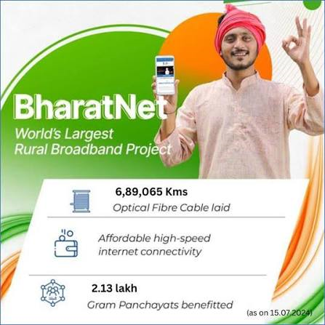
Context: National infrastructure data revealed implementation challenges for the flagship rural broadband program, with only about 45% of BharatNet’s last-mile internet connections actively operational.
-
- Current Metric: Despite an extensive nationwide physical infrastructure rollout, maintaining last-mile operational uptime remains a critical hurdle.
- Core Objective: BharatNet (originally launched as the National Optical Fibre Network – NOFN in 2011) seeks to provide high-speed broadband connectivity to all Gram Panchayats in India.
- Funding Mechanism: Financed entirely by the Universal Service Obligation Fund (USOF).
- USOF Genesis: Established under the Indian Telegraph (Amendment) Act, 2003, it is a non-lapsable fund that receives capital through a Universal Service Levy on telecom operators.
- Nodal Ministry: The project falls under the administrative jurisdiction of the Ministry of Communications.
- Implementation Model: Executed through a special purpose vehicle (SPV) Bharat Broadband Network Limited (BBNL) which was later structurally integrated with BSNL to streamline execution.
- Technology Used: Uses Optical Fibre Cables (OFC) utilizing Gigabit Passive Optical Network (GPON) technology to deliver high bandwidth over long distances.
- Digital India Pillar: Serves as the critical backbone for Pillar 1 of the Digital India Initiative: “Broadband Highways”.
- Governance Utility: Uptime is essential for delivering e-governance, tele-medicine, online education, and digital banking services via Common Service Centres (CSCs) in rural areas.
- Public-Private Partnership: Recent phases utilize a concessionaire-based PPP model to combine government funding with private-sector operational maintenance efficiency.
(IE)
Geography
Geopolitical Volatility in West Asia and the Strait of Hormuz:
Context: Diplomatic friction increased in West Asia following statements regarding the stability of the US-Iran temporary maritime ceasefire and security surrounding the Strait of Hormuz.
-
- Strategic Security: Major economies called for explicit structural assertions guaranteeing that commercial maritime traffic inside the Persian Gulf corridors remains unimpeded.
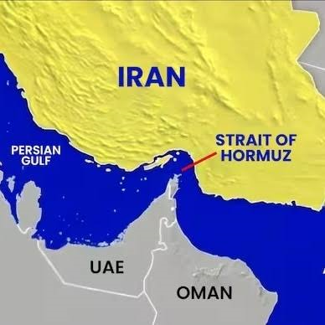
- Geographical Boundaries: The Strait of Hormuz is a narrow, globally vital waterway connecting the Persian Gulf (west) with the Gulf of Oman and the Arabian Sea (east).
- Littoral States: The northern coast of the strait is controlled by Iran, while the southern coast is controlled by Oman (via the Musandam exclave) and the UAE.
- Global Energy Chokepoint: It is considered the world’s most critical oil transit chokepoint; roughly one-fifth () of global petroleum consumption passes through it daily.
- Traffic Separation Scheme: Due to shallow waters, ships navigating the strait use a designated Traffic Separation Scheme (TSS), which routes inbound and outbound lanes through Iranian and Oman territorial waters.
- Transit Passage: Governed under Part III of UNCLOS, ships enjoy the right of “transit passage” through international straits solely for continuous and expeditious transit.
- Strategic Vulnerability: Any disruption or closure of the strait immediately triggers a spike in global Brent crude prices, affecting India’s trade deficit.
- Operation Sankalp: The Indian Navy routinely deploys stealth frigates to the Gulf region under Operation Sankalp to safeguard Indian-flagged merchant vessels.
- Chahbahar Port Context: India’s investment in Iran’s Chahbahar Port bypasses Pakistan to access Afghanistan, situated just outside the Strait of Hormuz in the Gulf of Oman.
- BAPCO and Global Flows: Energy corridors link major oil-producing nations (Saudi Arabia, Iraq, UAE, Kuwait, Iran) to massive consumer markets across East and South Asia.
(TH)
Organizations
UN Special Rapporteurs Issue Communication on Electoral Roll Processes:
Context: Three United Nations Special Rapporteurs sent a formal communication expressing concern regarding the Special Intensive Revision (SIR) procedures and potential voter exclusions.
-
- The Allegation: The independent experts highlighted risks of large-scale name removals from electoral rolls, urging safeguards for minority group representations.
- UN Special Rapporteurs: These are independent human rights experts appointed by the UN Human Rights Council (UNHRC) with mandates to report on specific country situations or thematic areas.
- Legal Status: They serve in their personal capacities, are not UN staff, do not receive salaries from the UN, and their findings/opinions are not legally binding on sovereign states.
- Constitutional Authority: In India, the preparation and revision of electoral rolls are the exclusive constitutional mandate of the Election Commission of India (ECI) under Article 324.
- Article 325: Clarifies that no person shall be ineligible for inclusion in an electoral roll on grounds only of religion, race, caste, sex, or any of them.
- Article 326: Grants the right to vote based on Universal Adult Suffrage to every citizen who is not less than 18 years of age and not otherwise disqualified.
- Statutory Acts: The process of voter registration and electoral roll maintenance is governed by the Representation of the People Act, 1950.
- De-deduplication Mechanisms: ECI utilizes advanced IT systems like the EroNet platform and AI-driven demographic de-deduplication software to remove duplicate entries.
- Claims and Objections: Statutory law requires mandatory public notice periods allowing citizens to file Form 6 (inclusion) or Form 7 (deletion/objection) before names are finalized.
- Judicial Remedies: Arbitrary voter deletion can be challenged by citizens in high courts via Writ Petitions under Article 226 of the Constitution.
(TH)
Environment & Ecology
Technical Performance Evaluation of E20 Fuel Blending:
Context: The Union Minister for Road Transport and Highways addressed technological outcomes, clarifying that while E20 fuel may cause minor mileage adjustments, it does not damage internal combustion engines.
-
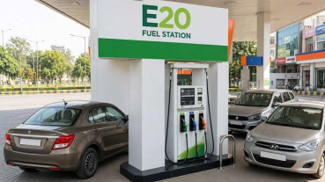
- E20 refers to a fuel blend consisting of 20% ethanol and 80% petrol by volume.
- National Target: The Government of India advanced its target to achieve a uniform 20% ethanol blending in petrol across the country to the year 2025-26.
- Chemical Structure: Ethanol () is an anhydrous ethyl alcohol compound produced primarily via the fermentation of biomass sugar.
- Primary Feedstocks: Sourced from sugarcane juice, molasses, damaged food grains (broken rice, wheat), and maize.
- National Policy on Biofuels: Modified in 2022, the policy allows a wider range of indigenous feedstocks for ethanol production to ensure food security balance.
- Categorization of Biofuels:
- 1G (First Generation): Derived from edible food crops (sugar, starch).
- 2G (Second Generation): Derived from non-edible agricultural residues (rice straw, wheat straw, bagasse).
- 3G (Third Generation): Derived from algal biomass.
- Environmental Benefit: Ethanol contains oxygen, which promotes more complete fuel combustion, reducing tailpipe emissions of Carbon Monoxide (CO) and Hydrocarbons.
- Economic Advantage: Reduces India’s heavy fiscal dependence on crude oil imports, conserving foreign exchange reserves.
- Calorific Value Challenge: Ethanol has a lower energy density (calorific value) than pure petrol, which explains the marginal drop in vehicular fuel mileage.
- Corrosive Nature: Ethanol is hydroscopic (absorbs water) and can be corrosive to standard rubber and plastic parts, necessitating “Ethanol-Compliant” material engineering in vehicles.
(IE)
Science & Tech
Progress on India-Australia Civil Nuclear Cooperation & Uranium Deal:
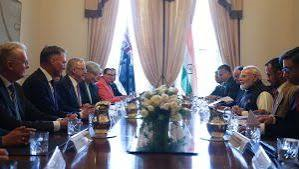
Context: Diplomatic channels confirmed progress on finalizing structural frameworks for a uranium export agreement between India and Australia.
-
- Bilateral Alignment: The agreement enhances strategic energy security cooperation, tapping into Australia’s massive global uranium reserves.
- Historical Shift: Australia reversed its long-standing policy of not selling uranium to non-signatories of the Nuclear Non-Proliferation Treaty (NPT) specifically for India.
- The NPT Factor: India is one of the few nations (alongside Pakistan, Israel, North Korea, and South Sudan) that has not signed the NPT, viewing it as discriminatory.
- Civil Nuclear Agreement: The deal builds on the bilateral Civil Nuclear Cooperation Agreement signed and brought into force during the mid-2010s.
- IAEA Safeguards: Imported Australian uranium can only be utilized in Indian civilian nuclear facilities placed under International Atomic Energy Agency (IAEA)
- Separation Plan: Under the historic 2006 Indo-US Civil Nuclear Deal, India separated its nuclear facilities into civilian (safeguarded) and military (non-safeguarded) categories.
- Nuclear Fuel Type: The primary commercial fuel for standard nuclear power reactors is Uranium-235 (), which undergoes nuclear fission.
- Enrichment Levels: Low-Enriched Uranium (LEU) contains a to concentration of (used for power), whereas Highly Enriched Uranium (HEU) exceeds (weapons grade).
- Nuclear Supply Group (NSG): India operates under a special, unconditional NSG waiver granted in 2008, allowing it to engage in global nuclear commerce despite non-NPT status.
- Three-Stage Program: Formulated by Homi J. Bhabha, India’s domestic nuclear program aims to eventually utilize its vast thorium reserves via breeder reactors.
(IE)
Defence
Commissioning of INS Mahendragiri into the Indian Navy:
Context: Raksha Mantri Rajnath Singh addressed naval personnel in Visakhapatnam on the eve of the formal commissioning of INS Mahendragiri, marking a major addition to the country’s indigenous security capabilities.
-
- INS Mahendragiri is officially commissioned as the sixth stealth frigate built under the Indian Navy’s prestigious Project 17A program.
- Trade & Security Nexus: The defense ministry highlighted that 90% of India’s trade by volume and its energy security pass through critical maritime routes.
- Project 17A Alpha: Project 17A frigates are a follow-on class of the Shivalik-class (Project 17) stealth frigates, incorporating advanced radar-cross section reduction.
- Manufacturing Entities: These warships are built indigenously by two public sector yards: Mazagon Dock Shipbuilders Limited (MDL) and Garden Reach Shipbuilders & Engineers (GRSE).
- Indigenous Content: Over 75% of the material and equipment used in Project 17A ships are sourced from domestic firms and MSMEs.
- Exclusive Economic Zone (EEZ): Under the UN Convention on the Law of the Sea (UNCLOS), an EEZ extends up to 200 nautical miles from the coastal baseline.
- EEZ Sovereign Rights: Within its EEZ, a coastal nation has sole rights for exploring, exploiting, conserving, and managing natural resources (both living and non-living).
- Strategic Chokepoints: Security architectures prioritize the protection of regional chokepoints such as the Malacca Strait, Bab-el-Mandeb, and the Strait of Hormuz.
- Net Security Provider: The deployment aligns with India’s SAGAR (Security and Growth for All in the Region) doctrine to maintain stability in the Indian Ocean Region (IOR).
- Weapon Integration: The vessel accommodates state-of-the-art armaments including the BrahMos supersonic cruise missile and Barak-8 surface-to-air missile systems.
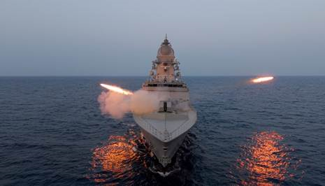
(PIB)
Miscellaneous
NCERT Modifies Class 8 History Textbooks under Curriculum Update:
Context: The National Council of Educational Research and Training (NCERT) executed a formal curriculum revision in its Class 8 history textbooks, modifying specific modern history timelines.
-
- Textbook Updates: The content rationalization modified structural details concerning political roles during the Partition of British India.
- NCERT Institutional Status: Established in 1961, NCERT is an autonomous organization registered under the Societies Registration Act, 1860.
- Core Objective: It assists and advises the Central and State Governments on academic policies and programs aimed at improving school education quality.
- National Curriculum Framework (NCF): NCERT is the nodal drafting agency for the NCF, which guides textbook development and pedagogy across the country.
- NEP 2020 Realignment: The ongoing textbook modifications are structurally aligned with the core directives of the National Education Policy 2020.
- Societies Registration Act, 1860: A pre-independence central legislation allowing the registration of literary, scientific, and charitable societies for legal tracking.
- Textbook Rationalization Criteria: Dictated by principles of reducing curriculum load, eliminating overlaps across classes, and maintaining contemporary relevance.
- Constitutional Values Mandate: Textbooks must align structurally with the core values of secularism, democracy, and equality enshrined in the Preamble of the Constitution.
- Central Board of Secondary Education (CBSE) Relation: CBSE is an affiliated board of examinations that prescribes the textbooks developed and published by NCERT.
- Executive Structure: Governed by a General Body headed by the Union Minister of Education, along with representatives from all State Governments.
(IE)
Spread the Word