
Indian Polity & Governance
The 16th Central Council of Health and Family Welfare (CCHFW) Conference:
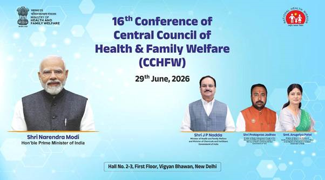
Context: The Union Ministry of Health and Family Welfare convened the 16th Conference of the Central Council of Health and Family Welfare (CCHFW) at Vigyan Bhawan, New Delhi, to reinforce Centre-State cooperative federalism across public health mandates, nutrition infrastructure, and pharmaceutical reforms.
-
- Article 263: The Central Council of Health and Family Welfare is a high-level apex advisory body formally established under Article 263 of the Constitution of India, which empowers the President to set up Inter-State Councils for public policy coordination.
- Composition Mandate: The Council is structurally chaired by the Union Minister of Health and Family Welfare and features Health Ministers from all States and Union Territories, designated Members of Parliament, and top public health experts.
- Core Institutional Function: As an advisory organ, the CCHFW reviews the implementation of health frameworks across the country, recommends systemic legislative measures, and acts as the apex forum for fostering cooperative federalism within the health sector.
- Three Strategic Pillars of the 16th Meet: The 2026 conference centered its policy focus on three distinct thematic tracks: “National Health Mission (NHM) – SDG Goals & Priorities”, “Food & Drug Reforms”, and “Allied Health Services”.
- The Launch of Anaemia Mukt Bharat (AMB) Guidelines: A major deliverable of the meet was the formal release of the updated Anaemia Mukt Bharat Abhiyaan Operational Guidelines, aimed at curbing iron deficiency via the 6x6x6 strategy (6 target age groups, 6 interventions, 6 institutional mechanisms).
- Proposals for Medical Devices Rules Amendments: The Ministry formally introduced key policy proposals to amend the Medical Devices Rules, 2017, intending to decouple and streamline manufacturing licensing processes to scale up domestic medical ecosystem output.
- Focus on Allied Health Services: The council laid out a roadmap to standardize and regulate educational frameworks for paramedics and allied health professionals under the National Commission for Allied and Healthcare Professions (NCAHP) Act.
- Seventh Schedule Distribution: Under the Seventh Schedule of the Indian Constitution, “Public health and sanitation; hospitals and dispensaries” falls strictly under List II (State List), while “Drugs and poisons” and “Medical professions” fall under List III (Concurrent List), making CCHFW coordination legally critical.
- SDG Target Alignment: The policy interventions discussed are directly mapped to fulfil Sustainable Development Goal 3 (Good Health and Well-being), specifically focusing on reducing maternal and under-5 child mortality rates by 2030.
- The Rural Internal Audit Portal Link: Parallel to the meet, the rollout of an AI-enabled Internal Audit Portal was highlighted to track financial outlays, prevent resource leakages, and ensure transparency in funds trickling down to primary health sub-centers at the Gram Panchayat level.
(PIB)
International Developments
The Fragile US-Iran ‘Stand Down’ and the Battle for the Strait of Hormuz:
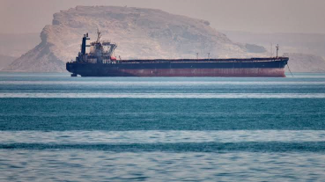
Context: Following intense, consecutive military exchanges that disrupted global energy supply corridors, the United States and Iran have agreed to a fragile “stand down” and are scheduled to meet in Doha, Qatar, to de-escalate their confrontation over the Strait of Hormuz.
-
- The Tactical De-escalation Accord: Brokered via third-party diplomatic backchannels, the US and Iran agreed to halt active kinetic strikes against each other’s military facilities ahead of crucial diplomatic talks in Doha on June 30.
- The recent exchanges saw Iran’s Revolutionary Guard striking US military infrastructure at the Ali al-Salem
- airbase in Kuwait and the US Navy’s Fifth Fleet base at Port Salman in Bahrain, following US operations in the Gulf region.
- Strait of Hormuz: The escalation peaked over multinational maritime maneuvers led by the US Navy to expand alternative shipping routes near Oman without Iranian oversight, a move Iran warned violated its territorial maritime sovereignty.
- The Linkage to Southern Lebanon: Iran has formally tied any long-term stability pact to the complete withdrawal of Israeli defense forces from southern Lebanon, highlighting the interconnected nature of the broader West Asian conflict landscape.
- The Strait of Hormuz is globally recognized as the most critical maritime energy chokepoint. It connects the Persian Gulf with the Gulf of Oman and the Arabian Sea, handling roughly one-fifth of the world’s total petroleum consumption.
- Impact on Indian Maritime Shipping: In response to the high-intensity conflict, India’s Directorate General of Shipping (DGS) had initially placed strict restrictions on the movement of Indian vessels and seafarers in the Gulf zone, which were conditionally withdrawn following the stand-down.
- Economic Shockwave to Indian Markets: The West Asia crisis caused Brent crude prices to fluctuate, adding short-term pressure on the Indian Rupee and bond yields, which stabilized only after news of the Doha diplomatic breakthrough emerged.
- The Syrian Factor: Amid the structural shifts in West Asian leadership following recent political overhauls in Damascus, the US has pitched Syria’s new administration under Ahmad al-Sharaa as a potential regional counterweight, though Syria has prioritized internal stability over external conflict.
- The Strait of Hormuz is bounded by Iran to the north and the Oman exclave (Musandam Peninsula) and the United Arab Emirates to the south. Its narrowest shipping lane width is only about 3 kilometers wide in either direction.
- International Maritime Law (UNCLOS): The legal disputes over naval escort operations in the Strait center around the interpretation of “Transit Passage” under the United Nations Convention on the Law of the Sea, which governs international straits even if they overlap with the territorial waters of coastal states.
(TH+IE)
International Relations
PM Conferred with the ‘Guardian of the Blue Horizon’ Honour by Seychelles:
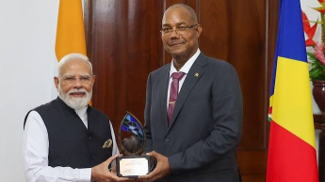
Context: During his high-level state visit to attend the Golden Jubilee of Seychelles’ Independence, PM Modi held extensive delegation-level talks with Seychelles President Patrick Herminie and was officially conferred with ‘Guardian of the Blue Horizon’, the highest civilian honour of Seychelles.
-
- Strategic Bilateral Accord: During the delegation-level dialogue, India and Seychelles formally reviewed their comprehensive maritime security architecture, concluding fresh agreements to counter piracy, illegal maritime traffic, and drug smuggling.
- ‘Guardian of the Blue Horizon’ Honour: This constitutes the highest civilian award of Seychelles, awarded to the Indian Prime Minister in recognition of India’s long-standing security, infrastructure, and humanitarian contributions to the island nation’s sovereignty.
- Handover of Indigenous Naval Vessel: Marking a major step in defense diplomacy, India formally handed over a newly manufactured ‘Made in India’ fast patrol maritime vessel to the Seychelles Coast Guard to reinforce its Exclusive Economic Zone (EEZ) surveillance capabilities.
- Envisioning ‘Ocean of Opportunity’: The bilateral template emphasized a mutual vision to transform the Western Indian Ocean into an “Ocean of Opportunity,” ensuring that maritime strategic partnerships are based on mutual trust rather than asymmetry of geographical size.
- SAGAR Policy Anchoring: India’s diplomatic outreach to Seychelles is deeply rooted in its core maritime doctrine SAGAR (Security and Growth for All in the Region), launched in 2015 to build a collective, transparent security framework for the Indian Ocean.
- Indian Army’s Contingent Participation: An active marching contingent of the Indian Army participated directly in the 50th National Day Celebrations of Seychelles on June 29, cementing active military-to-military interoperability.
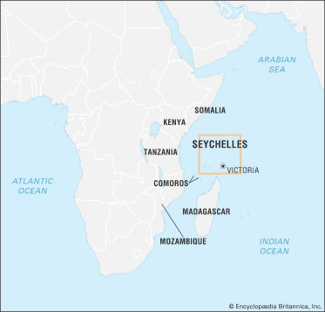
- Assumption Island: Strategically located in the Mozambique Channel, Seychelles holds the Assumption Island, where India and Seychelles have a long-standing framework agreement to build joint naval infrastructure to monitor critical sea lines of communication (SLOCs).
- Countering IOR Maritime Asymmetry: The bilateral matrix is vital for India to maintain net security provider status in the Western Indian Ocean, countering expanding foreign infrastructure footprints and ensuring free, open navigation channels.
- Small Island Developing States (SIDS) Advocacy: Cultivating deep ties with Seychelles allows India to champion the climate vulnerability causes of SIDS platforms at multilateral forums like the UNFCCC, reinforcing South-South cooperation.
- Seychelles is a strategic archipelagic island nation situated in the Indian Ocean, lying northeast of Madagascar and roughly 1,500 kilometers east of mainland Southeast Africa, composed of 115 islands with its capital at Victoria.
(PIB+IE)
Economy
The Repeal of MGNREGA and Dawn of VB-G RAM G Act:
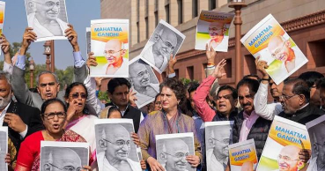
Context: Major political flashpoints have erupted across several states as the Central government officially prepares to replace the two-decade-old Mahatma Gandhi National Rural Employment Guarantee Act (MGNREGA) with the new Viksit Bharat – Guarantee for Rozgar and Ajeevika Mission (Gramin) Act, 2025 (VB-G RAM G Act), scheduled to roll out nationwide on July 1, 2026. States have flagged massive financial and structural stresses stemming from the framework.
-
- Employment Guarantee Expansion: The VB-G RAM G Act fundamentally increases the legal, statutory wage employment guarantee for rural households from the 100 days mandated under MGNREGA to 125 days annually.
- The Seasonal Agricultural Pause: Unlike MGNREGA, which was active year-round based on worker demand, the new Act introduces a mandatory 60-day structural pause during peak agricultural sowing and harvesting seasons to ensure that farm labour is not diverted from core food cultivation.
- Major Fiscal Shift in Funding: Under the old MGNREGA framework, the Central government bore 100% of the unskilled manual wage bills. Under the VB-G RAM G Act, the financial architecture changes drastically: States must now bear 40% of the funding burden, while the Centre accounts for 60%.
- Shift from Demand-Driven to Top-Down Normative Allocation: MGNREGA was a legal demand-driven scheme where funds were dynamically released based on labour budgets submitted by states. VB-G RAM G shifts this to a top-down normative allocation model determined centrally by the Union government.
- Horizontal Devolution Linkage: Central allocations to states under the new scheme will be determined using objective allocation parameters aligned with the 16th Finance Commission formula.
- Performance-Based Performance Pools: The Centre will structurally withhold a designated portion of the normative fund pool, distributing it conditionally to states based on strict performance parameters like timely Direct Benefit Transfer (DBT) wage payments and audited works.
- Statutory Worker Safeguards: If the state machinery fails to provide employment within the stipulated legal window, workers are entitled to an unemployment allowance (at least one-fourth of the wage rate for the first 30 days and one-half thereafter). Delays in payments past 15 days incur a statutory interest compensation rate of 05% per day.
- Gender-Specific Worksite Mandates: The Act gives strict statutory backing to worksite creches, specifically making it legally compulsory to appoint a dedicated childcare worker at any site where five or more children below the age of five are present.
- Transition Mechanism: Existing e-KYC verified MGNREGA job cards will remain legally valid for seeking work during the transitional phase until state governments systematically issue the new Gramin Rozgar Guarantee Cards.
- Article 23 & 41: This rights-based employment framework draws its static constitutional backing from the Directive Principles of State Policy (Article 41 – Right to Work) and protects against exploitation under Article 23 (Prohibition of forced labour).
(TH)
Geography
Massive Landslide Blocks Siji River in Arunachal Pradesh:
Context: A massive landslide triggered by continuous extreme rain events completely blocked the channel flow of the Siji River in the Lower Siang district of Arunachal Pradesh, creating an artificial landslide dam and prompting high-priority downstream flash flood warnings for parts of Assam.
-
- The Hydro-Geomorphic Incident: The landslide dumped tonnes of rock debris and topsoil directly into the active channel of the Siji River, creating a precarious landslide-dammed lake that risks sudden structural failure.
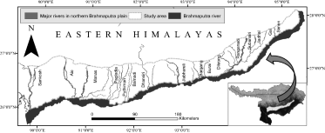
- Downstream Trans-Border Impact: The Siji River flows down the hills of Arunachal Pradesh and crosses into mainland Assam, where it transforms and is known as the Gai River. High-risk warnings were issued for Likabali town and multiple downstream Assamese plains.
-
- The Siji/Gai river system forms part of the northern bank drainage network of the Brahmaputra River basin, which is highly prone to structural modifications due to high-energy Himalayan geomorphology.
- Geological Vulnerability of Outer Himalayas: The Lower Siang region is part of the young fold mountains of the Outer Himalayas, structurally characterized by the Main Boundary Thrust (MBT) zone, making the rock strata fragile and prone to mass wasting.
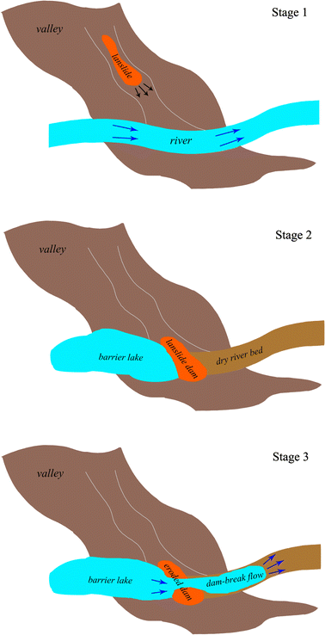
- Mechanism of Landslide Dam Burst Floods (LDBFs): When a landslide blocks a river, water accumulates rapidly behind the debris wall. A sudden breach causes a Landslide Dam Burst Flood, sending a massive, high-velocity wall of water and sediment downstream.
-
- Role of Monsoonal Antecedent Rainfall: The Indian Meteorological Department (IMD) highlighted that heavy antecedent monsoonal rainfall had saturated the soil pore-water pressure, reducing the shear strength of the slope material and triggering the failure.
- Ecological Impact on Riverine Habitat: Sudden channel blockages and subsequent hyper-concentrated sediment flows alter the turbidity of the river, disrupting spawning grounds of indigenous cold-water fish species unique to the Eastern Himalayas.
- Mass Wasting Classification: In geomorphology, a landslide of this scale is classified under Mass Wasting (specifically a rock avalanche or debris slide), driven primarily by gravitational forces acting on over-steepened slopes.
- Mitigation Infrastructure Challenges: The steep terrain and continuous rain complicate the deployment of heavy engineering machinery, requiring satellite-based telemetry and drone reconnaissance to map the structural dimensions of the blockage.
- Disaster Management Protocol (NDMA): Under the National Disaster Management Act, 2005, managing sudden river-blocking landslide hazards requires coordinated interstate tracking between the State Disaster Management Authorities (SDMAs) of Arunachal Pradesh and Assam.

(TH)
Science & Technology
The Nationwide National Pulse Polio Immunisation Campaign:
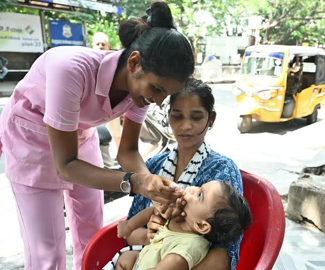
Context: State health departments across India successfully executed an intensive, large-scale National Pulse Polio Immunisation Campaign, setting up over 43,000 transit and mobile vaccination booths to target millions of children in the 0-5 age bracket, including marginalized migrant settlements and remote tribal pockets.
-
- The Target Cohort Demographics: The nationwide pulse polio drive systematically targets all children aged 0 to 5 years, irrespective of whether they have previously received the routine oral polio vaccine doses.
- The Multi-Day Operational Footprint: The intensive campaign follows a structural multi-day approach: fixed-booth vaccination drives are conducted on day one, followed by comprehensive door-to-door tracking and transit-booth tracking at airports and railway stations on subsequent days.
- Special Focus on Vulnerable Pockets: The 2026 drive featured specialized deployment of Mobile Medical Units (MMUs) to inoculate children belonging to migratory brick-kiln labourers, construction workers, and isolated hill tribes.
- Biological Profile of Polio: Poliomyelitis (polio) is a highly infectious viral disease caused by the Poliovirus, which belongs to the Enterovirus It predominantly invades the nervous system and can cause total irreversible paralysis within hours.
- Transmission Pathway Mechanism: The virus is transmitted primarily via the faecal-oral route or, less frequently, by a common vehicle (such as contaminated water or food) and multiplies rapidly within the human intestine.
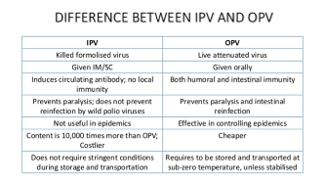
- The Two Vaccine Variants (OPV vs. IPV): The campaign utilizes the Oral Polio Vaccine (OPV), which contains live-attenuated virus strains and induces local intestinal immunity. This works in tandem with the injected Inactivated Polio Vaccine (IPV) used in routine immunization schedules.
-
- The Herd Immunity Principle: Pulse Polio works on the epidemiological principle of synchronous administration, where vaccinating a vast percentage of children simultaneously floods the environment with the vaccine virus, breaking the transmission cycle of the wild poliovirus.
- India’s Polio-Free Status Milestones: India recorded its last official case of wild poliovirus on January 13, 2011, in Howrah, West Bengal. Subsequently, India was formally certified as “Polio-Free” by the World Health Organization (WHO) on March 27, 2014, as part of the South-East Asia Region.
- The Risk of VDPV: Despite elimination of the wild virus, rigorous surveillance is mandatory to prevent the emergence of Vaccine-Derived Polioviruses (VDPV), which can mutate in under-immunized populations where the attenuated vaccine strain undergoes long-term replication.
- Global Eradication Alignment: The domestic Pulse Polio program operates under the strategic umbrella of the Global Polio Eradication Initiative (GPEI), a public-private partnership aimed at permanently eradicating all strains of poliovirus globally.
(IE)
The Menace of ‘Fake Patents’ in India’s Higher Education System:
Context: A sweeping investigative study featured in The Hindu’s Science & FAQ section has exposed how the proliferation of “fake or utility-compromised patents” is systemic across Indian academia, driven by flawed institutional scoring parameters that value numerical output over genuine innovation.
-
- The Root of the Proliferation: The growth of low-quality, non-viable patents is tied directly to the institutional assessment metrics used by the National Institutional Ranking Framework (NIRF) and the National Assessment and Accreditation Council (NAAC), which assign significant marks simply for the number of patents filed or granted.
- The Academic “Paper-to-Patent” Factory: Researchers are increasingly repurposing minor, incremental lab variations or low-tier journal papers into complex patent applications, paying non-practicing agencies to expedite filings solely to secure promotions or institutional research grants.
- The Concept of “Utility Patents” Misuse: Unlike stringent invention patents, many entities exploit international systems that grant “utility innovations” or design patents with minimal substantive examination, later presenting these low-tier assets as major scientific breakthroughs domestic-side.
- Drain on Public Exchequer Funding: Millions of rupees in public research grants from bodies like the UGC, DST, and CSIR are being funnelled into covering patent filing and annual maintenance fees for technologies that possess zero commercial viability or industrial scalability.
- The Missing Technology Transfer Link: India’s domestic Technology Transfer Rate (the percentage of academic patents actually licensed or commercialized by industries) remains below 5%, contrasting sharply with global hubs like the US or South Korea.
- Static Architecture of Indian Patent Law: Patents in India are governed by the Patents Act, 1970, as amended fundamentally by the Patents (Amendment) Act, 2005, which introduced product patents across all fields of technology, including food, medicine, and chemicals.
- The Criteria for Patentability: Under Section 2(1)(j) of the Indian Patents Act, an invention must meet three strict static criteria to be patentable: it must be new (novelty), involve an inventive step (non-obviousness), and be capable of industrial application.
- The Safe Safeguard – Section 3: The Indian Patents Act contains a unique static safeguard Section 3 (specifically Section 3d) which explicitly prohibits the patenting of “mere discoveries of new forms of a known substance” to prevent the practice of corporate evergreening.
- The Regulatory Authority: The apex regulatory authority governing these processes is the Controller General of Patents, Designs and Trade Marks (CGPDTM), which operates under the Department for Promotion of Industry and Internal Trade (DPIIT), Ministry of Commerce and Industry.
- International Treaty Alignments: India’s patent framework is strictly aligned with the World Trade Organization’s (WTO) agreement on TRIPS (Trade-Related Aspects of Intellectual Property Rights) and is a signatory to the Patent Cooperation Treaty (PCT) for streamlined international filings.

(TH)
Defence
Operationalisation of the Indian Army’s First Integrated Battle Groups (IBGs):
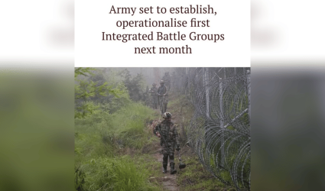
Context: The Indian Army has officially advanced its operational schedule to roll out and establish its first-ever Integrated Battle Groups (IBGs) by next month (July 1), carving these lean, agile fighting formations out of the Panagarh-based XVII Corps (Mountain Strike Corps) to counter trans-border security dynamics.
-
- Integrated Battle Groups (IBGs) are self-contained, highly agile, brigade-sized, combined-arms fighting units designed to execute swift, rapid offensive and defensive maneuvers.
- Structural Composition: Unlike traditional massive structural setups, each IBG comprises over 5,000 active troops and brings together 12 to 13 distinct units, including infantry battalions, artillery regiments, armoured elements, combat engineers, and field medical hospitals under a single cohesive layout.
- Command Architecture: Each of the newly structured IBGs will be commanded by an officer of the rank of Major General, with a Brigadier-rank officer serving as the Chief Operations Officer (COO).
- The XVII Mountain Strike Corps Restructuring: The first four IBGs are being structurally carved out from the two major existing divisions of the XVII Mountain Strike Corps (MSC), the 23 Division and the 59 Division which are strategically oriented toward the northern and eastern borders facing China.
- The Dedicated Fire Support Group: Alongside the four core IBGs, a specialized Fire Support Group comprising heavy artillery platforms will be established to operate directly under the Corps Headquarters. This group is slated to host the newly operationalised Divyastra batteries of the Army.
- Strategic Advantage over Divisions: A conventional Army Corps holds up to one lakh (100,000) troops and takes substantial logistical time to mobilize. IBGs eliminate this time lag due to their lean, localized, and self-sufficient design, drastically cutting down the “teeth-to-tail ratio.”
- Genesis of the Concept: The creation of IBGs was originally conceptualized as a vital pillar of the holistic military restructuring studies initiated by India’s first Chief of Defence Staff (CDS), General Bipin Rawat.
- Test-Bedding Background: The core operational parameters of the IBG layout were formally test-bedded by the IX Corps along the western borders with Pakistan in 2019, and later thoroughly validated in mountain terrains during Exercise HimVijay.
- Capacity vs. Threat: The modern transition to IBGs marks an institutional shift in Indian military planning from a “threat-based model” (reacting to enemy assets) to a “capacity-based model” (developing cross-terrain, multi-role versatile combat readiness).
- This structural transition mirrors global military shifts, notably the Chinese People’s Liberation Army’s (PLA) shift away from bulky divisions into agile Combined Arms Brigades (CABs) equipped for swift, modern electronic and asymmetric warfare.
(IE)
Internal Security
FATF Issues Global Warning on Terror Financing via Social Media and Cryptocurrencies:
Context: The Financial Action Task Force (FATF) has released a comprehensive global enforcement brief warning that international terrorist outfits are increasingly exploiting advanced digital tools, localized QR codes, and rotating cryptocurrency wallets to raise and move illicit funds globally.
-
- The New Technological Threat Matrix: The FATF brief notes that modern terrorist networks have evolved past traditional banking vectors, increasingly utilizing social media platforms, instant messaging services, and live-streaming tools to crowdsource finance.
- Exploitation of QR Codes: The watchdog specifically highlighted the rising misuse of quick-response (QR) codes linked to decentralized peer-to-peer applications, which allow rapid, micro-donations from global sympathizers under the guise of charitable giving.
- Rotating Cryptocurrency Wallets: To evade detection by financial intelligence units, criminal syndicates are using rotating/disposable cryptocurrency wallets and “crypto mixers” to obfuscate the transaction trail across public blockchains.
- Evasion Techniques: The use of end-to-end encrypted messaging applications, disappearing content features, and specialized coded language has created massive blind spots for conventional law enforcement tracking mechanisms.
- Call for Cross-Border Regulatory Convergence: The FATF emphasized that because digital assets operate seamlessly across borders, “no single jurisdiction can address this threat alone,” mandating a uniform implementation of crypto-asset regulatory standards.
- The Static Concept of FATF: Founded in 1989 during the G7 Summit in Paris, the FATF is the global money laundering and terrorist financing watchdog. Its secretariat is located at the OECD headquarters in Paris.
- The Grey vs. Black List Architecture: The FATF maintains two operational monitoring lists: the Increased Monitoring List (Grey List) for nations working to fix strategic deficiencies, and the High-Risk Jurisdictions subject to a Call for Action (Black List) for non-compliant states.
- The FATF “Travel Rule”: A key static regulatory tool mentioned is Recommendation 16 (the Travel Rule), which legally mandates that virtual asset service providers (VASPs) must collect and share beneficiary and originator information for transactions above a certain threshold.
- Indian Regulatory Countermeasures: In India, crypto transactions and cyber-enabled financing tracking fall under the statutory domain of the Financial Intelligence Unit-India (FIU-IND) and are regulated under the Prevention of Money Laundering Act (PMLA), 2002.
- Link to UN Security Council Resolutions: The FATF mandates align directly with UNSC Resolution 1267 and Resolution 1373, which legally oblige all member states to freeze the assets of designated terrorist entities without delay.
(IE)
History, Art & Culture
Tributes to PV Narasimha Rao on His Birth Anniversary:
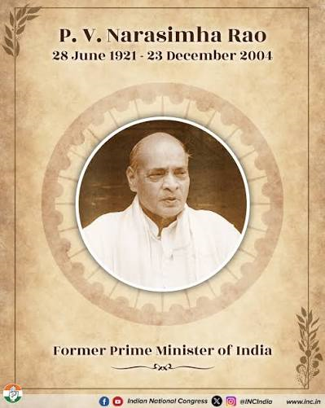
Context: The PM paid homages to former PM Shri P.V. Narasimha Rao on his birth anniversary, highlighting his enduring contributions as an able administrator and scholar who navigated India through a critical phase of post-independence history.
-
- The 1991 Balance of Payments (BoP) Crisis:V. Narasimha Rao assumed office as Prime Minister in June 1991 when India was facing an unprecedented BoP crisis, with foreign exchange reserves depleted to the point where they could barely cover two weeks of essential imports.
- The Birth of LPG Reforms: Alongside his Finance Minister Dr. Manmohan Singh, Rao initiated the historic Liberalisation, Privatisation, and Globalisation (LPG) structural reforms, dismantling the decades-old, restrictive Licence-Permit Raj.
- Devaluation of the Rupee & Fiscal Consolidation: His administration undertook a two-step sharp devaluation of the Indian Rupee to boost export competitiveness and initiated deep fiscal corrections to reduce the fiscal deficit.
- The Look East Policy: In the realm of foreign policy, Rao conceptualized and launched India’s landmark “Look East Policy” in 1991, strategically pivoting India’s economic and security focus toward the ASEAN region to counter the post-Cold War geopolitical vacuum left by the collapse of the Soviet Union.
- National Security Prowess: It was under his leadership that India successfully neutralized deep-seated cross-border insurgencies in Punjab, while simultaneously resetting diplomatic ties with major global powers, including Israel and the United States.
- The 73rd and 74th Constitutional Amendment Acts: The landmark constitutionalization of local self-government bodies Gram Panchayats (73rd Amendment) and Urban Municipalities (74th Amendment) was successfully passed and enacted during his prime ministerial tenure in 1992.
- The Dawn of India’s Nuclear Strategy: Rao is widely credited with laying the groundwork for India’s full-scale nuclear weaponisation program, preserving the scientific resources that eventually enabled the Pokhran-II tests in 1998.
- Literary and Scholarly Merits: Rao was a renowned polyglot who was fluent in more than ten Indian and foreign languages. He authored the celebrated political novel “The Insider”, which provided an analytical look into the functioning of India’s political structures.
- The Demolition of the License Raj (Industrial Policy 1991): His administration promulgated the New Industrial Policy of 1991, which abolished industrial licensing for all but a handful of strategic sectors and opened up sectors to Foreign Direct Investment (FDI).
- The Highest Civilian Award Recognition: In early 2024, the Government of India posthumously conferred the Bharat Ratna, India’s highest civilian award, upon P.V. Narasimha Rao, permanently cementing his legacy as the Architect of Modern Indian Economic Reforms.
(PIB)
Spread the Word