Indian Polity & Governance
Deliberations Move to Delhi for Karnataka Cabinet Formation:
Context: Following state assembly elections, political deliberations for the formation of the Karnataka Cabinet moved to New Delhi, as state leaders met with central party figures to finalize ministerial selections.
-
- Setting up a state council of ministers is governed by Article 163 and Article 164 of the Constitution of India.
- The Governor appoints the Chief Minister based on majority support, and other ministers are appointed on the advice of the Chief Minister.
- Under the 91st Constitutional Amendment Act, 2003, the size of the Council of Ministers in a state cannot exceed 15% of the total strength of the Legislative Assembly.
- The amendment also stipulates that a state council of ministers must have a minimum of 12 members to maintain governance standards.
- Moving state political discussions to central party headquarters highlights how national party structures influence state-level governance.
- Cabinet selection involves balancing regional representation, caste dynamics, and factional alignment to maintain political stability.
- Ministers must be members of the state legislature, or secure a seat within six consecutive months of appointment under Article 164(4) to remain in office.
- The political process operates parallel to constitutional conventions, which vest the formal authority for portfolio allocation in the Chief Minister.
- Delays in cabinet formation can slow administrative decision-making and delay the implementation of state budget allocations.
(TH)
Indian Society & Social Justice
Challenges Revealed in CBSE’s On-Screen Digital Evaluation System:
Context: An investigative report revealed that the Central Board of Secondary Education’s (CBSE) transition to the On-Screen Marking (OSM) evaluation system faced challenges, including system crashes and script mix-ups.
-
- The report found that parents and students encountered hurdles like portal errors, payment failures, and inaccessible digitized answer booklets.
- Over 13,000 digitized answer sheets required manual re-evaluation due to software errors, raising questions about the system’s reliability.
- OSM was introduced to improve transparency, reduce human errors in tallying marks, and speed up the declaration of board results.
- The system relies on third-party tech vendors, highlighting the need for strict data security audits and performance testing in public education contracts.
- Large-scale transitions to digital systems can create regional disparities if examiners face varying levels of internet speed or technical training.
- Software errors that mix up student answer scripts can affect student outcomes and lead to legal challenges over grading accuracy.
- Transparency initiatives like providing copies of evaluated answer scripts are required under the Right to Information (RTI) Act, 2005.
- The issues highlight the importance of maintaining robust fallback systems, such as temporary manual grading protocols, during digital transitions.
- Academic evaluation systems are classified as critical public infrastructure due to their direct impact on university admissions and career opportunities.
- Fixing these issues requires improving cloud capacity, implementing multi-factor authentication, and providing regular training to evaluators.
(IE)
Economy
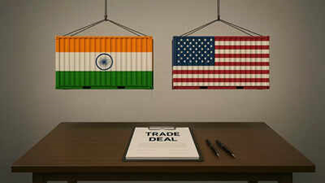
Resumption of India-US Trade Negotiations Amid Tariff Relief Discussions:
Context: Official high-level trade negotiations between India and the United States resumed on June 1, 2026, focusing on bilateral tariff relief and supply chain realignments.
-
- The negotiations followed statements by US Ambassador Sergio Gor regarding plans to establish a structured bilateral trade mechanism.
- India is seeking exemptions from Section 232 tariffs imposed by the US on steel and aluminum imports, which have affected domestic exporters.
- The US is seeking lower import tariffs from India on ICT (Information and Communications Technology) products, medical devices, and agricultural exports.
- A key priority for India is the restoration of its Generalized System of Preferences (GSP) status, which allowed duty-free access for many products before its removal.
- The discussions complement security and technology initiatives like the US-India Initiative on Critical and Emerging Technology (iCET).
- Both nations are working to coordinate digital trade regulations, balancing India’s data localization laws with US demands for cross-border data flows.
- The negotiations aim to advance “friend-shoring,” a strategy that moves manufacturing supply chains to allied countries to reduce reliance on geopolitical rivals.
- Any preferential tariff agreement must comply with World Trade Organization (WTO) rules, specifically Article XXIV of GATT regarding regional trade agreements.
- Easing visa regulations, particularly for H-1B visas, remains a key focus for Indian negotiators to support the IT services export sector.
- A successful trade arrangement can encourage higher Foreign Direct Investment (FDI) inflows into India’s emerging semiconductor and defence manufacturing sectors.
(IE)
Ecology & Environment and DM
Mandate Enforced for Domestic Solar PV Cells Under ALMM List-II
Context: The Union Government’s mandatory guidelines took effect on June 1, 2026, requiring all solar photovoltaic (PV) modules used in domestic projects to source solar cells exclusively from Approved List of Models and Manufacturers (ALMM) List-II.

-
- The ALMM framework was introduced by the Ministry of New and Renewable Energy (MNRE) to ensure the quality of solar equipment and protect domestic manufacturing.
- While ALMM List-I registers approved solar PV modules, ALMM List-II regulates the sourcing of individual solar cells, driving deeper indigenization.
- The mandate applies to all government-subsidized solar installations, net-metering setups, and utility-scale projects selling power to state distribution companies (DISCOMs).
- The policy aims to reduce India’s import dependence on solar components, historically sourced from China and Southeast Asian markets.
- By enforcing this rule, the government aims to expand domestic solar module production capacity to 150 GW and cell capacity to 100 GW by 2030.
- It supports the upstream manufacturing of solar wafers and polysilicon, components where India currently lacks sufficient supply-chain capacity.
- The measure aligns with fiscal incentives like the Production Linked Incentive (PLI) Scheme for High-Efficiency Solar PV Modules.
- Restricting imports via non-tariff barriers like ALMM helps domestic manufacturers compete with cheaper foreign components.
- This transition is essential for India to meet its COP26 climate goals, which include installing 500 GW of non-fossil fuel energy capacity by 2030.
- Balancing trade protections with domestic supply constraints is critical to preventing project delays or cost increases for solar developers.
(PIB)
Science & Technology
Cybersecurity Vulnerabilities Fixed in CBSE’s OnMark Evaluation Portal:
Context: The Central Board of Secondary Education (CBSE) stated that critical exploitable vulnerabilities in its On-Screen Marking (OSM) platform, OnMark, were contained following public disclosures by ethical hackers.
-
- On-Screen Marking (OSM) involves digitizing physical subjective answer scripts via secure scanning, allowing evaluators to grade papers remotely on electronic screens.
- The vulnerability exposure highlights risks related to data security and API endpoints in public sector educational technology platforms.
- Ethical hacking, or white-hat hacking, involves authorized attempts to gain unauthorized access to an application to identify vulnerabilities before exploitation.
- Exposed portals risk data leaks containing confidential student identities, roll numbers, and unauthorized modifications of internal examination scores.
- The containment strategy utilized patch deployment, server-side parameter validations, and end-to-end data encryption mechanisms.
- India’s premier nodal agency for responding to computer security incidents is the Indian Computer Emergency Response Team (CERT-In).
- Under provisions of the Information Technology (IT) Act, 2000, organizations handling public personal records are required to maintain strict cybersecurity practices.
- Digital evaluation portals rely on cloud architecture, making them vulnerable to Distributed Denial of Service (DDoS) attacks and SQL Injection vectors.
- The case shows the benefits of adopting a VDP (Vulnerability Disclosure Policy), encouraging civil tech communities to report bugs legally.
- Securing digital academic processing infrastructure is critical to maintaining public trust in national educational testing boards.

(TH)
Defence
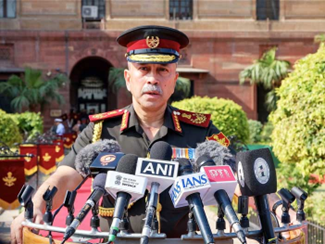
General NS Raja Subramani Assumes Office as 3rd Chief of Defence Staff (CDS):
Context: General NS Raja Subramani officially took charge as India’s third Chief of Defence Staff (CDS) and Secretary of the Department of Military Affairs (DMA).
-
- The position of CDS was created based on the recommendations of the Kargil Review Committee (2000) to ensure high-level defines integration.
- The CDS acts as the permanent Chairman of the Chiefs of Staff Committee (CoSC), providing unified advice to the executive.
- Administratively, the CDS heads the Department of Military Affairs (DMA) within the Ministry of Defence, created via an amendment to Government allocation rules.
- The CDS operates as the Principal Military Advisor to the Raksha Mantri (Defence Minister) on all tri-services matters.
- Unlike operational service chiefs, the CDS does not exercise direct military command over individual service components to preserve decentralized field controls.
- A key mandate of the office is executing the transition toward integrated Theater Commands, combining Army, Navy, and Air Force assets.
- The office is tasked with enforcing the “Whole-of-Nation” security approach and accelerating the indigenization of weapons platforms.
- The CDS is a member of the Defence Acquisition Council (DAC) and the Defence Planning Committee (DPC).
- In terms of protocol, the CDS is a four-star General, ranking as a first among equals among the three service chiefs.
- The structural setup of the DMA integrates military officers and civilian bureaucrats directly to speed up strategic defense decision-making.
(PIB)
Internal Security
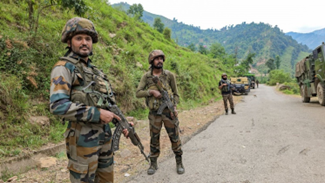
Security Infiltration and Exfiltration Attempt Apprehended in Uri Sector:
Context: Security forces detained three locals, including a former Territorial Army jawan, alongside a resident from Pakistan-occupied Kashmir (PoK) trying to cross the Line of Control (LoC) in the Uri Sector.
-
- The Uri sector is located in the Baramulla district of Jammu and Kashmir, serving as a historically sensitive point along the Line of Control (LoC).
- The Line of Control (LoC) represents a military control line rather than an internationally recognized legally delineated border.
- The incident highlights the challenge of “exfiltration”where domestic elements cross into external territories for radicalization or arms training.
- The involvement of a former Territorial Army (TA) individual highlights internal vetting risks regarding operational knowledge leakages.
- The Territorial Army operates as a voluntary part-time auxiliary organization of the regular Indian Army, designed for citizens to serve temporarily.
- Border management along the LoC utilizes a multi-tiered security setup combining physical fencing, thermal imaging, and electronic anti-infiltration grids.
- Cross-border movements are monitored under the Unlawful Activities (Prevention) Act (UAPA) and the Jammu & Kashmir Public Safety Act (PSA).
- The porous terrain of the northern Kashmir sector features deep ravines and dense forests, creating structural camouflage windows for trackers.
- Counter-infiltration grids involve real-time coordination between the Indian Army, Jammu & Kashmir Police, and central intelligence wings.
- The strategic focus on checking local guides is vital, as internal facilitators remain necessary for navigating advanced minefields near the LoC.
(TH)
History, Art & Culture
Birth Anniversary Tributes to Lokmata Ahilyabai Holkar:
Context: The Prime Minister paid national tributes to Lokmata Ahilyabai Holkar on her birth anniversary, highlighting her governance model and temple restorations.
-
- Ahilyabai Holkar (1725–1795) was the prominent queen of the Maratha Malwa kingdom, ruling from her capital at Maheshwar on the Narmada River.
- She assumed administrative control of the Holkar dynasty following the deaths of her husband Khanderao and father-in-law Malhar Rao Holkar.
- Her administration is recognized as a historic model of civil governance, financial integrity, and judicial impartiality.
- She pioneered the development of Maheshwar as an industrial and cultural hub, patronizing the iconic handloom-woven Maheshwari sarees.
- Her historical legacy is tied to the nationwide restoration and rebuilding of major Hindu pilgrimage sites smashed during previous eras.
- She financed the rebuilding of the Kashi Vishwanath Temple in Varanasi in 1780, centuries after its original destruction.
- Her infrastructure projects spanned across India, constructing dharamshalas, ghats, and temples at Somnath, Ayodhya, Puri, and Rameswaram.
- She maintained an independent diplomatic and security stance, successfully defending Malwa from plundering cross-border raiders.
- Her legal policies protected the property rights of widows and promoted tribal integration within the agrarian economy.
- She moved away from standard feudal court layouts by elevating Maheshwar over Indore as her active capital, establishing a cultural center along the Narmada.

(PIB)
Organisations in news
WFI Relents to Allow Vinesh Phogat to Compete in Asian Games Trials:
Context: The Wrestling Federation of India (WFI) changed its stance to officially permit wrestler Vinesh Phogat to participate in the upcoming Asian Games selection trials for the 53kg category.
-
- The WFI functions as the national governing body for wrestling in India, operating as an autonomous entity recognized by the Ministry of Youth Affairs and Sports.
- The decision followed public disputes, court challenges, and athlete protests over selection criteria and administrative transparency within national sports federations.
- National Sports Federations (NSFs) are bound by the guidelines specified under the National Sports Development Code of India, 2011.
- The Sports Code mandates that selection trials must be conducted in a fair, non-discriminatory, and highly objective manner for international events.
- Disagreements between athletes and federations often lead to judicial reviews by High Courts under Article 226 of the Indian Constitution.
- The case highlights broader governance challenges within Indian sports administration, including athlete welfare, arbitrary selection exemptions, and institutional accountability.
- The Indian Olympic Association (IOA) serves as the overarching authority responsible for registering and selecting athletes to represent India at the Olympic and Asian Games.
- International athletic regulatory bodies (like United World Wrestling) monitor domestic disputes to ensure third-party political or administrative interference is checked.
- Creating independent grievance redressal tribunals within sports bodies is a key reform recommended by the Supreme Court to protect sportspersons.
- Institutional transparency in sports governance directly affects India’s international sports diplomacy and representation at global mega-events.

(TH)
Miscellaneous
Implementation and Effective Date for the New South Coastal Railway Zone:
Context: The Gazette Notification issued by the Ministry of Railways took effect on June 1, 2026, officially creating the South Coastal Railway (SCoR) zone with its headquarters in Visakhapatnam.
-
- The South Coastal Railway (SCoR) becomes the 18th operational railway zone in India, fulfilling a commitment made under the Andhra Pradesh Reorganisation Act, 2014.
- The new zone comprises the existing Vijayawada, Guntur, and Guntakal railway divisions, along with a newly realigned portion of the Waltair division.
- Splitting and establishing new zones is an executive power exercised by the Ministry of Railways to optimize administrative efficiency and traffic management.
- SCoR’s operational zone covers key maritime freight routes, improving logistical links to major ports on the eastern coast.
- The launch coincides with an ongoing expansion plan to upgrade the entire East Coast Railway Corridor into a four-line network.
- It forms a core element of the proposed “High-Speed Diamond” rail infrastructure network planned for southern India.
- The reorganization required adjustments to division boundaries to ensure balanced passenger and freight revenue distribution between neighboring zones like the East Coast Railway (ECoR).
- Funding for the new zone is drawn from a record regional railway budget allocation intended to improve rail infrastructure density in Andhra Pradesh.
- Modernizing the network involves replacing level crossings with flyovers and underpasses to improve safety and train speeds.
- Reorganizing railway zones is an administrative step aimed at reducing operational delays and enhancing local economic growth.

(PIB)
Spread the Word