
Indian Polity & Governance
Goa Statehood Day:
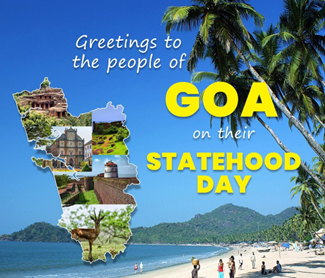
Context: The Prime Minister extended greetings to the people of Goa on the occasion of Goa Statehood Day, celebrated annually on May 30th.
-
- Goa was liberated from more than 450 years of Portuguese colonial rule on December 19, 1961, through a military action named Operation Vijay.
- Following its liberation, Goa, alongside Daman and Diu, was organized as a centrally administered Union Territory of India.
- In 1967, Goa underwent a historic opinion poll (the only one held in independent India) where citizens voted against merging with Maharashtra, choosing to retain their distinct identity as a Union Territory.
- On May 30, 1987, Goa was officially granted full statehood, becoming the 25th state of the Indian Union.
- Concurrently, Daman and Diu were separated from Goa and continued to function as a distinct Union Territory.
- The Konkani language, written in the Devanagari script, is the official language of the state and was included in the Eighth Schedule of the Constitution via the 71st Amendment Act in 1992.
- Under Article 371I of the Indian Constitution, special provisions are enabled for Goa, stipulating that its Legislative Assembly must consist of not less than 30 members.
- Goa is the only state in India that has a functional Uniform Civil Code (UCC), implemented via the Portuguese Civil Code of 1867, which was preserved after liberation.
- Geographically, Goa is situated within the Western Ghats region, a global biodiversity hotspot, and is drained by major west-flowing rivers like the Mandovi and Zuari.
- Celebrating Statehood Day highlights the integration of diverse colonial enclaves into the democratic constitutional framework of independent India.
(PIB)
Corporate Governance and the Lilavati Trust Legal Challenge:
Context: The Supreme Court sought a formal legal response from the CEO of HDFC regarding a petition filed by the Lilavati Trust, challenging a lower court order that quashed an FIR concerning alleged financial irregularities.
-
- The case highlights corporate governance challenges, trust management issues, and accountability thresholds for high-ranking banking executives handling institutional assets.
- Public and private charitable trusts are governed by distinct state legislations (like the Maharashtra Public Trusts Act, 1950) alongside central statutory provisions.
- An First Information Report (FIR) is a document prepared by police organizations when they receive information about the commission of a cognizable offense.
- Section 482 of the Code of Criminal Procedure (CrPC) grants High Courts inherent powers to quash FIRs to prevent the abuse of judicial processes or secure the ends of justice.
- The Supreme Court’s review focuses on whether the quashing of criminal proceedings compromised the financial accountability of institutional banking partners.
- Corporate governance requires clear separation of personal liability, institutional actions, and fiduciary responsibilities when managing public or charitable funds.
- Banking institutions are subjected to strict regulatory oversights and guidelines issued by the Reserve Bank of India (RBI) regarding loan disbursements and trust asset management.
- Legal disputes involving large public charitable trusts often impact public welfare operations, such as hospitals and educational institutes run by the trust.
- The issue underscores the role of the judiciary in examining whether white-collar financial crimes are investigated without procedural delays or undue institutional influence.
(IE)
Indian Society & Social Justice
Supreme Court Year-Long Extension for Teachers Eligibility Test (TET):
Context: The Supreme Court of India granted a one-year extension to in-service elementary school teachers to clear the mandatory Teachers Eligibility Test (TET), emphasizing the need for educational continuity.
-
- The Teachers Eligibility Test (TET) is a mandatory minimum qualification requirement for individuals to be eligible for appointment as school teachers in India.
- The legal mandate for TET is derived directly from the implementation of the Right of Children to Free and Compulsory Education (RTE) Act, 2009.
- Under Section 23 of the RTE Act, minimum professional and academic qualifications are laid down by an authorized academic authority to maintain national educational standards.
- The National Council for Teacher Education (NCTE) is the statutory central body that formally specifies the minimum qualifications and guidelines for conducting TET.
- The Supreme Court’s ruling balances strict statutory quality mandates with the practical need to prevent abrupt mass terminations of existing staff.
- Educational disruption caused by sudden vacancies can violate children’s fundamental right to education guaranteed under Article 21A of the Constitution.
- The TET framework includes the Central Teacher Eligibility Test (CTET) conducted by the CBSE, alongside individual State Teacher Eligibility Tests (STETs).
- State governments are directed to organize remedial training and sufficient test cycles within the extended timeframe to assist in-service teachers.
(TH)
International Developments
Russia to Build Kazakhstan’s First Nuclear Power Plant:
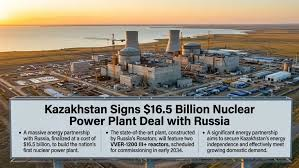
Context: Russia and Kazakhstan signed a formal bilateral agreement for Russia’s state-owned atomic energy corporation, Rosatom, to construct Kazakhstan’s first commercial nuclear power facility.
-
- Kazakhstan is historically the world’s largest producer of natural uranium but has lacked domestic operational commercial nuclear generation capacity.
- The deal cements Russia’s strategic presence and geopolitical leverage over the energy infrastructure in Central Asia.
- The project will likely deploy Russia’s flagship VVER-1200 (Water-Water Energetic Reactor), a Generation III+ pressurized water reactor design.
- VVER-1200 reactors feature advanced passive safety systems that function autonomously without power supply during emergencies.
- The agreement addresses Kazakhstan’s growing domestic power deficit and heavy reliance on aging, polluting coal-fired plants.
- It highlights the strategic role of Rosatom, which continues to dominate the global nuclear export market despite Western economic sanctions.
- For India, monitoring Central Asian dynamics is vital as Kazakhstan is a key supplier of raw uranium pellets to Indian nuclear reactors under a bilateral civil nuclear agreement.
- The plant will be subjected to the International Atomic Energy Agency (IAEA) safeguards and inspection regimes to ensure non-proliferation.
(IE)
International Relations
India-US Trade Pact Expectations:
Context: US Ambassador to India, Sergio Gor, stated that India and the United States are on track to finalize and sign a major bilateral trade arrangement within the upcoming weeks and months.
-
- The US remains one of India’s largest trading partners, and India maintains a consistent trade surplus in merchandise goods with the US.
- Key points of negotiation involve easing US export controls on critical technologies and securing predictable visa regimes (H-1B and L1) for Indian IT professionals.
- India is seeking the reinstatement of its status under the US Generalized System of Preferences (GSP), which was revoked in 2019.
- The GSP program allows duty-free entry for thousands of specified products from designated developing beneficiary countries.
- US negotiators are focusing on securing greater market access for American agricultural products, medical devices, and dairy goods.
- Intellectual Property Rights (IPR) enforcement and digital data localization norms remain traditional friction points in bilateral trade deliberations.
- The trade deal is designed to complement existing strategic frameworks like the US-India Initiative on Critical and Emerging Technology (iCET).
- Deepening economic ties acts as a strategic counterbalance to supply chain dependencies on China, reinforcing the “friend-shoring” doctrine.
- A structured trade agreement will provide legal certainty to institutional investors, boosting Foreign Direct Investment (FDI) inflows into India’s manufacturing sector.
(TH)
Geography
Salaya Port’s Strategic Relevance to Gujarat’s Dhow Trade:
Context: Heightened geopolitical risks in West Asia (including Iran) combined with the advancing early monsoon highlighted the economic criticality of Salaya Port in Gujarat for traditional dhow-based maritime trade.
-
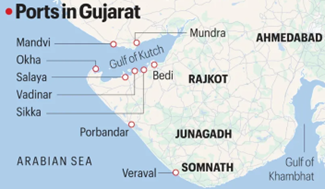
- Salaya is an ancient, natural deep-water port located in the Devbhumi Dwarka district of Gujarat along the Gulf of Kutch.
- A “Dhow” is a traditional wooden sailing vessel equipped with lateen (triangular) sails, widely used for centuries across the Arabian Sea and Indian Ocean.
- Salaya serves as a prominent hub for the manufacturing, maintenance, and operation of mechanized country crafts and dhows.
- The dhow trade links small-scale Indian exporters directly to traditional markets in the Persian Gulf, Yemen, Somalia, and East Africa.
- Unlike massive container ships, dhows can navigate shallow creeks and un-mechanized berths in conflict-prone or economically isolated ports.
- The trade is highly seasonal, governed strictly by the wind patterns of the Southwest Monsoon (June to September), forcing intensive operations in late May.
- Key commodities exported via Salaya dhows include livestock, foodstuffs, timber, textiles, and traditional consumer goods.
- The trade provides employment to a distinct socio-economic community of traditional seafarers, carpenters, and manual loaders across coastal Gujarat.
- Modernization of tracking systems (like mandatory AIS – Automatic Identification System transponders) is being enforced to reconcile traditional trade with maritime security protocols.
- The port highlights the survival of informal, historical maritime trade corridors operating parallel to modern globalized shipping lanes.
(IE)
Ecology & Environment and DM
Babesia Infection Outbreak Among Gir Lion Cubs:
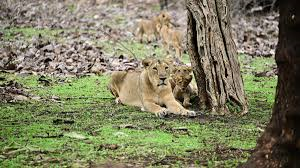
Context: The Gujarat Forest Department confirmed that eight Asiatic lion cubs died in the Gir ecosystem due to a suspected outbreak of Babesia infection, drawing focus to wildlife epidemiology.
-
- Babesiosis is a tick-borne disease caused by intraerythrocytic protozoan parasites belonging to the genus Babesia.
- The parasite primarily infects and destroys red blood cells (erythrocytes), leading to severe hemolytic anemia, hemoglobinuria, jaundice, and multi-organ failure in felines.
- It is transmitted through the bite of infected ixodid (hard-bodied) ticks, which proliferate in wildlife ecosystems during specific seasonal transitions.
- The Asiatic Lion (Panthera leo persica) is genetically distinct from African lions and is listed as “Endangered” under the IUCN Red List.
-
- The entire wild population of Asiatic lions is concentrated in the Gir National Park and Wildlife Sanctuary and surrounding landscapes in Gujarat.
- The concentration of an entire endangered species in a single geographic locale makes them highly vulnerable to extinction from epidemic outbreaks.
- Previously, the Gir lion population suffered heavy casualties due to Canine Distemper Virus (CDV) and Babesiosis co-infections in 2018.
- Wildlife veterinarians utilize anti-protozoal medications (such as Diminazene aceturate or Imidocarb) alongside intensive supportive therapy to treat infected animals.
- Management strategies involve vector control, regular health monitoring using camera traps, and non-invasive fecal and blood sample screening.
- The incident reinforces the recommendations of the Supreme Court and conservationists to create a second independent habitat for Asiatic lions (e.g., Kuno National Park or other designated sanctuaries) to mitigate catastrophic disease risks.
(IE)
Science & Technology
Hydrogen-Powered Public Buses in Delhi:
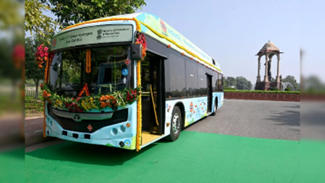
Context: The Delhi government finalized a blueprint to introduce hydrogen-powered public transport buses to combat vehicular pollution and transition toward green energy.
-
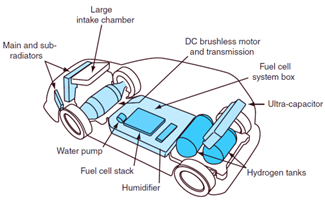
- Hydrogen fuel cell vehicles (FCEVs) combine hydrogen gas with oxygen from the air to generate electricity, with the only byproduct being water and heat.
-
- FCEVs offer a zero-emission alternative to traditional internal combustion engines and eliminate carbon footprints if green hydrogen is utilized.
- Unlike Battery Electric Vehicles (BEVs) that take hours to charge, hydrogen fuel vehicles can be refueled in a few minutes, making them ideal for heavy public transport.
- They have a significantly higher energy density by weight compared to lithium-ion batteries, allowing for a longer driving range.
- The project aligns with India’s National Green Hydrogen Mission, which targets a production capacity of 5 MMT (Million Metric Tonnes) per annum by 2030.
- Setting up highly pressurized hydrogen refueling stations (dispensing at 350 to 700 bar) presents a critical initial infrastructure bottleneck.
- High-pressure storage tanks made of carbon fiber composites are mandatory inside buses to ensure safety during impact.
- The initiative aids India’s commitment to achieving Net Zero emissions by 2070, under the COP26 Glasgow climate pledges.
- It helps reduce urban concentration of Particulate Matter (PM2.5 and PM10) and Oxides of Nitrogen emitted by aging diesel fleets.
- FCEVs exhibit high efficiency in stop-and-go city traffic conditions due to regenerative braking systems integrated with temporary battery storage.
(IE)
Vitamin K-Derived Compounds and Brain Cell Regeneration:
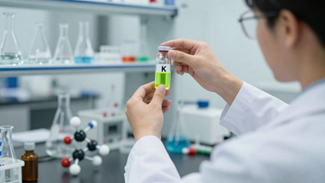
Context: Scientists published breakthrough research on newly developed Vitamin K-derived synthetic compounds that show significant efficacy in stimulating the regeneration of damaged brain cells.
-
- The study targets neurodegenerative conditions such as Alzheimer’s disease, Parkinson’s disease, and multiple sclerosis, where neurons and myelin sheath degrade.
- Vitamin K occurs naturally in two primary forms: Vitamin K1 (phylloquinone, from green leafy vegetables) and Vitamin K2 (menaquinones, from fermented foods and animal products).
- Vitamin K is traditionally known for its critical role in synthesizing blood-clotting proteins in the liver (factors II, VII, IX, and X) and regulating bone calcium deposition.
- Beyond coagulation, Vitamin K acts as an essential cofactor for Gas6 (Growth Arrest-Specific 6) protein, which regulates cellular survival and growth in the central nervous system.
- The newly engineered synthetic derivatives bypass the blood-brain barrier (BBB) more efficiently than standard dietary vitamins.
- The compounds promote oligodendrogenesis, the process by which precursor cells mature into oligodendrocytes, the cells responsible for creating myelin.
- Re-myelination protects axons from degeneration and restores efficient electrical signal transmission across neural networks.
- The research offers a therapeutic alternative to traditional neuroprotective drugs that merely slow down cognitive decline rather than reversing structural damage.
- Understanding the structural biochemistry of these fat-soluble vitamins helps in designing targeted drug delivery mechanisms via nanoparticles.
(IE)
Defence
Inauguration of Nausena Shaurya Vatika in Lucknow:
Context: Raksha Mantri Rajnath Singh and UP CM Yogi Adityanath jointly inaugurated the ‘Nausena Shaurya Vatika’ (Naval Valour Park) Open-Air Display Museum in Lucknow.
-
- The project was constructed at a cost of ₹19 crore, spanning over two acres, to act as an open-air educational and motivational museum.
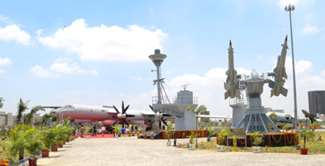
- The park showcases decommissioned naval weapons and structural artifacts to educate citizens, especially youth, about maritime security and naval history.
- Prominent exhibits include the AK-726 Naval Gun, a twin-barrel 76.2mm automatic gun used onboard older frontline Indian Navy warships.
- It features a ZIF-101 launcher, used historically for firing Surface-to-Air Missiles (SAMs) to protect naval fleets from aerial threats.
- Decommissioned anti-ship missiles, ship masts, heavy anchors, and torpedo launchers are permanently installed as public displays.
- Many displayed artifacts belong to INS Gomati, a Godavari-class guided-missile frigate that served the Indian Navy for 34 years before decommissioning.
- The park underscores India’s shifting focus toward maritime domain awareness (MDA) and securing critical Sea Lines of Communication (SLOCs) amid geopolitical changes in the Indian Ocean Region.
- The initiative links landlocked states like Uttar Pradesh directly with the rich maritime traditions and strategic goals of the Indian Navy.
- The museum supports defence tourism and raises public awareness about domestic naval manufacturing and self-reliance (Aatmanirbharta) in defence.
(PIB)
Surge in India’s Domestic Defence Production:
Context: Official data released by the Ministry of Defence during the inauguration of the Nausena Shaurya Vatika revealed that India’s domestic defence production surged to over ₹1.51 lakh crore, heading toward a target of ₹1.75 lakh crore.
-
- Domestic defence production values stood at ₹46,000 crore in 2014, reflecting a significant structural expansion over the past decade.
- The growth is driven by structural policy reforms, including the Defence Acquisition Procedure (DAP) 2020, which prioritizes domestic procurement categories.
- The Ministry of Defence uses Positive Indigenisation Lists that ban the import of specified military weapons, sub-systems, and components after fixed deadlines.
- Technological innovations are actively funded through the iDEX (Innovations for Defence Excellence) scheme, engaging defence startups and MSMEs.
- The ADITI (Acing Development of Innovative Technologies with iDEX) scheme targets financial grants for deep-tech strategic innovations in defence.
- Corporatization of the old Ordnance Factory Board (OFB) into 7 distinct 100% government-owned Defence Public Sector Undertakings (DPSUs) has improved operational efficiency.
- The setting up of two dedicated Defence Industrial Corridors (in Uttar Pradesh and Tamil Nadu) provides specialized infrastructure for defence manufacturing clusters.
- Foreign Direct Investment (FDI) limits in defence manufacturing have been raised to 74% under the automatic route and up to 100% via the government route for modern technologies.
- Increased domestic production supports India’s defence export goals, supplying friendly nations with items like the BrahMos supersonic cruise missile and Akash missile systems.
- The transition reduces fiscal vulnerabilities linked to import dependencies, ensuring supply chain security during global geopolitical crises.
(PIB)
Internal Security
India’s Pragmatic Diplomatic Engagement with Myanmar:
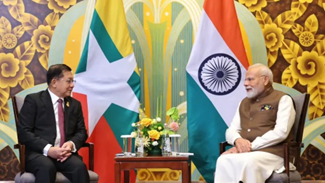
Context: Senior Indian diplomatic officials stated that India will maintain a “pragmatic” foreign policy stance toward Myanmar, validating engagement with the military-backed regime ahead of President U Min Aung Hlaing’s visit.
-
- Myanmar shares a highly sensitive, porous 1,643 km long land border with four northeastern Indian states: Mizoram, Manipur, Nagaland, and Arunachal Pradesh.
- India’s engagement with the military junta (Tatmadaw) is driven by critical national security interests, specifically curbing cross-border insurgent groups operating in the Northeast.
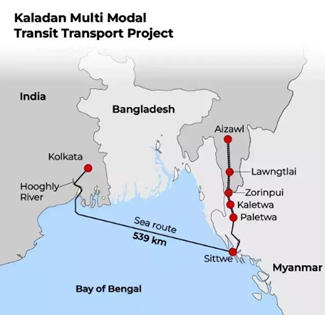
- India relies on the cooperation of Myanmar authorities to secure its massive infrastructure investments, such as the Kaladan Multi-Modal Transit Transport Project.
-
- The Kaladan project connects the eastern Indian seaport of Kolkata with the Sittwe seaport in Rakhine State, Myanmar, by sea.
- Another vital regional project is the India-Myanmar-Thailand Trilateral Highway, aiming to boost land-based trade with ASEAN countries.
- India’s pragmatic approach balances democratic values with geopolitical realities, ensuring Myanmar does not tilt entirely into China’s sphere of influence.
- The Free Movement Regime (FMR), which traditionally allowed tribes on both sides to travel up to 16 km inside each other’s territory without visas, has seen recent suspensions due to security concerns and illegal immigration.
- Managing stability in Myanmar is essential to prevent large-scale refugee influxes into states like Mizoram, which complicates local demographics and resources.
- India’s approach aligns with ASEAN’s “Five-Point Consensus” but emphasizes practical bilateral security coordination over strict diplomatic isolation.
- The situation highlights the classic realist paradigm in Indian foreign policy where immediate neighbourhood stability and border security take precedence over ideological alignment.
(TH)
Expansion of BSF Operational Mandate Under Consideration:
Context: Union Home Minister Amit Shah indicated that the central government is evaluating proposals to further expand the operational and legal jurisdiction mandate of the Border Security Force (BSF).
-
- The BSF was established on December 1, 1965, following the Indo-Pakistani War, to ensure the security of India’s international borders.
- It is a premier Central Armed Police Force (CAPF) operating under the administrative jurisdiction of the Ministry of Home Affairs (MHA).
- The BSF is primarily mandated with guarding India’s international land borders with Pakistan and Bangladesh.
- In 2021, the MHA expanded BSF’s jurisdiction up to 50 km (from 15 km) inside the international borders in Assam, West Bengal, and Punjab, while reducing it in Gujarat to 50 km (from 80 km).
- The operational mandate allows BSF officers to exercise powers of search, seizure, and arrest under specific central acts like the CrPC, Passport Act, and NDPS Act.
- The proposed expansion aims to address new-age asymmetrical security challenges, such as weapon and narcotics smuggling using low-radar commercial drones.
- Law and order inside state territories is a state subject under Entry 2 of the State List in the Seventh Schedule of the Constitution of India.
- BSF operations within the expanded zone are limited to specific border-related crimes and do not replace the regular investigative powers of the local state police.
- Coordinating between central border guarding forces and state police forces is critical to ensuring effective intelligence sharing and preventing cross-border infiltration.
- The legal framework governing these expansions derives directly from Section 139 of the Border Security Force Act, 1968.
(IE)
Miscellaneous
Security Protocols for US Troops via Mobile Advertisements:
Context: A specialized report revealed that hostile actors are targeting US military personnel deployed in active war zones by weaponizing mobile ad-tracking data and programmatic advertising ecosystems.
-
- Programmatic advertising utilizes Real-Time Bidding (RTB) protocols to buy and sell ad spaces on mobile applications within milliseconds.
- During an RTB auction, sensitive metadata including precise GPS coordinates, device IDs, operating systems, and user profiles are broadcast to hundreds of ad-tech firms.
- Hostile intelligence agencies harvest this metadata to track the exact geolocations, troop movements, and operational perimeters of military bases.
- The technique enables hyper-targeted “ad-targeting” or “malvertising,” where malicious payloads or spyware are delivered to specific devices belonging to military personnel.
- This form of digital surveillance bypasses conventional encrypted communication channels like Signal or WhatsApp by exploiting underlying OS-level ad tokens.
- The phenomenon highlights the growing threat of “open-source intelligence” (OSINT) leakage via commercial metadata streams.
- It underscores a major defence vulnerability where civilian electronic consumer hardware compromises state military operations.
- The report recommends strict geofencing restrictions, absolute bans on commercial smartphones in operational zones, and the implementation of customized, hardened communication networks.
(IE)
India Sends Medical Aid to Africa CDC Amid Ebola Outbreak:
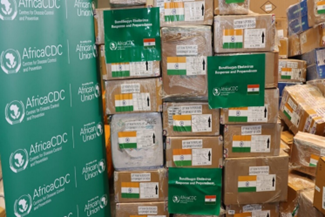
Context: The Ministry of External Affairs (MEA) confirmed the dispatch of India’s first emergency tranche of essential medical supplies to the Africa Centres for Disease Control and Prevention (Africa CDC) to combat a fresh Ebola outbreak.
-
- The Africa CDC is an autonomous public health agency of the African Union (AU) established to support public health initiatives of member states.
- Ebola Virus Disease (EVD) is a severe, often fatal illness in humans caused by the Ebolavirus, part of the Filoviridae viral family.
- The virus is transmitted to people from wild animals (such as fruit bats) and spreads through human-to-human transmission via direct contact with bodily fluids.
- The Indian medical consignment includes personal protective equipment (PPEs), emergency broad-spectrum antibiotics, antiviral therapeutics, and basic diagnostic kits.
- The initiative forms part of India’s “Vaccine Maitri” and broader South-South cooperation framework, positioning India as a first responder in global health crises.
- It aligns with India’s long-term foreign policy objective to deepen strategic and humanitarian partnerships with African nations.
- Managing Ebola outbreaks relies heavily on rapid contact tracing, strict isolation protocols, and community engagement.
- The assistance showcases India’s domestic pharmaceutical manufacturing capacity, often referred to as the “pharmacy of the global south”.
- The support underscores the international commitment required under the World Health Organization’s (WHO) International Health Regulations (IHR).
- Strengthening the Africa CDC improves continental epidemiological surveillance, preventing the transcontinental spread of high-fatality pathogens.
(TH)
Spread the Word