
Indian Polity & Governance
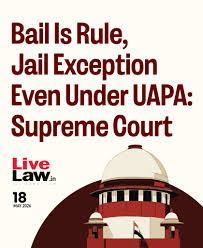
“Bail is the Rule” Principle Upheld by Supreme Court in Terror Cases:
Context: The Supreme Court ruled that personal liberty safeguards remain intact even under stringent special security legislation.
-
- The Apex Court explicitly stated that “Bail is the rule, jail is the exception”is not an empty slogan.
- The ruling applies directly to cases registered under the Unlawful Activities (Prevention) Act (UAPA).
- The Court reviewed its past strict postures on denying personal liberty to prolonged undertrial prisoners.
- Relief was granted to an undertrial from Jammu and Kashmir who had been incarcerated for five years in a narco-terrorism case.
- The bench underscored that indefinite incarceration without trial violates Article 21 of the Indian Constitution.
- It observed that statutory restrictions on bail do not completely eclipse constitutional courts’ powers to protect liberty.
- The judgment reins in the trend of long-term detentions where investigative agencies delay framing charges.
(TH)
Parliamentary Panel Summons NTA Chief Over Institutional Reforms:
Context: A Parliamentary Standing Committee took formal cognizance of institutional gaps within national testing frameworks.
-
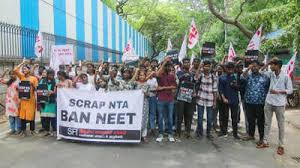
- A parliamentary panel officially summoned National Testing Agency (NTA) Chairperson Pradeep Kumar Joshi.
- The committee will review the systemic structural errors that led to the NEET-UG paper leak case.
- The panel aims to comprehensively evaluate the implementation of recommended exam delivery reforms.
- Simultaneously, the CBI carried out arrests of institutional heads involved in cheating rings across Maharashtra.
- The issue highlights vulnerabilities in the security parameters of high-stakes computer-based and offline tests.
- The panel will look into standard operating procedures (SOPs) for question paper setting and storage.
- The outcome will likely reshape the institutional structure of autonomous testing bodies in India.
(TH)
Transgender Man Allowed to Freeze Eggs: Kerala HC on Reproductive Rights:
Context: Kerala High Court issued a progressive judgment expanding the scope of Article 21 for transgender individuals.
-
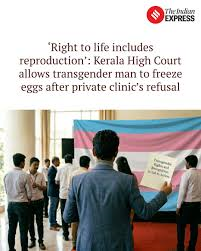
- The Kerala High Court held that the Right to Life includes the right to reproduction.
- The ruling was delivered after a private fertility clinic refused to freeze the eggs of a transgender man.
- The court declared that gender identity transition does not strip an individual of their biological reproductive choices.
- It ordered the medical facilities to safely proceed with the egg-freezing procedure.
- The ruling reinforces bodily autonomy as a fundamental facet of personal liberty under Article 21.
- It addresses the legal and institutional gaps faced by the LGBTQIA+ community in accessing healthcare.
- The judgment relies on the landmark NALSA vs. Union of India verdict concerning self-determined gender.
- It sets a binding judicial precedent for alternative reproductive technology (ART) clinics across India.
- The case underlines the need for inclusive administrative rules in medical and insurance protocols.
(IE)
State Legislatures Competent to Grant MLA/MLC Allowances: Allahabad HC:
Context: The Allahabad High Court ruled that there is no constitutional embargo on state legislatures regarding fiscal allowances.
-
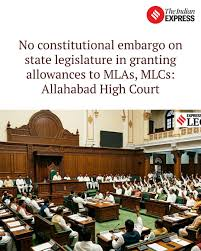
- State assemblies possess absolute constitutional competence to grant and modify allowances for MLAs and MLCs.
- The verdict dismissed a public interest litigation (PIL) challenging the validity of legislative perquisites.
- The court cited Article 195 of the Indian Constitution, which empowers legislatures to determine salaries and allowances.
- It held that judicial review cannot intervene in the internal fiscal decisions of the House unless explicitly unconstitutional.
- The ruling reinforces the doctrine of separation of powers between the judiciary and state legislatures.
- It clarifies that such spending falls under the consolidated fund of the respective state.
- The bench cautioned against using PILs to interfere with purely policy or statutory matters.
(IE)
International Developments
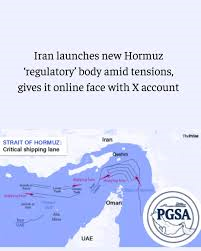
Iran Establishes PGSA to Regulate the Critical Strait of Hormuz:
Context: Iran established a new maritime regulator named the Persian Gulf Strait Authority (PGSA).
-
- Under the new mechanism, all commercial and military ships must obtain confirmation messages from the PGSA.
- The authority mandates compliance with specific rules and regulations laid out by Tehran before traversing.
- The move comes as Tehran exercises effective closure protocols amidst regional conflicts.
- Iran has indicated plans to levy transit or usage charges on ships passing through the strait.
- The Strait of Hormuzis a vital global chokepoint through which one-fifth of the world’s petroleum passes.
(TH)
International Relations
India-Norway Elevate Relationship to Green Strategic Partnership:
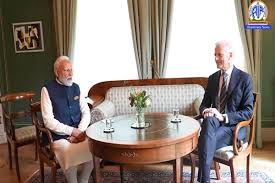
Context: PM Modi landed in Oslo and held bilateral talks with his Norwegian counterpart Jonas Gahr Store, upgrading their bilateral relationship.
-
- This marks the first official bilateral visit by an Indian Prime Minister to Norway in 43 years.
- Both nations formally elevated their bilateral relations to a Green Strategic Partnership.
- PM Modi was conferred with the Grand Cross of the Royal Norwegian Order of Merit, Norway’s highest civilian honour.
- New pacts were explicitly signed spanning the fields of space, health, and digital development.
- The Council of Scientific and Industrial Research (CSIR) inked a series of agreements with Norwegian institutions to boost science and innovation.
- Norway formally announced its entry into the Indo-Pacific Oceans Initiative (IPOI)to boost maritime security.
- Discussions prominently focused on building resilient and diversified supply chains to counter unilateral trade weaponisation.
- The leaders reviewed the implementation benefits of the newly signed India-EFTA Free Trade Agreement.
- Cooperation was extended into deep tech manufacturing, including semiconductors and green hydrogen infrastructure.
- PM Modi used the forum to emphasize that conflicts in West Asia and Ukraine must be resolved through dialogue and diplomacy.
(IE)
PM Modi Addresses the European Round Table for Industry Leaders:
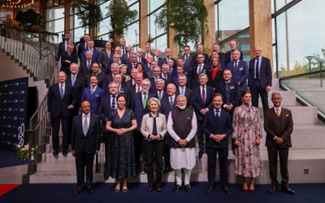
Context: PM Modi’s address to major European business leaders to attract investments into India.
-
- PM Modi showcased India’s economic momentum, highlighting its “next-generation economic reforms”.
- He championed the governance shift towards digital public infrastructure (DPI) and ease of doing business.
- PM reiterated India’s core manufacturing vision: “Design for India, Make in India, and Export from India”.
- European companies were invited to join as reliable partners in diversifying global supply chains.
- Massive public-private investment opportunities were highlighted in logistics, aviation, and transport corridors.
- Leaders were invited to invest heavily in India’s National Green Hydrogen Mission and clean energy setups.
- Deep tech manufacturing sectors like semiconductors, AI, and electronics were highlighted as sunrise sectors.
- The PM pitched India as a global hub for healthcare and life sciences manufacturing.
- The address underlined the crucial nature of bilateral talent mobility and structured skill-pact partnerships.
- The pitch aligns with India’s broader foreign policy goal of achieving a $5 trillion economy through enhanced FDI.
(PIB)
Miscellaneous
International Museum Day 2026 Focuses on Cultural Education and Sustainability:
Context: Ministry of Culture highlighted the completion of the three-day nationwide celebration of International Museum Day.
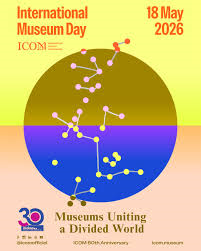
Each year since 1977, International Council of Museum , ICOM has organised International Museum Day, which represents a unique moment for the international museum community.
-
- The Nehru Science Centre and Ministry of Culture organized nationwide educational events from May 16 to May 18, 2026.
- The official central theme for the 2026 celebrations was “Museums Uniting a Divided World”.
- This year’s theme aligns with the following three goals:
- SDG 10: Reduced Inequalities: Reduce inequality within and among countries
- SDG 16: Peace, justice and strong institutions: Promote just, peaceful and inclusive societies
- SDG 17: Partnerships for the goals: Revitalise the global partnership for sustainable development
- The objective was to showcase museums as vibrant spaces for shaping an informed, creative, and progressive society.
- The initiative aims to shift public perspective from viewing museums as passive storage units to interactive hubs of learning.
- Special focus was placed on building scientific awareness and community engagement among students.
- Digital technologies, including AR/VR, are being integrated under the Digi-Museum scheme to preserve intangible heritage.
- The events featured hands-on workshops connecting the youth with ancient Indian history, crafts, and sustainable living.
- The initiative is part of India’s soft-power diplomacy to boost cultural tourism and historical consciousness.
- It aligns with the UN Sustainable Development Goal (SDG) 11.4 to protect and safeguard cultural heritage.
(PIB)
Spread the Word