
Indian Polity & Governance
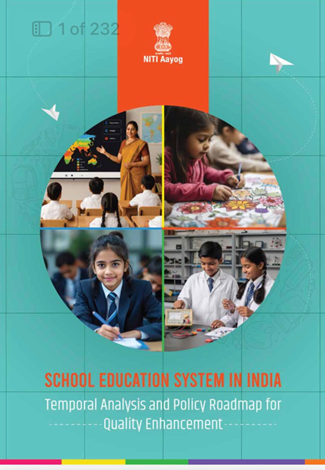
NITI Aayog Policy Report on School Education:
Context: NITI Aayog released a comprehensive policy report detailing recommendations for reforming India’s school education system.
-
- Proposes “Composite Schools” (combining primary, middle, and secondary) for better resource utilization.
- Recommends “Evidence-based Rationalisation” of schools with low enrolment.
- Calls for the institutionalization of State and District Task Forces on School Quality.
- Focuses on ECCE (Early Childhood Care and Education) as a foundation for learning.
- Advocates for integrating Artificial Intelligence (AI) for pedagogical innovation.
- Emphasizes “holistic assessment” rather than rote-learning-based exams.
- The report includes over 125 Performance Success Indicators (PSIs) to track progress.
- Suggests reimagining vocational education starting from the middle school level.
- Supports the strengthening of School Management Committees (SMCs) under the RTE Act.
- Aims to align the school system with the targets of SDG 4 (Quality Education).
(DD)
International Relations
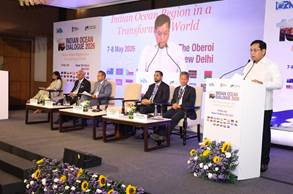
India as Chair of IORA (Maritime Security):
Context: As the current Chair of the Indian Ocean Rim Association (IORA), India emphasized maritime stability amid West Asian tensions.
-
- IORA is an inter-governmental organization established in 1997 to foster regional cooperation.
- It consists of 23 Member States and 11 Dialogue Partners rimming the Indian Ocean.
- India’s 2026 priority: Addressing threats to shipping routes in the Strait of Hormuz.
- Diego Garcia: A key island in the Chagos Archipelago (hosting a US-UK base) was noted for its strategic proximity.
- IORA’s apex body is the Council of (Foreign) Ministers which meets annually.
- The IORA Secretariat is based in Ebene, Mauritius.
- Focus areas include Maritime Safety, Trade Facilitation, and Blue Economy.
- The “IORA Vision 2030” aligns with India’s SAGAR (Security and Growth for All in the Region) initiative.
- India is promoting the “Indian Ocean Region (IOR) Information Fusion Centre” for real-time tracking.
(TH)
Economy
GSTAT Empowered as National Appellate Authority (NAAAR):
Context: The Ministry of Finance issued a notification empowering the GST Appellate Tribunal (GSTAT) to act as the National Appellate Authority for Advance Rulings.
-
- The Principal Bench of GSTAT in New Delhi will now handle national-level advance ruling appeals.
- The President of GSTAT will serve as the Presiding Officer of this authority.
- Advance Ruling: A written interpretation of tax laws provided by tax authorities to corporations to provide certainty.
- The move aims to resolve conflicting rulings given by different State-level Authorities for Advance Rulings (AARs).
- It reduces litigation by providing a single, unified appellate forum for GST issues.
- The GSTAT itself is a statutory body mandated by the CGST Act, 2017.
- It acts as the second appeal forum in GST laws and the first common forum between Centre and States.
- This empowerment is expected to significantly improve the Ease of Doing Business in India.
- Ensures uniformity in the application of GST across diverse business sectors.
(GSTAT)
Geography, Mapping, Ecology & Environment and DM
Coal Gasification: Talcher Plant and National Mission:
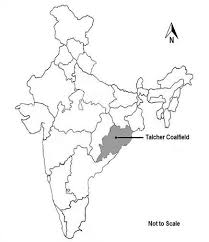
Context: The Ministry of Chemicals and Fertilizers reviewed the progress of the Talcher Fertilizers Ltd (TFL) plant, India’s first coal gasification-based urea project.
-
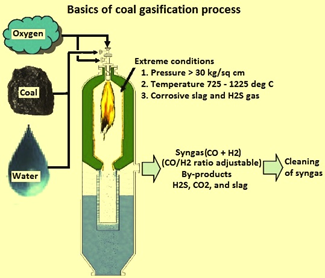
- Coal Gasification: A process of converting coal into Syngas (Hydrogen, Carbon Monoxide, and CO2).
-
- Syngas is used as a feedstock for producing urea, methanol, and other chemicals.
- National Coal Gasification Mission: Targets gasifying 100 Million Tonnes (MT) of coal by 2030.
- The Talcher plant in Odisha uses high-ash Indian coal, which is otherwise difficult to use cleanly.
- The project aims to reduce India’s urea import bill and dependence on expensive imported Natural Gas.
- Includes a “Clean Coal” pathway by stripping pollutants like sulfur and mercury before combustion.
- Aligns with India’s Panchamrit goals for climate action by reducing direct coal burning.
- Government offers a 50% rebate on revenue share in coal auctions if the coal is used for gasification.
- India has the 5th largest coal reserves in the world, making this critical for energy security.
(IE)
Science & Technology
National Technology Day 2026:
Context: Celebrated annually on 11 May to commemorate India’s technological advancements and scientific spirit.
-
- Marks the anniversary of the Pokhran-II nuclear tests (Operation Shakti) in 1998.
- The 2026 theme focuses on “Sustainable Technology for a Resilient Bharat.”
- Honours the flight of Hansa-3, India’s first indigenous aircraft.
- Commemorates the successful test firing of the Trishul
- The Technology Development Board (TDB), a statutory body, organizes the national award ceremony.
- TDB provides financial assistance to Indian industrial concerns for the commercialization of indigenous technology.
- Focus in 2026 is on deep-tech startups and green hydrogen integration.
- The day emphasizes the “Viksit Bharat” vision through technological self-reliance.
- Awards are given across categories like Main, MSME, and Startup for innovative indigenous products.
- Highlights the role of the Department of Science and Technology (DST) in fostering an R&D ecosystem.

(TOI)
Mission Drishti: World’s First OptoSAR Private Satellite:
Context: The Prime Minister congratulated the Bengaluru startup GalaxEye for the successful orbital performance of Mission Drishti, launched earlier in May 2026.
-
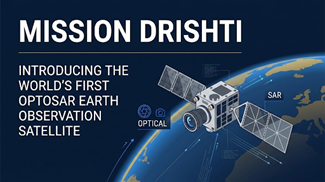
- Mission Drishti features the world’s first OptoSAR satellite.
- OptoSAR Technology: Combines Optical (visual) sensors and Synthetic Aperture Radar (SAR) on a single platform.
- Optical sensors provide high-resolution colour images but are blinded by clouds or darkness.
- SAR can “see” through clouds, rain, smoke, and total darkness using radar waves.
- By fusing both, the satellite provides all-weather, 24/7 monitoring
- It is the largest satellite ever built by a private Indian company.
- Launched aboard a SpaceX Falcon 9 rocket from California.
- Eliminates the need for separate satellites to verify radar data with visual imagery.
- The data resolution is approximately 8 meters, high enough for strategic surveillance.
- Developed by a team of engineers from IIT Madras, showcasing the success of Indian academia-industry links.
(PIB)
Defence
Advanced Agni Missile Test (MIRV Capability):
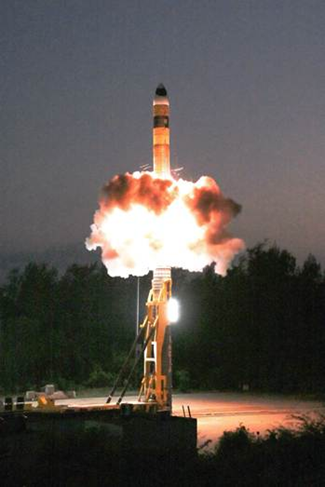
Context: India successfully test-fired an advanced Agni ballistic missile with MIRV (Multiple Independently Targetable Re-entry Vehicle) technology from APJ Abdul Kalam Island.
-
- MIRV Technology: Allows a single missile to carry multiple warheads, each capable of hitting different targets.
- Developed by the DRDO under the Integrated Guided Missile Development Programme (IGMDP).
- Strengthens India’s “credible minimum deterrence” and “No First Use” policy.
- The Agni series consists of solid-fuelled, nuclear-capable ballistic missiles.
- Agni-V, the flagship, has a range of over 5,000–5,500 km, placing it in the ICBM (Intercontinental Ballistic Missile) category.
- MIRV capability is critical for bypassing advanced Ballistic Missile Defence (BMD) systems.
- India joins a select group of nations (USA, Russia, China, UK, France) with this technology.
- The test confirms the miniaturization of nuclear warheads for multiple payloads.
- It enhances the survival of India’s second-strike capability.
- The system uses a redundant high-accuracy navigation system for precision strikes.
(PIB)
ICGS ACHAL Commissioned:
Context: The Indian Coast Guard (ICG) commissioned ICGS Achal, a new indigenous vessel, enhancing maritime security.
-
- The commissioning took place as part of the ICG’s fleet expansion in the Western Region.
- Indigenization: The ship is built under the “Make in India” initiative in the defence sector.
- Role: Search and Rescue (SAR), anti-piracy, and coastal surveillance.
- The vessel is equipped with advanced navigation and communication systems.
- A ‘Girdle Laying’ ceremony for indigenous Air Cushion Vehicles (Hovercrafts) also took place in Goa on May 11.
- ICG operates under the Ministry of Defence.
- It follows the “Yayam Rakshamah” (We Protect) motto.
- The commissioning highlights the growing capability of Indian shipyards in high-tech naval construction.
- The ship will be stationed to monitor the EEZ (Exclusive Economic Zone).
- It integrates with the National Command Control Communication and Intelligence (NC3I) network.

(PIB)
Release of Indian Navy Maritime Security Strategy-2026 (INMSS-2026):
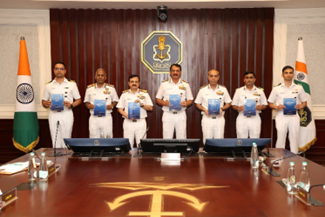
Context: The Indian Navy officially released its third maritime strategy document, INMSS-2026, titled “Securing the Blue Frontiers,” reflecting shifts in global geopolitics.
-
- This is the third such document, following Freedom to Use the Seas (2007) and Ensuring Secure Seas (2015).
- Introduces the concept of “Grey-Zone Warfare” as a primary challenge in the Indian Ocean Region (IOR).
- Follows an “Ends–Ways–Means” construct to align naval operations with national strategic objectives.
- Aligns with the “No War No Peace” doctrinal articulation introduced in the Indian Maritime Doctrine – 2025.
- Includes a new chapter on “Enablers”, focusing on technological means like AI and quantum communication.
- Prioritizes “Jointness and Integration” with the Indian Army and Air Force for multi-domain operations.
- Highlights the MAHASAGAR vision (Mutual and Holistic Advancement for Security and Growth Across Regions).
- Addresses non-traditional threats including climate change-induced migration and maritime terrorism.
- The strategy was unveiled by Admiral Dinesh K. Tripathi, Chief of the Naval Staff.
- Emphasizes India’s role as a “Preferred Security Partner” in the Indo-Pacific.
(TH)
Government Schemes
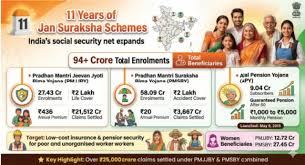
Jan Suraksha Schemes: 11-Year Milestone:
Context: The Prime Minister highlighted the impact of the Jan Suraksha social security schemes upon completing 11 years of their launch (2015–2026).
-
- PMJJBY (Pradhan Mantri Jeevan Jyoti Bima Yojana): Life cover of ₹2 lakh at a premium of ₹436/year for age group 18-50.
- PMSBY (Pradhan Mantri Suraksha Bima Yojana): Accident insurance of ₹2 lakh at just ₹20/year for age group 18-70.
- APY (Atal Pension Yojana): Guaranteed minimum pension (₹1,000–₹5,000) for subscribers joining between 18-40 years.
- As of April 2026, combined enrolments exceed 94 crore
- Significantly high penetration among women, with over 27 crore subscribers in PMJJBY.
- The schemes leverage the JAM Trinity (Jan Dhan, Aadhaar, Mobile) for direct benefit transfers and auto-debits.
- They align with Article 41 of the Constitution (Right to public assistance in cases of old age/disablement).
- A new “Jan Suraksha Portal” has been launched for digital claim processing.
- The schemes aim to reduce “distress borrowing” among informal workers.
- Payouts under PMJJBY alone have crossed ₹21,000 crore to over 10 lakh families.
(TOI)
Spread the Word