THE UN CONVENTION ON THE LAW OF THE SEA (UNCLOS)
Adopted in 1982, UNCLOS sets the ground rules for how countries use the world’s oceans. It defines territorial seas – extending 12 nautical miles from a country’s coastline – creates exclusive economic zones and establishes the legal framework for navigation through international waterways.
There are roughly 110 straits worldwide, including some of the busiest shipping corridors on the planet. The Strait of Hormuz lies within the territorial waters of Iran and Oman, UNCLOS created a special legal regime for straits like it known as “transit passage.”
Transit passage
Under this rule, ships have the right to move continuously and quickly through straits used for international navigation, even when those waters technically fall within a country’s territorial sea. The treaty is explicit on the point. Article 44 states that countries bordering such straits “shall not hamper transit passage,” and the right cannot be suspended.
In other words, the legal architecture of the oceans says these corridors must remain open.
|
UNCLOS, Article 44 “States bordering straits shall not hamper transit passage and shall give appropriate publicity to any danger to navigation or overflight within or over the strait of which they have knowledge. There shall be no suspension of transit passage.” |
Oman has ratified UNCLOS. Iran signed the treaty but never ratified it. The United States hasn’t ratified it either, though Washington treats most of its navigational provisions as binding customary international law and regularly enforces them through Freedom of Navigation operations.
| The Six-Day War
History shows how sensitive these passages can be. The closure of the Strait of Tiran by Egypt in 1967, for instance, helped trigger the Six-Day War. |
CAN IRAN LEGALLY CLOSE THE STRAIT?
No. Even before UNCLOS existed, the 1958 Geneva Convention on the Territorial Sea – which Iran did ratify – recognized that straits used for international navigation could not be arbitrarily closed. Under that earlier system, foreign ships enjoyed what is known as “non-suspendable innocent passage.”
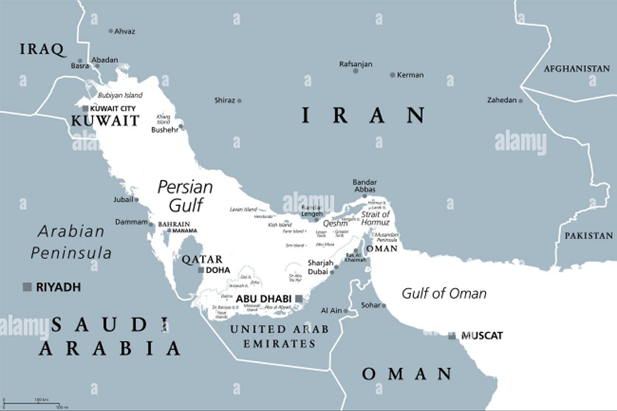
The bottom line is straightforward: under either legal framework, a blanket closure of the Strait of Hormuz to international shipping would be extraordinarily difficult to justify under international law.
Right to regulate: The coastal states do retain certain rights. They can regulate navigation for safety and may act against vessels engaged in hostile activities. But those powers are limited to specific conduct during transit – they do not extend to broader geopolitical disputes or retaliation for military strikes.
(Further, if Iran were to obstruct passage by military means, it would raise serious legal concerns under the UN Charter, which prohibits the unlawful use of force.)
How Do You Close a Body of Water?
There are several ways to achieve that.
1. One of the most effective methods (also the most self-sabotaging and damaging in the long-run) is seeding shipping lanes with underwater mines. Submarines or fast-attack boats can deploy them quietly, turning major trade routes into a high-stakes gamble.
2. Missiles and drones. Coastal missile batteries or drone attacks can threaten passing vessels. Even occasional strikes can rattle the shipping industry. You don’t have to hit every ship – only enough to demonstrate the threat is real.
3. Harassment and seizures. Another tactic is harassment by swarms of small fast boats that board, detain or seize tankers. Iran used similar tactics during the Tanker War of the 1980s, and incidents have resurfaced periodically in recent years.
4. Insurance upheaval. The most powerful lever may not involve weapons at all. If insurers determine a waterway has become too dangerous, they may refuse to cover ships traveling through it. Without insurance, vessels cannot secure financing, cargo or crews. At that point, the waterway may not be physically blocked, but traffic collapses anyway.
In other words, straits like Hormuz are rarely actually closed, but rather economically closed, when risk, markets and fear accomplish what navies might otherwise attempt.
The Way Forward
The 2026 conflict is being described by jurists as the “death of international law” because the major powers involved have pivoted to unilateralism. For the rules-based order to be restored, a new treaty is likely required that specifically addresses “gray zone” warfare and the legal status of proxy forces.
Spread the Word