
ISRAEL-THE UNITED STATES-IRAN
Context: For decades, the relationship has been defined by a triangular struggle:
-
- The 1979 Turning Point: Since the Islamic Revolution, Iran has viewed the US as the “Great Satan” and Israel as the “Little Satan,” seeking to export its revolutionary ideology and end Western influence in the Middle East.
- The Axis of Resistance: Iran manages a network of proxies (Hezbollah, Hamas, Houthis, and militias in Iraq/Syria) to project power and surround Israel.
- The Nuclear Standoff: Israel and the US view a nuclear-armed Iran as an existential threat. Efforts to curb this through diplomacy (like the 2015 JCPOA) have repeatedly stalled or collapsed.
Primary Causes of Conflict
-
- Nuclear Ambitions: Iran’s enrichment of uranium to near-weapons grade has triggered “red lines” for Israel and the US.
- Regional Hegemony: Iran’s “land bridge” from Tehran to the Mediterranean (via Iraq, Syria, and Lebanon) threatens the security of Israel and Sunni Arab allies.
- Proxy Warfare: Continuous rocket fire from Hezbollah and the October 7, 2023, Hamas attacks (which Israel believes were facilitated by Iran) have pushed tensions to a breaking point.
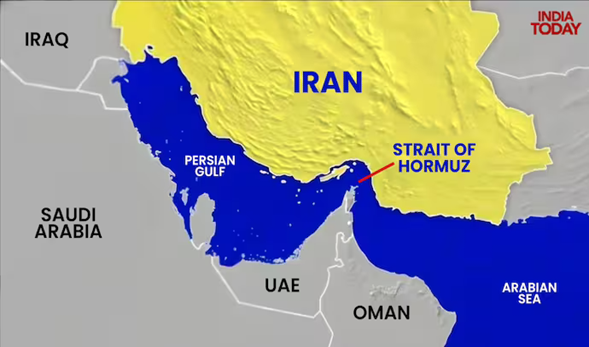
- Maritime Security: Iran’s control over the Strait of Hormuz—a chokepoint for 20% of global oil—serves as a constant economic leverage point against the West.
IRAN’S THREE CONDITIONS FOR ENDING THE WAR
1. Recognition of Rights: This includes recognizing Iran’s “legitimate rights” to nuclear enrichment for peaceful purposes, consistent with the Nuclear Non-Proliferation Treaty (NPT), according to YouTube videos and YouTube videos.
2. Reparations/Compensation: Iran demands payment for damages incurred during the conflict.
3. Guarantees Against Future Aggression: Iran requires assurances that the US and Israel will not attack the country in the future.
THE MILITARY OPERATIONS
United States & Israel
-
- Operation Midnight Hammer (June 2025): A major joint strike involving seven US B-2 bombers and Israeli stealth fighters targeting three key Iranian nuclear sites: Fordow, Natanz, and Isfahan. This was the first operational use of the 30,000-pound “Bunker Buster” (GBU-57 MOP).
- Operation Epic Fury (Feb 2026 – Present): The US code name for the massive, ongoing joint campaign initiated on February 28, 2026. It involves thousands of strikes aimed at dismantling Iran’s missile industry, navy, and leadership infrastructure.
- Operation Roaring Lion (Feb 2026): Israel’s specific code name for its component of the 2026 campaign, which included the precision decapitation strike on Supreme Leader Ali Khamenei’s compound in Tehran.
Iran
-
- Operation True Promise I (April 2024): The first-ever direct Iranian drone and missile strike on Israel from Iranian soil, launched in retaliation for the Damascus consulate bombing.
-
- Operation True Promise II (October 2024): A barrage of nearly 180 ballistic missiles launched after the assassinations of high-ranking Hezbollah and Hamas leaders.
- Operation True Promise III (June 2025): Iran’s official name for its defensive and retaliatory actions during the “Twelve-Day War” following the strikes on its nuclear sites.
- Operation True Promise IV (Feb 2026 – Present): The current, multi-wave retaliatory campaign. As of mid-March 2026, Iran has launched over 48 waves of missiles and drones targeting Israeli cities and US bases across the Middle East.
Gulf States (GCC)
-
- Operation Prosperity Guardian II (Proposed 2026): A US-led initiative in which several Gulf states (Bahrain, etc.) provide logistics and intelligence to protect the Strait of Hormuz from Iranian blockades.
| Country | Operation Name | Primary Objective |
|---|---|---|
| USA | Epic Fury | Dismantle Iran's nuclear/missile programs. |
| Israel | Roaring Lion | Decapitation strikes on Iranian leadership. |
| Iran | True Promise IV | Retaliation against Israel and US regional bases. |
| US/Israel | Midnight Hammer | Surprise destruction of underground nuclear sites. |
THE UN 10-POINT PEACE PLAN (MARCH 2026)
The UN Secretary-General has formally circulated a “Non-Paper” containing a 10-Point Peace Plan. This plan aims to provide a face-saving exit for all parties while ensuring long-term regional stability.
1. Immediate 72-Hour “Silence for Science” Ceasefire
2. The Hormuz Transit Guarantee
3. Formal Accession Recognition
4. Creation of a “Buffer Zone” in Lebanon
5. The “Remedy Window” Protocol
6. Strategic Missile Freeze
7. Cyber-Peace Treaty
8. Reconstruction Fund (The “Persian Marshall Plan”)
9. Release of All “Hostage-Politicals”
10. The Regional Security Summit (New Delhi 2027)
THE TRUMP ADMINISTRATION’S “PEACE PLAN”
1. The Core Objective: “Unconditional Surrender”
2. The Diplomatic Framework: Abraham Accords Expansion
3. The Military Component: “Peace Through Strength”
4. The “Internal Rescue” Strategy
THE ABRAHAM ACCORDS
The accords, originally signed in 2020 during Donald Trump’s first term, normalized relations between Israel and several Arab nations (UAE, Bahrain, Morocco, and Sudan). In the context of the current Operation Epic Fury (the U.S.-led military campaign against Iran in March 2026), these agreements are being referred to as “Abraham Accords 2.0.”
1. New Members and Expansion (2025–2026)
-
- Kazakhstan (November 2025): The first Central Asian nation to join, signaling the Accords’ expansion beyond the Middle East to encircle Iran from the north.
- Somaliland (December 2025): Added by Prime Minister Netanyahu to secure the Red Sea corridor and counter Iranian/Houthi influence in the Horn of Africa.
- Syria (Post-Assad): Following the fall of Bashar al-Assad in December 2024, the new Syrian leadership under Ahmed al-Sharaa has entered normalization talks with Israel, a move brokered by the U.S. to sever Iran’s “land bridge” to Hezbollah.
Signatories (as of March 2026)
| Country | Join Date | Key Role in 2026 Conflict |
|---|---|---|
| UAE | Sept 2020 | High-tech cyber and intelligence hub; logistics. |
| Bahrain | Sept 2020 | Hosting U.S. 5th Fleet; critical for Strait of Hormuz security. |
| Morocco | Dec 2020 | Security cooperation; military exchanges. |
| Sudan | Jan 2021 | Counter-smuggling in the Red Sea (status remains fragile). |
| Kazakhstan | Nov 2025 | Monitoring Iran’s northern border; energy cooperation. |
| Somaliland | Dec 2025 | Securing the Bab el-Mandeb strait against Houthi remnants. |