
INDIAN POLITY & GOVERNANCE
Department of Consumer Affairs Notifies Legal Metrology (Indian Standard Time) Rules, 2026:
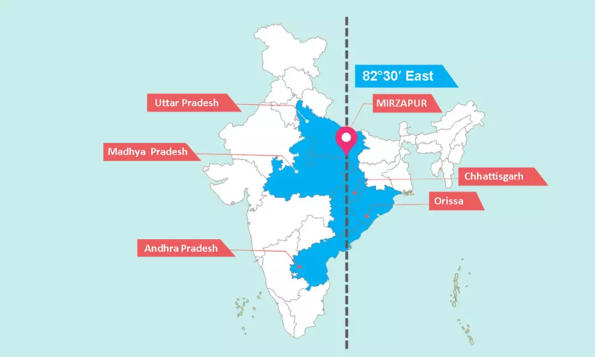
The Department of Consumer Affairs has officially notified the Legal Metrology (Indian Standard Time) Rules, 2026 under the Legal Metrology Act, 2009, establishing Indian Standard Time (IST) as the mandatory single time reference for all legal, administrative, and commercial operations across India.
-
- Statutory Mandate: The Legal Metrology (Indian Standard Time) Rules, 2026 have been framed under Section 52 read with Section 15 of the Legal Metrology Act, 2009, formalising the ‘One Nation, One Time’ national framework.
- Transitional Timeline: The notified rules will formally come into force 180 days after publication in the Official Gazette to allow public and private sector enterprises sufficient lead time for technological synchronization.
- Primary Beneficiaries: Mandatory standardized time-stamping applies to digital banking transactions, unified payments interface (UPI) logs, stock exchanges, telecom billing, airline operations, and Indian Railways scheduling.
- Sovereign Timing Source: The rules mandate the use of Indian Standard Time generated and disseminated by CSIR-National Physical Laboratory (CSIR-NPL) and ISRO’s indigenous NavIC (Navigation with Indian Constellation) satellite network.
- Elimination of Foreign Reliance: The framework eliminates critical infrastructure dependency on foreign timing references, specifically the United States Global Positioning System (GPS) time and European Galileo signals.
- Technological Architecture: Precise microsecond and nanosecond time synchronization is operationalized via the White Rabbit Precision Time Protocol (WR-PTP) and Regional Reference Standards Laboratories (RRSL).
- Enforcement Authority: State Legal Metrology Departments and the Central Legal Metrology Wing are vested with regulatory powers to audit, verify, and penalize non-compliant commercial time-stamping engines.
- Cybersecurity & Legal Evidentiary Value: Uniform millisecond-level time-stamping ensures tamper-proof audit trails under Section 65B of the Indian Evidence Act, 1872 (now Bharatiya Sakshya Adhiniyam, 2023) for financial dispute adjudications.
- Administrative Integration: Aligns national emergency response systems, power grid dispatch centres (POSOCO/Grid-India), and air traffic control under a single synchronised master clock.
(PIB)
SOCIETY & SOCIAL JUSTICE
State Cabinet Clears Stringent Anti-Conversion Legislation with Enhanced Penal Safeguards:
The Goa State Cabinet has approved the Goa Freedom of Religion Bill, 2026, establishing strict criminal penalties for religious conversions effected through coercion, undue influence, misrepresentation, allurement, or marriage, bringing the state’s legal framework into alignment with several other Indian jurisdictions.
-
- Statutory Provisions: The Bill criminalises unlawful religious conversions carried out through force, fraud, coercion, undue influence, economic allurement, or fraudulent promises of marriage.
- Stringent Penalties: Prescribes graded imprisonment ranging from 3 to 10 years, with aggravated penalties extending up to life imprisonment where conversions involve minors, women, or individuals belonging to Scheduled Castes and Scheduled Tribes.
- Mandatory Prior Declaration: Mandates that any person intending to convert, as well as the religious priest or authority performing the ceremony, must submit a formal declaration to the District Magistrate at least 60 days in advance.
- Burden of Proof: Statutorily places the burden of proof on the person who facilitated or caused the religious conversion to demonstrate that it was voluntary and not tainted by fraud, coercion, or allurement.
- Locus Standi for Complaints: Empowers the aggrieved individual, their parents, siblings, or any blood relative within the third degree of kinship to lodge a First Information Report (FIR).
- Constitutional Contours (Article 25): Article 25(1) guarantees the freedom of conscience and the right freely to profess, practise, and propagate religion, subject strictly to public order, morality, and health.
- Judicial Precedent (Rev. Stanislaus Case): In *Rev. Stanislaus v. State of Madhya Pradesh (1977)*, the Supreme Court held that the right to ‘propagate’ religion under Article 25 does not encompass a fundamental right to convert another person.
- Autonomy Precedents (Shafin Jahan & KS Puttaswamy): The Supreme Court in *Shafin Jahan v. Asokan K.M. (2018)* affirmed that the right to choose a religion and marital partner is an intrinsic element of personal liberty and privacy under Article 21.
- Socio-Legal Balance: The legislative measure seeks to balance individual liberty of conscience against state interest in maintaining inter-community harmony, social peace, and preventing predatory proselytisation.
(IE)
INTERNATIONAL DEVELOPMENTS
India and Uzbekistan Elevate Strategic Partnership with ‘Shared Vision’ Roadmap in Tashkent:
Prime Minister Narendra Modi and President Shavkat Mirziyoyev concluded high-level delegation talks in Tashkent, adopting a comprehensive ‘Shared Vision’ roadmap spanning bilateral trade, critical minerals, digital public infrastructure, and Eurasian connectivity via INSTC and Chabahar Port.
-
- Summit Level Outcome: India and Uzbekistan adopted a landmark Joint Declaration on ‘Shared Vision for Comprehensive Strategic Partnership’, expanding cooperation across multi-sectoral economic corridors.
- Bilateral Investment Treaty (BIT): Both nations finalized negotiations on the modern India-Uzbekistan Bilateral Investment Treaty (BIT) to provide robust investor protection and stimulate capital flows.
- Strategic Connectivity Hub: Uzbekistan affirmed its proactive participation in the International North-South Transport Corridor (INSTC) and the operationalization of the India-funded Shahid Beheshti Terminal at Chabahar Port, Iran.
- Eurasian Trade Integration: Agreed to utilize the multimodal INSTC route to reduce logistics transit time between Mumbai and Tashkent by over 40% compared to traditional maritime routes via the Suez Canal.
- Critical Minerals & Energy: Signed a long-term supply agreement for Uzbek uranium and explored joint exploration ventures in rare earth elements, lithium, and critical mineral processing.
- Digital Public Infrastructure (DPI): Extended technical assistance to deploy India’s ‘India Stack’ architecture in Uzbekistan, focusing on unified digital payments, national digital identity, and e-governance solutions.
- Defense & Counter-Terrorism: Reiterated institutional defense cooperation through the joint military exercise ‘DUSTLIK’ and enhanced real-time intelligence sharing through the Joint Working Group on Counter-Terrorism.
- Regional Security & Afghanistan: Emphasized a shared security interest in a peaceful, united, and stable Afghanistan, advocating for an inclusive government and preventing Afghan territory from being used as a terrorist sanctuary.
- Cultural & Educational Ties: Agreed to establish additional Indian university campuses in Tashkent and Samarkand, celebrating shared civilizational links connecting ancient Sogdiana with the Indian subcontinent.
(TH)
ECONOMY
Insolvency and Bankruptcy Code (IBC) Completes Ten Years: Creditor Realisation Trends and Structural Resolution Delays:
As India’s landmark Insolvency and Bankruptcy Code (IBC), 2016 completes a decade of operation, data compiled by the Insolvency and Bankruptcy Board of India (IBBI) reveals bank haircuts averaging over 70% in corporate insolvencies, highlighting systemic delays before the National Company Law Tribunal (NCLT).
-
- Decade of Operation: Enacted in May 2016 to consolidate and amend laws relating to reorganization and insolvency resolution, the IBC replaced fragmented mechanisms like SICA, 1985, SARFAESI, 2002, and CDR.
- Resolution vs Liquidation Metrics: Over the 10-year period, more than 50% of closed corporate insolvency resolution processes (CIRPs) ended in liquidation rather than resolution, primarily due to delayed admissions.
- Escalating Bank Haircuts: Financial creditors realized an average of ~30-32% of their admitted claims in resolved cases, translating to average haircuts of nearly 68-70%, with haircuts exceeding 85% in legacy manufacturing cases.
- Realization Against Liquidation Value: Financial creditors recovered approximately 165-170% of the fair liquidation value, demonstrating that resolution under IBC still yields superior value compared to outright liquidation.
- Statutory Timeframe Violation: Section 12 of the IBC mandates CIRP completion within 180 days (extendable to 330 days including litigation), but average resolution time has stretched past 650 days due to judicial bottlenecks.
- Section 29A Impact: Section 29A’s strict disqualification of wilful defaulters and erstwhile promoters prevented backdoor re-entry of defaulting promoters, though it narrowed the pool of eligible resolution applicants.
- Pre-packaged Insolvency (PIRP): The Pre-packaged Insolvency Resolution Process under Chapter III-A for MSMEs continues to see modest uptake, prompting proposals to extend pre-packs to larger corporate debtors.
- Institutional Infrastructure: IBBI has recommended expanding National Company Law Tribunal (NCLT) bench capacity, introducing specialized insolvency benches, and mandating automated electronic case management.
- Cross-Border Insolvency Framework: Ministry of Corporate Affairs is expediting the adoption of the UNCITRAL Model Law on Cross-Border Insolvency into the IBC to manage cross-border asset tracing and concurrent proceedings.
(IE)
GEOGRAPHY
Catastrophic Flash Floods and Glacial Lake Outbursts (GLOFs) in the Hindu Kush Himalaya (HKH) Drainage Basins:
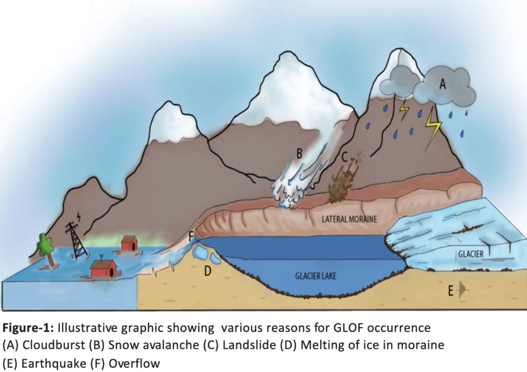
Intense transboundary cloudbursts and moraine-dammed glacial lake ruptures across the Hindu Kush Himalaya (HKH) along the Nepal-Tibet border have triggered devastating flash floods, discharging massive debris flows into the upper tributaries of the Gandak and Kosi river systems.
-
- Geomorphic Trigger: The disaster was precipitated by localized high-intensity precipitation (cloudbursts >100 mm/hour) combined with rapid glacier melt, triggering moraine-dam failures in high-altitude proglacial lakes.
- HKH Cryosphere Fragility: The Hindu Kush Himalaya (often termed the ‘Third Pole’) contains the largest reserve of frozen water outside the polar regions, feeding 10 major Asian river systems that support 1.9 billion people.
- Glacial Lake Outburst Floods (GLOFs): GLOFs occur when unstable natural moraine dams holding glacial meltwater fail catastrophically due to hydrostatic pressure, ice avalanches, or seismic liquefaction, unleashing extreme flash floods downstream.
- Transboundary Drainage Cascades: The floodwaters originated in the upper trans-Himalayan catchments of the Bhote Koshi and Trishuli rivers in Tibet/Nepal, directly feeding the Narayani (Gandak) and Saptakoshi (Kosi) basins in northern Bihar, India.
- Sediment & Silt Transport: The violent surge transported millions of tonnes of boulder-rich glacial debris and fine silt, dramatically elevating downstream riverbed levels and increasing flood inundation vulnerability across North Bihar plains.
- Climate Warming Amplification: According to ICIMOD assessments, Himalayan glaciers are retreating at an unprecedented rate of 65% faster in the 2010s compared to the preceding decade, multiplying the number of hazardous glacial lakes.
- Hydrological Early Warning Deficits: Highlights severe gaps in real-time transboundary hydrological data sharing and automated satellite-based GLOF early warning systems across the India-Nepal-China Himalayan arc.
- Disaster Mitigation Framework: NDMA guidelines recommend deploying synthetic aperture radar (SAR) monitoring, automated water-level sensors, and structural siphoning to artificially lower high-risk glacial lake levels.
(TH)
SCIENCE & TECH
White Rabbit Precision Timing Protocol and NavIC-Synchronised Time Dissemination Network for Critical Digital Infrastructure:
CSIR-National Physical Laboratory (CSIR-NPL), in collaboration with ISRO, the Department of Consumer Affairs, and SEBI, has operationalized the White Rabbit Technology-based Indian Standard Time (IST) Dissemination Network, achieving sub-nanosecond synchronization across critical financial and digital sectors.
-
- Technological Origin: Originally developed at CERN (European Organization for Nuclear Research) for particle accelerator control, White Rabbit (WR) is a precision time transfer technology combining Synchronous Ethernet (SyncE) and IEEE 1588 PTP.
- Sub-Nanosecond Accuracy: White Rabbit enables deterministic, sub-nanosecond time synchronization (typically <1 nanosecond accuracy) and picosecond precision over fiber-optic networks spanning thousands of kilometers.
- Indian Implementation: CSIR-NPL and Regional Reference Standards Laboratories (RRSL Bengaluru) demonstrated secure, high-precision IST dissemination connecting financial exchange hubs in Chennai and Mumbai.
- PTP vs NTP Comparison: Unlike the standard Network Time Protocol (NTP) which offers millisecond-level precision, White Rabbit-based Precision Time Protocol (PTP) operates at hardware-level timestamping with sub-nanosecond precision.
- High-Frequency Trading (HFT) Integrity: Provides tamper-proof, synchronized millisecond and microsecond order-matching time stamps for capital markets (NSE and BSE), eliminating latency arbitrage and trading manipulation.
- Power Grid Stabilization: Enables Phasor Measurement Units (PMUs) across India’s National Power Grid (Grid-India) to achieve precise wide-area grid monitoring, preventing cascading blackouts through synchrophasor technology.
- 5G/6G Telecom Synchronization: Essential for Time Division Duplexing (TDD) in 5G and future 6G telecommunications, where carrier frequency alignment and beamforming require microsecond-level synchronization to avoid inter-cell interference.
- NavIC Constellation Integration: Integrates optical ground clocks directly with ISRO’s NavIC rubidium and atomic clock timing signals, creating an autonomous, sovereign, multi-layered national time architecture.
(PIB)
INTERNAL SECURITY
India-China LAC De-escalation Mechanism: Deliberations on Expanding Border Personnel Meeting (BPM) Points:
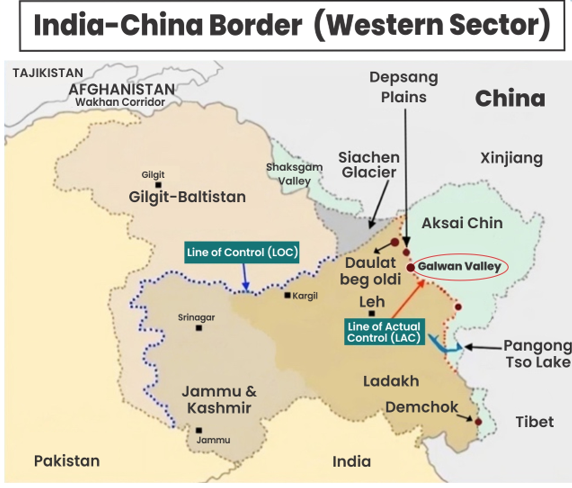
Diplomatic and military deliberations under the Working Mechanism for Consultation and Coordination on India-China Border Affairs (WMCC) have focused on operationalizing two additional Border Personnel Meeting (BPM) points along the Line of Actual Control (LAC) to enhance crisis de-escalation protocols.
-
- Institutional Context: The deliberations were held under the framework of the WMCC, established in 2012 to maintain peace and tranquility in the India-China border regions and facilitate institutional dialogue.
- Existing BPM Points: India and China currently operate five designated BPM points along the 3,488 km LAC: Chushul and Daulat Beg Oldie (Western Sector/Ladakh), Nathu La (Middle/Eastern Sector/Sikkim), and Bum La and Kibithu (Eastern Sector/Arunachal Pradesh).
- Proposed Expansion: The proposal seeks to establish two new designated BPM points in previously unrepresented friction sectors to allow ground commanders to interact rapidly during border face-offs.
- Tactical Role of BPMs: BPM points serve as frontline dispute-resolution mechanisms where local military commanders hold flag meetings to de-escalate inadvertent transgressions, patrols overlaps, and infrastructure disputes.
- Bilateral Border Agreements: Governed by key confidence-building agreements: 1993 Border Peace and Tranquility Agreement (BPTA), 1996 Confidence Building Measures Agreement, 2005 Modalities Protocol, and 2013 Border Defence Cooperation Agreement (BDCA).
- Buffer Zones & Patrol Protocols: Discussions address the verification of mutually agreed buffer zones created post-2020 disengagement (Galwan, Pangong Tso, Gogra-Hot Springs) to avoid accidental kinetic escalation.
- Border Infrastructure Modernization: Parallels India’s strategic push under the Vibrant Villages Programme (VVP) and Border Roads Organisation (BRO) infrastructure projects (DS-DBO Road, Sela Tunnel, Nyoma Airbase).
- Strategic Posture: Maintains a twin-track approach of firm defensive military deterrence backed by institutional diplomatic engagement to achieve complete disengagement and eventual de-escalation along the LAC.
(TH)
MISCELLANEOUS
Sardar Patel National Unity Award: Government Set to Confer Inaugural Decoration on Patel’s 150th Birth Anniversary:
The Ministry of Home Affairs (MHA) is finalizing the selection for the inaugural Sardar Patel National Unity Award, instituted to recognize exceptional and inspiring contributions towards promoting national unity and integrity, coinciding with the nationwide commemoration of Sardar Vallabhbhai Patel’s 150th birth anniversary.
-
- Statutory Institution: Instituted by the Government of India in 2019 under the administrative aegis of the Ministry of Home Affairs to serve as the highest civilian award for contributions to national unity.
- Prestige & Precedence: Structured on par with the Padma Vibhushan in terms of national stature, the award seeks to recognize individuals, institutions, or organizations fostering national integration.
- No Monetary Grant: The award comprises a medal and a citation; no monetary grant or cash award is attached to it, emphasizing purely moral and patriotic prestige.
- Eligibility Criteria: Open to all Indian citizens, institutions, associations, or bodies without distinction of race, occupation, position, or sex for exceptional work in promoting unity and solidarity.
- Selection Committee: The Award Committee is constituted by the Prime Minister and includes the Cabinet Secretary, Principal Secretary to the PM, Secretary to the President, Home Secretary, and eminent public figures.
- Historical Commemoration: Coincides with the 150th birth anniversary celebrations of Sardar Vallabhbhai Patel (born 31 October 1875 in Nadiad, Gujarat), known as the ‘Iron Man of India’ and the architect of national integration.
- Integration of Princely States: Patel, alongside V.P. Menon, successfully integrated over 565 princely states into the Indian Union through diplomatic skill, the Instrument of Accession, and decisive action in Junagadh, Hyderabad (Operation Polo), and Kashmir.
- National Unity Day (Rashtriya Ekta Diwas): Since 2014, October 31 is observed nationwide as Rashtriya Ekta Diwas to foster and reinforce India’s commitment to strengthen the security, unity, and integrity of the nation.
(IE)
Spread the Word