
INDIAN POLITY & GOVERNANCE
University Grants Commission Issues Comprehensive Graded Autonomy and Quality Governance Norms:
The University Grants Commission (UGC) has notified updated regulatory frameworks under the National Higher Education Qualifications Framework (NHEQF), introducing streamlined graded autonomy, multiple entry-exit pathways, and rigorous accreditation metrics to restructure governance across higher educational institutions (HEIs).
-
- Statutory Authority: Notified under Section 12 read with Section 26 of the University Grants Commission Act, 1956, empowering the Commission to determine and coordinate standards of higher education.
- Graded Autonomy Tiers: HEIs are classified into three autonomous tiers based on National Assessment and Accreditation Council (NAAC) scores and National Institutional Ranking Framework (NIRF) ranks, granting top-tier institutions financial and curriculum-setting freedom.
- Multiple Entry and Exit Scheme (MEES): Operationalizes the Academic Bank of Credits (ABC) under the DigiLocker framework, enabling students to accumulate, verify, transfer, and redeem academic credits across multidisciplinary streams.
- Dual-Degree & Twinning Program Rules: Liberalizes joint-degree and twinning arrangements with top 500 global universities under Times Higher Education or QS rankings without requiring prior ad-hoc approvals from the UGC.
- National Higher Education Qualifications Framework (NHEQF): Levels higher education qualifications from Level 4.5 (first year undergraduate certificate) to Level 8 (doctoral degree), establishing uniform learning outcomes across general and vocational tracks.
- Faculty Recruitment & Governance Oversight: Mandates the ‘CU-Chayan’ unified recruitment portal for central universities to minimize faculty vacancies and institutionalize transparency in selections under Article 16 affirmative action guidelines.
- Appellate Tribunal Mechanism: Proposes dedicated Higher Education Grievance Redressal Committees (HEGRCs) and institutional ombudspersons to resolve student, teacher, and administrative disputes within a statutory 30-day window.
- Alignment with NEP 2020: Serves as an operational stepping stone towards the envisioned Higher Education Commission of India (HECI) as an overarching umbrella body with four independent verticals (NHERC, NAC, HEGC, GEC).
- Constitutional Contours: Higher education standards coordination falls under Entry 66 of List I (Union List) of the Seventh Schedule, maintaining the primacy of central legislation over state enactments.
(PIB)
AGRICULTURE
Pradhan Mantri Fasal Bima Yojana (PMFBY) Scales Historic Kharif Enrolment with Tech-Driven Claim Automation:
Official data released by the Ministry of Agriculture & Farmers Welfare indicates record participation under PMFBY for the Kharif 2026 season, covering 241.38 lakh farmers across 278.12 lakh hectares, driven by the re-entry of key states and the integration of automated remote-sensing yield estimation platforms.
-
- Record Enrolment Figures: Kharif 2026 witnessed 241.38 lakh enrolled farmers covering 278.12 lakh hectares of gross cropped area, representing a substantial year-on-year expansion in agricultural social safety coverage.
- State Re-Entry Dynamics: Major agricultural states including Andhra Pradesh, Bihar, Jharkhand, and West Bengal rejoined the central crop insurance scheme, with Uttar Pradesh recording a leading 35% surge in voluntary farmer enrolments.
- Universalized Voluntary Coverage: Since the 2020 revamp, PMFBY enrolment is 100% voluntary for all farmers (both loanee and non-loanee), dismantling mandatory automatic premium deductions by commercial and cooperative credit banks.
- Subsidized Premium Structure: Farmers pay an ultra-low uniform premium of 2% for Kharif food and oilseed crops, 1.5% for Rabi crops, and 5% for annual commercial/horticultural crops, with remaining premium shared 50:50 between Centre and States (90:10 in NE states).
- YES-TECH Integration: Mandatory deployment of the Yield Estimation System based on Technology (YES-TECH), blending satellite remote sensing, UAV drone imagery, and AI models to accurately assess crop loss at the Gram Panchayat level.
- WINDS & CROPIC Networks: The Weather Information Network Data Systems (WINDS) expands automatic weather stations (AWS), while CROPIC (Collection of Real-time Photographs and Integrated Crop Monitoring) provides geo-tagged photographic evidence of localized crop damage.
- Direct Benefit Transfer (DBT): Digitally integrated claim processing through the National Crop Insurance Portal (NCIP) and DigiClaim module eliminates intermediary delays, disbursing insurance claims directly into Aadhaar-seeded bank accounts.
- Welfare & Social Justice Mandate: Over 85% of total enrolled beneficiaries represent small and marginal farmers (<2 hectares), providing vital financial insulation against extreme monsoon variability and preventing agrarian debt traps under Article 48 directive principles.
(PIB)
INTERNATIONAL DEVELOPMENTS
UNFCCC Ocean and Climate Change Dialogue 2026 Outlines Blue Carbon Pathways Ahead of COP31:
The United Nations Framework Convention on Climate Change (UNFCCC) released its comprehensive synthesis report of the 2026 Ocean and Climate Change Dialogue, calling for the systemic integration of ocean-based climate solutions into Nationally Determined Contributions (NDCs) and global climate finance architecture.
-
- Synthesis Report Release: The UNFCCC released the formal outcome report of the 2026 Ocean and Climate Change Dialogue, establishing a strategic roadmap to integrate marine ecosystems into national climate mitigation and adaptation plans.
- Blue Carbon Ecosystems: Prioritizes the conservation and ecological restoration of mangroves, tidal salt marshes, and seagrass meadows, which sequester carbon at rates up to ten times higher per hectare than terrestrial tropical rainforests.
- Ocean-Based NDC Integration: Urges all coastal and island nations to incorporate quantifiable ocean-based mitigation targets—including offshore renewable energy, green shipping corridors, and marine spatial planning—into their 2030/2035 NDCs.
- Marine Heatwaves & Acidification: Highlights escalating oceanic threats, noting that the global ocean has absorbed over 90% of excess planetary heat since 1970 and 25-30% of anthropogenic carbon dioxide, driving severe coral bleaching and marine biodiversity collapses.
- High Seas Treaty Synergy: Emphasizes institutional linkages with the newly ratified Biodiversity Beyond National Jurisdiction (BBNJ) Treaty to establish marine protected areas (MPAs) in areas beyond national jurisdiction covering 30% of global oceans by 2030 (30×30 target).
- Climate Finance & CBDR-RC: Calls on the Green Climate Fund (GCF) and multilateral development banks to establish dedicated Blue Finance windows for Small Island Developing States (SIDS) and developing nations under the principle of Common But Differentiated Responsibilities.
- Decarbonization of Maritime Transport: Coordinates with the International Maritime Organization (IMO) Strategy on Reduction of GHG Emissions from Ships to achieve net-zero international maritime emissions by or around 2050.
- Strategic Significance for India: Directly reinforces India’s Deep Ocean Mission, Coastal Regulation Zone (CRZ) conservation policies, and the ‘MISHTI’ (Mangrove Initiative for Shoreline Habitats & Tangible Incomes) framework along its 7,516 km coastline.
(TH)
ECONOMY
National Statistical Office Releases Q1 FY 2026-27 GDP Estimates: Real GDP Growth Accelerates to 7.8%:
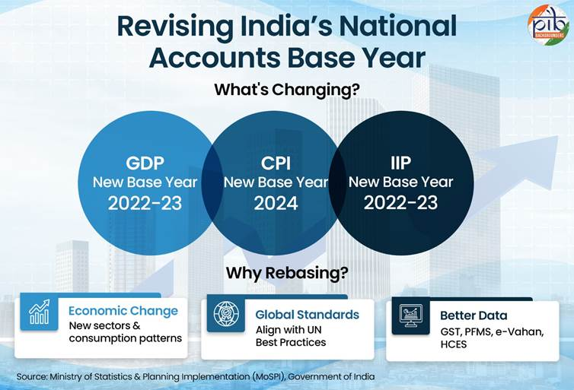
The National Statistical Office (NSO), Ministry of Statistics and Programme Implementation (MoSPI), has released the Quarterly Estimates of Gross Domestic Product (GDP) for the first quarter (April-June) of FY 2026-27, recording a robust Real GDP expansion of 7.8% underpinned by resilient domestic consumption and manufacturing recovery.
-
- Macroeconomic Growth Rate: India’s Real GDP (at constant 2011-12 prices) grew by 7.8% in Q1 FY 2026-27 compared to 6.7% in the corresponding quarter of the previous fiscal year, sustaining India’s position as the fastest-growing major global economy.
- Nominal GDP Expansion: Nominal GDP (at current prices) recorded a growth of 10.4%, reflecting moderate wholesale and retail inflation levels and stable input cost pressures across primary production sectors.
- Gross Value Added (GVA) Dynamics: Real Gross Value Added (GVA) expanded by 7.4%, driven by strong momentum in Manufacturing (7.5%), Construction (8.6%), and Financial, Real Estate & Professional Services (8.2%).
- Agriculture Sector Performance: The Agriculture, Forestry & Fishing sector grew at 3.5%, supported by the timely spatial progression of the southwest monsoon and robust summer crop sowing across major agrarian states.
- Investment Share (GFCF): Gross Fixed Capital Formation (GFCF)—the primary barometer of capital investment in the economy—expanded by 8.9%, maintaining an investment-to-GDP ratio of over 34.5% driven by central public capex and private industrial capacity expansion.
- Consumption Trends (PFCE): Private Final Consumption Expenditure (PFCE) registered a steady 6.8% increase, indicating recovering rural demand and sustained urban discretionary spending across durable goods and services.
- External Trade Drag: Net external demand exerted a slight negative drag on overall growth as imports of capital goods and intermediate inputs outpaced merchandise export growth amid subdued economic conditions in major advanced markets.
- Fiscal Deficit & Monetary Policy Context: High economic growth combined with buoyant direct tax collections supports the Union Government’s fiscal consolidation path towards a <4.5% fiscal deficit target by FY 2026-27 while providing room for the RBI MPC to maintain interest rate stability.
(PIB)
GEOGRAPHY
Fluvial Hydrology and Riverbank Inundation in the Mandakini and Ken-Betwa Catchments of the Bundelkhand Plateau:
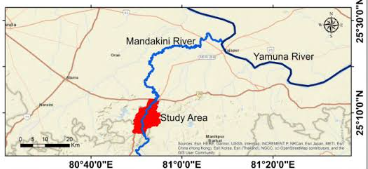
Intense cyclonic downpours over the northern Vindhyan Ranges have triggered severe bank overflow along the Mandakini River in Chitrakoot and adjacent tributaries across the Ken-Betwa river basin, causing widespread floodplain inundation and severe soil erosion across the semi-arid Bundelkhand geographic tract.
-
- Fluvial Drainage Pattern: The Mandakini River (distinct from the Mandakini tributary of the Alaknanda in Uttarakhand) originates near Majhgawan in the northern Vindhyan Range of Madhya Pradesh and flows through Chitrakoot before discharging into the Yamuna River.
- Geomorphology of Bundelkhand: The Bundelkhand plateau is an ancient, undulating crystalline peninsular shield characterized by granitic-gneissic bedrock, thin skeletal red soils (*rakhar* and *parwa*), and low infiltration capacity, making it exceptionally prone to sudden flash runoff.
- Transboundary Yamuna Basin Dynamics: The sudden swelling of the Mandakini, Paisuni, Ken, and Betwa rivers synchronised with elevated water levels in the Yamuna and Ganga trunk channels, creating severe hydraulic backwater effects and impeding natural drainage.
- Flash Runoff & Hydrograph Characteristics: The steep gradient of Vindhyan seasonal torrents generates rapid peak discharge with sharp, narrow flood hydrographs, leaving minimal time for downstream emergency flood evacuation.
- Soil Erosion & Ravine Formation: High-velocity runoff over weathered crystalline soils accelerates sheet and gully erosion, contributing to the expansion of historical badland and ravine topography characteristic of the Yamuna-Chambal-Betwa riparian corridors.
- Ken-Betwa River Linkage Context: The affected region forms the catchment for the flagship Ken-Betwa Link Project (KBLP), designed to transfer surplus water from the Ken basin in MP to the water-deficit Betwa basin in UP via the Daudhan Dam.
- Ecological Buffer & Forest Cover: The upper catchments traverse the northern fringe of the Panna Tiger Reserve and Ranipur Wildlife Sanctuary, where dense deciduous forest cover acts as a critical natural sponge moderating flood crests.
(IE)
SCIENCE & TECH
Synthetic Biology and Engineered Microbial Consortia for Precision Bioremediation and Biomanufacturing:
The Department of Biotechnology (DBT) and the National Institute of Plant Genome Research (NIPGR) have unveiled new regulatory and translational guidelines for deploying synthetic microbial consortia and CRISPR-based metabolic engineering for heavy metal soil bioremediation and sustainable biomanufacturing.
-
- Technological Definition: Synthetic biology represents the multidisciplinary redesign and de novo synthesis of biological parts, devices, and genetic circuits to construct organisms with customized biochemical capabilities not found in nature.
- Engineered Microbial Consortia: Utilizes synthetic metabolic pathways engineered into bacterial strains (*Pseudomonas putida*, *Rhodococcus*) to break down persistent polycyclic aromatic hydrocarbons (PAHs), synthetic plastics, and industrial chemical effluents into inert byproducts.
- CRISPR-Cas Guided Metabolic Tuning: Leverages CRISPR-Cas9 and base-editing tools to optimize gene expression and enzyme cascades in microbial cell factories for producing high-value biofuels, biopharmaceuticals, and bio-based industrial polymers.
- Biosafety & Biosecurity Protocols: Establishes stringent multi-tier biocontainment mechanisms, including engineered ‘kill-switches’ (synthetic auxotrophy and synthetic genetic firewalls) that ensure engineered microbes cannot survive outside designated laboratory or closed-reactor environments.
- Regulatory Architecture in India: Governed under the ‘Rules for the Manufacture, Use, Import, Export and Storage of Hazardous Microorganisms/Genetically Engineered Organisms or Cells, 1989’ framed under the Environment (Protection) Act, 1986.
- Institutional Oversight Hierarchy: Operates through a four-tier biosafety governance framework: Institutional Biosafety Committees (IBSC), Review Committee on Genetic Manipulation (RCGM under DBT), and Genetic Engineering Appraisal Committee (GEAC under MoEFCC).
- International Treaty Compliance: Strictly complies with the Cartagena Protocol on Biosafety and the Nagoya-Kuala Lumpur Supplementary Protocol on Liability and Redress under the Convention on Biological Diversity (CBD).
- Bio-Economy Potential: Aligns with India’s National Biotechnology Development Strategy to scale the domestic bio-economy to over $300 billion, transitioning chemical industries toward low-carbon biomanufacturing.
(DTE)
INTERNAL SECURITY
Bureau of Civil Aviation Security (BCAS) and DGCA Conduct Comprehensive Civil Aviation Emergency Audits:
Following an emergency aircraft landing incident involving hydraulic flight control malfunctions, the Bureau of Civil Aviation Security (BCAS) and the Directorate General of Civil Aviation (DGCA) initiated nationwide multi-agency contingency drills across Category-I international airports to evaluate aviation emergency response grids.
-
- Regulatory Mandate of BCAS: Established in 1978 (and restructured into an independent department under the Ministry of Civil Aviation in 1987 following the Kanishka crash), BCAS serves as the designated national appropriate authority for civil aviation security in India.
- Directorate General of Civil Aviation (DGCA): DGCA functions as the principal statutory regulatory body overseeing air safety, aircraft airworthiness certification, flight operations licensing, and incident investigation under the Aircraft Act, 1934.
- Aircraft (Security) Rules, 2023: Enforces the updated statutory security framework prescribing mandatory aerodrome emergency plans (AEP), counter-terrorism contingency measures, and multi-agency crisis containment protocols.
- Airport Emergency Response Protocol: Mandates coordinated inter-agency execution between the Central Industrial Security Force (CISF – Airport Security Group), Airport Health Organisation (APHO), state police forces, and local municipal fire-rescue grids.
- Incident Commander & CACMC: In civil aviation hijacking or security crises, the Central Aviation Crisis Management Committee (CACMC) headed by the Cabinet Secretary/Civil Aviation Secretary assumes central command, with the Aerodrome Committee functioning at the tactical field level.
- Operational Safety Standards: DGCA audits review airline compliance with Mandatory Occurrence Reporting (MOR), maintenance tracking under CAR-145 regulations, and crew recurrent training on emergency ditching and hydraulic-loss recovery.
- Anti-Sabotage & Screening Infrastructure: Enforces the deployment of advanced Dual-View X-ray Baggage Inspection Systems (BIS), Computed Tomography Explosive Detection Systems (CT-EDS), and biometric DigiYatra security gateways across hypersensitive airports.
(IE)
MISCELLANEOUS
Ecological Role of the Indian Flying Fox (*Pteropus medius*) and Conservation of Heritage Shitol Pati Cane Craft:
Ecological research highlighting the keystone seed-dispersal role of the Indian Flying Fox following its legal upgrade under the Wildlife (Protection) Act coincides with national initiatives to preserve the traditional ‘Shitol Pati’ cane-weaving craft of Assam and West Bengal.
-
- Taxonomy of Indian Flying Fox: The Indian Flying Fox (*Pteropus medius*, formerly *Pteropus giganteus*) is one of the largest bat species in the world, endemic to South Asia and characterized by a dog-like snout and lack of a tail.
- Keystone Ecological Services: As obligate frugivores and nectarivores, flying foxes act as critical long-distance seed dispersers and pollinators for over 300 plant species (including *Madhuca longifolia* / Mahua and *Ficus* species), maintaining tropical forest canopy regeneration.
- Upgraded Legal Status: Historically classified as ‘Vermin’ under Schedule V of the Wildlife (Protection) Act, 1972, the species was upgraded to Schedule II protection under the Wildlife (Protection) Amendment Act, 2022, legally prohibiting unpermitted hunting and culling.
- IUCN Red List & CITES: Classified as ‘Least Concern’ on the IUCN Red List of Threatened Species, but included in Appendix II of CITES to regulate international trade in specimens.
- Shitol Pati Traditional Craft: Shitol Pati (meaning ‘cool mat’) is a traditional GI-tagged handloom craft of Assam (Cachar) and West Bengal (Cooch Behar), renowned for its natural cooling properties during hot and humid summers.
- Botanical Raw Material: Woven exclusively from the smooth outer bark of the *Murta* plant (*Schumannianthus dichotomus*), a semi-aquatic wetland reed cultivated in marshy alluvial soils of the Brahmaputra and Barak valleys.
- UNESCO Recognition: The traditional art of Shitol Pati weaving is recognized by UNESCO on the Representative List of the Intangible Cultural Heritage of Humanity, celebrated for its sustainable, eco-friendly rural artisanal mastery.
(DTE)
Spread the Word