Introduction:
Farmers do not always get a fair price for their crops. Prices can fall below cost during harvest. PM-AASHA is the government’s plan to fix this. It works mainly for pulses, oilseeds and copra. It uses four tools to protect farmer income. It also keeps prices stable for buyers. The scheme supports India’s push for self-reliant farming and Viksit Bharat @2047.
What is PM-AASHA?
PM-AASHA stands for Pradhan Mantri Annadata Aay Sanrakshan Abhiyan. It was launched in September 2018. It is an umbrella scheme. This means it brings many price-support tools under one roof.
-
- Minimum Support Price (MSP): A floor price set by the government. Farmers should not sell below this price.
- Distress sale: When a farmer sells crops at a loss, often just after harvest, because there is no other buyer.
- Nodal agencies: NAFED and NCCF are the main agencies that buy crops on behalf of the government.
The Four Components of PM-AASHA
1. Price Support Scheme (PSS): The government buys pulses, oilseeds and copra at MSP. This happens only when the market price falls below MSP. Only registered farmers with land records can sell.
2. Price Deficiency Payment Scheme (PDPS): Used mainly for oilseeds. The government does not buy the crop. It pays the farmer the gap between MSP and the market price. The payment goes straight to the bank account. It is capped at 15% of MSP.
3. Market Intervention Scheme (MIS): Used for crops like tomato, onion and potato, which have no MSP. It starts when prices fall by 10% or more. Centre and states share the cost.
4. Price Stabilisation Fund (PSF): This scheme protects buyers, not just farmers. It builds a buffer stock of items like pulses and onions. Stock is released in the lean season to control price spikes.
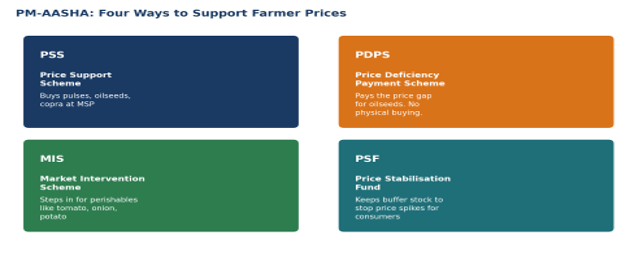
Fig. 1 – The four tools under PM-AASHA and what each one does.
Key Rules for Procurement
-
- From 2024-25, states can sell up to 25% of their pulses, oilseeds and copra output under PSS.
- A Committee of Secretaries can allow more, up to 25% of national output.
- For Tur, Urad and Masur, there is no limit. States can sell up to 100% of their output. This push is meant to cut pulse imports.
Recent Progress
-
- Budget: PM-AASHA spending rose from ₹5,437.99 crore in 2024-25 to ₹6,941.36 crore in 2025-26. It is ₹7,200 crore in 2026-27.
- Digital tools: Aadhaar-based checks, e-NAM, e-Samriddhi and e-Samyukti now support the scheme. These cut down fraud and delays.
- Infrastructure: The Agriculture Infrastructure Fund has backed 2,14,437 projects worth ₹96,426 crore. e-NAM links 1,656 mandis. India has also built 50,249 warehouses.
- State examples: In Bihar, NCCF bought masoor for the first time. In Chhattisgarh, PACS and FPOs helped NAFED and NCCF procure chana, masoor and mustard from over 21,000 farmers.
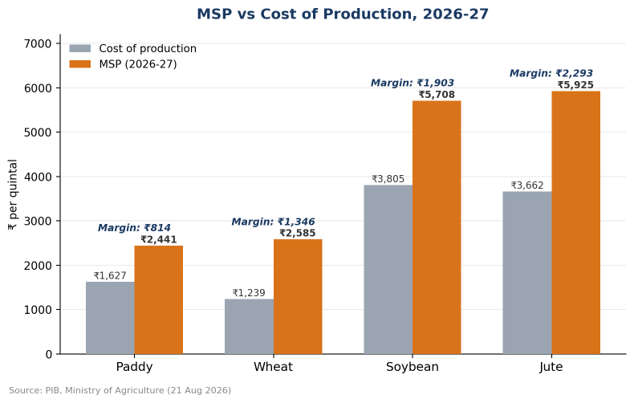
Fig. 2 – MSP stays well above the cost of growing key crops, 2026-27.
Why This Matters
-
- It gives farmers a price floor. This cuts the risk of distress sales.
- It supports crops beyond rice and wheat, like pulses and oilseeds, where India still depends on imports.
- It protects consumers too, through buffer stocks and market intervention.
- Digital tools cut out middlemen and make payments faster.
Challenges
-
- Parliamentary Standing Committee on Agriculture (March 2026) asked the government to raise pulse and oilseed procurement from 25% to 100% of output. It said this would also cut India’s import bill.
- CACP (Commission for Agricultural Costs and Prices) has said that PSS works fairly well. But PDPS and the private procurement pilot have not taken off. Farmers rarely use them.
- CACP: also flagged a problem in disposal. Agencies often struggle to sell procured stock later. This makes them cautious about buying more.
- Shanta Kumar Committee (2015), still widely cited in policy debate found that only about 6% of farmers actually benefit from MSP procurement. Most benefits go to paddy and wheat growers, not pulses and oilseeds farmers.
- Independent policy analysts point out that procurement is skewed by geography. States like Punjab, Haryana, Madhya Pradesh, Uttar Pradesh and Telangana get most of the benefit. Farmers in eastern and rainfed states often miss out.
- Farmer unions (Samyukt Kisan Morcha and others) have long demanded a legal guarantee for MSP on all crops. They also want the Swaminathan formula, cost plus 50% profit, used for setting MSP. The government has not agreed to a blanket legal guarantee so far.
Way Forward
-
- Ministry of Agriculture should study Standing Committee’s call for full procurement of key pulses and oilseeds. This can be done state by state, based on infrastructure readiness.
- NAFED and NCCF should build stronger plans to sell stock after procurement. This will reduce losses and encourage more active buying.
- Government should push PDPS harder in states where physical procurement is hard. This can help oilseed farmers get MSP without needing large warehouses.
- States with low procurement coverage should get more procurement centres, better storage, and stronger digital support like e-Samriddhi. This can fix the geographic gap flagged by analysts.
- Centre and states together should keep improving the Crop Sown Registry and biometric checks. This will help India move toward more direct and transparent benefit transfer over time.
Conclusion:
PM-AASHA gives Indian farmers a safety net when prices fall. But real gaps remain. Procurement is still low for many crops. Benefits are not spread evenly across states. Some tools like PDPS, have not taken off. Fixing these gaps will help PM-AASHA move from a safety net to a true income guarantee for all farmers.
Spread the Word