
Indian Polity & Governance
ECI Focuses on “ASD” (Absent, Shifted, or Dead) Voter Scrutiny in Electoral Roll Revision:
Context: Recent administrative disclosures indicate that a significant proportion of electors listed in previous general election rolls now fall under distinct bureaucratic classification markers like “ASD” (Absent, Shifted, or Dead).
-
- ASD Classification: “ASD” stands for Absent, Shifted, or Dead voters a specialized administrative category utilized by the Election Commission of India (ECI) to sanitize electoral rolls.
- Purpose of ASD Tagging: Designed to prevent electoral malpractices, proxy voting, or impersonation at polling booths during elections.
- Verification Mechanism: Booth Level Officers (BLOs) conduct house-to-house field verifications to identify voters who have permanently migrated, passed away, or remain untraceable.
- Constitutional Body: The Election Commission of India (ECI) is an independent constitutional authority established under Article 324 of the Constitution.
- Statutory Framework: Electoral registration and roll revisions are governed under the provisions of the Representation of the People Act, 1950 and the Registration of Electors Rules, 1960.
- Voter Rights Safeguards: Voters tagged under the ASD list are typically subjected to rigorous scrutiny before being permitted to cast their vote, requiring additional identity verifications at the polling station.
- Continuous Updating: ECI conducts periodic revisions (Summary Revisions) of electoral rolls to add newly eligible citizens (attaining age 18) and remove ineligible entries.
- EPIC Integration: Integration of Electors Photo Identity Cards (EPIC) with Aadhaar data structures aims to curb duplicate entries across multiple state constituencies.
- Transparency and Access: Draft and final electoral rolls are made accessible to recognized political parties and citizens for inspection to ensure participatory democratic accountability.
- Role of BLOs: Booth Level Officers act as the grassroots administrative backbone for the ECI, managing local-level roll discrepancies and field-level data collection.
(TH)
Debate Intensifies Over Delimitation Linkage in Women’s Reservation Act Implementation:
Context: A major political and legislative debate erupted between treasury benches and the opposition regarding the conditional linkage between the implementation of the women’s reservation law and the upcoming nationwide delimitation exercise.
-
- Legislative Milestone: The Women’s Reservation Act was enacted as the 106th Constitutional Amendment Act, 2023 (Nari Shakti Vandan Adhiniyam).
- Core Provision: Reserves one-third (33%) of all seats for women in the Lok Sabha, State Legislative Assemblies, and the Legislative Assembly of the National Capital Territory of Delhi.
- Operational Trigger Clause: The law stipulates that reservation will come into effect only after an exercise of delimitation is undertaken for this purpose based on the first census taken after the commencement of the Act.
- Delimitation Commission: A statutory body established under the Delimitation Commission Act enacted by Parliament, tasked with redrawing boundaries of Lok Sabha and Assembly constituencies based on population census data.
- Constitutional Freeze: Article 82 and Article 170 of the Constitution previously froze the allocation of seats and constituency boundaries until the first census after 2026 (via the 84th Amendment Act, 2001).
- Nodal Ministry: The administrative machinery for conducting the census and allied legislative frameworks is anchored by the Ministry of Home Affairs (Office of the Registrar General and Census Commissioner, India).
- Federal Implications: Delimitation based strictly on population metrics raises concerns regarding potential political representation imbalances between southern states (which controlled population growth successfully) and northern states.
- Judicial Bar: Under Article 329 of the Constitution, the validity of any delimitation law or order relating to seat allocation cannot be questioned in any court.
- Basic Structure Doctrine: Legislative amendments concerning democratic representation must conform to the basic structure of the Constitution, including free and fair elections and federal balance.
- Implementation Timeline: The exact operationalization date remains tied to the execution of the postponed decennial census cycle.
(TH)
Society & Social Justice
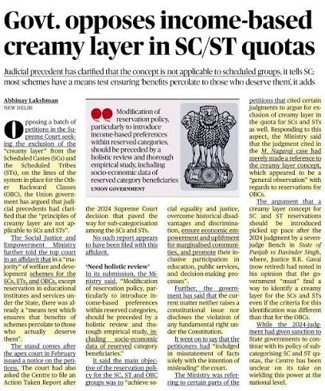
Judicial Scrutiny and Centre’s Stance on Creamy Layer Concept within SC/ST Reservations:
Context: Legal and administrative debates surrounding the exclusion criteria for reservations specifically the government’s stance on excluding the “creamy layer” concept within Scheduled Castes (SCs) and Scheduled Tribes (STs) gained major traction.
-
- Legal Discourse: The Centre’s legal position regarding the application or non-application of the creamy layer principle to SC/ST reservations is under active judicial and legislative scrutiny.
- Constitutional Basis: Reservations for SCs and STs are constitutionally mandated primarily under Article 15(4) and Article 16(4) of the Constitution of India.
- Creamy Layer Origin: The creamy layer concept was first introduced for Other Backward Classes (OBCs) following the landmark Supreme Court judgment in Indra Sawhney v. Union of India (1992).
- Constitutional Bench Rulings: Subsequent judgments (such as M. Nagaraj (2006) and Jarnail Singh (2018)) touched upon administrative efficiency and adequacy of representation regarding SC/ST promotions.
- Supreme Court’s Recent Observations: The judiciary has deliberated whether sub-classification and exclusionary principles can be extended to ensure trickle-down benefits within historically marginalized groups.
- Nodal Ministry: Administrative oversight of policies concerning SCs and STs rests with the Ministry of Social Justice and Empowerment and the Ministry of Tribal Affairs.
- Article 341 & 342: Empower the President of India to notify castes, races, or tribes or parts of groups as SCs and STs respectively in consultation with the respective Governors.
- Parliamentary Power: Any inclusion or exclusion from the lists of SCs and STs can only be achieved through an Act of Parliament under Articles 341(2) and 342(2).
- National Commissions: Statutory bodies like the National Commission for Scheduled Castes (NCSC) under Article 338 and National Commission for Scheduled Tribes (NCST) under Article 338A monitor safeguards provided to these communities.
- Affirmative Action Objective: Designed to dismantle systemic caste-based historical discrimination and ensure proportional representation in public employment and higher education.
(TH)
International Developments
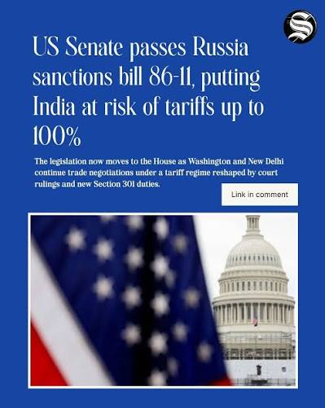
US Senate Moves on Russia Oil Sanctions Bill Create New Trade Friction for India:
Context: India faces potential trade friction following legislative moves in the United States Senate proposing secondary sanctions on nations purchasing discounted Russian crude oil.
-
- Legislative Action: The United States Senate passed a bill targeting global buyers of Russian oil, explicitly citing major importing economies like India and China.
- Energy Strategy Friction: India’s strategic autonomy in energy procurement—securing discounted Russian crude to manage domestic inflation clashes with Western sanction frameworks.
- Bilateral Trade Framework: The development directly impacts the ongoing strategic and trade frameworks governing the India-US Comprehensive Global Strategic Partnership.
- Secondary Sanctions Concept: These are punitive measures imposed by a country (such as the US) on third-party entities/countries engaging in commercial transactions with targeted sanctioned states (like Russia).
- India’s Energy Security Architecture: India imports over 85% of its crude oil requirements, making supplier diversification a cornerstone of national economic stability.
- Public Sector Undertakings (PSUs): Indian refiners (such as IOCL, BPCL, HPCL) operate under commercial viability parameters influenced by Ministry of Petroleum and Natural Gas directives.
- World Trade Organization (WTO) Rules: Unilateral trade tariffs or secondary sanctions often face scrutiny under multilateral trade dispute mechanisms.
- CAATSA Precedents: Previous legislative frameworks like the Countering America’s Adversaries Through Sanctions Act (CAATSA) also posed similar diplomatic navigation challenges for Indian defense and energy imports.
- Strategic Autonomy: India maintains a consistent foreign policy posture of strategic independence, balancing multi-alignment ties with Western nations and traditional partners like Russia.
- Economic Diplomacy: Managed via bilateral dialogues (e.g., India-US Trade Policy Forum) to safeguard macroeconomic resilience and domestic consumer interests.
(IE)
Economy
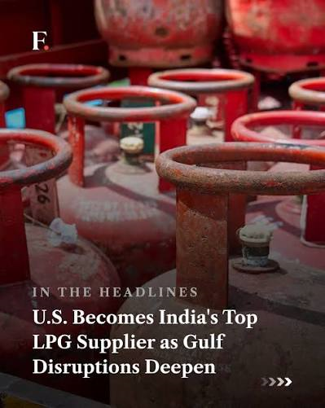
US Emerges as Top Supplier in India’s Liquefied Petroleum Gas (LPG) Import Basket:
Context: Data highlighting domestic energy dependency indicates that the United States accounts for a substantial majority share of India’s Liquefied Petroleum Gas (LPG) imports.
-
- Import Dependency Share: The United States supplies approximately 67% of India’s total LPG import requirements, according to recent Ministry of Petroleum data.
- Clean Cooking Transition: High reliance on imported LPG is tied to domestic welfare schemes like the Pradhan Mantri Ujjwala Yojana (PMUY), which aims to provide clean cooking fuel to rural households.
- Nodal Ministry: Overseen by the Ministry of Petroleum and Natural Gas (MoPNG).
- Import Sourcing Diversification: India balances its West Asian energy imports with North American shale gas markets to optimize pricing and supply chain resilience.
- Strategic Petroleum Reserves (SPR): Maintained underground crude oil storage facilities managed by ISPRL (Indian Strategic Petroleum Reserves Limited) to safeguard against global supply shocks.
- Pricing Mechanism: Domestic LPG cylinder pricing is dynamically linked to international benchmark prices (Saudi Aramco contract prices) and domestic taxation structures.
- Subsidies & Direct Benefit Transfer: Subsidies for targeted beneficiaries are channeled through the Direct Benefit Transfer (DBT) framework—officially known as the PAHAL (Pradhan Mantri Hastantrit LPG Vitaran) scheme.
- Alternative Clean Energy: Growing policy focus on shifting domestic cooking requirements toward piped natural gas (PNG) networks via City Gas Distribution (CGD) grids.
- Energy Security Calculus: Defined by the International Energy Agency (IEA), of which India is an Associate Member, as uninterrupted availability of energy sources at an affordable price.
- Trade Deficit Implications: Energy imports constitute a major component of India’s import bill, directly impacting current account deficit (CAD) dynamics.
(TH)
President Droupadi Murmu Honors Master Artisans on National Handloom Day:
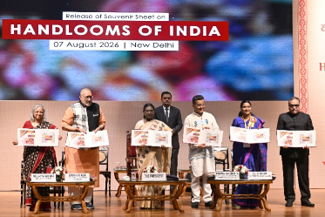
Context: The President of India graced the 12th National Handloom Day celebrations, presenting the prestigious Sant Kabir Handloom Awards and National Handloom Awards 2025 while emphasizing handloom’s role in the rural premium economy.
-
- Event Milestone: Celebrated the 12th National Handloom Day, commemorating the launch of the Swadeshi Movement on August 7, 1905.
- National Handloom Day Origin: Formally notified by the Government of India in 2015 to honor the handloom weaving community and highlight the sector’s contribution to socio-economic development.
- Top Civilian Honors: The Sant Kabir Handloom Award is bestowed upon weavers for outstanding lifetime contributions, while the National Handloom Award recognizes design innovation and excellence.
- Philatelic Commemoration: Four special commemorative postage stamps showcasing India’s diverse regional handloom weaving traditions were released.
- Geographical Indications (GI): Handlooms form a major chunk of India’s GI-tagged assets (e.g., Kancheepuram Silk, Chanderi fabric, Pochampally Ikat), protected under the Geographical Indications of Goods (Registration and Protection) Act, 1999.
- Nodal Ministry: The sector is primarily administered by the Ministry of Textiles.
- Handloom Census: Provides comprehensive structural data on weaver households, operational looms, and credit linkages across rural India.
- Wider Economic Impact: The handloom sector plays a crucial role in women’s empowerment, as a vast majority of handloom artisans and weavers are women.
- Financial Support Schemes: Key interventions include the National Handloom Development Programme (NHDP) and the Handloom Marketing Assistance (HMA) scheme.
- Export-Import Framework: Weaving clusters are increasingly linked with digital e-commerce platforms and global value chains to transform traditional crafts into a Verified Cultural Economy.
(PIB)
Geography
Tragic Bus Accident on Chamba Mountain Stretch Highlights Himalayan Vulnerabilities:
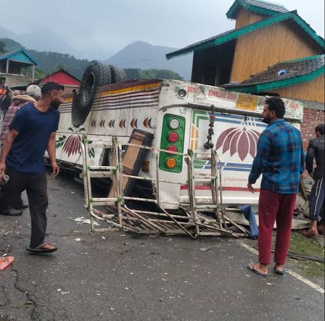
Context: A major road accident involving a private bus on a treacherous mountain stretch in the Chamba district of Himachal Pradesh highlighted severe vulnerabilities in high-altitude Himalayan transit infrastructure during the monsoon season.
-
- Incident Location: The accident occurred along the Bairagarh-Tissa road near Chalunj Mor in the remote Churah Valley of Chamba district, Himachal Pradesh.
- Strategic Route: The affected stretch is a crucial corridor leading to the high-altitude Sach Pass.
- Monsoon Vulnerability: Heavy casualties and road blockages during monsoon underline the susceptibility of young Himalayan rock formations to landslides and slope failures.
- Geological Profile: The Lesser and Greater Himalayas are structurally fragile, characterized by loose sedimentary deposits, thrust zones (like the Main Boundary Thrust), and high seismic activity.
- Nodal Disaster Response: Search and rescue operations are coordinated locally by the National Disaster Response Force (NDRF), State Police, and Home Guards under the provisions of the Disaster Management Act, 2005.
- National Disaster Management Authority (NDMA): Headed by the Prime Minister, NDMA lays down policies and guidelines for disaster management at the national level.
- State Disaster Management Authority (SDMA): Headed by the Chief Minister of the state, it handles state-specific disaster preparedness and relief operations.
- Road Infrastructure Bodies: Border roads and strategic high-altitude routes in border districts are frequently maintained by agencies like the Border Roads Organisation (BRO) under the Ministry of Defence.
- Landslide Warning Systems: Implementation of real-time slope monitoring and automated early warning systems is a priority under national mitigation projects.
- Monsoon Dynamics: Himachal Pradesh experiences high-intensity convective rainfall events during the Southwest Monsoon season, often triggering localized flash floods and mudslides.
(TH)
Science & Technology
PM Modi Addresses 57th Convocation Ceremony of IIT Delhi:
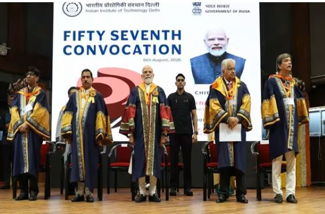
Context: Prime Minister Narendra Modi addressed the 57th Convocation Ceremony of the Indian Institute of Technology (IIT) Delhi as the Chief Guest, emphasizing the importance of adapting to rapid technological transformations.
-
- Event Details: The Prime Minister participated in the 57th Convocation Ceremony of IIT Delhi, conferring degrees to over 3,000 students, including 587 Ph.D. scholars.
- Key Technological Frontiers: Highlighted emerging growth sectors crucial for future national capacity, including Artificial Intelligence (AI), Data Centers, and Quantum Computing.
- Strategic Resources: Emphasized national self-reliance in deep-tech domains such as Deep Sea Exploration, Critical Minerals, and Energy Security.
- Youth and Innovation: Framed youth empowerment and startup revolutions (FinTech and digital payments) as the foundational pillars of Viksit Bharat.
- IIT Delhi Heritage: Established in 1961, IIT Delhi was declared an Institution of National Importance under the Institutes of Technology Act, 1961.
- Statutory Status: Institutes of Technology (IITs) are statutory bodies governed directly under the control of the Ministry of Education, Government of India.
- All India Council for Technical Education (AICTE): While AICTE is the statutory body for technical education regulation overall, IITs possess independent academic autonomy granted via parliamentary legislation.
- Research Framework: The promotion of translational research in higher educational institutions is primarily anchored via schemes like the Science and Engineering Research Board (SERB) / Anusandhan National Research Foundation (ANRF).
- Global Ranking Metrics: Institutional excellence frameworks like the National Institutional Ranking Framework (NIRF) evaluate institutions on parameters including Teaching, Learning & Resources (TLR), Research, and Professional Practice.
- Lifelong Learning Concept: Stressed continuous adaptation and structured modular problem-solving as key competencies for modern technological leadership.
(PIB)
Internal Security
MHA Issues Strict Bans on Renewable Energy Plants Near International Borders:
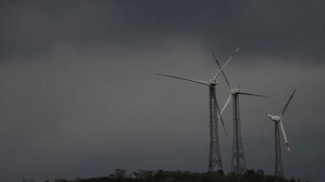
Context: The Ministry of Home Affairs (MHA) issued strict operational guidelines barring the establishment of any solar, wind, or renewable energy projects within a specified proximity of India’s international borders.
-
- MHA Directive: Prohibition on setting up solar, wind, or renewable energy power plants within a 1-kilometer radius of the international border.
- Security Rationale: High-capacity renewable installations often require tall masts, expansive land clearances, and transmission infrastructure that could potentially compromise border surveillance or be exploited for espionage/infiltration.
- Nodal Ministry: Formulated and enforced by the Ministry of Home Affairs (MHA).
- Border Guarding Forces: Implementation involves coordination with forces like the Border Security Force (BSF) and Indo-Tibetan Border Police (ITBP), which operate under MHA command.
- Border Area Development Programme (BADP): A centrally sponsored scheme aimed at meeting the special developmental needs of people living in remote and inaccessible areas near international borders.
- Comprehensive Integrated Border Management System (CIBMS): Focuses on deploying smart fencing, thermal imagers, underground sensors, and radar systems along sensitive border segments.
- Land Use Regulations: Border land management is strictly regulated to prevent unauthorized civilian encroachment or covert infrastructure development near sensitive border pillars.
- National Security Act (NSA): Empowers authorities to detain individuals acting in a manner prejudicial to the security of the State.
- Renewable Energy Conflict: While India targets 500 GW of non-fossil energy capacity by 2030, strategic security protocols supersede commercial green energy deployment near international boundaries.
- Defense Clearances: Strategic infrastructure projects within border states mandate stringent security clearances from both the MHA and the Ministry of Defence (MoD).
(TH)
Miscellaneous
Vice-President Undertakes Official Visit to Andaman and Nicobar Islands:
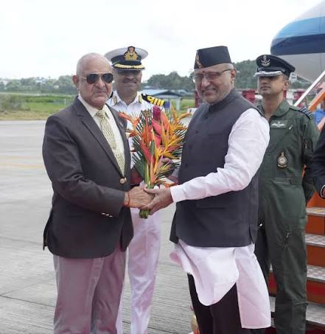
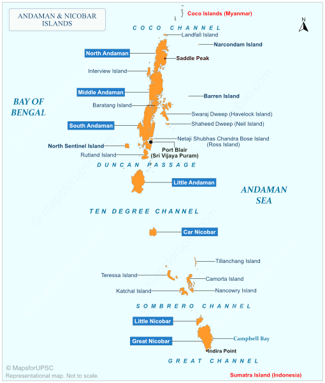
Context: The Vice-President of India undertook a high-profile official visit to the Andaman and Nicobar Islands, paying tribute to freedom fighters at the historic Cellular Jail and Netaji Subhash Chandra Bose Island.
-
- The Vice-President visited the Cellular Jail National Memorial at Sri Vijay Puram and paid homage at the Martyrs’ Column and Swatantrata Jyoti.
- Historical Renaming: Sri Vijay Puram serves as the administrative capital of the Andaman and Nicobar Union Territory.
- Cellular Jail Significance: Built between 1896 and 1906, it was a colonial prison used by the British to exile political prisoners (notably Veer Savarkar, Batukeshwar Dutt, and Yogendra Shukla) to the remote archipelago.
- Architecture of the Jail: Designed on the “panopticon” model, it originally consisted of seven wings radiating from a central watchtower, preventing communication among inmates.

-
- Netaji’s Historic Link: Netaji Subhash Chandra Bose hoisted the Indian tricolor flag for the first time on Indian soil at Gymkhana Ground, Port Blair, on December 30, 1943.
- Island Renaming: Ross Island was officially renamed Netaji Subhash Chandra Bose Island in 2018 to honor his legacy and the Azad Hind Government.
- Union Territory Governance: Andaman and Nicobar Islands is a Union Territory administered by the President of India through a Lieutenant Governor under Article 239 of the Constitution.
- Indigenous Tribal Groups: The islands are home to vulnerable and Particularly Vulnerable Tribal Groups (PVTGs) including the Great Andamanese, Jarawas, Onge, and Sentinelese.
- Protection Regulations: The indigenous tribes are protected under the Andaman and Nicobar Islands (Protection of Aboriginal Tribes) Regulation (AAPAATR), 1956.
- Geographical Significance: The archipelago is separated from the Nicobar group by the Ten Degree Channel and holds immense strategic importance for India’s Indo-Pacific defense architecture.
(TH)
Spread the Word