
Indian Polity & Governance
Supreme Court Notice on RTI Act Amendments via DPDP Act:
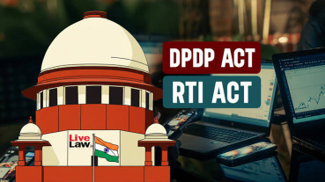
Context: The Supreme Court sought the Centre’s response on a batch of petitions challenging amendments made to the Right to Information (RTI) Act through the Digital Personal Data Protection (DPDP) Act.
-
- Core Legal Challenge: Petitioners argue that amendments dilute transparency by removing the larger public interest safeguard for disclosing certain personal information.
- RTI Act, 2005: A landmark legislation empowering citizens to secure access to information under the control of public authorities, promoting transparency and accountability.
- DPDP Act, 2023: Regulates digital personal data processing while balancing the right of individuals to protect their data with lawful processing needs.
- Section 8(1)(j) of RTI Act: Originally exempted personal information unless larger public interest justified disclosure; the DPDP amendments altered exemptions regarding all personal data of government employees and officials.
- Right to Information as Fundamental Right: The Supreme Court has ruled that the right to know is encompassed within the right to freedom of speech and expression (Article 19(1)(a)).
- Right to Privacy: Recognized as a fundamental right under Article 21 by the landmark 9-judge bench in the K.S. Puttaswamy v. Union of India (2017) judgment.
- Harmonizing Rights: Legal debates center on striking a constitutional balance between transparency (RTI) and data privacy (DPDP).
- Information Commission Structure: The Central Information Commission (CIC) and State Information Commissions act as apex appellate authorities under the RTI Act.
- Exemptions Under RTI: Certain intelligence and security organizations listed under the Second Schedule of the RTI Act are exempt from its purview, barring allegations of corruption and human rights violations.
- Judicial Review: The Supreme Court examines legislative changes to check whether they violate the basic structure doctrine or statutory intent of transparency laws.
(TH)
Society & Social Justice
Supreme Court Directives on Medical Care for Rape Victims:
Context: The Supreme Court ordered two private hospitals in Ghaziabad to pay compensation for denying emergency medical care to a minor rape victim, announcing upcoming comprehensive legal guidelines.

-
- Judicial Intervention: A bench led by the Chief Justice pulled up hospitals for apathy and penalized them under public law principles for failing to provide emergency treatment.
- Statutory Duty to Treat: Under Section 357C of the Code of Criminal Procedure (CrPC) / Bharatiya Nagarik Suraksha Sanhita (BNSS), all hospitals, public or private must provide immediate first aid or medical treatment free of cost to victims of sexual offenses.
- Right to Health: The Supreme Court has repeatedly interpreted the Right to Health as an integral part of the Right to Life under Article 21 of the Constitution.
- Professional Ethics: Medical negligence and refusal to attend to emergency cases violate the Indian Medical Council (Professional Conduct, Etiquette and Ethics) Regulations.
- Protection of Human Rights Act: State Human Rights Commissions can take suo motu cognizance of institutional negligence in healthcare access.
- Emergency Medical Services: Frameworks like the Clinical Establishments (Registration and Regulation) Act mandate stabilization of emergency patients before transfer.
- Victim Compensation Schemes: Under Section 357A of the CrPC/BNSS, every State Government in coordination with the Central Government must prepare a scheme for financial compensation to victims of crimes.
- Medical Jurisprudence: Doctors are legally protected under the Good Samaritan guidelines and statutory provisions when handling medico-legal cases without awaiting police clearance.
- SIT Investigation: High-profile cases of institutional apathy often invite court-monitored Special Investigation Teams (SITs) to ensure impartial probes.
- Judicial Accountability: Sets a legal precedent enforcing strict deterrence against medical institutions refusing trauma care in grave criminal offenses.
(TH)
International Developments
Iranian Leadership Dynamics and Regional Geopolitics:
Context: Iranian official statements regarding communication challenges with supreme leadership raised fresh international security concerns.

-
- Geopolitical Significance: Developments in Iran heavily impact West Asian stability, global crude oil supply chains, and international diplomacy.
- Strait of Hormuz: A critical maritime choke point controlled partly by Iran, through which a massive portion of the world’s petroleum passes.
- India-Iran Relations: Built around strategic assets like the Chabahar Port (Shahid Beheshti terminal), offering India access to landlocked Afghanistan and Central Asia.
- INSTC Corridor: Iran serves as a foundational southern anchor for the International North-South Transport Corridor (INSTC) connecting to Russia.
- Political Architecture: Iran operates as an Islamic theocracy with a Supreme Leader holding ultimate constitutional, religious, and military command.
- Assembly of Experts: The elected clerical body tasked with appointing, supervising, and replacing the Supreme Leader.
- FATF Compliance: Iran remains under strict scrutiny and countermeasures by the Financial Action Task Force (FATF) regarding anti-money laundering norms.
- Sanctions Regime: Subject to decades of complex unilateral and multilateral economic sanctions affecting banking (SWIFT exclusion) and trade.
- Nuclear Program: Ongoing geopolitical tension persists over uranium enrichment thresholds and regional security frameworks.
- Regional Alliances: Iran’s strategic posture affects multi-lateral alignments across the Middle East, influencing Indian diaspora security and energy security.
(TH)
International Relations
US Immigration Policy Updates Impacting Indian Applicants:
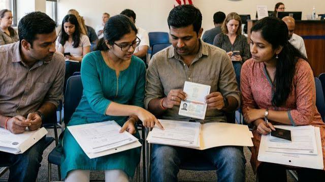
Context: US immigration authorities introduced stricter administrative rules allowing the outright rejection of incomplete visa, green card, and work permit applications without granting cure periods.
-
- Policy Change: Immigration officers can now reject incomplete petitions for work permits and Green Cards upfront, bypassing prior requests for evidence (RFEs) or missing documents.
- Impact on Diaspora: Directly affects Indian students, IT professionals, and skilled workers navigating the US immigration pipeline (H-1B and EB-2/EB-3 categories).
- USCIS Governance: Administered by the United States Citizenship and Immigration Services under the Department of Homeland Security (DHS).
- H-1B Visa Program: A non-immigrant visa allowing US companies to employ foreign workers in specialty occupations, heavily utilized by Indian tech workers.
- Green Card Backlogs: Structural per-country caps create multi-decade waiting queues for Indian nationals applying for lawful permanent residency (employment-based).
- Consular Access: Highlights the importance of robust consular services and legal compliance for expatriates moving across international borders.
- Brain Drain vs. Brain Gain: Complex visa regimes fuel ongoing debates around global talent mobility, repatriation, and reverse migration trends.
- Bilaterals and Diplomacy: Visa policies and fee structures regularly feature in high-level India-US bilateral dialogues and consular consultations.
- Documentation Rigor: Mandates absolute precision in legal paperwork, credential evaluations, and financial filings for overseas aspirants.
- Alternative Destinations: Growing regulatory friction in traditional Western immigration markets encourages skilled professionals to explore emerging hubs in Europe, Asia, and the Gulf.
(IE)
Economy
Kerala Shifts Welfare Pensions to Direct Benefit Transfer (DBT):
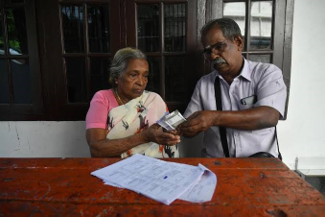
Context: The Kerala government mandated Direct Benefit Transfer (DBT) through Aadhaar-linked bank accounts for social security pensions, ending doorstep cash deliveries.
-
- Policy Shift: Phased out the legacy system of doorstep pension distribution via cooperative banks in favor of direct digital crediting.
- Exemptions: The government carved out exceptions for completely bedridden beneficiaries, ensuring alternative delivery mechanisms for them.
- Aadhaar Integration: Requires mandatory Aadhaar seeding to streamline database hygiene and eliminate systemic leakages or duplicate payouts.
- DBT Architecture: Part of India’s broader trinity framework (JAM: Jan Dhan, Aadhaar, Mobile) designed to plug pilferages in welfare delivery.
- Aadhaar Act, 2016: Governs the statutory backing for biometric authentication and identity verification for receiving public subsidies.
- Cooperative Banks Role: Historically central to rural credit and local distribution, their operational scope in state-sponsored welfare is undergoing structural adjustments.
- Fiscal Federalism: Illustrates state-level execution of financial inclusion frameworks recommended by central fiscal monitoring bodies.
- Social Security Mandate: Welfare pensions function under Directive Principles of State Policy (DPSPs, specifically Article 41 – right to work, to education, and to public assistance in certain cases).
- Public Financial Management System (PFMS): The central web-based tracking system used for tracking fund disbursement and utilization.
- Financial Literacy: Emphasizes banking penetration and digital financial literacy among elderly and vulnerable rural demographic cohorts.
(IE)
Railway Board Proposes Mechanized Station Cleaning Overhaul:
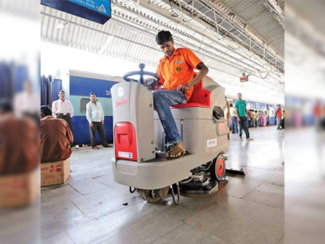
Context: The Railway Board invited feedback from all zonal railways on a proposal to revise criteria and flexibility for mechanized cleaning of railway stations.
-
- Policy Review: Aimed at modernizing and optimizing station sanitization contracts using high-pressure water jets, scrubber dryers, and automated vacuums.
- Indian Railways Governance: Managed by the Railway Board under the Ministry of Railways, guided by the Indian Railways Act, 1989.
- Swachh Bharat Mission Synergy: Station cleanliness forms a core operational deliverable under pan-Indian cleanliness surveys and station grading frameworks.
- Outsourcing and PPP Models: Mechanized cleaning contracts are predominantly outsourced to private vendors via transparent tender processes.
- Passenger Amenities: Cleanliness standards directly impact passenger satisfaction metrics and compliance with consumer rights under service level agreements (SLAs).
- Green Railways Initiative: Modern cleaning policies integrate eco-friendly chemical usage, water recycling plants, and waste management segregation at platforms.
- Zonal Decentralization: Feedback from Zonal General Managers ensures localized adaptability based on footfall density, station category (A-1, A, B, etc.), and climatic conditions.
- Employment and Labor Standards: Contractors are legally bound to adhere to minimum wage laws, provident fund contributions, and safety gear provisions for sanitation workers.
- station Redevelopment: Ties into the Amrit Bharat Station Scheme, which envisions modernizing over 1,300 stations with superior passenger facilities.
- Digital Monitoring: Integration of app-based feedback, geotagged attendance of cleaning staff, and real-time supervisory audits.
(IE)
Science & Technology
Global Tech Partnerships: TCS & Anthropic AI Alliance:
Context: Tata Consultancy Services (TCS) announced a global strategic partnership with artificial intelligence firm Anthropic to scale enterprise AI adoption.
-
- Corporate Collaboration: Focuses on integrating advanced foundational AI models into corporate digital transformation and business workflows.
- Enterprise AI Market: Reflects the exponential rise of generative AI in automating back-office processes, customer service, and software coding.
- IT Sector Dominance: India’s IT majors (like TCS) act as crucial global bridges connecting advanced Western software models with traditional enterprise clients.
- IndiaAI Mission: The national initiative by the Government of India aimed at building domestic compute capacity, datasets, and indigenous AI innovation ecosystems.
- Ethical AI and Governance: Emphasizes safe, responsible, and transparent artificial intelligence deployment, guarding against data bias and hallucinations.
- Data Localization Regulations: Enterprise cloud deployment must comply with domestic laws such as the DPDP Act, ensuring data privacy and sovereignty.
- Semiconductor Ecosystem: The growth of heavy AI workloads exponentially drives global demand for advanced semiconductors, GPUs, and chip-design capabilities.
- Upskilling Workforces: IT sector restructuring requires massive internal reskilling programs to train engineers in prompt engineering, machine learning, and AI architecture.
- Intellectual Property Rights: Managing IP ownership in client-facing customized generative AI solutions remains a critical legal frontier.
- Economic Multiplier: Technology services contribute significantly to India’s export revenues, service trade surplus, and urban employment generation.
(IE)
History, Art & Culture
National Handloom Day 2026:
Context: The nation observed National Handloom Day to celebrate India’s rich weaving heritage and recognize the socio-economic contribution of handloom workers.

-
- Historical Significance: Celebrated annually on August 7 to commemorate the launch of the Swadeshi Movement in 1905, which promoted indigenous goods and self-reliance.
- Inception: The observance was officially instituted by the government in 2015 to provide a dedicated national platform for the handloom sector.
- Demographics: The sector supports millions of weavers and allied workers, with a massive share being women, highlighting its role in women-led development.
- Civilizational Roots: Earliest archaeological traces of cotton and spinning in India date back to the Indus Valley Civilization (e.g., Mehrgarh findings, spindle whorls).
- Literary References: Spinning and weaving find prominent mentions in Vedic texts like the Rigveda, epic literature (Ramayana and Mahabharata), and Kautilya’s Arthashastra.
- Geographical Indications (GI): Handlooms enjoy robust legal protection, with numerous traditional weaves (e.g., Kanchipuram silk, Chanderi, Banarasi) registered under GI tags.
- Economic Support Schemes: Handloom clusters are boosted via modernized assistance programs, craft handloom villages, and the National Handloom Development Programme.
- Budgetary Integration: Union Budgets emphasize textiles through initiatives like the National Fibre Scheme and skill-upgradation clusters for rural youth and artisans.
- Handloom Mark Scheme: Introduced to serve as a legally enforceable assurance for consumers regarding the authenticity of pure handloom products.
- Global Reach: Digital platforms and global exhibitions are actively being leveraged to expand market access, aligning with the vision of an Atmanirbhar Bharat.
(PIB)
Internal Security
CBI Disclosures on NEET-UG Paper Leak Modus Operandi:
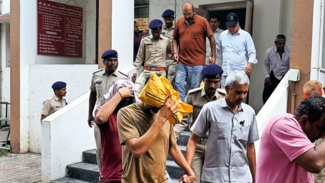
Context: The Central Bureau of Investigation (CBI) detailed investigative findings exposing how subject experts compromised security inside testing agencies.
-
- Modus Operandi: Investigation revealed insiders using physical paper chits, memory retention, and textbook tagging to smuggle questions out of testing centres.
- About CBI: The Central Bureau of Investigation is the premier investigating police agency of India, operating under the Delhi Special Police Establishment (DSPE) Act, 1946.
- Public Examinations Act, 2024: Enacted specifically to penalize organized cheating rings, paper leaks, and fraudulent practices with heavy prison terms and fines.
- Role of NTA: The National Testing Agency conducts major centralized entrance tests; its operational security protocols have faced national policy overhauls.
- Cyber Forensics: Modern high-stakes investigations utilize metadata tracking, electronic surveillance, and financial trail analysis of solver gangs.
- National Cyber Crime Coordination Centre (I4C): Functions under the Ministry of Home Affairs to combat cyber crimes comprehensively.
- Impact on Meritocracy: Examination malpractice directly threatens Articles 14 (Equality before law) and 21 (Right to fair opportunity) for millions of aspirants.
- Supreme Court Monitoring: High-level examination scams are typically subjected to continuous judicial monitoring to overhaul systemic institutional rot.
- Preventive Reforms: Recommendations include end-to-end encrypted digital question paper distribution (QPD) and biometric multi-tier verification.
- Federal Coordination: Investigating interstate paper-leak syndicates necessitates close coordination between state police forces and central agencies.
(IE)
Sports
Jos Buttler Breaks Global T20 Run-Scoring Record:
Context: English cricketer Jos Buttler surpassed Kieron Pollard’s long-standing record to become the highest run-scorer in the history of T20 cricket.

-
- Historic Milestone: Buttler crossed the previous landmark of 14,803 T20 runs during a match in The Hundred tournament.
- T20 Evolution: Highlights the evolution of the shortest format of cricket, characterized by high-intensity power-hitting, franchise leagues, and advanced analytics.
- Global Franchise Leagues: The proliferation of domestic T20 leagues (IPL, BBL, PSL, CPL, The Hundred) has fundamentally transformed cricket economics.
- International Cricket Council (ICC): The global governing body headquartered in Dubai, responsible for regulating international formats and global tournaments.
- Sports Science and Conditioning: Modern batsmen rely heavily on customized bats, biomechanics optimization, and specialized power-hitting coaches.
- Data Analytics in Cricket: Performance analysts track fielding heat maps, bowling match-ups, and strike-rate matrices in real-time.
- The Hundred Format: An ECB-backed 100-ball-per-side cricket format designed to attract a wider, family-oriented demographic.
- Financial Ecosystem: Media rights, central contracts, and brand valuations have made T20 cricket the financial engine of global cricket boards.
- Milestone Tracking: Maintaining comprehensive records across domestic and international T20 matches requires meticulous data compilation by statisticians.
- Youth Pathways: Success in T20 leagues serves as a primary pathway for raw domestic talent to transition into international representation.
(IE)
Spread the Word