
Indian Polity & Governance
Atmanirbhar Panchayat Programme & Model Own Source Revenue (OSR) Rules:
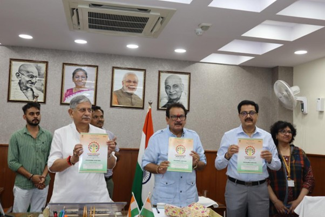
Context: The Ministry of Panchayati Raj launched the Atmanirbhar Panchayat Programme, SAMARTH Panchayat Portal, and released the Model Own Source of Revenue (OSR) Rules at Krishi Bhawan, New Delhi.
-
- Core Objective: To strengthen financial autonomy, promote digital governance, and boost non-tax and tax revenue generation capacity for Panchayati Raj Institutions (PRIs) aligned with Viksit Bharat @2047.
- Model OSR Rules: Serves as an advisory framework for States and UTs to systematically levy, collect, and manage property taxes, user fees, and local service charges.
- Constitutional Basis: The 73rd Constitutional Amendment Act, 1992 inserted Part IX and the 11th Schedule (containing 29 functional items) into the Constitution.
- Article 243H: Authorizes State Legislatures to enact laws empowering Panchayats to levy, collect, and appropriate specified taxes, duties, tolls, and fees.
- Article 243I: Mandates the setting up of a State Finance Commission (SFC) every 5 years to review the financial position of PRIs and recommend principles for devolution of revenue.
- Finance Commission Grants: The Central Finance Commission (Article 280) releases tied and untied grants directly to local bodies, linked with OSR performance and audit compliance.
- SAMARTH Portal: A centralized digital interface designed for transparent tracking of local revenues, administrative approvals, and expenditure management.
- Three-Tier Architecture: Gram Panchayat (village level), Panchayat Samiti (block level), and Zilla Parishad (district level), except in states with a population under 20 lakhs.
- Gram Sabha: Article 243A establishes the Gram Sabha as the foundation of the Panchayati Raj system, comprising all registered voters in the village.
- Financial Independence Bottleneck: Statutorily, less than 10-15% of total PRI expenditure historically comes from their own revenues, making Model OSR rules crucial for ending fiscal dependence on state/central transfers.
(PIB/IE)
International Relations
Secondary Economic Sanctions Framework & International Trade Dynamics:
Context: Legislative deliberations in the US Senate regarding global sanctions frameworks brought attention to secondary sanctions risk and strategic trade safeguards for emerging markets like India.
-
- Primary vs. Secondary Sanctions:
- Primary Sanctions: Prohibit citizens and companies of the sanctioning state from engaging in transactions with sanctioned entities.
- Secondary Sanctions: Penalize third-country individuals or companies doing business with sanctioned entities, even if no direct connection exists with the sanctioning nation.
- CAATSA: Countering America’s Adversaries Through Sanctions Act (2017) mandates sanctions against nations engaging in significant transactions with Russian defense, energy, or intelligence sectors.
- Strategic Autonomy: India maintains a policy of non-alignment and strategic autonomy, refusing to recognize unilateral sanctions not endorsed by the United Nations Security Council (UNSC).
- Rupee-Rouble & Alternative Mechanisms: India and its trading partners utilize special Vostro accounts, local currency trade settlements, and messaging networks outside SWIFT to facilitate legitimate commerce.
- Special Non-Resident Rupee (SNRR) & Vostro Accounts: Rupee Vostro accounts allow foreign banks to hold funds in Indian rupees in domestic banks to settle bilateral import-export bills.
- Tariff & Trade Safeguards (WTO): World Trade Organization rules permit Member countries to invoke Article XXI (Security Exceptions) to protect essential security interests during international emergencies.
- G7 Price Cap Framework: Enforced price cap limits on maritime transport services for crude oil, requiring Indian refiners to balance energy security imperatives with global shipping compliance.
- DPIIT & DGFT Rules: Directorate General of Foreign Trade (DGFT) formulates India’s Foreign Trade Policy (FTP 2023), focusing on making the Rupee a global settlement currency.
- Strategic Trade Authorizations (STA-1): US designation granting India license-exempt access to high-technology dual-use items on par with NATO allies.
- Supply Chain Resilience Initiative (SCRI): Trilateral initiative between India, Japan, and Australia to build resilient, diversified supply chains and counter market disruptions in critical technologies.
- Primary vs. Secondary Sanctions:
(IE)
Economy
Transition to Producer Price Index (PPI) for GDP Deflation:
Context: The Ministry of Statistics and Programme Implementation (MoSPI) announced plans to introduce the output Producer Price Index (PPI) as a deflator for calculating real Gross Domestic Product (GDP), replacing the Wholesale Price Index (WPI).
-
- Key Shift: Replacing WPI with output PPI for quarterly and annual GDP estimates to reduce distortions in national accounts and align with System of National Accounts (SNA) global standards.
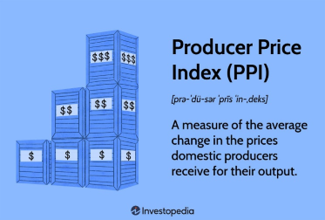
- Definition of PPI: PPI measures the average change over time in the prices received by domestic producers for their output, excluding indirect taxes, trade margins, and transport costs.
-
- Difference from WPI: WPI tracks price movements at the wholesale level and includes trade margins and indirect taxes, whereas PPI measures basic prices received by producers at the factory gate.
- Difference from CPI: Consumer Price Index (CPI) measures the price change of a representative basket of goods and services consumed by retail households, including all indirect taxes and retail margins.
- GDP Deflator: A measure of the level of prices of all new, domestically produced, final goods and services in an economy. It is calculated as: .
- DPIIT Role: The output PPI series was developed and released by the Department for Promotion of Industry and Internal Trade (DPIIT) under the Ministry of Commerce & Industry.
- Minimizing Single Deflation Bias: Utilizing PPI helps address “double deflation” gaps where output and input price movements differ significantly during volatile commodity cycles.
- Monetary Policy Relevance: While the RBI’s primary inflation target remains CPI (headline inflation at ), PPI offers a cleaner picture of supply-side price pressures.
- Services Sector Inclusion: Unlike WPI (which excludes services entirely), advanced PPI frameworks incorporate primary service sectors, better reflecting India’s service-dominated economy.
- Base Year Realignment: The shift to PPI is part of MoSPI’s broader structural exercise to update the base year of National Accounts Statistics.
(TH/PIB)
Formation of Toy Sector Task Force & “SCALE” Framework:
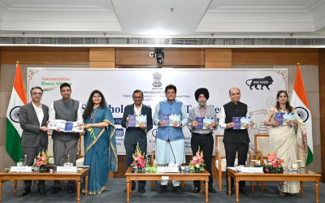
Context: Union Minister Piyush Goyal announced the creation of a specialized Task Force and released the “Toy Sector Playbook” during the stakeholder meeting Team Up for Toys under the SCALE initiative.
-
- SCALE Mandate: Steering Committee for Advancing Local Value Add and Employment (SCALE) aims to integrate domestic toy makers into global supply chains.
- Six Pillars: Focuses on integration with Global Value Chains (GVCs), domestic capacity creation, removing supply-chain bottlenecks, design/IP protection, workforce training, and ease of doing business.
- Quality Control Order (QCO): Quality Control Orders issued under the Bureau of Indian Standards (BIS) Act make BIS certification mandatory for all imported and domestically sold toys to eliminate sub-standard toxicity/safety hazards.
- National Action Plan for Toys (NAPT): A multi-ministerial initiative (led by DPIIT) launched to promote indigenous toy clusters, woodcraft traditions, and STEM-based learning toys.
- Traditional Toy Clusters: Focuses on geographical indication (GI) tagged traditional Indian toy clusters like Channapatna (Karnataka), Kondapalli (Andhra Pradesh), Asharikandi (Assam), and Varanasi Wooden Toys (UP).
- Customs Duty Protection: Basic Customs Duty (BCD) on imported toys was raised in recent budgets from 20% to 70% to curb predatory dumping of cheap, non-certified toys.
- MSME Dominance: Over 90% of the Indian toy manufacturing industry resides in the unorganized MSME micro-enterprise sector.
- Export Trends: India transitioned from a net importer of toys to a net exporter, recording significant growth in wooden and electronic educational toy exports over the past 5 years.
- Intellectual Property Rights (IPR): The Playbook guides startups on registering patents, industrial designs, and trademarks to safeguard unique toy mechanisms against infringement.
- Toycathon Initiative: An inter-ministerial hackathon designed to crowd-source innovative toys based on Indian ethos, local folklore, and ancient Vedic wisdom.
(PIB/TH)
Air India & Ministry of Tourism Partnership for Inbound Travel:
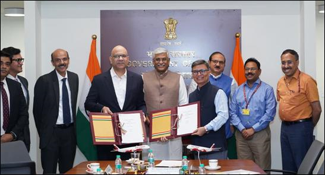
Context: The Ministry of Tourism signed a strategic Memorandum of Understanding (MoU) with national carrier Air India to run joint global campaigns aimed at boosting Foreign Tourist Arrivals (FTAs).
-
- Core Strategy: Merges the Ministry’s destination marketing assets with Air India’s expanding non-stop long-haul direct international routes.
- Incredible India 3.0: The campaign leverages digital platforms, niche thematic tourism (spiritual, wellness, eco-tourism, heritage), and seamless bilateral air connectivity.
- Foreign Exchange Earnings (FEEs): Tourism acts as an invisible export sector, generating foreign exchange and holding high employment multiplier effects across unskilled, semi-skilled, and skilled labour.
- e-Tourist Visa (e-TV): India extends e-Visa facilities across 5 sub-categories: e-Tourist, e-Business, e-Medical, e-Medical Attendant, and e-Conference visas to simplify entry procedures.
- Swadesh Darshan 2.0: A 100% centrally funded scheme launched for the integrated development of theme-based tourist circuits across the country with a sustainable and tourist-centric focus.
- PRASHAD Scheme: Pilgrimage Rejuvenation and Spiritual Heritage Augmentation Drive aims at holistic development of identified pilgrimage destinations across India.
- Services Export Promotion Council (SEPC): Coordinates with civil aviation and tourism bodies to market medical value travel (MVT) and MICE (Meetings, Incentives, Conferences, and Exhibitions) tourism.
- Civil Aviation Regulation (DGCA): Directorate General of Civil Aviation is the statutory regulatory body governing civil aviation standards, flight safety, and airworthiness in India.
- National Civil Aviation Policy (NCAP 2016): Promotes regional connectivity via UDAN (Ude Desh ka Aam Naagrik) while optimizing international bilateral rights (Freedoms of the Air).
- Global Rankings: India’s ranking on the WEF’s Travel & Tourism Development Index (TTDI) depends heavily on cultural/natural resources, price competitiveness, and ground infrastructure
(PIB)
Geography,
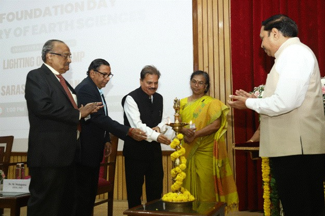
Ocean Science Initiatives on MoES 20th Foundation Day:
Context: The Ministry of Earth Sciences (MoES) celebrated its 20th Foundation Day in New Delhi by rolling out new weather forecasting tools, marine taxonomic manuals, and ocean observing systems.
-
- Key Launches: Unveiled IMD NOVA (thunderstorm nowcasting portal), WINGS mobile app (NCMRWF numerical weather prediction), and upgraded Open Data Portals.
- ACWC Upgrade: The Cyclone Warning Centre in Thiruvananthapuram was upgraded into a full-fledged Area Cyclone Warning Centre (ACWC).
- Marine Taxonomy Manuals: Released by the Centre for Marine Living Resources and Ecology (CMLRE), documenting 100 Tintinnid ciliate species and 225 seamount-associated marine species.
- Deep Ocean Mission (DOM): MoES is the nodal ministry implementing India’s flagship Deep Ocean Mission, focused on ocean technology, deep-sea mining, and marine biodiversity.
- MATSYA 6000: A manned submersible vehicle developed under DOM capable of carrying 3 humans to a depth of 6,000 meters in the ocean for deep-sea resource exploration.
- Polymetallic Nodules (PMNs): India holds exclusive rights granted by the International Seabed Authority (ISA) to explore PMNs (rich in Nickel, Copper, Cobalt, Manganese) over 75,000 sq km in the Central Indian Ocean Basin.
- Doppler Weather Radars (DWR): Use the Doppler effect to measure the velocity of precipitation along with its intensity, enhancing real-time localized disaster warnings (Nowcasting).
- INCOIS Role: Indian National Centre for Ocean Information Services (Hyderabad) provides operational ocean services, including Tsunami Early Warnings and Potential Fishing Zone (PFZ) advisories.
- NCMRWF: National Centre for Medium Range Weather Forecasting (Noida) specializes in numerical weather prediction models using high-performance supercomputing assets.
- Nodal Ministry Structure: MoES was formed in 2006 by merging the India Meteorological Department (IMD), National Centre for Medium Range Weather Forecasting (NCMRWF), Indian Institute of Tropical Meteorology (IITM), and Ocean Development department.
(PIB)
Ecology & Environment and DM
Global Tiger Day 2026 & India’s Tiger Conservation Ecosystem:
Context: PM extended greetings on Global Tiger Day (29th July 2026), reaffirming India’s commitment to science-based tiger conservation, community participation, and mitigating human-wildlife conflict.
-
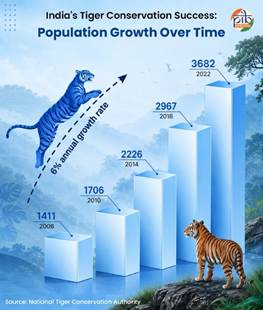
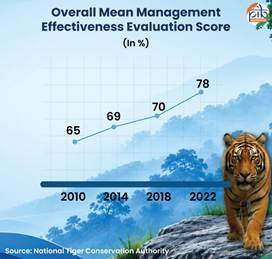
- Global Tiger Share: India currently hosts nearly 70% of the wild tiger population globally.
-
- St Petersburg Declaration (2010): Global Tiger Day was instituted at the Saint Petersburg Tiger Summit in 2010, where 13 Tiger Range Countries pledged to double wild tiger numbers by 2022 (Tx2 goal).
- Statutory Body: The National Tiger Conservation Authority (NTCA) is a statutory body under the Ministry of Environment, Forest and Climate Change (MoEFCC), established under the provisions of the Wild Life (Protection) Act, 1972 (as amended in 2006).
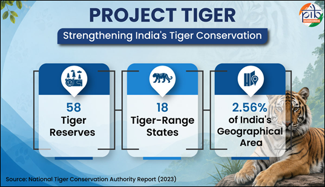
- Project Tiger: Launched in 1973 at Jim Corbett National Park as a Centrally Sponsored Scheme to ensure a viable population of Bengal tigers in their natural habitats.
-
- M-STrIPES: Monitoring System for Tigers – Intensity Protection and Ecological Status is a GPS and GIS-based mobile app used for digital patrolling and ecological auditing in tiger reserves.
- Lethal & Legal Protection: The Bengal Tiger (Panthera tigris) is listed under Schedule I of the Wild Life (Protection) Act, 1972, Appendix I of CITES, and as Endangered on the IUCN Red List.
- CA|TS Accreditation: Conservation Assured | Tiger Standards (CA|TS) is a global site-based scheme that sets best practice standards for managing wild tiger populations.
- International Big Cats Alliance (IBCA): Launched by India in 2023, IBCA focuses on protecting 7 big cats: Tiger, Lion, Leopard, Snow Leopard, Puma, Jaguar, and Cheetah.
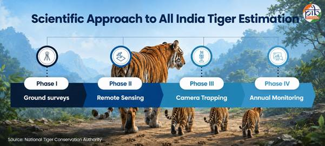
- All India Tiger Estimation: Conducted every 4 years by NTCA along with the Wildlife Institute of India (WII) using camera traps and line-transect methods.
-
- Community Empowerment: Eco-development Committees (EDCs) formed near buffer zones involve local/tribal communities in alternative livelihood generation to minimize human-animal confrontation.
(PIB)
National Disaster Management Framework & Assam Flood Relief Measures:
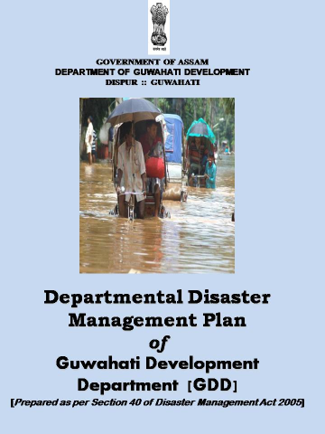
Context: As severe flood conditions affected the Brahmaputra river basin in Assam, disaster response operations and financial ex-gratia distributions were accelerated under state and central relief mechanisms.
-
- Hydro-Geographical Factors: Brahmaputra is a braided antecedent river prone to intense annual avulsion, bank erosion, and silt deposition due to high sediment load and steep gradient in its upper course (Yarlung Tsangpo).
- Disaster Management Act, 2005: Provides the legal and institutional framework for disaster management in India, creating NDMA, SDMA, and DDMA.
- NDMA Structure: The National Disaster Management Authority (NDMA) is chaired ex-officio by the Prime Minister of India.
- SDMA Structure: The State Disaster Management Authority is chaired ex-officio by the respective Chief Minister.
- SDRF vs. NDRF:
- State Disaster Response Fund (SDRF): Primary fund available with state governments under Section 48(1)(a) of the DM Act.
- National Disaster Response Fund (NDRF): Set up under Section 46 to meet expenses for emergency response when a calamity is of severe nature exceeding state resources.
- Finance Commission Allocations: Funding share for SDRF is 75:25 for general category states and 90:10 for North-Eastern & Himalayan States, financed by the Central Government.
- CWC Hydro-Meteorological Monitoring: The Central Water Commission (CWC) operates flood forecasting stations across the Brahmaputra and its key tributaries (Subansiri, Jia Bharali, Manas, Teesta).
- Natural Barriers & Protected Areas: Kaziranga National Park relies on temporary annual flood pulses for eco-hydrological flushing, though extreme flooding threatens megaherbivores like the Greater One-Horned Rhino.
- Sendai Framework (2015-2030): Global voluntary agreement establishing 4 priorities for action: understanding risk, strengthening governance, investing in resilience, and enhancing disaster preparedness.
- Integrated Flood Management (IFM): Modern flood control strategy shifting focus from structural engineering (embankments) to living with floods via wetlands restoration, watershed management, and floodplain zoning.
(IE)
History, Art & Culture
Guru Purnima & Ancient Philosophical Systems of Education:
Context: PM extended greetings on Guru Purnima, highlighting the classical Sanskrit Subhashitam regarding the six traditional traits and forms of a Guru (Guru Lakshanas).
The Prime Minister shared a Sanskrit Subhashitam-
“प्रेरकः सूचकश्चैव वाचको दर्शकस्तथा।
शिक्षकः बोधकश्चैव षडेते गुरवः स्मृताः॥”
-
- Subhashitam Verse: “Preraka, Suchaka, Vachaka, Darshaka, Shikshaka, and Bodhaka” – detailing the six roles of a teacher: inspiring, informing, speaking truth, guiding direction, educating, and awakening self-realization.
- Historical Significance: Guru Purnima falls on the full moon day (Purnima) of the Ashadha month in the Hindu calendar. It is traditionally observed in honour of Maharshi Veda Vyasa, who edited the four Vedas and authored the Mahabharata and Puranas.
- Buddhist Tradition: For Buddhists, the day commemorates Lord Buddha’s Dhammacakkappavattana , delivering his first sermon to his first five disciples at the Deer Park in Sarnath after attaining enlightenment.
- Jain Tradition: In Jainism, it marks the day when Lord Mahavira chose his first disciple (Gandhara), Indrabhuti Gautama, becoming a Tirthankara Guru.
- Gurukula System: The ancient Indian education framework where students resided with the Acharya, practicing Brahmacharya, holistic learning (Vidya), and oral transmission (Shruti and Smriti).
- Ancient Universities (Mahaviharas):
- Takshashila: Renowned for medicine (Charaka), politics (Kautilya), and grammar (Panini).
- Nalanda: Established during the Gupta Empire (Kumaragupta I); specialized in Mahayana Buddhism and logic.
- Vikramashila: Founded by Pala king Dharmapala; famous for Vajrayana Tantric studies.
- Six Systems of Orthodox Philosophy (Shad-Darshana): Nyaya (Gautama), Vaisheshika (Kanada), Samkhya (Kapila), Yoga (Patanjali), Mimamsa (Jaimini), and Vedanta (Vyasa).
- Heterodox Systems (Nastika): Philosophical schools that rejected the authority of the Vedas – Buddhism, Jainism, and Charvaka (Lokayata).
- Oral Preservation: UNESCO recognized the Chanting of Vedic Mantras as an Intangible Cultural Heritage of Humanity, preserving the precision of phonetics (Shiksha).
- Guru-Shishya Parampara: The unbroken lineage of knowledge transfer that forms the foundation of classical Indian performing arts (Gharanas in Hindustani/Carnatic music) and spiritual traditions.
(PIB)
Government Schemes & Initiatives
Implementation Benchmarks under Rashtriya Krishi Vikas Yojana (RKVY):
Context: Union Agriculture Minister Shivraj Singh Chouhan chaired a high-level review meeting where Maharashtra became the first state to fulfill the 75% expenditure benchmark to secure the second installment under RKVY.
-
- Background: Maharashtra utilized over ₹260 crore out of the initial ₹335 crore tranche released, satisfying the financial audit criteria for second tranche disbursement.
- Scheme Evolution: RKVY was initiated in 2007 during the 11th Five-Year Plan by the National Development Council (NDC) to ensure holistic development of agriculture and allied sectors.
- RKVY-RAFTAAR: Later rebranded as Remunerative Approaches for Agriculture and Allied Sectors Rejuvenation (RAFTAAR) to incentivize agribusiness entrepreneurship and post-harvest infrastructure.
- Scheme Classification: Operates as a Centrally Sponsored Scheme (CSS).
- Funding Pattern:
- 60:40 ratio between Centre and General States.
- 90:10 ratio for 8 North-Eastern states and Himalayan states.
- 100% central funding for Union Territories.
- State-Level Flexibility: RKVY provides complete autonomy to states to plan and execute decentralized agricultural project strategies based on localized agro-climatic zones via District Agriculture Plans (DAPs).
- Component Focus: Sub-schemes under RKVY cover soil health management, rainwater harvesting, organic farming, crop diversification, and Agri-Startups seed funding.
- Fund Disbursement Norms: Release of subsequent installments is contingent upon strict Public Financial Management System (PFMS) tracking and utilization certificate (UC) submissions.
- Agri-Tech Integration: Encourages drone deployment, smart irrigation, and climate-resilient crop varieties through State Agricultural Universities (SAUs).
- Constitutional Schema: Agriculture is a State Subject under Entry 14 of List II (State List) in the Seventh Schedule of the Constitution of India.
(PIB/IE)
Spread the Word