Indian Polity & Governance
Anti-Defection Law – Judicial Interpretation:
Context
Debates continue regarding delays in disqualification decisions under anti-defection law.
-
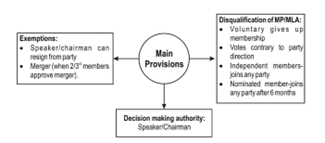
- Based on Tenth Schedule (52nd Amendment).
- Applies to:
- MPs
- MLAs.
- Grounds:
- Voluntarily giving up membership
- Voting against party whip.
- Decision made by:
- Speaker/Chairman.
- Supreme Court allows judicial review.
- No strict timeline → delays controversial.
- Exception:
- Merger (2/3 members).
(TH)
Parliamentary Privileges:
Context
Debate over scope of parliamentary privileges and freedom of speech.
-
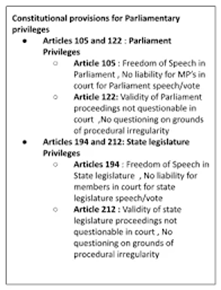
- Provided under:
- Article 105 (Parliament)
- Article 194 (State legislatures).
- Includes:
- Freedom of speech in House
- Immunity from legal proceedings.
- Not absolute — subject to:
- Constitutional provisions.
- Breach of privilege can lead to:
- Punishment by House.
- Based on British parliamentary traditions.
- Courts can examine constitutional validity.
- Provided under:
(TH)
Economy
Bioeconomy and Biotechnology Growth:
Context
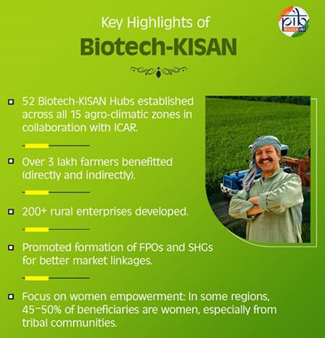
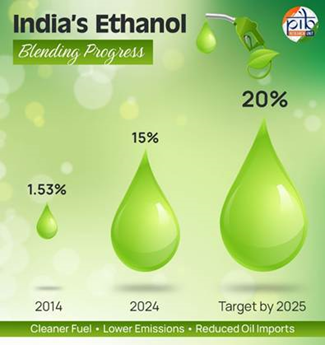
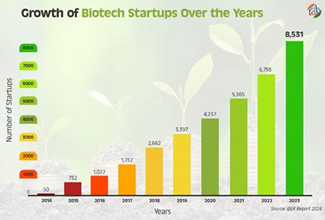
India’s bioeconomy sector shows rapid expansion.
-
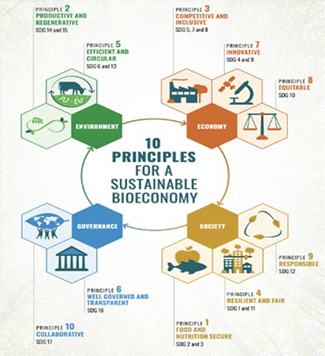
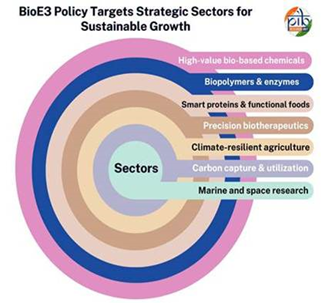
- Bioeconomy includes:
- Biotech
- Biopharma
- Bio-agriculture.
- Driven by innovation in:
- Genomics
- Vaccines.
- India is a major vaccine producer globally.
- Sector contributes to:
- GDP
- Employment.
- Bio-based products reduce environmental impact.
- Linked with:
- Sustainable development.
- Requires:
- Skilled workforce
- R&D investment.
- Bioeconomy includes:
(PIB)
Geography, Mapping, Ecology & Environment and DM
Ocean Thermal Energy Conversion (OTEC):
Context
Discussion on potential of Ocean Thermal Energy Conversion (OTEC) as renewable energy.
-
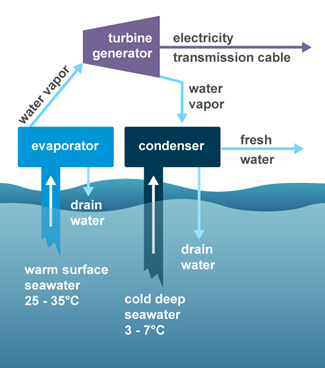
- OTEC uses temperature difference between surface and deep ocean water.
- Works best in tropical regions.
- Requires at least 20°C temperature difference.
- Produces:
- Electricity
- Desalinated water.
- Continuous energy source (unlike solar/wind intermittency).
- Limited deployment due to:
- High cost
- Technological challenges.
- Environmentally cleaner compared to fossil fuels.
(IE)
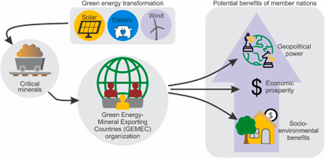
Lithium Resources and Energy Security:
Context
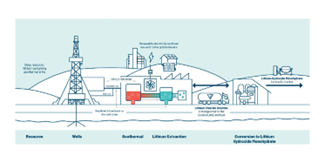
India is exploring lithium resources for strengthening energy security and EV ecosystem.
-
- Lithium is critical for:
- Batteries
- Electric vehicles.
- Classified as critical mineral.
- Major global producers:
- Australia
- Chile
- China.
- India exploring domestic reserves.
- Lithium-ion batteries dominate EV sector.
- Supply chain concentration poses risk.
- Strategic for:
- Energy transition
- Storage solutions.
- Lithium is critical for:
(ET)
Science & Technology
India’s Semiconductor Design Ecosystem:
Context
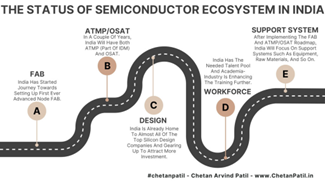
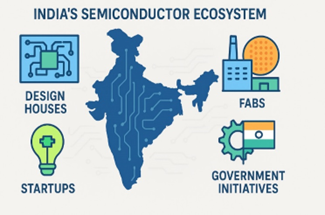
Focus on India’s strength in chip design (fabless ecosystem).
-
- Fabless companies design chips but do not manufacture them.
- India has strong:
- Software
- Chip design talent.
- Fabrication (fabs) requires:
- High capital
- Advanced tech.
- Global hubs:
- Taiwan
- South Korea.
- Design ecosystem is key to value addition.
- Semiconductor supply chain is geopolitically sensitive.
- Government incentives aim to boost ecosystem.
(ET)
History, Art & Culture
Geographical Indication (GI) Tag Expansion:
Context
New products were granted Geographical Indication (GI) tags, highlighting regional uniqueness.
-
- GI tags are governed under:
- Geographical Indications of Goods Act, 1999.
- GI identifies goods originating from a specific region.
- Ensures:
- Quality
- Reputation linked to geography.
- Registered by:
- Controller General of Patents, Designs and Trade Marks
- Valid for 10 years (renewable).
- Examples:
- Darjeeling Tea
- Kanchipuram Silk.
- GI protection prevents unauthorized use.
- Promotes:
- Local economy
- Exports.
- GI tags are governed under:
(TH)
Spread the Word