Introduction:
Chips and AI are now closely linked. Every AI system needs advanced chips to run. India is building both at once & is growing its chip-making base and its AI compute and models as India marks 80 years of independence and moves toward Viksit Bharat.
Semicon India: From Policy to Factories
-
- Semicon 1.0: Started with a ₹76,000 crore outlay. It covered chip design, fabrication, packaging, equipment, materials and skills.
- Semicon 2.0: Approved in July 2026 with ₹1,27,500 crore. It has six pillars: design, equipment and materials, fabrication, packaging, R&D, and talent.
- 12 projects approved: Spread across six states, worth over ₹1.64 lakh crore. These include chip fabs, display fabs and packaging units.
- Three facilities: Have already started commercial production. This marks a shift from policy to real output.
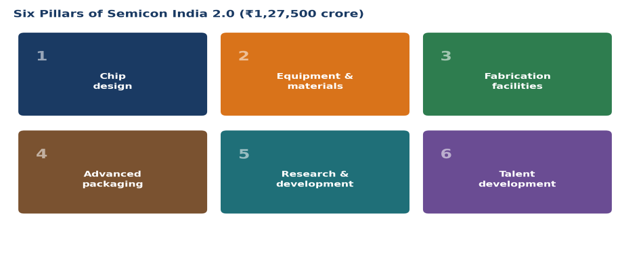
Fig. 1 – The six pillars of Semicon India 2.0.
Key Terms
-
- Semiconductor fab: A plant that turns raw silicon into working chips.
- EDA tools: Software used to design and test chips before they are built. This cuts cost and error.
- GPU (Graphics Processing Unit): A processor built for heavy, fast computing. It is the key hardware behind AI training.
- Foundation model: A large AI model trained on huge data. It can be adapted for many tasks, like chatbots or translation.
Building Chip Design Talent
-
- Chips to Startup (C2S): Has placed EDA tools in 320 institutes. Over 68,000 students have been trained.
- Design Linked Incentive (DLI) Scheme: Has backed 24 design projects and 105 startups/MSMEs with EDA tool support.
- 211 chips: Were taped out (finalised for manufacture) by 75 institutions, as of April 2026. 7 chips have been fabricated, some at advanced 12 nm nodes.
- Global links: Partnerships with the US, Japan, Singapore, the Netherlands, Germany and the EU. Semicon India 2025 drew 350+ exhibitors from 48 countries.
India AI Mission:
-
- Budget: About ₹10,372 crore.
- Compute: Shared GPU capacity has crossed 45,000 GPUs as of June 2026. 237 projects have used 93.18 lakh GPU hours of subsidised compute.
- Foundation models: 20 Indian model proposals chosen from 506 applications. This includes 12 large multimodal models and 8 small language models.
- AI Kosh: Hosts over 14,000 datasets and 331 AI models for researchers and developers.
- Real-world use: 62 AI prototypes built. 20 AI solutions deployed in government bodies.
- Centres of Excellence: 58 AI CoEs approved across states; 22 already active.
- Responsible AI: 13 projects approved to work on bias, deepfake detection, privacy and AI risk assessment.
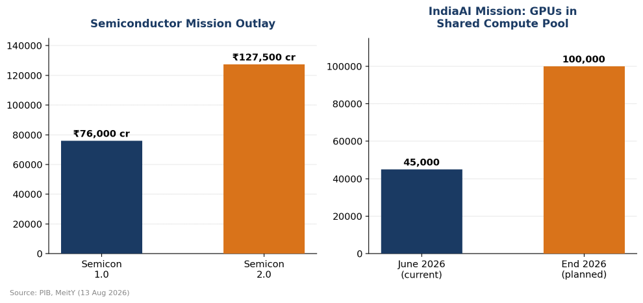
Fig. 2 – Both the chip mission budget and AI compute capacity are scaling up fast.
Global Standing
-
- India ranked third in the Stanford Global AI Vibrancy Report 2025.
- India was the second-largest contributor to GitHub AI projects in 2025.
- The India AI Impact Summit (February 2026) drew over 100 countries. 92 countries backed its declaration.
- India joined the Pax Silica coalition with the US to build safer global chip supply chains.
- Data centre capacity has grown from 375 MW in 2020 to about 1,575 MW now.
Why This Matters
-
- Chips and AI are now core to defence, telecom, health and everyday life. Home-grown capacity cuts risk from global supply shocks.
- Cheap, shared AI compute helps small Indian startups compete, not just big firms.
- Indian-language AI models can serve people who are left out by English-first global models.
- Chip and AI growth together can create high-value jobs in design, research and manufacturing.
Challenges
i. Parliamentary Standing Committee on Communications and Information Technology flagged delays in project approvals, weak coordination across ministries, and gaps in infrastructure readiness under the semiconductor scheme.
ii. PRS Legislative find that its review of Semicon 2.0 progress is based on data only up to December 2025, showing the mission is still at an early execution stage despite large announced numbers.
iii. BusinessToday (June 2026) found that India’s showcase AI model, built by a leading Indian AI startup, was trained using thousands of imported GPUs and foreign AI software frameworks. The report said India’s “AI dream runs on a stack it does not control.”
iv. Industry analysts covering India’s GPU expansion warn that nearly all of India’s AI compute today runs on chips from a small number of foreign companies. A change in export rules by chip-supplying countries could disrupt India’s compute plans.
v. Sector reports on the fab ecosystem note that India still depends on imported equipment and materials for chip-making, such as photolithography tools. Domestic supply of these remains limited, even as fabs begin production.
Way Forward
i. Ministry of Electronics and IT (MeitY) should act on the Standing Committee’s advice. It should speed up project clearances and set up a single-window coordination system across ministries.
ii. Government and industry together should keep building indigenous chip and hardware capacity for AI, not just software and models, to cut reliance on a few foreign chip suppliers.
iii. IndiaAI Mission: should support more open-source and Indian-built AI tools and frameworks, alongside the current use of foreign platforms, to build deeper technical control over time.
iv. Power and water regulators should assess data centre power and water needs early, and push for renewable energy sourcing, before more large GPU clusters are approved.
v. Government trade and technology diplomacy teams should keep building coalitions like Pax Silica, to secure long-term, stable access to advanced chips even if global export rules tighten.
Conclusion:
India has moved from planning to real chip and AI output in just a few years. Semicon India and the IndiaAI Mission are working together to build a fuller tech stack, from raw chips to AI models. The next phase Semicon 2.0 should broadens focus to equipment, materials, advanced packaging, research, indigenous intellectual property and talent.
Spread the Word