Introduction:
Prevention of Insults to National Honour (Amendment) Bill, 2026 seeks to extend the specific protection under Section 3 from Jana Gana Mana to the National Song, Vande Mataram. Thereby bringing both national musical symbols within the same statutory framework.
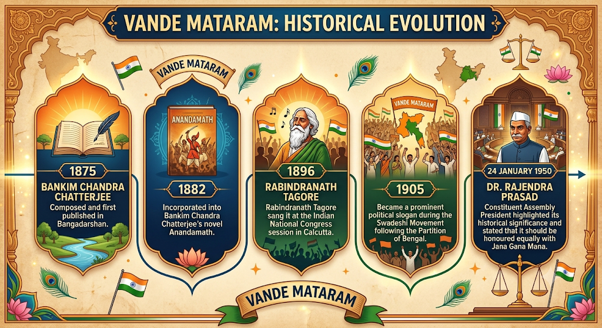
Why was the Amendment Needed?
1. Section 3 of the 1971 Act specifically criminalises intentionally preventing singing of the National Anthem or disturbing an assembly engaged in its singing but contains no equivalent protection for Vande Mataram.
2. Vande Mataram played an important role in the freedom struggle and became a symbol of national resistance and mobilisation, particularly during the Swadeshi Movement.
3. On 24 January 1950, Dr. Rajendra Prasad recognised the historic importance of Vande Mataram and stated that it should be honoured equally with Jana Gana Mana.
4. Formally introduced by the Lok Sabha (30 July 2026) accompanied by a Statement of Objects and Reasons highlighting the historic role of Vande Mataram during India’s freedom movement.
Debate Between National Honour and Constitutional Liberty
Against the Amendment: The principal concern is not with respecting Vande Mataram but with using criminal law to regulate individual expressions of patriotism. In a constitutional democracy national symbols deserve dignity but that dignity must coexist with freedom of conscience and expression.
-
- In Bijoe Emmanuel case (1986) Supreme Court protected schoolchildren who respectfully stood during National Anthem but did not sing it because of their religious beliefs. The Court emphasised that there was no disrespect or disturbance.
- Since Section 3 carries imprisonment of up to three years. But vague or overbroad enforcement could discourage legitimate dissent.
- Constitution does not prescribe a single form of patriotic expression. Article 51A(a) requires citizens to respect national symbols but fundamental rights continue to protect conscience and expression.
Therefore, respect for the nation cannot require uniformity of thought.
For the Amendment: At the same time, amendment addresses deliberate interference with the collective expression of national honour. It does not merely regulate personal belief but it penalises intentionally preventing singing or disturbing an assembly engaged in it. From Swadeshi Movement of 1905 to freedom struggle Vande Mataram became a powerful expression of anti-colonial mobilisation. Its historical significance was also recognised by Dr. Rajendra Prasad in the Constituent Assembly on 24 January 1950.
-
- The law can legitimately prevent an individual from intentionally disrupting the peaceful participation of others. This is different from compelling every individual to participate.
- Democracies such as the United States, France and Germany provide varying degrees of legal protection to national symbols.
Thus, objective should not be “compulsory patriotism” but protection against deliberate and disruptive acts directed at a collective national observance.
Conclusion:
Therefore, better approach is to protect national symbols from deliberate disruption without converting patriotism into a test of conformity. In a constitutional democracy, national honour is strengthened not weakened when respect for the nation coexists with freedom of conscience and expression.
Spread the Word