
Indian Polity & Governance
Television Rating Policy 2026:
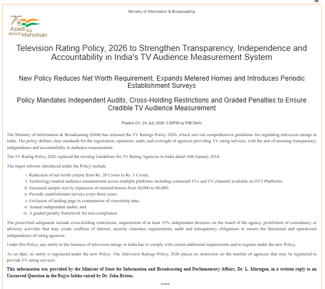
Context: The Ministry of Information & Broadcasting (MIB) released the Television Rating Policy 2026, replacing the 12-year-old Guidelines for TV Rating Agencies in India (2014) to enhance transparency, independence, and accountability.
-
- Regulatory Body: MIB regulates audience measurement guidelines, while the Telecom Regulatory Authority of India (TRAI) gives statutory recommendations under the TRAI Act, 1997.
- Net Worth Requirement: The minimum net worth criterion for rating agencies was slashed from ₹20 crore to ₹5 crore to encourage market competition.
- Sample Size Expansion: Mandates expanding metered households from 50,000 to 80,000 for better demographic representation.
- Technology Neutrality: Encompasses audience measurement across linear television, Connected TVs, and TV channels streamed on OTT platforms.
- Periodic Surveys: Requires mandatory Establishment Surveys every 3 years to update demographic baseline data.
- Exclusion of Landing Pages: Prohibits counting “landing page” views towards viewership numbers to prevent manipulation of ratings.
- Board Governance: Mandates at least 33% independent directors on the board of any television rating agency.
- Cross-Holding Restrictions: Prevents cross-shareholding between broadcasters, advertisers, and rating agencies to eliminate conflict of interest.
- Mandatory Audits: Requires annual independent technical and financial audits of panel selection, data collection, and processing algorithms.
- Graded Penalties: Replaces blanket cancellation of registration with a structured, graded penalty system for minor to major non-compliances.
(PIB)
Community Intelligence Framework & State Police Powers:
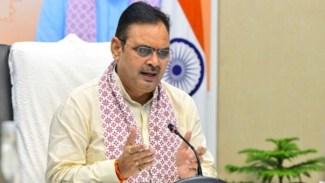
Context: The State Government of Rajasthan amended guidelines for community policing, paving the way for structured community intelligence groups to assist local law enforcement.
-
- Seventh Schedule Allocation: ‘Public Order’ (Entry 1) and ‘Police’ (Entry 2) fall strictly under the State List (List II) of the 7th Schedule of the Indian Constitution.
- Model Police Act, 2006: Drafted by the Soli Sorabjee Committee; advocates community policing as a core duty of police personnel.
- Prakash Singh Case (2006): Landmark SC judgment prescribing 7 directives for police reforms (e.g., establishing State Security Commissions, fixed 2-year tenure for DGP/DSPs, Police Complaints Authorities).
- Community Policing Concept: Strategy focused on building ties and working closely with members of communities to prevent crime and gather grassroots intelligence.
- Examples in India: Janamaithri Suraksha (Kerala), Friends of Police (Tamil Nadu), Meira Paibi (Manipur).
- Constitutional Safeguards: Article 22 provides protection against arrest and detention in certain cases; requires producing arrested persons before a magistrate within 24 hours.
- National Police Commission (1977–81): First major commission set up to recommend comprehensive police reforms in independent India.
- Bureau of Police Research and Development (BPR&D): Nodal agency under the Ministry of Home Affairs for modernization and research in police forces.
- Data Privacy / Intelligence Oversight: Community intelligence schemes must adhere to privacy standards established under the Puttaswamy Judgment (2017) (Right to Privacy as a fundamental right under Article 21)
- Smart Policing Directive: Introduced in 2014 emphasizing Strict, Sensitive, Modern, Accountable, Responsive, and Technologically trained police.
(IE)
International Relations
3rd BRICS Ministerial Meeting on Disaster Risk Reduction (DRR):
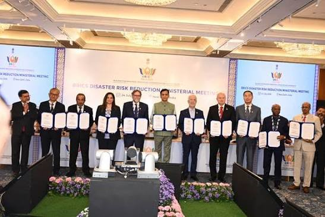
Context: Under India’s BRICS Chairship in 2026, the National Disaster Management Authority (NDMA) hosted the 3rd BRICS Ministerial Meeting on DRR in New Delhi, concluding with the adoption of a joint declaration.
-
- Host Institution: National Disaster Management Authority (NDMA), chaired ex-officio by the Prime Minister of India under the Disaster Management Act, 2005.
- Key Adoption: Unanimous adoption of the BRICS Joint Statement on Disaster Risk Reduction.
- Execution Roadmap: Focuses on accelerating the BRICS DRR Work Plan (2025–2028) targeting early warning systems and climate-resilient infrastructure.
- Institutional Evolution: Traces back to the Udaipur Declaration (2016) (which set up the Joint Task Force) and the Kazan Declaration (2024).
- Core Theme: “Building for Resilience, Innovation, Cooperation and Sustainability”.
- Global Framework Alignment: Directly supports the Sendai Framework for Disaster Risk Reduction 2015–2030 (7 targets, 4 priorities).
- BRICS Expanded Form: BRICS expanded beyond its founding members (Brazil, Russia, India, China, South Africa) to include Egypt, Ethiopia, Iran, UAE, and Saudi Arabia.
- Focus Area: Financing mechanism for disaster-resilient infrastructure, aligning with the Coalition for Disaster Resilient Infrastructure (CDRI).
- NDMA Structure: Comprises a Chairman (PM) and up to 9 members nominated by the Chairman; functions under the Ministry of Home Affairs.
- Nodal Agency: Ministry of Home Affairs (MHA) serves as the overall nodal ministry for disaster management in India.
(PIB)
Economy
US Tariffs on Goods & India’s Trade Policy:
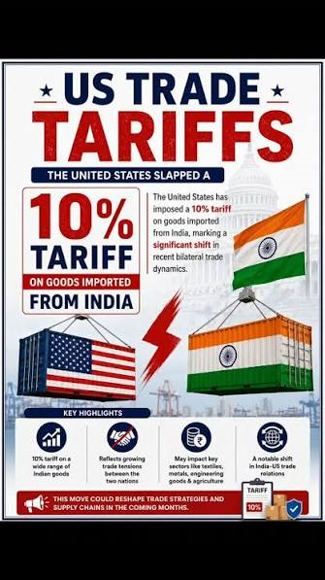
Context: A global trade analysis report highlighted India’s strategic trade negotiations amidst the imposition of a 10% tariff by the United States on select import categories over labor standards and trade balance issues.
-
- Tariff Types: Ad valorem tariffs (percentage of value) vs specific tariffs (fixed monetary amount per physical unit).
- Most Favoured Nation (MFN): Under WTO rules (Article I of GATT), MFN obligates members to treat all trading partners equally unless under a Free Trade Agreement (FTA).
- Generalized System of Preferences (GSP): A non-reciprocal preferential tariff system extended by developed nations to developing ones (US suspended India’s GSP in 2019).
- Section 301 / Trade Safeguards: US domestic trade policy tool allowing unilateral action against perceived unfair foreign trade practices.
- India’s Export Composition to US: Major exports include engineering goods, pharmaceutical products, polished diamonds, textiles, and electronics.
- Trade Balance: India maintains a merchandise trade surplus with the United States.
- Directorate General of Foreign Trade (DGFT): Attached office of the Ministry of Commerce and Industry; formulates India’s Foreign Trade Policy (FTP).
- Countervailing Duties (CVD): Tariffs levied on imported goods to offset subsidies provided by the exporting country’s government.
- Anti-Dumping Duties: Tariffs imposed on goods imported at prices lower than their normal domestic market value.
- Rules of Origin: Criteria used to define where a product was made; critical for determining applicable duties and trade restrictions.
(IE)
Geography
Protection of River Ganga Floodplains (Patna Encroachments):
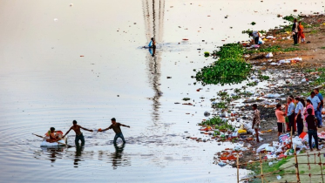
Context: The Supreme Court ordered the Bihar Government to clear all illegal constructions and encroachments along the banks and active floodplains of the River Ganga in Patna within 6 weeks.
-
- Legal Principle: Enforcement of the Public Trust Doctrine, holding that natural resources like rivers and floodplains are held by the state in trust for public use.
- Ganga River Basin Authority Framework: Encroachments violate notifications under the Environment (Protection) Act, 1986.
- Floodplain: Buffer zones adjacent to a river that periodically overflow; crucial for groundwater recharge, flood attenuation, and biodiversity.
- National Mission for Clean Ganga (NMCG): Registered as a society under the Societies Registration Act, 1860; acts as the implementation wing of the National Ganga Council.
- National Ganga Council: Headed by the Prime Minister; replaced the National Ganga River Basin Authority (NGRBA) in 2016.
- River Ganga Origin: Rises as Bhagirathi from Gangotri Glacier at Gaumukh; becomes Ganga after confluence with Alaknanda at Devprayag.
- Major Tributaries in Patna Zone: Yamuna, Ghaghara, Gandak, Kosi (left bank); Son, Punpun (right bank—Son joins just upstream of Patna).
- Ecological Impact: Encroachments impair flow velocity, disrupt migration of Ganges River Dolphin (Platanista gangetica – India’s National Aquatic Animal), and heighten urban flooding risk.
- IUCN Status: Ganges River Dolphin is classified as Endangered on the IUCN Red List.
- Constitutional Mandate: Article 48A (Directive Principles) and Article 51A(g) (Fundamental Duties) mandate environmental and river protection.
(IE)
Cauvery River Water Dispute & Riparian Framework:
Context: Tamil Nadu and Karnataka initiated bilateral state-level dialogue proposals regarding the distress-sharing formula and water release schedules from the Cauvery basin.
-
- Constitutional Provision: Article 262 empowers Parliament to adjudicate disputes relating to waters of inter-state rivers or river valleys.
- Jurisdiction Bar: Article 262(2) allows Parliament to bar the Supreme Court or any other court from exercising jurisdiction in respect of such water disputes.
- Statutory Act: Inter-State River Water Disputes (ISRWD) Act, 1956 empowers the Union Government to set up ad-hoc tribunals upon state request.
- Cauvery Water Management Scheme 2018: Formed the Cauvery Water Management Authority (CWMA) and Cauvery Water Regulation Committee (CWRC) under SC directions.
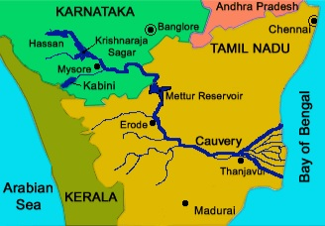
- Cauvery River Origin: Rises at Talakaveri in the Brahmagiri Range of the Western Ghats (Kodagu district, Karnataka).
- Basin Coverage: Flows through Karnataka, Tamil Nadu, Kerala, and the Union Territory of Puducherry before emptying into the Bay of Bengal at Poompuhar.
- Major Tributaries: Harangi, Hemavati, Arkavathi, Kabini, Bhavani, Lakshmana Tirtha, Noyyal, and Amaravati.
- Riparian Distinction: Karnataka is the upper riparian state; Tamil Nadu and Puducherry are lower riparian entities.
- Shivanasamudra Falls: Located along the Cauvery River in Karnataka; site of one of Asia’s first hydroelectric power stations (1902).
- Protected Areas in Basin: Includes Nagarhole National Park, Bandipur National Park, and Mudumalai Tiger Reserve.
(TH)
Environment & Ecology
Ajwa Lake Reservoir & Urban Flood Management:
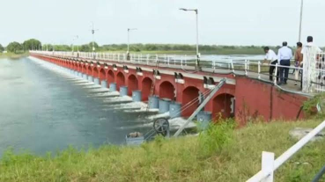
Context: Heavy monsoon rainfall filled the historical Ajwa Lake reservoir in Gujarat, prompting disaster management agencies to regulate discharge into the Vishwamitri River to prevent urban flooding.
-
- Location: Situated near Vadodara, Gujarat; constructed in the 20th century by Maharaja Sayajirao Gaekwad III to ensure drinking water security.
- Associated River System: Feeds into and controls the outflow of the Vishwamitri River basin.
- Vishwamitri River: An inter-state/seasonal river rising from the Pavagadh Hills (Panchmahal district, Gujarat) and draining into the Gulf of Khambhat.
- Faunal Significance: The Vishwamitri River and Ajwa Lake ecosystem host a large population of Mugger Crocodiles (Crocodylus palustris).
- Mugger Crocodile Conservation: Classified as Vulnerable on the IUCN Red List and listed under Schedule I of India’s Wildlife Protection Act, 1972.
- Urban Flood Drivers: Loss of natural wetland buffers, siltation of drainage channels, and encroachment on river floodplains.
- NDMA Guidelines on Urban Flooding (2010): Treats Urban Flooding as a distinct disaster separate from rural flooding due to impermeable surfaces and storm-water drain overcapacity.
- Pavagadh Hills Ecosystem: Champaner-Pavagadh Archaeological Park located at the headwaters is a UNESCO World Heritage Site.
- Gulf of Khambhat Dynamics: Estuarine region experiencing high tidal ranges, receiving rivers like Narmada, Tapi, Mahi, and Sabarmati.
- Ramsar Sites in Gujarat: Includes Nalsarovar Bird Sanctuary, Thol Lake, Wadhwana Wetland, and Khijadia Wildlife Sanctuary.
(TH/IE)
Defence
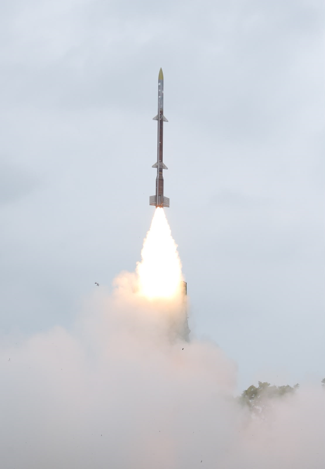
Flight Test of Project ‘Kusha’ (Indigenous Long-Range SAM):
Context: Defence Research and Development Organisation (DRDO) successfully conducted the maiden flight test of the Kusha Long-Range Surface-to-Air Missile (LRSAM) system.
-
- Developer: Indigenously designed and developed by DRDO in collaboration with public/private industry partners.
- System Capability: Surface-to-Air Missile (SAM) system engineered to neutralize stealth fighters, cruise missiles, precision-guided munitions, and UAVs.
- Target Engagement Range: Designed for long-range interception (up to 350 km in operational envelope), acting as India’s equivalent to foreign systems like S-400.
- Multi-Layered Defence: Integrates long-range radar tracking, active radar homing seekers, and command guidance units.
- Strategic Significance: Fills crucial gaps in the Integrated Air Defence Weapon System (IADWS) for the Indian Air Force.
- DRDO Status: Statutory body under the Ministry of Defence, established in 1958 by combining Technical Development Establishments and Directorate of Technical Development and Production.
- Propulsion: Uses solid-propellant multi-stage motors for quick reaction times and high endo-atmospheric intercept capability.
- Interoperability: Built to interface with the Integrated Air Command and Control System (IACCS) network.
- Import Substitution: Part of Atmanirbhar Bharat in defence under the positive indigenisation lists issued by the Ministry of Defence.
- Testing Facility: Flight tests are conducted off the coast of Odisha at the Integrated Test Range (ITR), Abdul Kalam Island (formerly Wheeler Island).
(PIB)
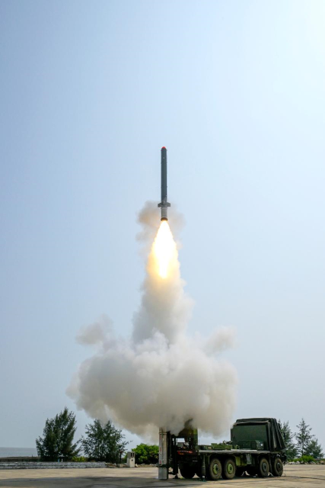
Long Range Land Attack Cruise Missile (LRLACM) & Netra AEW&C:
Context: The Ministry of Defence highlighted major operational milestones, including successful testing of the Long Range Land Attack Cruise Missile (LRLACM) and operational certification of the Netra AEW&C System.
-
- LRLACM Classification: Subsonic land-attack cruise missile capable of terrain-following and precision strikes over extended distances.
- Cruise vs Ballistic: Cruise missiles travel at self-propelled, constant subsonic/supersonic speeds within the atmosphere; ballistic missiles follow a high-arcing parabolic trajectory.
- Netra AEW&C Platform: Airborne Early Warning and Control system built on Embraer ERJ-145 aircraft platform by DRDO.
- Netra Capabilities: Features 240-degree coverage Active Electronically Scanned Array (AESA) radar for air and sea surveillance.
- Strategic Role: Acts as an “Eye in the Sky,” enabling network-centric warfare and battle management.
- Guidance Technologies: Uses hybrid navigation integrating Inertial Navigation System (INS) with NavIC (India’s satellite navigation system).
- NavIC Overview: Navigation with Indian Constellation; developed by ISRO, consisting of 7 satellites (3 geostationary, 4 inclined geosynchronous).
- MTCR Compliance: India’s joining of the Missile Technology Control Regime (MTCR) in 2016 enabled development and export of long-range precision missiles (>300 km).
- Tri-Services Integration: Systems engineered for joint operations across Army, Navy, and Air Force.
- Indigenous Content: High percentage of indigenous sub-systems including engine components, radio frequency seekers, and command links.
(PIB)
Department of Military Affairs (DMA) & Defence Management Reforms:
Context: An administrative overview of Higher Defence Management Reforms detailing the operational functioning of the Department of Military Affairs (DMA) was released recently.
-
- Creation: DMA was created in December 2019 as the 5th department within the Ministry of Defence (MoD).
- Ex-officio Head: The Chief of Defence Staff (CDS) functions as the ex-officio Secretary of the Department of Military Affairs.
- Scope of DMA: Deals with the Armed Forces (Army, Navy, Air Force), procurement exclusive to the services, and promoting jointness/theatrisation.
- Departments in MoD: 1) Dept of Defence, 2) Dept of Military Affairs, 3) Dept of Defence Production, 4) Dept of Defence R&D (DRDO), 5) Dept of Ex-Servicemen Welfare.
- CDS Role & Status: Four-star General/Admiral/Air Chief Marshal; acts as the Principal Military Advisor to the Raksha Mantri (Minister of Defence).
- No Command Authority: CDS does not exercise military command over the three Service Chiefs; acts as first among equals among service chiefs in administrative bodies.
- Nuclear Command Authority (NCA): CDS serves as the Military Advisor to the Executive Council of the NCA (headed by the Prime Minister).
- Theatre Commands Objective: Mandated to facilitate restructuring of military commands for optimal utilization of resources through joint theater commands.
- Kargil Review Committee (1999): Chaired by K. Subrahmanyam; first recommended establishing a CDS to streamline military-civilian interface.
- Agnipath Scheme Administration: Personnel recruitment programs (Agniveers) across the three services are managed administratively under the DMA.
(PIB)
Spread the Word