
Indian Polity & Governance
Mukhyamantri Majhi Ladki Bahin Yojana led to the removal of over 92 lakh ineligible or unverified beneficiaries:
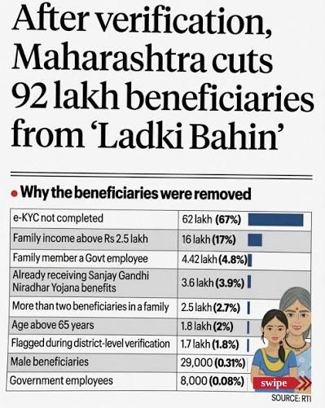
Context: A major state-wide verification drive of Maharashtra’s flagship Mukhyamantri Majhi Ladki Bahin Yojana led to the removal of over 92 lakh ineligible or unverified beneficiaries from the records.
-
- Core Cause for Deletion: The vast majority of deletions (~62 lakh) occurred because beneficiaries failed to complete mandatory eKYC (Electronic Know Your Customer)
- Direct Benefit Transfer (DBT): The scheme functions via DBT, where funds are transferred directly into Aadhaar-linked bank accounts to remove middle-men and leakage.
- Jam Trinity: Schemes of this nature depend directly on the JAM infrastructure Jan Dhan Accounts, Aadhaar identity verification, and Mobile numbers.
- Exclusion vs. Inclusion Errors: In welfare economics, removing non-eligible wealthy candidates fixes an Inclusion Error, whereas accidentally deleting genuine poor candidates constitutes an Exclusion Error.
- Constitutional Mandate: Direct cash transfers and women-centric welfare schemes fulfill the objectives of Directive Principles of State Policy (DPSP) specifically Article 39, which mandates state policy toward securing livelihood and minimizing inequalities.
- Aadhaar Data Security Legalities: The Supreme Court in the S. Puttaswamy judgment (2017) upheld Aadhaar’s validity for state-sponsored welfare benefits while establishing privacy as a fundamental right under Article 21.
- eKYC Mechanism: eKYC utilizes biometrics or OTP-based authentication through the Unique Identification Authority of India (UIDAI) servers to verify identity instantly.
- Statutory Status of UIDAI: UIDAI is a statutory authority established under the provisions of the Aadhaar Act, 2016, operating under the Ministry of Electronics and Information Technology (MeitY).
- Fiscal Deficit Impact: Tightening beneficiary lists prevents revenue leakage, assisting states in keeping their fiscal deficits within the limits prescribed by State FRBM (Fiscal Responsibility and Budget Management) Acts.
- Auditing Welfare: Article 149-151 regarding the Comptroller and Auditor General (CAG) covers the performance auditing of such socio-economic welfare schemes to ensure public funds are utilized as legislated.
(IE)
Supreme Court set aside 27 judgments of the Gauhati High Court:
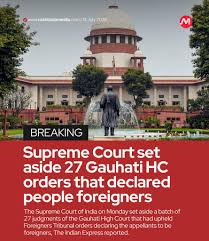
Context: The Supreme Court set aside 27 judgments of the Gauhati High Court that had previously upheld ex-parte orders of Foreigners Tribunals declaring individuals in Assam to be foreigners.
-
- The Ruling Principle: The Supreme Court ruled that determining an individual’s citizenship must strictly adhere to a fair, lawful, and reasonable process, even under special regional circumstances.
- Ex-Parte Orders Scrutiny: An ex-parte order is a decision passed by a judicial/quasi-judicial body in the absence of the accused party. The SC ruled these require the highest level of judicial scrutiny before striping citizenship.
- Principles of Natural Justice: The judgment emphasizes Audi Alteram Partem (listen to the other side), ruling that individuals must be given an absolute and practical opportunity to present their documentary evidence.
- Foreigners Tribunals: These are quasi-judicial bodies established uniquely under the Foreigners (Tribunals) Order, 1964. They possess powers equivalent to a civil court to determine if a person is an illegal migrant.
- The Burden of Proof: Under Section 9 of the Foreigners Act, 1946, the burden of proving whether a person is or is not a foreigner lies entirely on the person concerned. However, the SC ruled this does not override constitutional due process.
- Constitutional Base: Citizenship in India is governed by Articles 5 to 11 (Part II) of the Constitution and regulated dynamically by the Citizenship Act, 1955.
- Article 21 Application: The right to a fair trial and lawful procedure forms the bedrock of Article 21 (Right to Life and Personal Liberty), which applies to all persons, citizens and non-citizens alike.
- Assam Accord Context: The issue of illegal migration in Assam is historically anchored to the Assam Accord of 1985, which set March 24, 1971, as the cutoff date for detecting and deporting illegal immigrants.
- National Register of Citizens (NRC): The NRC is a register containing names of all genuine Indian citizens, updated specifically in Assam under the supervision of the Supreme Court to identify illegal residents.
- Writ Jurisdiction: The affected individuals approached the Supreme Court via Special Leave Petitions (SLPs) under Article 136, which grants the SC residual, extraordinary power to grant leave to appeal against any judgment from any court/tribunal in India.
(TH/IE)
Indian Society & Social Justice
Civil Registration System (CRS):
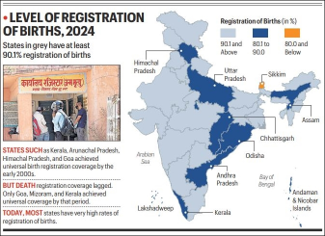
Context: Data from the Civil Registration System (CRS) revealed that India has achieved near-universal registration of births and deaths, reaching 99.1% and 99.4% coverage respectively.
-
- The Evolution: Registration coverage has witnessed massive growth; prior to 2000, only 56% of births and 48% of deaths were registered across India.
- Statutory Framework: The CRS operates strictly under the provisions of the Registration of Births and Deaths (RBD) Act, 1969.
- Institutional Head: The Registrar General of India (RGI), functioning under the Ministry of Home Affairs (MHA), coordinates and unifies the activities of registration throughout the country.
- RBD Amendment Act: Recent statutory amendments make digital birth certificates a single mandatory document for multiple services, including school admission, passport issuance, and voter list enrollment.
- Drivers of Birth Registration: The surge in birth registration is heavily tied to the rise in institutional deliveries in hospitals, driven by financial incentive schemes like Janani Suraksha Yojana (JSY).
- Drivers of Death Registration: Death registration increased due to expanding public health insurance schemes (like PM-JAY) and banking linkages, where certificates are mandatory for claims, inheritance, and land transfer.
- SDG Target Alignment: Near-universal registration fulfills Sustainable Development Goal (SDG) Target 16.9, which aims to provide legal identity for all, including birth registration, by 2030.
- Digital Divide Challenge: While urban centers show instantaneous logging through centralized portals, rural or remote pockets face registration lag due to lack of local internet infrastructure and institutional awareness.
- Policy Formulation Value: Accurately captured real-time demographic data through CRS is crucial for calculating the Infant Mortality Rate (IMR) and Maternal Mortality Ratio (MMR), guiding public health spending.
- Decentralized Execution: Though the policy framework is central, the actual field execution of the RBD Act is carried out by State governments through local Registrars (often village panchayat secretaries or municipal officers).
(IE)
International Developments
India and New Zealand formally upgraded their bilateral relationship:
Context: India and New Zealand formally upgraded their bilateral relationship into a comprehensive Strategic Partnership with a defined “Roadmap to 2030”.

-
- Geopolitical Pivot: The upgrade expands India’s strategic footprint beyond Southeast Asia directly into Oceania and the South Pacific islands.
- Indo-Pacific Alignment: Both nations explicitly reaffirmed their alignment for a “Free, Open, and Rules-based Indo-Pacific,” countering unilateral maritime assertions in the region.
- UNCLOS Adherence: The partnership stresses compliance with the UN Convention on the Law of the Sea (UNCLOS) 1982, which governs global maritime zones, EEZs, and navigation rights.
- Multilateral Support: As part of the declaration, New Zealand formally reiterated its support for India’s permanent membership in a reformed UN Security Council (UNSC) and India’s entry into the Nuclear Suppliers Group (NSG).
- FIPIC Synergy: The agreement complements India’s Forum for India-Pacific Islands Cooperation (FIPIC), an assertive diplomatic outreach involving 14 Pacific Island nations.
- Act East Policy: This development marks a structural expansion of India’s Act East Policy, migrating from pure trade ties with ASEAN to deep security cooperation in the wider Pacific.
- Nuclear Suppliers Group: The NSG is a 48-member elite cartel controlling global nuclear exports. India seeks entry, but faces structural vetoes due to being a non-signatory to the Non-Proliferation Treaty (NPT).
- Trade Profile: Bilateral trade focuses on agriculture, forestry, education, and pharmaceutical sectors, with talks ongoing to address non-tariff barriers.
- Maori: New Zealand’s indigenous population, the Maori, mostly inhabit the North Island. Mapping of New Zealand involves understanding the Cook Strait, which separates the North and South Islands.
- Antarctic Cooperation: Both nations are signatories to the Antarctic Treaty, and the partnership envisions collaborative deep-sea and polar scientific research.
(TH/PIB)
Economy
India’s retail inflation:
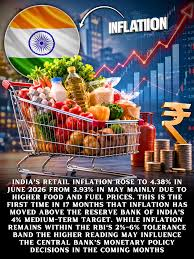
Context: India’s retail inflation inched up to 4.38% in June 2026 compared to 3.93% in May 2026, primarily driven by a surge in food inflation which scaled to 5.32%.
-
- Consumer Price Index (CPI): Retail inflation in India is measured by CPI (Combined), which tracks the change over time in the prices of a basket of consumer goods and services.
- Releasing Authority: CPI data is compiled and released monthly by the National Statistical Office (NSO), Ministry of Statistics and Programme Implementation (MoSPI).
- Base Year: The current base year for calculation of the CPI index in India is 2012 = 100.
- Weightage Distribution: In CPI (Combined), the ‘Food and Beverages’ group carries the highest weightage at approximately 45.86%, making the index highly sensitive to agricultural supply shocks.
- Inflation Targeting: The Reserve Bank of India (RBI) is legally mandated to maintain inflation targeting under the RBI Act, 1934, with a target of 4% and a tolerance band of +/- 2% (i.e., between 2% and 6%).
- Monetary Policy Committee (MPC): The statutory 6-member MPC uses the CPI (Combined) as its primary tool (nominal anchor) to decide policy repo rates to control inflation.
- Headline vs. Core Inflation: The 4.38% figure represents Headline Inflation. Core Inflation excludes volatile categories like food and fuel from the headline basket.
- Base Effect: A key mathematical factor in inflation calculations is the “Base Effect,” which refers to the impact of the corresponding month’s price levels from the previous year on the current inflation rate.
- Impact on Bonds: When retail inflation rises, bond yields typically go up, and bond prices fall, as investors anticipate tightening by the central bank.
- Difference with WPI: Unlike CPI, the Wholesale Price Index (WPI) is released by the Office of the Economic Adviser (Ministry of Commerce and Industry), tracks inflation at the producer level, and excludes services entirely.
(TH/PIB)
Ecology & Environment and DM
New rare species of jumping spiders:
Context: A joint team of researchers from India and Sri Lanka discovered three new rare species of jumping spiders belonging to the ancient genus Onomastus.

-
- The Discoveries: The three newly discovered species are named Onomastus brahmagiri, Onomastus silentvalley, and Onomastus wijesinghei.
- Geographical Distribution: brahmagiri was found in the Brahmagiri Hills (Karnataka/Kerala border) and O. silentvalley in the Silent Valley National Park (Kerala).
- Lineage: The genus Onomastus belongs to one of the oldest evolutionary lineages of jumping spiders (family Salticidae) and is strictly restricted to the Oriental/Indo-Malayan biogeographic region.
- Brahmagiri Wildlife Sanctuary: Located in the Western Ghats, it features shola-grassland ecosystems and acts as an important elephant corridor connecting to Nagarhole and Bandipur.
- Silent Valley National Park: Located in the Palakkad district of Kerala, it preserves a continuous stretch of pristine South Western Ghats rain forests and Shola-grassland ecosystems.
- River Systems: Silent Valley is drained by the Kunthipuzha River, a major tributary of the Bharathapuzha River, which flows completely unpolluted through the park.
- Western Ghats Biodiversity: The Western Ghats is recognized globally as one of the 36 “Biodiversity Hotspots” due to its exceptional level of endemism and high rate of habitat loss.
- Ecological Role of Spiders: As predatory invertebrates, jumping spiders act as vital bio-indicators of micro-climate health and regulate insect populations within fragile forest layers.
- Shola Forests Feature: Shola forests are tropical montane forests found in valleys separated by rolling grasslands in high-altitude regions of South India, known for dwarfed trees and high endemism.
- Taxonomic Significance: Discoveries of ancient lineages like Onomastus help evolutionary biologists map how species migrated across the Indian subcontinent prior to and during the collision of the Indian plate with Eurasia.
(IE)
Biogas and Compressed Biogas (CBG):
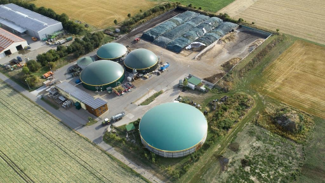
Context: The Ministry of Petroleum and Natural Gas highlighted India’s accelerated push for Biogas and Compressed Biogas (CBG) infrastructure as a dual strategy for energy independence and organic waste management.
-
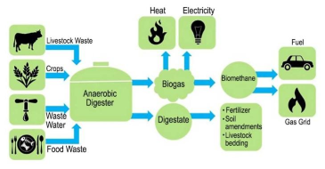
- What is Biogas? Biogas is produced naturally through the anaerobic digestion (decomposition in the complete absence of oxygen) of organic wastes like cattle manure, sewage, agricultural residue, and food waste.
- Chemical Composition: Biogas consists primarily of Methane (, ~50-70%) and Carbon Dioxide (, ~30-45%), with trace amounts of hydrogen sulfide and moisture.
- Compressed Biogas (CBG): When raw biogas is purified to remove carbon dioxide, hydrogen sulfide, and moisture, and compressed to over 90% methane content, it becomes CBG, which is chemically identical to commercial CNG.
-
- SATAT Initiative: The Sustainable Alternative Towards Affordable Transportation (SATAT) scheme was launched by the Ministry of Petroleum and Natural Gas to encourage entrepreneurs to set up commercial CBG plants.
- The Feedstock Model Trap: To prevent food-versus-fuel dilemmas, India’s policy strictly discourages the cultivation of dedicated energy crops for biogas, focusing instead entirely on agricultural residues and livestock waste (mirroring successful models like Denmark).
- Environmental Dividend: Methane is a potent greenhouse gas with a global warming potential over 25 times higher than . Capturing it via biogas plants significantly mitigates short-lived climate pollutants.
- Byproduct Value: The solid and liquid residue left behind after anaerobic digestion is called Fermented Organic Manure (FOM), a high-quality organic fertilizer that enriches soil organic carbon.
- National Bioenergy Programme: This umbrella programme supports the scaling up of waste-to-energy plants through central financial assistance and capital subsidies.
- City Gas Distribution (CGD) Integration: The government mandates the blending of CBG in the commercial City Gas Distribution networks to substitute imported Liquefied Natural Gas (LNG).
- Circular Economy Principle: Biogas perfectly represents the “Wealth from Waste” or circular economy concept, turning rural agrarian agricultural liabilities (like stubble burning) into local energy resources.
(PIB/TH)
Science & Technology
Helium emerged as a critical strategic resource:
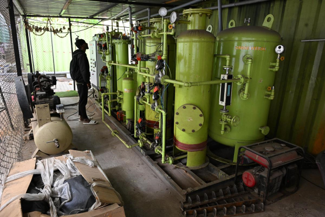
Context: Amid growing global semiconductor manufacturing competition and space exploration expansions, Helium emerged as a critical strategic resource for India’s high-tech industrial self-reliance.
-
- Physical Properties: Helium () is the second lightest element in the universe. It is a colorless, odorless, tasteless, and non-toxic noble gas with the lowest boiling point () of all elements.
- Cryogenic Utility: Because it stays liquid at temperatures close to absolute zero, it is irreplaceable as a cooling agent for Superconducting Magnets used in MRI scanners and Satellite launch vehicles.
- Semiconductor Role: Helium is vital in electronics manufacturing to create inert atmospheres and cool components rapidly during the production of microchips and fiber optics.
- Extraction Source: On Earth, Helium is not easily extracted from the air due to its light weight; it is harvested primarily as a byproduct of natural gas extraction, trapped deep in the crust.
- Global Supply Vulnerability: The global Helium market is highly consolidated, with a majority of reserves controlled by the US, Qatar, Russia, and Algeria, making importing nations prone to supply chain blockades.
- India imports almost all of its Helium requirements, creating a strategic vulnerability for its strategic space programs (ISRO) and defense electronics.
- Indigenous Extraction Research: India has been exploring extraction from indigenous sources, including geothermal monazite sands in West Bengal and natural gas fields in Rajasthan.
- Non-Renewable Nature: Once Helium escapes into the Earth’s atmosphere, it is light enough to escape Earth’s gravitational pull and bleed directly into space, making it a finite, non-recyclable resource if not captured.
- Alpha Decay Origin: Earth’s helium reserves are produced by the slow, billions-of-years-long radioactive alpha decay of heavy elements like Uranium and Thorium underground.
- Nuclear Fusion Association: In astrophysics, Helium is the primary product of the proton-proton chain reaction nuclear fusion that powers stars like our Sun.
(TH/PIB)
Government Schemes & Initiatives
Street Food Hubs under the PM SVANidhi infrastructure:
Context: Lakhanpur in Jammu & Kashmir was designated among the earliest towns in India selected for the transformation of its traditional vendor markets into dedicated Street Food Hubs under the PM SVANidhi infrastructure expansion.
-
- PM SVANidhi Core: The Pradhan Mantri Street Vendor’s AtmaNirbhar Nidhi is a Special Micro-Credit Facility scheme launched to provide affordable working capital loans to street vendors.
- Nodal Ministry: PM SVANidhi is entirely designed and implemented by the Ministry of Housing and Urban Affairs (MoHUA).
- The Street Food Hubs Sub-Scheme: This targeted intervention seeks to systematically upgrade infrastructure, ensure hygiene compliance, and boost urban tourism by formalizing informal street vendor clusters.
- Inter-Ministerial Collaboration: The implementation framework leverages resources from MoHUA, the Ministry of Tourism, and technical food safety standards from the Food Safety and Standards Authority of India (FSSAI).
- Funding Structure: Each approved Street Food Hub project receives capital grants amounting to Rs. 4 crore disbursed in phased installments, combined with direct fiscal incentives for Urban Local Bodies (ULBs).
- Urban Local Bodies (ULBs) Role: To qualify for special hub incentives, the respective ULB must possess a formally notified and operational Street Vending Plan as per national guidelines.
- Street Vendors Act, 2014: The formal protection and regulation of street vending livelihoods are anchored to the statutory Street Vendors (Protection of Livelihood and Regulation of Street Vending) Act, 2014.
- Financial Inclusion Vectors: A core target of the PM SVANidhi ecosystem is digital formalization vendors are given cash-back rewards for conducting digital transactions, building their formal credit scores.
- Collateral-Free Nature: The working capital loans provided under the baseline PM SVANidhi scheme are entirely collateral-free, preventing poor vendors from falling into the traps of informal, usurious moneylenders.
- Socio-Economic Upgradation: Beyond pure credit, the scheme integrates beneficiaries into wider social security umbrellas, linking them to schemes like PM Jeevan Jyoti Bima Yojana and PM Shram Yogi Maan-dhan.
(IE)
Spread the Word