
Indian Polity & Governance
Uddhav Thackeray’s Disqualification Demand:
Context: A major constitutional flashpoint re-emerged as Shiv Sena (UBT) chief Uddhav Thackeray publicly demanded the immediate disqualification of six party Members of Parliament (MPs) who recently defected to a rival faction, alleging a broader political conspiracy.
-
- The Disqualification Demand: The dispute focuses on the formal invocation of the Anti-Defection Law against elected Lok Sabha members who shifted their institutional factional allegiances.
- The Speaker’s Jurisdiction: The formal petition for disqualification rests strictly with the Speaker of the Lok Sabha, who functions as the primary adjudicating authority under constitutional provisions.
- Tenth Schedule: Inserted into the Constitution via the 52nd Amendment Act, 1985, to prevent political defections driven by opportunism.
- The Merge Exemption Reality: Following the deletion of the original split clause by the 91st Constitutional Amendment Act, 2003, protection from disqualification is only granted if at least two-thirds of the legislative party group agrees to merge with another political entity.
- The petition alleges that the defections were structurally engineered to destabilize the core organizational identity of the mother political party.
- Judicial Precedents: The ongoing battle references the landmark Kihoto Hollohan case (1992), which confirmed that while the Speaker’s decision is final, it remains subject to judicial review by the High Courts and Supreme Court to check for mala fide actions.
- A major point of institutional friction is the lack of a strict, binding constitutional timeline for the Speaker to rule on outstanding defection petitions.
- Voluntarily Giving Up Membership: The expression “voluntarily gives up membership” carries a broad legal definition; the Supreme Court has ruled that an MP’s conduct can indicate defection even without a formal resignation.
- Whip Enforcement: The issue highlights the role of the party Whip, whose formal directives on legislative voting must be obeyed by members under penalty of disqualification.

(TH)
International Relations
Ships Going Dark in Hormuz:
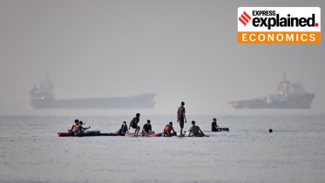
Context: Industry data revealed that a majority of India-bound commercial and oil shipping vessels have switched off their tracking transponders referred to as “going dark” while transiting the critical Strait of Hormuz due to active threats of seizure or attacks by regional actors.
-
- The Phenomenon: “Going dark” involves manually deactivating a vessel’s Automatic Identification System (AIS) to obscure its real-time location, heading, and speed from tracking networks.
- The Strait of Hormuz is the world’s most critical maritime oil chokepoint, separating the Persian Gulf from the Gulf of Oman and the Arabian Sea.
- Nearly one-third of global maritime oil shipments and a substantial percentage of India’s crude oil imports pass directly through this narrow strait.
- The localized tracking blackout is a defensive response to escalating maritime tensions and threats of physical asset seizures along the shipping lane.
- AIS: The Automatic Identification System is an automated tracking network mandated by the International Maritime Organization (IMO) under the SOLAS (Safety of Life at Sea) Convention to prevent collisions.
- Safety Trade-offs: Deactivating AIS mitigates the threat of localized targeting by hostile actors but drastically heightens the risk of accidental mid-sea collisions and complicates rescue responses during emergencies.
- The strait’s narrowest point is approximately 21 miles wide, with shipping lanes strictly divided into inbound and outbound channels located within the territorial waters of Oman and Iran.
- Indian Navfor Deployments: The situation directly activates Indian Navy monitoring frameworks, including Operation Sankalp, which was originally launched to provide safe passage to Indian-flagged vessels in the Gulf region.
- Economic impact: Disrupted transit through the strait triggers sharp spikes in maritime insurance premiums (War Risk Surcharges) and alters global freight pricing indices.
(IE)
India Slams Pakistan’s Strikes:
Context: India officially issued a strong diplomatic statement condemning Pakistan’s cross-border military strikes inside Afghanistan, characterizing the cross-border action as a “blatant act of aggression” that threatens the security balance of the region.
-
- The Ministry of External Affairs (MEA) delivered a direct critique of external military interventions disrupting the sovereignty of Afghanistan.
- The Conflict Core: Pakistan carried out unilateral ground and calibrated aerial strikes hitting suspected cross-border militant hideouts along its shared western border.
- India’s quick diplomatic reaction highlights a deep strategic interest in maintaining structural stability in Afghanistan and preventing unilateral changes to regional security boundaries.
- The Border Dynamic: Focuses on the highly contested Durand Line, the porous 2,640-kilometer international border between Afghanistan and Pakistan that local tribal and political factions historically reject.
- Durand Line: Established in 1893 via an agreement between Sir Mortimer Durand of British India and Afghan Amir Abdur Rahman Khan, it remains a persistent operational flashpoint for cross-border friction.
- Neighbourhood First Policy: Reflects India’s broader diplomatic doctrine that prioritizes stability, connectivity, and anti-terror coordination across its immediate South Asian periphery.
- Bilateral Fallout: The statement adds a fresh point of friction to the long-frozen bilateral ties between New Delhi and Islamabad.
- Security Council Context: Aligns with continuous discussions at United Nations forums regarding counter-terrorism, state sovereignty, and non-intervention principles.
- Regional Groupings: The fallout directly strains the functionality of regional dialogue platforms like the Shanghai Cooperation Organisation (SCO), where both India and Pakistan hold full membership.
(IE)
Economy
Special Economic Zones and Export Reforms:
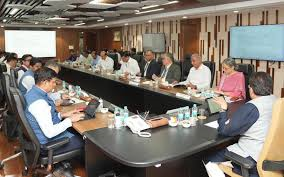
Context: The Union Ministry of Commerce and Industry convened a high-level national stakeholders’ meeting to resolve regulatory logjams and iron out urgent administrative reforms for Special Economic Zones (SEZs).
-
- The Objective: The assembly focused entirely on structural adjustments to improve operational ease of doing business and reverse underutilized land capacity within existing SEZ enclaves.
- Harmonization Strategy: A central agenda item involves harmonizing existing SEZ regulatory operational mandates with newer federal export promotion initiatives.
- The SEZ Act Basis: Special Economic Zones in India operate under the legal framework of the landmark SEZ Act, 2005, which treats these zones explicitly as foreign territories for trade operations and duties.
- Fiscal Paradigm Shift: The meet addressed the operational transition from traditional direct tax holidays to modern, compliance-friendly infrastructural and procedural ease incentives.
- DESH Bill Framework: Discussions directly touch upon the core principles of the Development of Enterprise and Service Hubs (DESH) model, aimed at altering SEZs into wider, domestic-compliant manufacturing areas.
- Net Foreign Exchange (NFE): SEZ units are strictly bound by the legal requirement to remain NFE positive, meaning their cumulative export value must exceed their cumulative import value over a rolling five-year block.
- Dual-Zone Friction: Focuses on easing the operational barriers governing the movement of goods between an SEZ unit and the adjacent Domestic Tariff Area (DTA).
- DTA Regulations: Sales made from an SEZ into the DTA (domestic market) are strictly treated as physical imports, attracting full customs duties to preserve domestic market equity.
- Single Window Clearance: Evaluates the technical performance of online single-window clearance mechanisms at the state and zonal levels to speed up setup approvals.
(TH)
Gold Customs Duty and Market Volatility:
Context: Domestically, gold prices witnessed continuous daily volatility despite a temporary easing of global geopolitical tensions, following the Union Government’s recent fiscal decision to adjust the basic customs duty on precious metals to 10%.

-
- Duty Restructuring: The federal government increased the basic customs duty on gold and silver imports to 10% (up from the previous baseline of 5%) to curb non-essential import surges.
- Current Account Deficit (CAD) Management: Gold ranks as a primary component in India’s import bill; raising duties acts as a structural fiscal brake to prevent excessive outbound flows of foreign currency reserves.
- Price Dynamics: The baseline domestic pricing matrix for 24-carat, 22-carat, and 18-carat gold recorded sharp daily fluctuations as physical retail networks adjusted to the newer tariff structures.
- Current Account Deficit: CAD measures the structural gap between a nation’s total exports of goods, services, and transfers, and its total imports, directly impacting the sovereign currency exchange valuation.
- The Smuggling Vector: A persistent policy challenge with high customs duties on bullion is the risk of encouraging illicit gray-market smuggling networks via open maritime or land borders.
- Safe Haven Asset Class: Gold maintains its distinct macroeconomic position as a classic “safe-haven” asset, with institutional capital flocking to it during phases of global inflationary pressure or currency devaluations.
- Sovereign Gold Bond (SGB) Correlation: Price fluctuations in physical bullion directly dictate the redemption values and interest payouts of the Reserve Bank of India’s active SGB cycles.
- SGB Scheme: Launched by the government to shift domestic physical gold demand into financial savings instruments, thereby reducing the structural necessity for physical bullion imports.
- Monetization Frameworks: Connects with the Gold Monetization Scheme, designed to mobilize idle gold held by households and domestic trusts to make it available for productive use by domestic jewellers.
(IE)
Geography,
IMD Advancements:
Context: The India Meteorological Department (IMD) officially declared that the prolonged delay in the seasonal progression of the Southwest Monsoon is drawing to an end, with atmospheric conditions turning highly favourable for a rapid advance into several northern states within 5 to 6 days.
-
- Seasonal Delayed Footprint: The national capital and surrounding agrarian belts logged their warmest early-summer mornings in two years due to a brief regional break in the monsoonal stream.
- Atmospheric Drivers: The anticipated advancement is powered by the strengthening of lower tropospheric westerly winds blowing from the Arabian Sea and a favourable shifting of the monsoon trough.
- Monsoon Trough: An elongated low-pressure area extending from northwest India to the Bay of Bengal, whose movement north or south dictates the localized distribution of rainfall.
- Sowing Impact: The timely recovery of the monsoonal front is deeply critical for Kharif crop sowing cycles, particularly across water-intensive crops like paddy, coarse cereals, cotton, and pulses.
- Spatial Distribution vs. Quantum: The IMD emphasized that the overall spatial distribution of rain across different agro-climatic zones carries far more economic significance than the aggregate volumetric rainfall quantum.
- Onset Parameters: The official declaration of a monsoonal onset over a region requires specific meteorological criteria to be met, including consistent rainfall across 60% of designated monitoring stations, sustained wind speed vectors, and Outgoing Longwave Radiation (OLR) thresholds.
- El Nino-Southern Oscillation (ENSO) Status: The 2026 monsoonal framework is closely tied to equatorial Pacific sea-surface temperature anomalies, indicating a transition phase between ENSO-neutral and La Nina conditions.
- Delays in rainfall cause immediate spikes in tube-well agricultural electricity consumption, straining state electricity distribution grids and depleting regional aquifers.
- IMD Forecasting Tiers: Utilizes advanced Dynamic Ensemble Forecasting Systems alongside legacy statistical models to map out localized short-to-medium range precipitation events.
(TH)
Ecology & Environment and DM
Delhi EV Policy 2026 Cleared:
Context: The Delhi Cabinet officially cleared the sweeping Delhi Electric Vehicle (EV) Policy 2026, introducing strict pure-EV regulatory pathways and completely excluding strong hybrids from tax incentives.
-
- Pure-EV Strategy: The approved policy establishes a decisive regulatory focus on pure battery electric vehicles (BEVs), deliberately withholding fiscal benefits or tax holidays from strong hybrid vehicles.
- Two-Wheeler Mandate: Introduces an absolute ban on new internal combustion engine (ICE) petrol motorbikes for commercial and delivery aggregators starting April 2028.
- Target Benchmarks: Sets an institutional target to achieve at least 30% overall vehicle fleet electrification across the National Capital Territory by the time the policy cycle lapses in March 2030.
- Infrastructure Scaling: Outlines a capital deployment roadmap to set up 32,000 public and private EV charging points across the capital via integrated financial pools.
- Funding Synergy: The infrastructure plan combines state budget outlays with structural funding drawn from the central PM E-Drive Scheme.
- Composition Factor: Two-wheelers currently constitute nearly two-thirds (66%) of Delhi’s active vehicle registry, making them the primary target for emission mitigation.
- PM E-Drive: The Progressive Mobility through Electric Vehicles (PM E-Drive) scheme is the central flagship program designed to accelerate EV charging frameworks and subsidize commercial EV adoption.
- Pollution Vector: Targets a massive reduction in urban traffic emissions, focusing specifically on ultra-fine Particulate Matter (PM2.5), Nitrogen Oxides (NOx), and Volatile Organic Compounds (VOCs).
- National Ambient Air Quality Standards: Administered by the CPCB under the Air Act, 1981, tracking 12 ambient air pollutants across designated industrial and residential zones.
(IE)
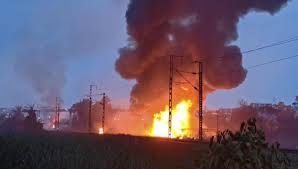
Bengal Refinery Naphtha Fire:
Context: A major industrial disaster was narrowly averted after a massive fire erupted at a high-pressure naphtha-carrying pipeline at the Haldia refinery complex in West Bengal, injuring 15 personnel.
-
- A volatile rupture and subsequent explosion in a pipeline carrying raw naphtha within the processing perimeter caused injuries and triggered immediate emergency shutdowns.
- Chemical Volatility: Naphtha is a highly flammable, volatile liquid hydrocarbon mixture produced during the initial distillation phase of crude oil.
- Petrochemical Value Chain: It serves as a vital primary feedstock for producing high-octane gasoline and cracking units that yield plastics, synthetic rubbers, and petrochemical derivatives.
- Disaster Management Response: Activated localized Tier-1 emergency response mechanisms, isolating the feeding valves and using specialized chemical foam blankets to smother the petroleum fire.
- Naphtha characteristics: It possesses a low flashpoint (the lowest temperature at which it can vaporize to form an ignitable mixture in air), making it exceptionally hazardous to handle without inert gas blanketing.
- Regulatory Oversight: Activates investigative loops managed by the Oil Industry Safety Directorate (OISD) to evaluate asset integrity and structural corrosion failures.
- OISD: A technical authority operating under the Ministry of Petroleum and Natural Gas that formulates self-regulatory safety standards for the entire Indian hydrocarbon sector.
- Coastal Infrastructure Geography: Haldia is a premier deep-water port and industrial hub located at the mouth of the Hooghly River in Purba Medinipur, serving as a critical entry node for crude oil imports.
- Environmental Exposure: Requires intensive post-disaster monitoring of VOC emissions and runoff checks to safeguard adjacent delicate coastal and estuarine marine ecosystems.
(IE)
Arunachal Landslide Blocks Siji River:
Context: Intense and continuous monsoon rainfall triggered a massive landslide that completely blocked the natural flow of the Siji River in Arunachal Pradesh’s Lower Siang district, creating an artificial landslide dam and threatening downstream areas in Assam.

-
- The Blockage: Tons of rock and debris slid down the vulnerable slopes of the outer Himalayas, creating a natural obstruction across the Siji River channel.
- Landslide Lake Outburst Flood (LLOF) Risk: The immediate danger stems from the potential for a sudden, uncontrolled failure of the debris dam, which could unleash a catastrophic flash flood downstream.
- Downstream Hydrology: The Siji River flows south across state boundaries to become the Gai River in Assam, putting low-lying downstream settlements on high alert.
- Geomorphological Vulnerability: The Eastern Himalayas are highly susceptible to mass wasting and landslides due to steep terrain, high seismic activity, and fragile, loosely consolidated rock formations.
- Trigger Mechanism: Extreme rainfall saturates the soil, raising pore-water pressure, reducing the shear strength of the slope, and triggering sudden slope failures.
- Administrative Mobilization: District authorities launched emergency tracking measures using satellite imagery and drone reconnaissance to observe water accumulation levels behind the debris wall.
- Mass Wasting: The downslope movement of rock, regolith, and soil under the direct influence of gravity, distinct from erosion as it does not require a transporting medium like water or ice.
- Early Warning Protocols: Emergency responses involve deploying automated water-level sensors and clearing paths to carefully breach the debris barrier and gradually drain the reservoir.
- Inter-State Coordination: The event highlights the need for real-time data sharing between hill states (Arunachal Pradesh) and downstream plains (Assam) to manage shared river basin hazards.
(TH)
Sports news
FIFA World Cup 2026 Framework:
Context: The expanded FIFA World Cup 2026, co-hosted across three North American nations, entered its crucial Round of 32 knockout matches, showcasing unprecedented logistics and host-nation immigration frameworks.

-
- The Expansion: The 2026 tournament marks a historic milestone in sports administration, expanding to feature 48 national teams competing across 104 matches, up from the legacy 32-team matrix.
- Tri-Nation Hosting Model: Co-hosted simultaneously by the United States, Canada, and Mexico, creating a highly complex multi-jurisdictional logistics and security environment.
- Knockout Stage Progression: The transition into the newly structured Round of 32 knockout phase introduced unique stoppage-time variables and high-intensity administrative scheduling.
- Economic Footprint: The structural scale of the event acts as a primary driver for massive global sports tourism, broadcasting rights revisions, and cross-border commercial sponsorships.
- Visa and Immigration Coordination: Necessitated the creation of unified, fast-tracked temporary athletic and spectator transit visas across the three host nations to ensure frictionless cross-border travel.
- Governance Architecture: FIFA (Federation Internationale de Football Association) operates as an independent international non-governmental association governed by Swiss law, based in Zurich.
- Infrastructure Footprint: Relies strictly on retrofitted, high-capacity multi-use stadium infrastructure, setting newer environmental sustainability and carbon-neutral goals for mega-events.
- Anti-Doping Compliance: Operates under strict regulatory alignment with the World Anti-Doping Agency (WADA) code, deploying rigorous random blood and urine biologic passport tracking.
- VAR Integration: Employs advanced semi-automated offside technology and video assistant referees (VAR), reflecting the growing influence of high-tech telemetry tracking in modern sports adjudication.
(TH)
Spread the Word