
Indian Polity & Governance
CCPA Fines Food Brands for Misleading “100%” Claims:
Context: The Central Consumer Protection Authority (CCPA) fined major food companies ₹1 lakh each for deceiving consumers through absolute “100%” purity claims on packaging.
-
- CCPA Framework: The CCPA is a statutory body established under the Consumer Protection Act (CPA), 2019.
- Ministry Control: It functions under the Ministry of Consumer Affairs, Food and Public Distribution to regulate and enforce consumer rights.
- Definition of Misleading: Section 2(28) of the CPA defines a misleading advertisement as one that falsely describes a product, gives a false guarantee, or conceals essential information.
- Unfair Trade Practices: Section 2(47) classifies making false representations about the standard, quality, or composition of goods as an unfair trade practice.
- Regulatory Guidelines: The Guidelines for Prevention of Misleading Advertisements (2022) mandate that advertising claims must be truthful and verifiable.
- Role of FSSAI: The Food Safety and Standards Authority of India (FSSAI) is a statutory body under the Ministry of Health & Family Welfare.
- FSSAI Warnings: FSSAI previously warned that terms like “100%” create false impressions of absolute purity and superiority, which are not scientifically definable.
- Right to Life: The Supreme Court has interpreted Article 21 (Right to Life) to intrinsically include the right to safe and unadulterated food.
- Evolution of Law: The CPA 2019 replaced the older 1986 Act, specifically introducing e-commerce regulations, class action suits, and strict product liability.
- Corporate Accountability: The ruling mandates food brands to rely on scientifically backed nutritional profiling rather than deceptive marketing jargon.

(IE)
International Developments
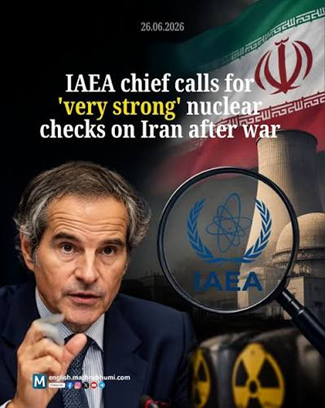
IAEA Demands “Very Strong” Nuclear Verification in Iran:
Context: The IAEA chief stated that a “very strong” nuclear verification system is needed in Iran following prolonged West Asia conflicts to ensure non-proliferation.
-
- IAEA Framework: The International Atomic Energy Agency (IAEA) is the world’s central intergovernmental forum for scientific cooperation in the nuclear field.
- Origins: Headquartered in Vienna, Austria, it was established in 1957 as an autonomous organization under the UN system (the “Atoms for Peace” initiative).
- NPT Obligations: The Non-Proliferation Treaty (NPT) mandates non-nuclear-weapon states to accept IAEA safeguards to prove their programs are entirely peaceful.
- Iran’s Status: Iran is an NPT signatory, but its program faces immense scrutiny for potential covert weapons-grade uranium enrichment.
- JCPOA: The 2015 Iran nuclear deal (Joint Comprehensive Plan of Action) heavily restricted Iran’s program in exchange for economic sanctions relief.
- Uranium Enrichment: Uranium-235 is the fissile isotope used in reactors. While power plants use low-enriched uranium (3-5%), weapons require over 90% enrichment.
- Centrifuge Technology: Enrichment is achieved using specialized centrifuges that separate U-235 from U-238 based on minute atomic mass differences via high-speed rotation.
- Geopolitical Chokepoint: Regional instability directly threatens the Strait of Hormuz a critical maritime chokepoint handling roughly 20% of global oil trade.
- India’s Stance: India is not a signatory to the NPT, viewing its framework as structurally discriminatory between the P5 and the rest of the world.
- Nuclear Doctrine: Despite remaining outside the NPT, India maintains a strict, voluntary “No First Use” policy and credible minimum deterrence.
(TH)
Economy
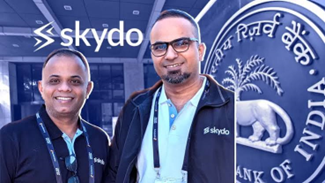
Skydo Becomes First Indian Cross-Border Payment Firm Licensed Overseas:
Context: Skydo, an Indian cross-border payments platform, secured an international payment license in Canada, becoming the first domestic firm in this space to get overseas regulatory approval.
-
- Cross-Border Mechanics: Cross-border payments are financial transactions where the payer and the recipient are based in different sovereign jurisdictions.
- SWIFT Monopoly: Traditional global payments rely heavily on the SWIFT (Society for Worldwide Interbank Financial Telecommunication) messaging network.
- Correspondent Banking: SWIFT does not move money; it sends secure payment orders settled through a chain of correspondent intermediary banks, increasing costs.
- License Benefits: Skydo’s Canadian license allows it to bypass multiple intermediaries, facilitating direct two-day payment flows and local collections.
- MSME Support: This significantly reduces transaction friction and exchange rate markups for Indian MSMEs exporting physical goods and IT services to North America.
- BoP Classification: Remittances, software services, and cross-border trade settlements are recorded under the Current Account of India’s Balance of Payments.
- FEMA Regulation: In India, cross-border flows are regulated by the Reserve Bank of India (RBI) under the Foreign Exchange Management Act (FEMA), 1999.
- Economic Reform: FEMA replaced the draconian FERA (Foreign Exchange Regulation Act) to facilitate external trade and promote orderly forex markets.
- G20 Mandate: Reducing friction in cross-border payments is a core economic mandate of the G20, aimed at making global remittances faster and more transparent.
- Digital Public Infrastructure: The overseas expansion of homegrown fintech solutions aligns with the government’s push to globalize India’s digital financial footprint.
(IE)
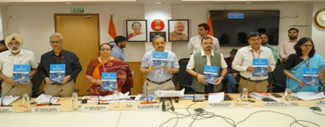
NITI Aayog Releases 8th Edition of Trade Watch Quarterly:
Context: NITI Aayog released the 8th edition of the ‘Trade Watch Quarterly’ (TWQ) for the fourth quarter (Jan-March 2026) of the financial year.
-
- Institutional Role: NITI Aayog (National Institution for Transforming India) is the premier policy ‘Think Tank’ of the Union Government.
- Evolution: Established on January 1, 2015, it replaced the top-down Planning Commission to foster “cooperative federalism.”
- Leadership: The Prime Minister serves as the ex-officio Chairperson of NITI Aayog.
- TWQ Purpose: The Trade Watch Quarterly systematically monitors India’s macroeconomic indicators, explicitly focusing on export-import trends and supply chain health.
- BoP Accounting: Trade data directly impacts the Current Account Deficit (CAD) the shortfall between the money flowing in on exports versus out on imports.
- Key Export Sectors: India’s major export pillars tracked by the index include refined petroleum products, gems & jewellery, pharmaceuticals, and engineering goods.
- Global Headwinds: Recent Indian trade has faced friction from protectionist global policies and maritime security disruptions in the Red Sea/Suez Canal route.
- Policy Calibration: TWQ data allows the government to dynamically adjust the Foreign Trade Policy (FTP) to meet the target of $2 trillion in combined exports by 2030.
- Forex Management: Reliable trade data allows the RBI to actively manage foreign exchange reserves to stabilize the Rupee’s value against the dollar.
- Import Substitution: The data highlights sectors requiring urgent policy intervention (like PLI schemes) to reduce over-reliance on specific imports.
(PIB)
Geography
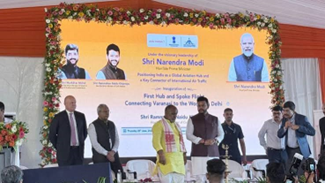
India’s First Hub-and-Spoke Flight Launched in Varanasi:
Context: The Union Civil Aviation Minister inaugurated India’s first hub-and-spoke flight from Lal Bahadur Shastri International Airport in Varanasi under the ‘Easy Connect’ initiative.
-
- Hub-and-Spoke Model: An aviation model that centralizes passenger traffic at a major ‘hub’ airport, from which they are routed to specific ‘spoke’ destinations.
- Economic Efficiency: This model reduces operational costs and maximizes passenger load factors compared to traditional point-to-point routing.
- Tier-2 Connectivity: The inaugural flight enables passengers from Varanasi to seamlessly connect to 17 international destinations via a major domestic hub.
- Varanasi’s Location: Lal Bahadur Shastri Airport serves as a critical gateway to eastern Uttar Pradesh and adjoining regions of Bihar.
- UDAN Integration: The ‘Easy Connect’ initiative runs parallel to the UDAN (Ude Desh ka Aam Naagrik) scheme’s goal of democratizing regional air travel.
- Constitutional Mandate: The aviation sector falls exclusively under the Union List of the Seventh Schedule, giving the Centre absolute regulatory control.
- Economic Geography: Enhanced connectivity directly boosts regional tourism, particularly the international Buddhist circuit (Sarnath, Bodh Gaya) and Kashi Vishwanath.
- National Waterway Link: Varanasi is also a major multimodal logistics node situated on National Waterway 1 (the Ganga-Bhagirathi-Hooghly river system).
- Retaining Revenue: Establishing robust aviation hubs within India prevents transit revenue loss to established middle-eastern hubs like Dubai and Doha.
- Infrastructure Push: The initiative is part of the National Civil Aviation Policy’s broader goal to develop self-sustaining airport ecosystems in non-metro cities.
(IE+PIB)
Ecology & Environment and DM
DRI Busts Illegal Wildlife Trafficking Ring in Andhra Pradesh:
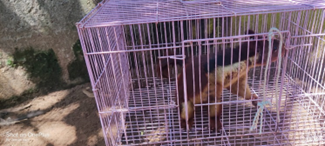
Context: The Directorate of Revenue Intelligence (DRI), Nagpur Regional Unit busted a trafficking syndicate, rescuing Malabar Giant Squirrels, Indian Star Tortoises, and Small Indian Civets in Srikakulam, Andhra Pradesh.
-
- Agency Role: The DRI is the apex anti-smuggling agency of India, functioning under the Central Board of Indirect Taxes & Customs (CBIC).
- Squirrel: The Malabar Giant Squirrel (Ratufa indica) is a large tree squirrel endemic to the forests and woodlands of peninsular India.
- State Symbol: It is the state animal of Maharashtra and requires tall, heavily branched trees for its canopy-dwelling lifestyle.
- Tortoise: The Indian Star Tortoise (Geochelone elegans) is found in dry areas and scrub forests across India, Pakistan, and Sri Lanka.
- Civet: The Small Indian Civet (Viverricula indica) is a small nocturnal carnivore found in varied habitats across South and Southeast Asia.
- WPA 1972 Protection: All three rescued species are listed under Schedule I of the Wildlife (Protection) Act, 1972, according them the highest absolute protection.
- Penalties: Poaching or smuggling of Schedule I species attracts the maximum penalties under Indian wildlife laws.
- International Status: The Indian Star Tortoise is heavily trafficked for the exotic pet trade and is listed in Appendix I of CITES, banning international commercial trade.
- Ecological Impact: Illegal wildlife trade threatens biodiversity equilibrium, leading to localized extinctions and risking the transmission of zoonotic diseases.
- Jurisdiction: Rescued animals are formally handed over to the State Forest Departments for rehabilitation and legal action under the WPA.
(PIB)
Bangladesh Joins India’s International Big Cat Alliance:
Context: Bangladesh officially joined the India-led International Big Cat Alliance (IBCA) as its 27th member country to enhance transboundary wildlife management.
-
- Alliance Origins: The IBCA was launched by India in 2023 to protect and conserve the world’s seven major big cats.
- The Seven Species: The alliance covers the Tiger, Lion, Leopard, Snow Leopard, Puma, Jaguar, and Cheetah.
- India’s Biodiversity: Out of these seven, India is naturally home to five (Tiger, Lion, Leopard, Snow Leopard, and the recently reintroduced Cheetah).
- Transboundary Significance: Bangladesh is a crucial range country for the Royal Bengal Tiger, sharing the Sundarbans mangrove ecosystem with India.
- Sundarbans: The Sundarbans is a UNESCO World Heritage site, a globally recognized Ramsar wetland, and the largest mangrove forest in the world.
- Financial Backing: India has committed structural funding for the IBCA for a period of five years (2023-24 to 2027-28) to establish a permanent secretariat.
- Objectives: The alliance aims to share best conservation practices, fund capacity building, and support collaborative R&D for habitat protection.
- Umbrella Species: Conservation of big cats acts as an “umbrella species” initiative protecting them inadvertently preserves the entire associated ecological food web.
- Diplomatic Soft Power: IBCA membership signifies a diplomatic success for India, leveraging environmental conservation as a tool for geopolitical soft power.
- Border Security: Joint management with Bangladesh is essential to curb cross-border poaching in the porous, riverine borders of the Bengal delta.
(TH+PIB)
Science & Technology
C-DOT & IIT Hyderabad MoU on Advanced Communications:
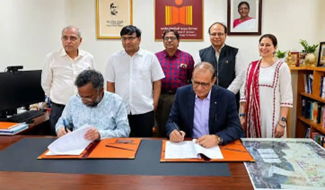
Context: The Centre for Development of Telematics (C-DOT) signed an MoU with IIT Hyderabad to establish a Centre of Excellence (CoE) in 5G-Advanced and 6G technologies.
-
- C-DOT Background: C-DOT is the premier autonomous R&D center operating under the Department of Telecommunications (Ministry of Communications).
- Institutional History: Established in 1984, C-DOT was designed to revolutionize India’s rural telecom network and develop indigenous switching technologies.
- CoE Expansion: The IIT Hyderabad CoE is C-DOT’s 4th such center, joining existing nodes at IIT Kanpur, IIT Gandhinagar, and IIT Roorkee.
- 6G Capabilities: 6G technology is expected to operate in terahertz (THz) frequency bands, offering speeds up to 100 times faster than current 5G networks.
- Massive MIMO: A core research area is Massive MIMO (Multiple Input, Multiple Output) using numerous antennas to exponentially multiply network capacity.
- Quantum Communication: The CoE will develop quantum communication systems, utilizing quantum mechanics (like entanglement) to create unhackable networks.
- Post-Quantum Cryptography: Research will include designing cryptographic algorithms secure against future attacks by advanced quantum computers.
- Bharat 6G Vision: This aligns with the “Bharat 6G Vision,” which aims to position India as a leading global supplier of telecom technology by 2030.
- Edge Computing: Advanced networks rely on edge computing processing data closer to the source rather than a central cloud to achieve ultra-low latency.
- Strategic Autonomy: Indigenous telecom R&D is critical for national security, reducing reliance on foreign hardware and preventing back-door cyber espionage.
(PIB)
Defence
US Notifies Sustainment Support for India’s Apaches & Howitzers:
Context: The US Defence Security Cooperation Agency (DSCA) notified Congress of the proposed sale of sustainment support for India’s AH-64E Apache helicopters and M777A2 Howitzers.
-
- FMS Route: The DSCA administers the Foreign Military Sales (FMS) program a US government-to-government mechanism ensuring standardized pricing and logistics.
- Major Defense Partner: India was designated a “Major Defense Partner” by the US in 2016, facilitating advanced defense technology sharing.
- AH-64E Apache : The Apache is a highly advanced multi-role combat helicopter equipped with Hellfire missiles, known for its anti-armor and strike capabilities.
- Strategic Deployment: India utilizes Apaches for tactical strikes along the western borders and in high-altitude environments like eastern Ladakh.
- M777A2 Howitzers: A 155mm ultra-lightweight towed artillery piece that heavily utilizes titanium and aluminum alloys to reduce weight.
- Mountain Warfare: Weighing under 4.2 tons, the M777 can be slung under transport helicopters (like the CH-47 Chinook) for rapid deployment to inaccessible Himalayan peaks.
- Sustainment Importance: Modern military hardware requires continuous OEM (Original Equipment Manufacturer) sustainment support to maintain operational readiness and high serviceability rates.
- Foundational Pacts: US-India interoperability is governed by four foundational agreements: GSOMIA, LEMOA, COMCASA, and BECA.
- Diversification Strategy: Continued acquisitions from the US underscore India’s strategic imperative to diversify its defense inventory away from historical Russian dominance.
- Indo-Pacific Alignment: High-end arms sales cement the strategic partnership between Washington and New Delhi, acting as a deterrent in the Indo-Pacific architecture.

(TH)
Miscellaneous
Bangladesh PM Urges China to Reduce Trade Deficit:
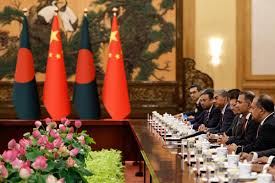
Context: During a visit to Beijing, the Bangladeshi PM requested China to reduce the bilateral trade deficit, diversify exports, and discuss the Teesta River project.
-
- Belt and Road Initiative: Bangladesh joined China’s flagship Belt and Road Initiative (BRI) in 2016, seeking massive infrastructure and connectivity funding.
- BRI Scope: Launched by President Xi Jinping, the BRI aims to connect Asia, Africa, and Europe via strategic land and maritime trade networks.
- Trade Imbalance: Bangladesh runs a severe trade deficit with China, pushing Dhaka to request market access for its jute, raw leather, aquatic, and pharmaceutical products.
- Jute Geography: Jute is a major Bangladeshi export. It thrives in the deltaic alluvium of the Ganges-Brahmaputra basin, requiring high humidity and heavy rainfall.
- Teesta River Dispute: The Teesta River originates in the Himalayas in Sikkim, flowing through West Bengal before entering Bangladesh.
- Constitutional Framework: Water is a State List subject in India (Entry 17), giving West Bengal significant leverage over international river treaty negotiations.
- Geopolitical Friction: China’s proposed involvement in the Teesta River comprehensive management project is a major strategic and security concern for India.
- Neighbourhood First: India’s “Neighbourhood First” policy seeks to prioritize relations with immediate neighbours to counter expanding Chinese influence.
- Maritime Security: Deepening Sino-Bangla ties, particularly regarding port infrastructure, has direct implications for India’s maritime security in the Bay of Bengal.
(TH)
Spread the Word