Indian Polity & Governance
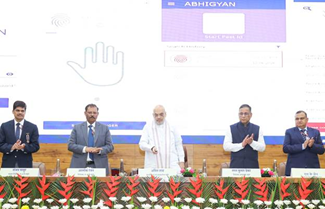
Launch of Four Digital Policing Apps for ICJS:
Context: The Union Minister of Home Affairs launched four digital policing applications NCRB-Abhigyan, CrPI, e-Prosecution 2.0, and e-Forensics 2.0 at the 26th All India Fingerprint Conference.
-
- ICJS Integration: The Inter-Operable Criminal Justice System (ICJS) integrates the five core pillars: Police (CCTNS), e-Forensics, e-Courts, e-Prosecution, and e-Prisons.
- NCRB’s Function: The National Crime Records Bureau (NCRB), operating under the Ministry of Home Affairs, developed these applications and acts as the nodal agency for CCTNS.
- Core Objective: The initiative targets the completion of the justice process from FIR registration to final conviction within three years by streamlining data sharing.
- NCRB-Abhigyan: An application dedicated to advancing fingerprint analysis and establishing a centralized, highly searchable biometric database for law enforcement.
- CrPI App: Designed to implement the Criminal Procedure (Identification) Act, 2022, allowing police to digitally collect and store biometric and physical data of convicts and arrested persons.
- e-Prosecution 2.0: A dedicated portal facilitating seamless communication between police and prosecutors, aiming to improve charge-sheet scrutiny and conviction rates.
- e-Forensics 2.0: Enhances the workflow of forensic science laboratories (FSLs) by ensuring secure, real-time sharing of forensic reports with investigating officers.
- Static Concept (Article 20): The collection of biometrics under the CrPI Act frequently sparks debates around Article 20(3) (protection against self-incrimination), though courts allow fingerprinting.
- Data encryption: NCRB employs advanced cryptographic standards to protect sensitive biometric and case data stored centrally in the National Data Centre.
(PIB)
International Relations
India & Israel Sign MoU on Public Sector Auditing:
Context: The Comptroller and Auditor General (CAG) of India signed a Memorandum of Understanding (MoU) with the Supreme Audit Institution (SAI) of Israel to advance audit efficiency.

-
- Constitutional basis: The CAG is an independent constitutional authority established under Article 148, serving as the supreme guardian of the public purse at both central and state levels.
- MoU objective: The agreement seeks to strengthen bilateral cooperation, capacity building, and knowledge exchange specifically in the domain of modern public sector auditing.
- Technological focus: A primary pillar of the MoU is the integration of Artificial Intelligence (AI) and advanced data analytics into traditional audit workflows.
- Performance auditing: The partnership aims to refine “performance auditing”, a process that goes beyond financial compliance to evaluate whether government schemes achieve their goals efficiently.
- Expanding bilateral ties: The MoU signifies the diversification of India-Israel relations, moving beyond traditional pillars like defence, agriculture, and water management into institutional governance.
- Global Audit Representation: The CAG actively represents India in prestigious international forums, including the International Organization of Supreme Audit Institutions (INTOSAI).
- Data-Driven Governance: Deploying AI in state auditing allows institutions to rapidly detect financial anomalies, procurement fraud, and systemic inefficiencies within massive government datasets.
- Independence Safeguards: To maintain autonomy from the executive, the administrative expenses of the CAG are strictly charged upon the Consolidated Fund of India.
- Adopting Best Practices: The collaboration will enable Indian auditors to study and adopt Israel’s highly advanced frameworks for auditing national cybersecurity and defence procurement.
(PIB+ET)
Economy
India Ranks 13th in Global AI-Economy Readiness Index:
Context: India secured the 13th position globally and ranked 1st among lower-middle-income countries in the latest AI-Economy Readiness Index.

-
- Index Score: India scored 89.4 out of 100, positioning it among the world’s strongest performers and making it the only South Asian nation in the top 15.
- Global Leaders: The United States topped the index with a score of 99.2, followed by Australia (97.5) and the United Kingdom (96.6).
- Category Dominance: India ranked 1st in the broader South Asia region and secured the undisputed 1st position within its income category.
- Economic Trajectory: The index notes India’s high potential to become one of the fastest-growing digital economies over the next decade through AI deployment.
- What is AI Readiness? The index measures a country’s foundational capacity to integrate Artificial Intelligence across government services, tech sectors, and data infrastructure.
- INDIAai Initiative: The National AI Portal of India is a collaborative initiative by the Ministry of Electronics and IT (MeitY), NeGD, and NASSCOM to foster an AI ecosystem.
- Demographic Catalyst: India’s massive pool of STEM graduates and young IT professionals serves as the primary driver for its high readiness score.
- DPI Backbone: India’s robust Digital Public Infrastructure (DPI) such as Aadhaar, UPI, and DigiLocker provides the vast data architecture required to train and scale AI models.
- Regulatory Framework: India is concurrently working on the Digital India Act to govern AI ethically, prevent deepfakes, and foster open-source innovation.
- Sectoral Impact: AI adoption is accelerating rapidly in Indian agriculture (predictive weather/precision farming), healthcare (diagnostics), and financial inclusion.
(IE)
RBI Issues Revised Directions on TReDS:
Context: The Reserve Bank of India (RBI) issued the “RBI (TReDS) Directions, 2026” to simplify the onboarding process for MSME sellers and allow financiers to avail of credit guarantees.

-
- What is TReDS? The Trade Receivables Discounting System (TReDS) is an electronic platform regulated by the RBI to facilitate the financing or discounting of trade receivables of MSMEs.
- Core problem addressed: The system was built to solve the chronic issue of delayed payments to MSMEs from corporate buyers and government departments, which severely chokes working capital.
- Operational Mechanism: MSME sellers upload invoices, corporate buyers accept them, and multiple financiers (banks/NBFCs) bid to discount the invoice, providing immediate liquidity to the seller.
- Revised KYC Guidelines: The 2026 directions drastically simplify the KYC and onboarding procedures, allowing MSMEs to join the platform with minimal friction.
- Credit Guarantee Integration: Financiers can now link their exposures to official credit guarantees, reducing their risk and theoretically driving down the discount rates offered to MSMEs.
- Primary participants: A functional TReDS platform requires three entities: MSME Sellers, Corporate/Government Buyers, and Financiers.
- Regulatory Framework: TReDS platforms operate as authorized payment systems under the Payment and Settlement Systems Act, 2007.
- Factoring Regulation Act: TReDS aligns tightly with the Factoring Regulation Act, 2011, which governs the legal assignment and transfer of receivables.
- Mandatory Registration: To ensure efficacy, Central Public Sector Enterprises (CPSEs) and large corporations above a certain turnover threshold are mandated by the government to register on TReDS.
(TH)
Ecology & Environment and DM
India Becomes World’s Leading Ship Recycling Nation:
Context: The Ministry of Ports, Shipping and Waterways (MoPSW) announced that India has officially become the world’s leading ship recycling nation in 2025, capturing a 35.4% global share.
-
- Volume Surge: India’s ship recycling volumes increased to 2.99 million gross tons (GT), a nearly 60% rise from previous periods.
- Alang Shipyard: Alang, located in the Gulf of Khambhat (Gujarat), is the world’s largest ship recycling yard. Its high tidal range and sandy beaches make it geographically perfect for beaching vessels.
- Hong Kong Convention: India’s accession to the Hong Kong International Convention for the Safe and Environmentally Sound Recycling of Ships in 2019 boosted global maritime confidence in Indian yards.
- Recycling of Ships Act, 2019: This statutory framework regulates the safe and eco-friendly recycling of ships in India and strictly prohibits the use of hazardous materials.
- Secondary Steel Source: The ship recycling sector acts as a massive raw material source, meeting a significant portion of India’s secondary steel requirements through scrap metal.
- Environmental Compliance: To achieve the top rank, Indian yards heavily upgraded their infrastructure to prevent marine pollution, oil spills, and heavy metal leaching during dismantling.
- Geographical Advantage: The western coast’s proximity to major global shipping lanes facilitates the cost-effective docking of end-of-life global vessels.
- Circular Economy: Ship recycling is a textbook example of a circular economy, extending the lifecycle of processed metals and reducing the ecological footprint of iron ore mining.
- Global Competitors: India decisively surpassed traditional regional competitors like Bangladesh and Pakistan to claim the top position.
- Policy Horizon: The government intends to double the nation’s ship recycling capacity under the broader Maritime India Vision 2030 framework.

(PIB)
VOCPA Recognised as Scope-2 Emission Free Port:
Context: V.O. Chidambaranar Port Authority (VOCPA) was officially recognized as a Scope-2 Emission Free Port by MoPSW after achieving a 45% reduction in net carbon emissions.
-
- Port Location:O. Chidambaranar Port (formerly Tuticorin Port) is a major artificial deep-sea harbour situated in the Gulf of Mannar, Tamil Nadu.
- Scope-2 Emissions: Under the global GHG Protocol, Scope 2 emissions refer to indirect greenhouse gas emissions associated with the purchase of electricity, steam, heat, or cooling.
- Zero Scope-2 Status: VOCPA achieved this milestone by fulfilling 100% of its electricity requirements entirely through renewable energy sources.
- Harit Sagar Guidelines: The MoPSW’s ‘Harit Sagar’ Green Port Guidelines provide the regulatory and operational framework for Indian ports to achieve zero carbon emissions.
- Renewable Infrastructure: The port has established extensive captive solar power plants and onshore wind farms to sustain its heavy operations autonomously.
- Green Hydrogen Hub: VOCPA is actively being developed as a nodal maritime hub for the production, storage, and bunkering of Green Hydrogen and Green Ammonia.
- Autonomy under 2021 Act: The Major Port Authorities Act, 2021 grants ports greater financial and operational autonomy, enabling rapid, independent investments in green infrastructure.
- Maritime India Vision 2030: The national vision mandates increasing the share of renewable energy across all major Indian ports to over 60% by the end of the decade.
- Economic Competitiveness: Transitioning to self-sustained renewable energy dramatically lowers operational costs, enhancing the port’s cost-competitiveness in global freight.
- Climate Commitments: The port’s transition serves as a scalable model, directly contributing to India’s Nationally Determined Contributions (NDCs) under the Paris Agreement.

(PIB)
Spread the Word