Indian Polity & Governance
Supreme Court Declares Right to Walk on Footpaths a Fundamental Right:
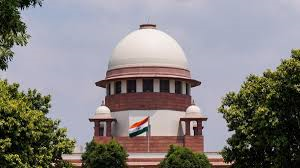
Context: The Supreme Court of India, in a landmark judgment authored by Justice P.S. Narasimha, officially recognized the right to walk safely on demarcated and well-maintained footpaths as an integral part of the Right to Life under the Constitution. The ruling arose from a tragic incident where a five-year-old child was killed by a commercial vehicle while walking to school.
-
- Constitutional Alignment: The apex court explicitly stated that the right to walk on demarcated, unobstructed pedestrian pathways falls under the structural umbrella of Article 21 (Right to Life and Personal Liberty) and Article 19(1)(d) (Right to move freely throughout the territory of India).
- Priority of Pedestrians: The judgment establishes a new legal hierarchy in public spaces, declaring that the fundamental right of a walker to safe passage strictly overrides the mere “privilege” of motorized transport.
- Positive Obligation on State: The ruling shifts civic administration from a discretionary framework to an enforceable legal duty. Municipalities and state authorities are now legally bound to construct, demarcate, and maintain pedestrian pathways wherever public roads exist.
- Implicit Extension of Article 21: Historically, the Supreme Court has progressively expanded Article 21 to include non-explicit rights such as the right to clean air, the right to livelihood (Olga Tellis case), and the right to privacy (Puttaswamy case).
- Pedestrian Infrastructure Deficit: In Indian urban governance, road engineering has traditionally prioritized vehicular throughput over pedestrian safety, resulting in high vulnerable road user (VRU) fatalities.
- Inter-relation with Article 19: The court noted that unsafe, broken, or non-existent footpaths effectively restrict citizens’ physical mobility, indirect hindering their freedoms of assembly and movement guaranteed under Article 19.
- Compensatory Jurisprudence: Emphasizing the state’s failure to provide basic safe civic conditions, the court awarded a significant financial compensation package exceeding ₹11 lakh to the victim’s family, reaffirming public law liability.
- Need for a Central/State Walkability Law: The bench strongly advocated for structured statutory frameworks specifically detailing minimum walkability indices and pedestrian safety metrics for urban planning.
- Directive Principles of State Policy (DPSP) Linkage: This judicial directive echoes the spirit of Article 38 (State to secure a social order for the promotion of welfare of the people) and Article 39A, ensuring public infrastructure does not inadvertently discriminate against non-motorized, economically weaker citizens.
- Global Precedents: The decision moves Indian municipal law closer to Western transit-oriented development (TOD) and “Complete Streets” models, where transport networks are legally mandated to be designed safely for all age groups and abilities.

(TH+IE)
Supreme Court Flags ‘Brain Drain’ in Litigation, Directs Creation of Welfare Funds:
Context: A Supreme Court bench comprising Chief Justice Surya Kant and Justice V. Mohana expressed serious concern over the rising “brain drain” affecting the Indian litigation landscape. The court observed that severe financial hardships are forcing talented young advocates to abandon court practice and directed all states to create a “Young Lawyers’ Professional Assistance Fund.”
-
- Socio-Economic Barriers: The apex court highlighted that the initial years of active litigation impose extreme financial stress, disproportionately hurting first-generation lawyers and those from historically marginalized or economically weaker backgrounds.
- Judicial Mandate to States: The Supreme Court issued a formal directive instructing every State Government and State Bar Council across India to jointly set up a structured, dedicated welfare fund to offer institutional financial stipends to junior advocates.
- Ecosystem Risk: The bench warned that if entering litigation remains dependent on family wealth, the bar will lose exceptional talent, leading to long-term systemic erosion in the quality of the bar and the judiciary, which draws its judges from practicing advocates.
- Bar Council of India (BCI) Framework: The BCI is a statutory body established under the Advocates Act, 1961, responsible for regulating legal education and professional standards of conduct within the Indian legal system.
- Rule-Making Powers Under the 1961 Act: While the BCI possesses statutory powers to promote welfare schemes for advocates, the court noted that existing programs are fragmented and insufficient to meet the challenges faced by entering professionals.
- Constitutional Anchor: This judicial intervention draws strength from Article 39A of the Constitution (Directive Principles), which mandates the State to ensure the legal system promotes justice on a basis of equal opportunity, ensuring justice is not denied by reason of economic disabilities.
- Right to a Profession: The structural inability of less-privileged law graduates to sustain a practice due to institutional neglect indirectly impacts their freedom to practice a profession under Article 19(1)(g).
- Inclusive Judicial Selection: The court observed that reducing the financial strain on young lawyers is essential to ensure that future judicial selections reflect diverse socio-economic backgrounds.
- Institutional Responsibility: The ruling places a dual responsibility on seniors in the bar to ensure fair payment practices, while mandating that State Bar Councils institutionalize transparent, merit-cum-means selection criteria for disbursement from the new funds.
- Law Commission Recommendations: The judgment builds on previous reports from the Law Commission of India that highlighted the urgent need to modernize legal infrastructure and improve working conditions for junior members of the bar.
(TH)
Indian Society & Social Justice
National Sickle Cell Anaemia Elimination Mission Targets Eradication Before 2047:
Context: Commemorating International Sickle Cell Day at Omkareshwar, Madhya Pradesh, President Droupadi Murmu announced that due to rapid mission-mode screening, India is on track to eliminate sickle cell anaemia well before its formal target year of 2047.
-
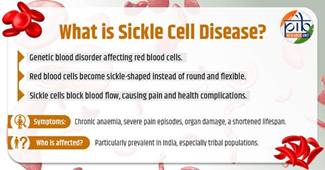
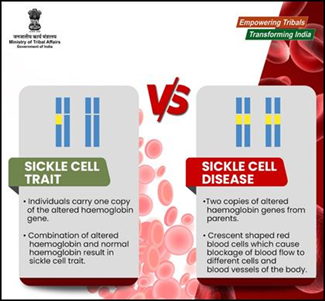
- Biological Mechanism: Sickle Cell Disease (SCD) is a group of inherited, autosomal recessive red blood cell disorders where haemoglobin abnormalities cause cells to become rigid and shaped like sickles or crescent moons, blocking blood flow and causing severe pain crises.
-
- Mission Launch & Objective: The National Sickle Cell Anaemia Elimination Mission (NSCAEM) was formally rolled out by the Prime Minister in 2023 with the clear, long-term mandate of eradicating the public health threat of the disease by the centenary of India’s independence in 2047.
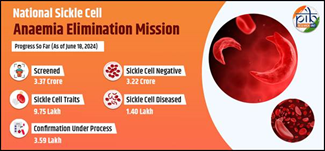
- Massive Screening Scale: The mission ranks as one of the world’s largest genetic screening interventions, targeting the clinical evaluation of 7 crore individuals within the 0 to 40 age bracket located in high-prevalence areas.
- Current Progress Data: As of June 2026, the digital tracking systems have successfully identified approximately 2.5 lakh individuals living with active sickle cell conditions and more than 20 lakh healthy carriers of the trait.
- Inter-Ministerial Convergence: In a unique institutional setup, the mission operates via a joint execution model co-managed by the Ministry of Health and Family Welfare and the Ministry of Tribal Affairs.
- Vulnerable Demographics: Epidemiological and genetic studies show that the prevalence of the sickle cell gene is highly concentrated within India’s Scheduled Tribe (ST) communities due to long histories of endogamous marriages.
- Geographical Footprint: The mission specifically focuses its clinical infrastructure across 17 high-burden states, with central Indian states like Madhya Pradesh leading in regional screening volumes (1.25 crore screened).
- Genetic Counselling Strategy: The core prevention strategy hinges on distributing color-coded Genetic Status Cards. Premarital and pre-conception counselling are utilized to prevent two carriers from passing the active disease to future generations.
- Diagnostic Modalities: Field screening utilizes cost-effective Solubility Tests, followed by definitive confirmatory testing via High-Performance Liquid Chromatography (HPLC) or Electrophoresis techniques.
- Constitutional Alignment: The state-backed elimination drive fulfills the Directive Principles outlined in Article 47 of the Constitution, which mandates the State to raise the level of nutrition and the standard of living of its people and to improve public health.
(TH+PIB)
Economy
Incentive Disbursements Under Pradhan Mantri Viksit Bharat Rozgar Yojana (PM-VBRY):
Context: PM Modi led a national ceremony at Vigyan Bhawan, New Delhi, to disburse approximately ₹2,400 crore in direct incentives under the Pradhan Mantri Viksit Bharat Rozgar Yojana (PM-VBRY). Simultaneously, 200 industrial hubs hosted parallel regional events.
-
- Scheme Evolution: PM-VBRY is the rebranded and expanded avatar of the government’s earlier Employment Linked Incentive (ELI) Scheme, redesigned to scale up formal job creation post-2025.
- Macro Targets: Armed with an overall financial outlay of ₹99,446 crore, the flagship scheme aims to support the creation of over 3.5 crore formal jobs within a strict two-year policy window.
- Target Windows: The economic incentives under this framework apply specifically to new, formal jobs generated between the timelines of August 1, 2025, and July 31, 2027.
- Part A Benefits (First-Time Employees): Newly registered EPFO workers earning up to ₹1 lakh per month receive a direct incentive equal to one month’s salary, capped at ₹15,000, paid in two separate installments via Direct Benefit Transfer (DBT).
- Conditionality for Workers: To unlock the second worker installment, the employee must complete a minimum of 12 months of continuous formal service and undergo a mandatory financial literacy program. A portion of this payout is locked into a fixed savings instrument to build long-term savings habits.
- Part B Benefits (Employer Incentives): To stimulate formal hiring, the government subsidizes businesses by providing up to ₹3,000 per month per additional employee for two consecutive years, provided the new hire stays employed for at least 6 months.
- Manufacturing Sector Premium: Recognizing the high employment-elasticity of secondary industries, the scheme extends the employer financial incentives in the manufacturing sector for an additional two years (covering the 3rd and 4th years of employment).
- Eligible Establishments: To prevent large firms from gaming the system, EPFO-registered companies must scale up their baseline employment by hiring at least 2 extra workers (for firms with under 50 staff) or 5 extra workers (for firms with over 50 staff).
- Nodal Implementation Body: The scheme is managed and audited by the Employees’ Provident Fund Organisation (EPFO), which falls under the administrative jurisdiction of the Ministry of Labour and Employment.
- Economic Strategy: PM-VBRY seeks to structuralize India’s vast informal labour force into the formal economy. By subsidizing social security contributions, it lowers the regulatory compliance burden on MSMEs while expanding the national social safety net.
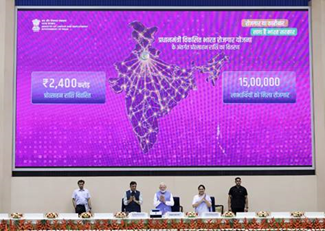
(PIB)
Geography
Rapid Expansion of Glacial Lakes in Arunachal Pradesh Tracked via Satellite Data:
Context: A remote sensing and satellite monitoring study revealed that four major glacial lakes located in the high-altitude headwaters of Arunachal Pradesh have expanded significantly over the past decade, raising the threat of devastating Glacial Lake Outburst Floods (GLOFs) downstream.
-
- Mechanics of a GLOF: A Glacial Lake Outburst Flood occurs when loose moraine dams consisting of weak soil and rock debris left behind by retreating glaciers fail catastrophically, suddenly releasing vast volumes of water down high-altitude valleys.
- Drivers of Expansion: The primary driver behind the rapid growth of these glacial lakes is the accelerated melting of Himalayan glaciers, caused by rising average global temperatures and altered localized precipitation patterns.
- Geographic Vulnerability: The Eastern Himalayas, which include Arunachal Pradesh, feature steep terrain and younger, fragile rock formations. These conditions make the region highly vulnerable to cascading disasters where a GLOF can trigger massive secondary landslides.
- Moraine Characterization: Glacial lakes are typically contained by unstable terminal or lateral moraines. Unlike concrete dams, these natural barriers lack structural reinforcement and can fail due to heavy rainfall, ice avalanches, or earthquakes.
- Downstream Hazards: The expanding lakes sit directly above vital downstream infrastructure, including major hydroelectric power plants, highways, and communities along the Brahmaputra River network.
- Remote Sensing Applications: Space-based instruments like ISRO’s RISAT and Resourcesat series are essential for monitoring these remote lakes, mapping changes in water surface area across inaccessible terrains.
- The Role of Black Carbon: The melting of these high-altitude glaciers is accelerated by the deposition of black carbon, a short-lived climate pollutant from biomass burning and fossil fuel emissions which darkens snow surfaces and increases heat absorption.
- Mitigation Frameworks: Managing GLOF risks requires a mix of structural interventions, such as controlled lake siphoning and building debris barriers, alongside non-structural measures like setting up automated Early Warning Systems (EWS).
- National Institutional Mandate: The National Disaster Management Authority (NDMA) leads the guidelines for managing GLOF risks, working closely with geological surveys to map vulnerable lakes across the Himalayan belt.
- Transboundary Challenges: Because many Himalayan glacial networks cross international borders into Tibet (China), sharing real-time hydrological and satellite data is critical for effective flood forecasting in Northeast India.
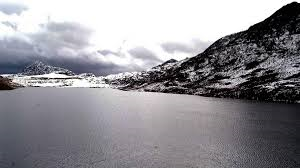
(TH)
Ecology & Environment and DM
High-Concentration Ground-Level Ozone Aggravated by Intense Heatwaves:
Context: An environmental study published in the wake of prolonged summer heatwaves highlighted a sharp increase in ground-level ozone () concentrations across major Indian urban corridors, presenting severe respiratory risks to the population.
-
- Dual Nature of Ozone: Atmospheric science divides ozone into two clear categories: “Good Ozone,” which occurs naturally in the Stratosphere and shields Earth from harmful solar UV rays, and “Bad Ozone,” which builds up near the surface in the Troposphere as a potent pollutant.
- Secondary Pollutant Status: Ground-level ozone is never emitted directly into the air by vehicles or factories. Instead, it is a secondary pollutant created exclusively through complex photochemical reactions in the atmosphere.
- Primary Precursors: The formation of surface ozone requires the presence of precursor gases, primarily Nitrogen Oxides () and Volatile Organic Compounds (VOCs), which are emitted by automobiles, power plants, and chemical industries.
- Role of Meteorological Triggers: The reaction driving tropospheric ozone formation is highly dependent on weather conditions. High ambient temperatures, intense sunlight, stagnant air masses, and low wind speeds act as catalyst forces that accelerate these chemical transformations.
- Diurnal Variability: Ground-level ozone exhibits a distinct daily cycle. Concentrations typically peak during the late afternoon hours when solar radiation is strongest and drop significantly during the night when the photochemical driving mechanism stops.
- Impact on Vegetation and Agriculture: Beyond human health risks, ground-level ozone is highly phytotoxic. It penetrates plant stomata, causing cellular damage that impairs photosynthesis, stunts crop growth, and reduces national agricultural yields for staples like wheat and rice.
- Winter vs. Summer Pollutant Dynamics: Unlike fine particulate matter (and ), which typically surges during winter due to thermal inversion and stagnant winds, surface ozone stands out as a dominant, hazardous summer pollutant.
- National Air Quality Index (AQI) Metric: Tropospheric ozone is one of the eight core criteria pollutants monitored under India’s National AQI system, alongside , , , , , , and .
- Standard Measurement Windows: Because of its unique volatility, the Central Pollution Control Board (CPCB) sets air safety standards for ozone based on 1-hour and 8-hour continuous exposure averages, rather than standard 24-hour tracking windows.
- Global Alignment: This rising pollution trend aligns with concerns raised by the World Health Organization (WHO) and the World Meteorological Organization (WMO) regarding a “climate penalty,” where rising global temperatures directly worsen local ambient air quality independently of changes in primary emissions.
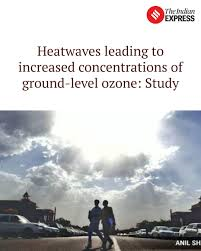
(IE)
Launch of the Bharat Climate Observation Network (BCON):
Context: The Government of India officially rolled out the Bharat Climate Observation Network (BCON). This new national initiative integrates multi-sectoral climate data to improve the accuracy of regional climate projections and build long-term environmental resilience.
-
- Network Architecture: BCON is designed as a comprehensive, multi-layered data network that pulls together real-time measurements from ocean buoys, automated weather stations, high-altitude atmospheric observatories, and flux towers.
- Key Nodal Agency: The project is coordinated by the Ministry of Earth Sciences (MoES), working in partnership with ISRO, the India Meteorological Department (IMD), and premier environmental research institutes.
- Core Scientific Focus: BCON’s primary goal is to study the evolving dynamics of the Indian Summer Monsoon, track ocean acidification trends in the Arabian Sea and Bay of Bengal, and monitor changing carbon flux patterns across diverse forest ecosystems.
- Improving Climate Models: The highly localized data generated by BCON will help refine India’s regional climate models, reducing uncertainties in long-term rainfall, temperature, and sea-level rise projections.
- Link to National Action Plan: BCON serves as a core scientific foundation for the National Action Plan on Climate Change (NAPCC), providing the hard empirical data needed to update India’s national adaptation and mitigation strategies.
- Ocean-Atmosphere Coupling: The network places a strong emphasis on deploying automated moored buoys across the Indian Ocean to monitor changes in Sea Surface Temperatures (SST), which are critical for predicting the intensity of severe tropical cyclones.
- Tracking Carbon Flux: By using eddy covariance towers, BCON will measure the net exchange of carbon dioxide between the atmosphere and different terrestrial ecosystems, providing an accurate look at the carbon storage capacity of India’s forests.
- Global Data Integration: While built to serve national interests, BCON will share its atmospheric and oceanic data with global networks like the World Climate Research Programme (WCRP), boosting India’s role in international climate science.
- Policy Applications: The highly detailed data provided by BCON will help state and local planners design targeted climate-resilient infrastructure, optimize water management systems, and protect vulnerable coastal zones.
- Sustainable Development Goals (SDGs): The creation of BCON directly supports India’s commitment to SDG 13 (Climate Action) and SDG 14/15 (Life Below Water and Life on Land) by strengthening the country’s early warning capabilities and climate resilience.

(PIB)
Science & Technology
Discovery of Fast X-ray Transients (FXTs) by Indian Astronomical Assets:
Context: Indian astrophysicists utilizing a coordinated network of domestic space and ground-based telescopes successfully detected and analysed rare Fast X-ray Transients (FXTs), shedding new light on high-energy cosmic explosions.
-
- Defining FXTs: Fast X-ray Transients are short-lived, brilliant flashes of X-ray radiation that appear suddenly in the cosmos and fade away into deep space within a few milliseconds to several hours, making them very difficult to detect.
- Coordinated Telescope Array: The successful discovery was made using a combined network of advanced domestic facilities, including the Himalayan Chandra Telescope, the GROWTH-India Telescope, and the Upgraded Giant Metrewave Radio Telescope (uGMRT).
- Physical Locations of Assets: The Himalayan Chandra Telescope and the GROWTH-India facility are strategically located at the Indian Astronomical Observatory in Hanle, Ladakh a premier high-altitude dark sky site while the uGMRT is situated near Pune, Maharashtra.
- Underlying Cosmic Sources: Astrophysical models indicate that FXTs are generated by extreme, violent cosmic events, such as binary neutron star mergers, core-collapse supernovae, magnetar flares, or black holes tearing apart white dwarf stars (Tidal Disruption Events).
- Link to Gravitational Waves: FXTs originating from binary neutron star mergers are critical electromagnetic counterparts to gravitational wave events, offering vital multi-messenger data for studying space-time physics.
- The X-ray Spectrum: X-rays are a high-energy form of electromagnetic radiation with wavelengths shorter than ultraviolet light. Because Earth’s thick atmosphere absorbs cosmic X-rays, satellite-based space observatories like India’s AstroSat are required to detect them from orbit.
- Hanle’s Unique Advantage: The Indian Astronomical Observatory at Hanle sits at 4,500 meters above sea level in the cold desert of Ladakh. Its exceptionally low atmospheric moisture and minimal light pollution provide ideal conditions for tracking rapid cosmic phenomena.
- uGMRT’s Special Capability: Operating at low radio frequencies, the uGMRT plays a key role in tracking the long-term radio afterglows left behind by the high-energy explosions that cause FXTs.
- Advancing Multi-Messenger Astronomy: Analysing these events allows scientists to test theories of general relativity, explore matter under extreme densities, and understand the chemical evolution of heavy elements across the universe.
- Global Collaborative Context: The data gathered by Indian teams feeds directly into global networks like the Global Relay of Observatories Watching Transients Happen (GROWTH), cementing India’s standing in time-domain astronomy.
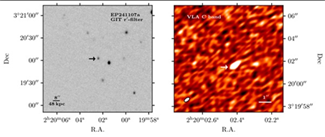
Fig: This image shows the detection of the counterpart (marked with arrows) to the fast X-ray transient EP241107a detected in optical -GROWTH India Telescope (left) and in radio -Very Large Array (right).
(PIB)
Defence
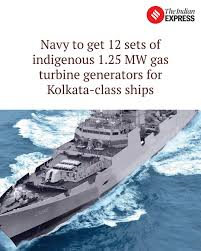
Commissioning of Next-Generation Indigenous Gas Turbine Generators for Kolkata-Class Ships:
Context: Marking a major milestone in defence indigenization, the Indian Navy finalized plans to integrate 12 newly developed, domestic 1.25 MW gas turbine generators onto its frontline Kolkata-class guided-missile destroyers.
-
- Breakthrough in Indigenization: This development marks a major shift away from foreign dependency for critical marine propulsion and auxiliary power components, aligning with the national goal of Aatmanirbhar Bharat in defence manufacturing.
- Kolkata-Class Profile: The Kolkata-class (Project 15A) consists of stealth guided-missile destroyers, including the INS Kolkata, INS Kochi, and INS Chennai, which are designed to operate as multi-mission command platforms.
- Power Generation and Auxiliary Systems: The new 1.25 MW gas turbine units supply the essential electrical power required to run the ships’ advanced combat suites, including long-range radar networks and electronic warfare systems.
- Technical Advantages of Gas Turbines: Marine gas turbines are favoured for frontline warships due to their high power-to-weight ratio, compact size, rapid startup capabilities, and significantly lower acoustic signature compared to traditional heavy diesel engines.
- Strategic Autonomy: Historically, India relied heavily on European and Ukrainian suppliers for marine gas turbine components. Developing this domestic capability secures the Navy’s supply chain against geopolitical disruptions.
- Engineering Collaboration: The development of these generators was driven by a public-private partnership involving defence public sector undertakings (DPSUs) like Bharat Heavy Electricals Limited (BHEL), Indian private engineering firms, and the Navy’s in-house design groups.
- Managing Thermal Signatures: A key engineering feature of these domestic turbines is their advanced exhaust cooling system, which minimizes the ship’s infrared signature to reduce vulnerability to heat-seeking anti-ship missiles.
- Context of Project 15B: The technological success of these generators will influence future warship design, paving the way for full indigenization of the power plants on next-generation Visakhapatnam-class destroyers.
- Defence Procurement Policy Alignment: This project complies with the “Buy (Indian-IDDM)” Indigenously Designed, Developed, and Manufactured category of the Defence Acquisition Procedure, which prioritizes domestic technology development.
- Enhancing Maritime Sovereignty: Upgrading these frontline destroyers with domestic power systems strengthens the Indian Navy’s long-range operational readiness across the Indian Ocean Region (IOR), reinforcing India’s status as a key net security provider in the region.
(IE)
Internal Security
Launch of ‘Abhigyan’ Mobile App and the Expansion of NAFIS:
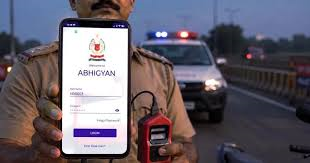
Context: Union Home Minister Amit Shah officially launched “Abhigyan”, a smartphone application engineered by the National Crime Records Bureau (NCRB) during the 26th All India Fingerprint Conference. The application empowers field-level police officers to match fingerprints instantaneously on the go.
-
- Operational Capability: The Abhigyan app acts as a mobile gateway to the centralized National Automated Fingerprint Identification System (NAFIS) database, returning real-time identity matches within a record 35 seconds.
- Ground-Level Shift: Previously, fingerprint verification against NAFIS required physically transporting a suspect to one of the 1,556 designated fixed workstations located at district headquarters or police stations. This app brings that verification power directly to street-level checkpoints.
- Database Scale: The mobile interface links directly with a vast digital repository containing the biometric profiles of over 3 crore criminal suspects, convicts, and prison inmates across India.
- Targeted Specialized Sub-databases: The application queries specific high-priority datasets managed under NAFIS, including records of 9.91 lakh narcotics offenders and 3.65 lakh individuals tied to human trafficking networks.
- Statutory Foundation: The collection of these biometrics is legally governed by the Criminal Procedure (Identification) Act, 2022, which replaced the century-old Identification of Prisoners Act, 1920.
- Scope of the 2022 Act: Under Section 3 of the new Act, investigating agencies are legally permitted to collect physical and biological samples including finger impressions, palm prints, iris/retina scans, and behavioural attributes from convicts, arrestees, or persons detained under preventive laws.
- Data Custodian: The National Crime Records Bureau (NCRB) serves as the central repository and nodal agency responsible for collecting, storing, processing, and destroying these biometric records nationally.
- Federal System Integration: NAFIS assigns a unique National Fingerprint Number (NFN) to each criminal, allowing distinct state police departments to track a single offender’s pan-India criminal history seamlessly.
- Security Architecture: To prevent unauthorized leaks or misuse by personnel, the Abhigyan app is heavily fortified with multi-factor, two-step authentication systems.
- Civil Liberties Balance: While praised for enhancing law enforcement capabilities, the deployment of street-level biometric scanning triggers strict constitutional scrutiny regarding the Right to Privacy (S. Puttaswamy judgment) and protection against self-incrimination under Article 20(3) if coerced.
(TH)
Spread the Word