
Indian Polity & Governance
The Smart Meter Rollout and Center-State Federal Friction:
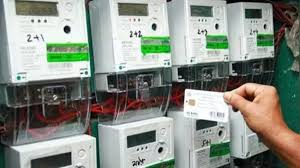
Context: The Maharashtra State Electricity Distribution Company Limited (MSEDCL) faced widespread public resistance and legal challenges over its aggressive push to replace traditional consumer electricity meters with automated Smart Meters.
-
- RDSS Umbrella Scheme: The installation of smart prepaid meters is a core operational mandate of the Revamped Distribution Sector Scheme (RDSS) launched by the Ministry of Power to improve operational efficiencies.
- Seventh Schedule Distribution: Under the Constitution of India, “Electricity” is placed entry 38 in the Concurrent List (List III), meaning both the Parliament and State Legislatures can pass laws, though executive implementation rests primarily with state utilities (DISCOMs).
- Aggregate Technical & Commercial (AT&C) Losses: Smart meters are designed to reduce AT&C losses, which measure the combination of power lost during transmission, electricity theft, billing inaccuracies, and non-collection of dues.
- Time-of-Day (ToD) Tariff Structure: Smart meters enable ToD tariff systems. Instead of charging a flat rate, electricity prices vary based on peak hours (higher rates when the grid is strained) and off-peak hours (lower rates), encouraging demand-side load management.
- Operational Mechanism: Smart meters use advanced two-way communication systems (usually via cellular or RF networks) to relay consumption data directly to the utility company, eliminating the need for manual physical meter readings.
- Prepaid Disconnection Debate: A primary source of public friction is the automated prepaid disconnection feature. If a consumer’s account balance drops to zero, the power supply shuts off automatically, raising human rights and public welfare concerns.
- State Electricity Regulatory Commissions (SERCs): While the central government sets national policies, the actual consumer tariff rates and meter rollout rules must be approved by the respective independent SERC of each state.
- UDAY Scheme Lessons: The RDSS succeeds the older UDAY (Ujwal DISCOM Assurance Yojana) While UDAY focused on restructuring DISCOM debt, RDSS conditions its financial grants on states meeting fixed structural reform targets, like reducing cross-subsidies.
- Data Privacy Risks: Because smart meters record real-time granular electricity consumption data, cybersecurity and citizen privacy groups argue that without data protection laws, consumer behavioural patterns could be exposed to unauthorized commercial tracking.
- Statutory Framework: The entire electricity governance framework in India is anchored in the Electricity Act, 2003, which unbundled State Electricity Boards into separate generation, transmission, and distribution entities to promote market competition.
(IE)
Indian Society & Social Justice
Launch of ‘Nasha Mukt Bharat Saptah’:
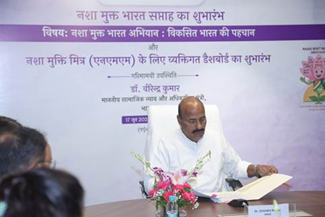
Context: The Department of Social Justice & Empowerment launched the nationwide ‘Nasha Mukt Bharat Saptah’ running from June 17 to June 26, 2026, under the institutional umbrella theme: “Nasha Mukt Bharat Abhiyaan- Viksit Bharat Ki Pehchaan.”
-
- Nodal Ministry: The Ministry of Social Justice and Empowerment (MoSJE) is the central nodal authority responsible for drug demand reduction policies in India.
- NMM Personal Dashboard: The 2026 campaign introduced a digital Personal Dashboard for Nasha Mukti Mitras (NMM) to track, manage, and scale grassroot citizen volunteer networks.
- Constitutional Mandate: The campaign directly addresses Article 47 of the Directive Principles of State Policy (DPSP), which mandates that the State shall endeavour to bring about prohibition of the consumption, except for medicinal purposes, of intoxicating drinks and drugs harmful to health.
- Three-Pronged Strategy: India’s national anti-drug architecture relies on a triad: Supply Control (managed by the Ministry of Home Affairs/NCB), Demand Reduction (managed by MoSJE), and Harm Reduction (managed by the Ministry of Health).
- Narcotics Control Bureau (NCB): Formed under the Narcotic Drugs and Psychotropic Substances (NDPS) Act, 1985, the NCB is the apex law enforcement and coordinating agency for drug trafficking.
- International Treaties: India is a signatory to three major UN Conventions: the Single Convention on Narcotic Drugs (1961), the Convention on Psychotropic Substances (1971), and the UN Convention against Illicit Traffic in Narcotic Drugs (1988).
- Grassroots Convergence: The initiative leverages rural networks by integrating Panchayati Raj Institutions, Anganwadi workers, ASHA workers, and the MY Bharat youth volunteer framework.
- The NAPDDR Scheme: The MoSJE implements the National Action Plan for Drug Demand Reduction (NAPDDR), which provides financial support for running de-addiction centers and community counseling.
- International Alignment: The week-long campaign culminates on June 26, which marks the UN-designated International Day against Drug Abuse and Illicit Trafficking.
- The Golden Triangle & Crescent: Geopolitically, India is highly vulnerable to illicit drug inflows due to its location between two premier illegal opium production hubs: the Golden Triangle (Myanmar, Laos, Thailand) and the Golden Crescent (Pakistan, Afghanistan, Iran).
(PIB)
Geography
Mumbai Cuts Water Supply to Protect Lakes Amid Delayed Monsoons:
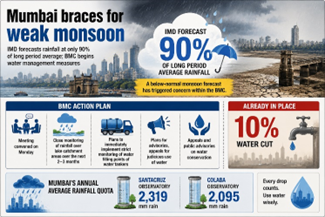
Context: Due to a delayed southwest monsoon and drying catchment areas, the Brihanmumbai Municipal Corporation (BMC) halted water supplies to commercial swimming pools and major construction sites to preserve dwindling municipal lake reserves.
-
- Source Catchment Lakes: Mumbai’s municipal water supply depends on a network of seven artificial and natural reservoirs: Modak Sagar, Tansa, Vihar, Tulsi, Upper Vaitarna, Bhatsa, and Middle Vaitarna.
- The Sanjay Gandhi National Park Lakes: Tulsi and Vihar lakes are unique because they are located inside the protected boundaries of the Sanjay Gandhi National Park, an urban national park within Mumbai’s city limits.
- Inter-Basin Water Transfer: Major systems like the Bhatsa dam involve multipurpose water transfers, providing both hydroelectric power generation and drinking water across distinct administrative districts.
- Composite Water Management Index (CWMI): Published by NITI Aayog, the CWMI ranks Indian states and cities on their water management efficiency, highlighting systemic groundwater depletion and urban water stress.
- EIA and Infrastructure Demands: Large construction projects are bound by Environmental Impact Assessments (EIA). During acute dry spells, municipal corporations can invoke emergency powers to divert industrial allocations to domestic drinking water priority.
- Water as a State Subject: Under the Constitution, “Water” is primarily a State Subject under Entry 17 of the State List (List II), giving state governments and their local urban bodies full administrative control over water conservation and distribution.
- National Water Policy Mandate: The National Water Policy dictates a clear hierarchy for water allocation: Drinking water holds top priority, followed by Agriculture, Hydro-power, and lastly, Industrial/Commercial activities.
- Rainwater Harvesting Mandates: To combat urban dry spells, municipal bylaws make rainwater harvesting structures legally mandatory for all newly constructed urban residential structures exceeding specific plot sizes.
- Surface Runoff Loss: Urbanization replaces porous natural soil with concrete, creating impermeable surfaces that increase urban heat island effects and cause rainwater to turn into surface runoff, preventing local groundwater recharge.
- Central Groundwater Authority (CGWA): Constituted under the Environment (Protection) Act, 1986, the CGWA regulates and controls groundwater development and issue permits for commercial extractions across India.
(IE)
Ecology & Environment and DM
India’s Agri-Solar Model and its Africa Scalability:
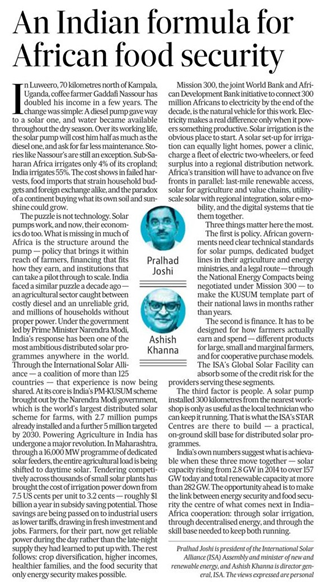
Context: Prime Minister Narendra Modi shared an analytical brief authored by the Union Minister for New and Renewable Energy and the Director General of the International Solar Alliance (ISA), detailing how India’s model of combining solar energy with agriculture offers a highly scalable template for African nations.
-
- Agrivoltaics Concept: Known formally as Agrivoltaics or Agri-solar, this system involves co-developing the same area of land for both solar photovoltaic power generation and agricultural cultivation.
- Dual-Use Land Benefits: Mounting solar panels at a height allows crops to grow beneath them. The panels provide partial shade, which reduces water evaporation from the soil and protects shade-tolerant crops from extreme heatwaves.
- PM-KUSUM Link: India’s primary agrivoltaic driver is the PM-KUSUM (Pradhan Mantri Kisan Urja Suraksha evam Utthaan Mahabhiyan) Scheme, which provides subsidies to farmers to install solar water pumps and set up small grid-connected solar plants on barren or fallow lands.
- International Solar Alliance (ISA): Co-founded by India and France during the 2015 COP21 Paris Climate Summit, the ISA is a treaty-based international organization headquartered in Gurugram, India.
- ISA Target Zone: The ISA was originally conceived to rally “Sunshine Countries” lying either completely or partially between the Tropic of Cancer and the Tropic of Capricorn to optimize solar energy infrastructure.
- Technology Transfer to Africa: The scalability model focuses on Africa’s sub-Saharan drylands, where decentralized solar microgrids can power clean crop irrigation without depending on unreliable national power grids.
- Solar Panel Efficiency Clean-up: A reciprocal benefit occurs in agrivoltaic systems: the evapotranspiration (moisture release) from the crops below cools the solar panels above, preventing overheating and improving their energy conversion efficiency.
- Component C of KUSUM: This specific component focuses on the Solarisation of Grid-Connected Agriculture Pumps, enabling farmers to cultivate crops and sell surplus generated power back to DISCOMs, creating a secondary source of income.
- Mitigating Food-vs-Fuel Dilemma: Traditional utility-scale solar farms require vast tracts of land, which often displaces active agriculture. Agrivoltaics resolves this conflict by keeping the land under dual production.
- National Solar Mission: This is a core component of India’s National Action Plan on Climate Change (NAPCC), which binds India to international renewable energy targets.
(PIB)
Defence
Record Expansion of Indian Defence Production:
Context: The Ministry of Defence announced that India’s annual defence production surged to an all-time high of ₹1.78 lakh crore in the Financial Year (FY) 2025–26, registering a 15.6% growth over the previous fiscal year.
-
- Production Breakdown: Defence Public Sector Undertakings (DPSUs) and other PSUs accounted for approximately 76% of the total production, while the private sector contributed an all-time high share of 24% (amounting to ~₹42,000 crore).
- Export Milestone: The sustained boost in domestic manufacturing fueled record-high Indian defence exports, which touched ₹38,424 crore in FY 2025–26.
- Strategic Initiatives Linked: This structural growth is driven by the Aatmanirbhar Bharat initiative, championed through mechanisms like the Positive Indigenisation Lists (PILS), which place rolling bans on importing specific weapon systems and sub-components.
- Defence Acquisition Council (DAC): The apex body deciding on new policies and capital acquisitions is the DAC, chaired directly by the Union Minister of Defence.
- Innovations for Defence Excellence (iDEX): Launched to promote innovation, iDEX engages MSMEs, startups, and innovators to build dual-use technologies, funded via the Defence Innovation Organisation (DIO).
- Defence Industrial Corridors (DICs): To set up a structured domestic supply chain, the government established two dedicated DICs located strategically in Uttar Pradesh and Tamil Nadu.
- Corporatisation of OFB: To boost efficiency, the historic Ordnance Factory Board (OFB) was dissolved and restructured into 7 fully state-owned corporate entities (DPSUs) specializing in distinct military verticals.
- FDI Policy in Defence: Under current rules, Foreign Direct Investment (FDI) in the defence sector is allowed up to 74% through the Automatic Route, and up to 100% via the Government Route wherever it brings modern technology.
- Technology Development Fund (TDF): Executed by the DRDO, the TDF bridges public funding gaps by providing grants to private industries and startups for upgrading existing weapon components.
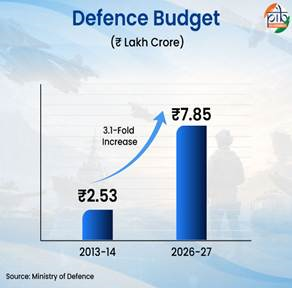
- Capital vs. Revenue Budget: In India’s budget allocations, the Capital Head represents expenditures on procurement of new weapon systems, aircraft, and modernization, whereas the Revenue Head manages salaries, maintenance, and operational costs.
(PIB)
Spread the Word