
International Relations
India-Cyprus Strategic Partnership Upgrade:
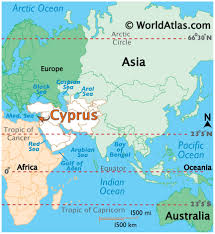
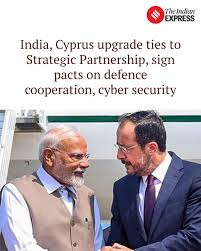
CONTEXT: During the official state visit of the President of the Republic of Cyprus, H.E. Mr. Nikos Christodoulides, to New Delhi, India and Cyprus signed a Joint Statement elevating their bilateral ties to a comprehensive Strategic Partnership.
-
- Geopolitical Pivot: Cyprus serves as a critical maritime and political bridge between India and the European Union (EU), aligning with India’s broader Mediterranean geopolitical strategy.
-
- Economic Defense Framework: Both nations finalized deep defense cooperation tracks alongside legal frameworks to secure European investments routed through Cyprus into India.
- Double Taxation Avoidance Agreement (DTAA): Compliance reviews were accelerated to streamline capital flows while ensuring anti-money laundering frameworks remain intact.
- Defense Mobility Pact: Discussions advanced on standardizing a Defense Mobility and Partnership Agreement to regulate military and technological personnel exchange.
- Shipping & Maritime Hub: The upgrade heavily emphasizes shipping logistics, as Cyprus commands one of the largest merchant fleets globally, boosting India’s Sagarmala port connectivity aims.
- Sovereign Support on Geopolitical Issues: Cyprus reiterated its historical, unwavering support for India’s permanent membership in an expanded United Nations Security Council (UNSC).
- Territorial Integrity Reaffirmation: India reciprocated by reaffirming its structural support for the sovereignty and territorial integrity of Cyprus in line with UN resolutions regarding the Cyprus issue.
- Renewable Energy Collaboration: A Memorandum of Understanding (MoU) was initiated targeting technology transfers in solar energy grid integrations, leveraging India’s International Solar Alliance (ISA) leadership.
- Cybersecurity Co-Development: The countries agreed to build joint institutional mechanisms to counter cross-border cyber threats and secure high-value critical information infrastructure.
(PIB)
Economy
SEBI-NISM-IICA Tripartite Pact for Capital Markets & ESG Governance:
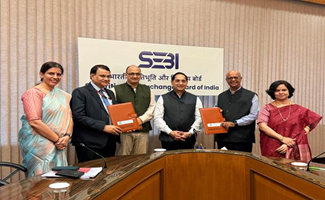
CONTEXT: The Securities and Exchange Board of India (SEBI), the National Institute of Securities Markets (NISM), and the Indian Institute of Corporate Affairs (IICA) signed a historic tripartite pact to transform capital market accessibility and standardize Environmental, Social, and Governance (ESG) regulations. The MoU was signed in Mumbai, on 19 May 2026.
-
- BRSR Architecture Standardization: The central pillar of the pact is to build capacity, training, and strict data standardization for the Business Responsibility and Sustainability Reporting (BRSR)
- MSME Capital Market Democratization: It sets a blueprint to simplify regulatory frameworks, allowing Micro, Small, and Medium Enterprises (MSMEs) to tap into primary stock exchanges via dedicated SME platforms.
- Reducing Debt Dependence: By easing SME exchange listings, the policy aims to transition small industries away from expensive bank credit toward public equity markets.
- Evidence-Based Regulation: The alliance shifts SEBI’s strategy toward deep-track, academic-led corporate governance research before implementing ad-hoc market guidelines.
- Mitigating Greenwashing: The joint framework will formulate specialized audit metrics to verify corporate sustainability claims, preventing fraudulent ESG labeling.
- Institutional Audits and Training: IICA and NISM will roll out mandatory executive education and professional certification programs for corporate boards on market ethics.
- Retail Investor Protection: Amid booming retail investor participation in India, the pact targets structured research to identify and eliminate systemic market manipulation vectors.
- Global Financial Alignment: The initiative brings Indian corporate disclosure levels on par with international standards like the Task Force on Climate-related Financial Disclosures (TCFD).
(PIB)
Geography, Environment, Ecology & DM
Extreme Climatological Alert: Record-Breaking Nationwide Heatwave:
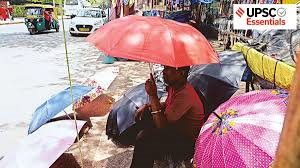
CONTEXT: On May 22, 2026, India recorded a historic meteorological anomaly where 97 of the world’s 100 hottest cities were located within its borders during an unprecedented heatwave sweeping northern, central, and eastern regions.
-
- Extreme Thermal Thresholds: Balangir (Odisha) and Sasaram (Bihar) peaked at a hazardous 48°C, while Varanasi (Uttar Pradesh) reached 47°C.
- IMD Alert Classification: The India Meteorological Department (IMD) issued severe “Orange” and “Red” weather alerts across the affected belt, valid through late May.
- The Humidity-Heat Stress Paradox: Relative humidity levels dropped to an ultra-low 6% to 8%, aggravating immediate biological heat stress and escalating dehydration vectors.
- Public Health Toll: State data recorded a massive surge in suspected heatstroke and heat exhaustion cases, stressing regional tertiary health infrastructure.
- Global Ranking Dominance: Automated tracking via AQI.in verified that during the early morning hours of May 22, the top 50 hottest urban settlements globally were entirely in India.
- Trans-Border Footprint: The heat dome extended marginally into neighbouring Nepal, with only three of its cities breaking into the global top 100 heat list.
- Wet-Bulb Temperature Concerns: The phenomenon underscores the growing threat of unliveable wet-bulb temperature limits across the Indo-Gangetic plains due to climate change.
- Agricultural Shock: The extreme thermal spike during this window creates immediate concerns for premature crop drying and alters water-table depletion kinetics.
- Urban Heat Island (UHI) Amplification: Cities like Delhi-NCR experienced delayed nocturnal cooling because concrete infrastructure trapped heat, keeping night temperatures abnormally high.
(IMD)
Defence
Launch of Indigenous Next-Generation Patrol Vessel ‘Sanghmitra’:
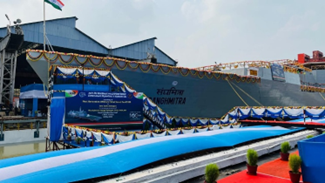
CONTEXT: The Indian Navy launched its state-of-the-art, indigenously designed Next-Generation Offshore Patrol Vessel (NGOPV) named ‘Sanghmitra’ at Garden Reach Shipbuilders & Engineers (GRSE) in Kolkata.
-
- The 11-Vessel Ambitious Grid: ‘Sanghmitra’ is part of a flagship concurrent procurement program where 11 NGOPVs are being built simultaneously across two domestic shipyards.
- Historical Nomenclature: The warship is named after the daughter of Emperor Ashoka, symbolizing India’s historical maritime footprints and soft-power diplomacy.

-
- Crest Design Symbolism: The vessel’s official crest prominently depicts the Ursa Major constellation alongside a red-and-white lighthouse structure.
- Physical Dimensions: The vessel features a length of approximately 113 meters, a width of 14.6 meters, and commands a heavy displacement of 3,000 tonnes.
- Operational Range & Endurance: It possesses an endurance capability of 8,500 nautical miles at a steady cruising speed of 14 knots.
- Speed Spectrum: Built with cutting-edge marine propulsion systems, the warship can reach a maximum operational sprint speed of 23 knots.
- Strategic Capabilities: Fully equipped to carry out maritime surveillance, anti-piracy operations, search and rescue (SAR), and protection of vital Exclusive Economic Zone (EEZ) assets.
- HADR Readiness: The deck design includes dedicated modular allocations to handle Humanitarian Assistance and Disaster Relief (HADR) missions across the Indian Ocean Region (IOR).
- Aatmanirbhar Bharat Drive: The ship’s domestic steel integration and localized weapon-sensor fitment stand as a major success for defense indigenization.
- Geopolitical Value: Serves as a prime example of India executing its SAGAR (Security and Growth for All in the Region) vision by securing primary choke points in the IOR.
(Ministry of Defence/PIB)
Internal Security
Institutionalizing the ‘Smart Border’ Concept & Regional Governance Review:
CONTEXT: The Ministry of Home Affairs (MHA) rolled out a comprehensive security and administrative blueprint detailing the phased implementation of the ‘Smart Border’ management concept across India’s international frontiers.
-
- The Smart Border Definition: The concept focuses on moving away from purely physical fencing toward an integrated network of tech-driven surveillance layers.
- Technological Components: Deployment of underground thermal sensors, radar systems, micro-aerostats, and laser fences under the Comprehensive Integrated Border Management System (CIBMS).
- Focus on Difficult Terrains: The immediate rollout prioritizes vulnerable riverine, swampy, and mountainous gaps along the Indo-Bangladesh and Indo-Pakistan borders.
- Rozgar Mela Integration: On the same day, the government distributed over 51,000 appointment letters under the Rozgar Mela initiative, a substantial portion of which went into reinforcing the Central Armed Police Forces (CAPFs).
- Addressing Border Force Attrition: The mass induction aims to counter personnel fatigue and boost specialized operational command teams for technical border management.
- Cabinet Review on Ease of Living: Parallelly, the Prime Minister chaired a full Council of Ministers meeting focused on linking border area development directly to “Ease of Living” to stop migration from border villages.
- Vibrant Villages Programme Synergy: The MHA blueprint integrates Smart Border infrastructure with the Vibrant Villages Programme to turn frontier outposts into economic hubs.
- Data Security Standards: To prevent hacking of advanced border sensors, the MHA mandated localized, encrypted data servers managed through indigenous satellite networks (NavIC).
- Cross-Border Crime Mitigation: The high-tech surveillance matrix targets a complete shutdown of cattle smuggling, fake Indian currency note (FICN) pipelines, and narco-terrorism.
(MHA/PIB)
Miscellaneous
PM Modi Conferred with UN FAO’s Highest Honour: Agricola Medal 2026:
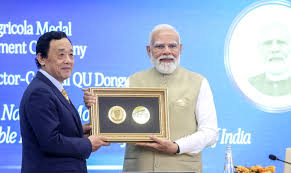
CONTEXT: The United Nations Food and Agriculture Organization (FAO) officially presented the prestigious Agricola Medal 2026 to Prime Minister Narendra Modi during a high-level summit at the FAO Headquarters in Rome, Italy.
-
- The Highest Distinction: The Agricola Medal is the absolute highest honor conferred by the FAO to global leaders who champion the cause of international food security.
- Core Citation Focus: The award explicitly recognizes India’s leadership in scaling up sustainable agricultural practices and managing massive food welfare safety nets.
- Historical Benchmark: This state visit marked the first time an Indian Prime Minister has visited the FAO Headquarters in Rome in over 30 years.
- Director-General’s Presentation: The medal was formally presented by the sitting Director-General of the FAO, Dr. Qu Dongyu.
- Dedication Theme: In his acceptance address, the Prime Minister dedicated the international award to the collective resilience of Indian farmers and the country’s agri-scientific community.
- Public Distribution System (PDS) Recognition: The award underscores global institutional praise for India’s Pradhan Mantri Garib Kalyan Anna Yojana (PMGKAY) as an unparalleled food security cushion.
- Promotion of Millets (Nutri-Cereals): FAO officials lauded India’s persistent global push for climate-resilient agriculture, specifically its leadership during the International Year of Millets.
- Digital Agriculture Footprint: The integration of technology via the AgriStack initiative, e-NAM, and drone-based agricultural mapping was cited as a global model for developing nations.
- Global South Leadership: The event cemented India’s stance as a primary voice for food security rights within the Global South, resisting global market protectionism.
(FAO)
Spread the Word