Indian Polity & Governance
Commencing of Field Operations for Houselisting and Housing Census:
Context: The Ministry of Home Affairs announced the commencement of physical field operations for Houselisting and Housing Census across multiple states.
-
- The field operations kicked off in Rajasthan, Meghalaya, Maharashtra, Jharkhand, and the Municipal Corporation of Delhi (MCD) area.
- This marks the foundational first phase of the delayed decadal census operations.
- The Census in India is conducted under the legal provisions of the statutory Census Act, 1948.
- The apex organization responsible for conducting the census is the Office of the Registrar General and Census Commissioner, under the Ministry of Home Affairs.
- Houselisting operations identify all residential, commercial, and mixed-use structures within a defined enumeration block.
- Data collected includes housing characteristics, amenities available to the household, and asset ownership profiles.
- For the first time, this census deployment relies extensively on a digital-first approach using mobile applications for data collection.
- Census data forms the statutory baseline for the delimitation of Parliamentary and Assembly constituencies.
- Unlike the regular census data, individual information collected under the Census Act is strictly confidential and not admissible as evidence in a court of law.
- It works as the primary statistical pipeline for socio-economic planning and targeting under schemes like PM Awas Yojana.
(ET)
International Developments
Drone Strike on Barakah Nuclear Power Plant (UAE):
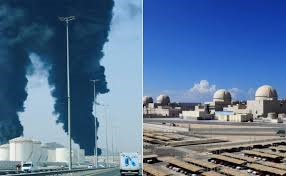
Context: A major security incident occurred as a drone strike hit an external component of the Barakah Nuclear Power Plant in Abu Dhabi, UAE.
-
- The fire broke out specifically in an electrical generator outside the inner perimeter of the facility.
- UAE authorities reported zero injuries and absolutely no impact on radiation levels.
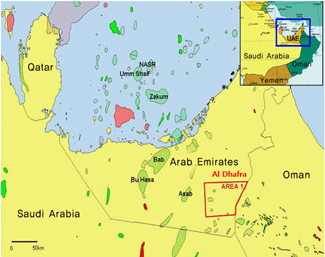
- The plant is situated in the Al Dhafra Region of Abu Dhabi.
-
- Barakah is the first commercial nuclear power station in the Arab world.
- It utilizes four APR-1400 nuclear reactors, designed by the Korea Electric Power Corporation (KEPCO).
- The incident poses severe concerns regarding infrastructure security within the broader West Asia Crisis.
- For India, nuclear energy safety in the Gulf is critical due to the presence of a massive 8.5 million-strong diaspora.
- Commercial energy safety guidelines are overseen by the International Atomic Energy Agency (IAEA).
- The plant accounts for nearly 25% of the United Arab Emirates’ total electricity requirements.
- Geopolitically, this escalates the drone-warfare vulnerability vectors of critical energy infrastructure across the Persian Gulf.
(TH)
International Relations
India-Sweden Strategic Partnership Upgrade:
Context: Prime Minister Narendra Modi and Swedish PM Ulf Kristersson held bilateral delegation-level talks in Gothenburg, officially elevating India-Sweden ties to a Strategic Partnership.
-
- The elevation focuses heavily on trade, green tech, deep-tech manufacturing, and defense.
- PM Modi was conferred with the Royal Order of the Polar Star (Degree Commander Grand Cross), Sweden’s highest honour for foreign heads of government.
- This marks the 31st international honour received by the Prime Minister.
- The Gothenburg engagement specifically targeted Swedish investment into India’s National Green Hydrogen Mission.
- Bilateral trade between the two nations reached $7.75 billion in 2025.
- Key focus sectors under the new partnership include Telecom, Digital Infrastructure, and AI.
- India urged Sweden to look at the country as a global Research and Development (R&D) hub.
- Cooperation frameworks were outlined for urban transformation, mobility, and life sciences.
- The historical framework of India-Sweden relations is anchored by the Joint Action Plan signed back in
- Security cooperation via the Lead IT (Leadership Group for Industry Transition) initiative, co-founded by both nations, was reaffirmed.

(TH)
Safe Passage and Maritime Security in the Strait of Hormuz:
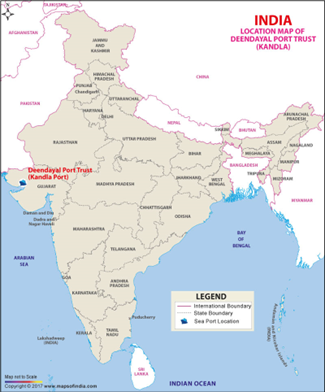
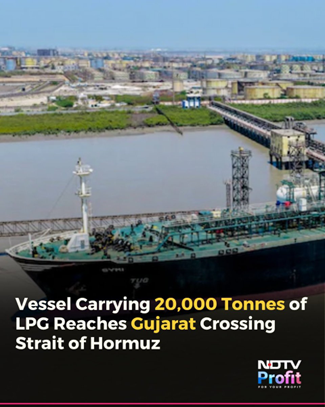
Context: A vessel carrying 20,000 metric tonnes of liquefied petroleum gas (LPG) arrived at Deendayal Port Authority in Kandla in Gujarat after crossing the Strait of Hormuz amid the West Asia crisis.
-
- India declared at the UN that targeting commercial shipping and civilian crew is completely unacceptable.
- The Indian statement emphasized that international law governing freedom of navigation must be fully respected.
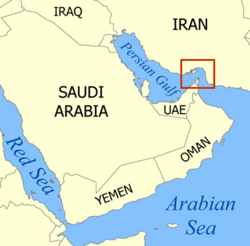
- The Strait of Hormuz is a vital maritime choke point connecting the Persian Gulf with the Gulf of Oman and the Arabian Sea.
-
- Roughly one-fifth of the world’s total liquefied natural gas (LNG) and petroleum consumption passes through this strait.
- The primary international legal instrument governing safe passage here is the United Nations Convention on the Law of the Sea (UNCLOS).
- India is highly dependent on this maritime route for oil and gas imports from Iraq, Saudi Arabia, and Qatar.
- Concurrently, a Marshall Islands-flagged vessel, MV SYMI, successfully carried 20,000 tonnes of LPG from Qatar to India’s Kandla port via the strait.
- Kandla port is managed by the Deendayal Port Authority in Gujarat.
- India uses naval deployments like Operation Sankalp to safeguard Indian-flagged vessels transiting the Gulf region.
- The geopolitical tension arises out of the collapsing U.S.-Iran diplomatic negotiations.
(TH)
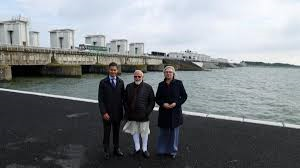
PM Modi’s Climate Infrastructure Tour of the Afsluitdijk Dam:
Context: Prime Minister Narendra Modi toured the iconic Afsluitdijk Dam alongside Dutch Minister Rob Jetten to explore climate-resilient water infrastructure.
-
- The visit was aimed at building deep bilateral collaborations in water management and climate-resilient infrastructure.
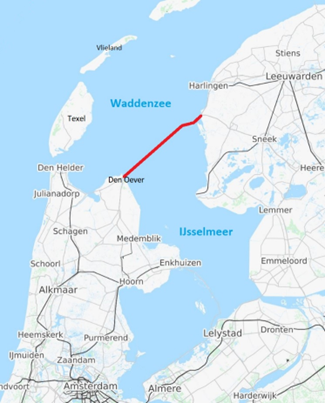
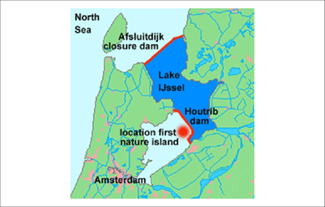
- The Afsluitdijk is a major sea-barrage dam in the Netherlands, constructed to protect the country against catastrophic flooding.
-
- The dam blocks off the Zuiderzee (a former inlet of the North Sea) and turns it into a freshwater lake called IJsselmeer.
- India is looking to replicate Dutch technologies for coastal protection, delta management, and flood mitigation.
- This aligns with India’s domestic urban infrastructure protection mandates against rising sea levels in cities like Mumbai and Chennai.
- The Netherlands and India have a pre-existing Strategic Partnership on Water launched in 2021.
- Modern upgrades to the Afsluitdijk Dam utilize smart ecological components to allow fish migration while preserving flood safety.
- The dam is a classic global engineering example of land reclamation and large-scale marine water control.
- PM Modi noted that the entire global community has valuable lessons to learn from Dutch water resource engineering.
- Technology transfer agreements signed include hydraulic engineering frameworks and storm-surge barrier modeling.
(TH)
Economy
Government Restricts Silver Imports to Support Rupee:
Context: Following a steep tariff hike, the Ministry of Commerce and Finance placed strategic import restrictions on silver.
-
- The fundamental objective of the import curb is to stabilize and support the valuation of the Indian Rupee (INR) against the US dollar.
- Unchecked silver inflows were significantly widening India’s Current Account Deficit (CAD).
- Silver imports are classified under the Restricted/Review category of the Foreign Trade Policy (FTP).
- The restriction curbs the arbitrage loop where importers exploit lower tariff routes via Free Trade Agreements (FTAs).
- The Directorate General of Foreign Trade (DGFT) is the apex licensing body executing these restriction notifications.
- India is one of the world’s largest consumers of silver, largely driven by jewellery, industrial electronics, and solar PV manufacturing.
- Economically, a wide CAD puts structural depreciating pressure on the domestic currency.
- The measure works alongside the Reserve Bank of India’s (RBI) forex management strategies.
- Exceptions are usually maintained for exporters who import raw silver to manufacture value-added items for export (Advance Authorization scheme).
- Such trade restrictions are strictly evaluated under World Trade Organization (WTO) rules on balance-of-payments safeguards.

(ET)
Geography, Mapping, Ecology & Environment and DM
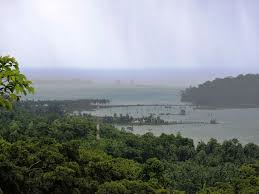
Great Nicobar Project Environmental Debate:
Context: Former Environment Minister and Congress leader Jairam Ramesh wrote to the Union Defence Minister calling the Great Nicobar Island Development Project an “ecological disaster”.
-
- The Central Government continues to defend the project by prioritizing India’s strategic and maritime security interests.
- The mega-infrastructure plan includes an International Transshipment Port, an international airport, and a power plant.
- Great Nicobar is the southernmost island of the Andaman and Nicobar archipelago.
- The island holds the Great Nicobar Biosphere Reserve, which contains two national parks: Campbell Bay National Park and Galathea National Park.
- Galathea Bay is a primary nesting site for the endangered Giant Leatherback Sea Turtle.
- The project footprint threatens the pristine habitat of the Shompen and Nicobarese tribes, who are Particularly Vulnerable Tribal Groups (PVTGs).
- Environmentalists flags the large-scale diversion of thousands of hectares of pristine tropical rainforest.
- Geopolitically, the project helps India project naval power near the critical Malacca Strait choke point.
- The NITI Aayog is the principal government body steering the holistic development plan for the island.
- Critics have demanded exploring alternative strategic options that do not compromise the island’s fragile coral reef ecosystem.
(TH)
Science & Technology
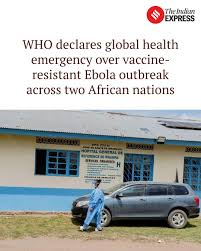
WHO Declares Vaccine-Resistant Ebola Global Emergency:
Context: The World Health Organization (WHO) declared a Public Health Emergency of International Concern (PHEIC) over a vaccine-resistant Ebola outbreak.
-
- The lethal outbreak has expanded across two African nations, displaying high mutations.
- A PHEIC is the highest level of global health alert that can be issued under the International Health Regulations (IHR).
- Ebola Virus Disease (EVD) is a severe, often fatal illness in humans, caused by the Ebolavirus genus.
- The virus is transmitted to humans from wild animals (like fruit bats) and spreads via human-to-human bodily fluid contact.
- Traditional vaccines (like Ervebo) are demonstrating limited efficacy against this specific vaccine-resistant strain.
- Symptoms typically present as acute fever, weakness, muscle pain, headaches, followed by vomiting, diarrhea, and internal/external bleeding.
- The incubation period for Ebola ranges from 2 to 21 days; individuals are not infectious until they develop symptoms.
- Genus Ebolavirus features 6 distinct species, with the Zaire and Sudan strains causing the most severe historical outbreaks.
- India has enhanced airport screening and vector surveillance protocol under National Centre for Disease Control (NCDC) guidelines.
- Community engagement, intensive contact tracing, and safe burials remain the primary non-pharmaceutical interventions.
(TH)
History, Art & Culture
Repatriation of the Chola-Era Leiden Copper Plates:
Context: The Netherlands formally returned the historic Anaimangalam copper plates charter (popularly known as the Leiden copper plates) to India during a high-profile ceremony at The Hague.

-
- This marks the very first time that a Chola-period copper plate charter has been successfully repatriated to India.
- The priceless artefacts were held in the possession of Leiden University in the Netherlands for nearly two centuries.
- The plates explicitly record a historic land grant at Anaimangalam village (near Nagapattinam) given to a Buddhist monastery.
- The land gift was originally ordered by the Chola monarch Raja Raja Chola I (985–1014 CE).
- The command to construct and endow the monastery was officially executed and completed by his son, Rajendra Chola I (1014–1044 CE).
- The monastery was built by King Sri Mara Vijayottunga Varman of Java (Sailendra Dynasty) and named the Chulamani Varma Vihara.
- During Rajendra Chola I’s reign, the site was also known as the Raja Raja Cholan Perumpalli (the great vihara).
- The charter plates are held together by a metallic ring bearing a complex Chola royal insignia that visually depicts their regional conquests.
- It features a tiger (Chola emblem), alongside two fish (signifying victory over the Pandyas) and a bow (victory over the Cheras).
- The text contains multi-lingual epigraphical evidence, with the larger plates featuring a Sanskrit sloka praising Rajendra Chola I and the smaller plates lauding Kulottunga Chola I.
(TH)
Terms in news
Historical Terminology: “Kalam” as an Economic Metric:
Context: The repatriation text of the Chola Leiden copper plates has renewed scholastic interest in “Kalam”, the primary unit of bulk measurement used in medieval South Indian public finance and temple administrations.
-
- A Kalam functions strictly as an ancient measurement unit of grain volume, primarily used to quantify harvested paddy or processed rice.
- Historically, it corresponds roughly to a standardized modern weight metric of 126 kilograms per filled measure.
- Epigraphical data proves it was an analytical pillar for land revenue assessment by the Puravuvari-tinaikkalam (Chola revenue department).
- One Kalam is mathemactically structured to equal 3 Tuṇi or exactly 48 Padis in standard volume hierarchies.
- The Anaimangalam charter shows that King Raja Raja Chola I initially granted an annual revenue of 8,943 kalam of paddy to the Javanese Buddhist monastery.
- Later records indicate that Kulottunga Chola I issued an incremental supplemental grant of 4,500 kalam of paddy to support the same monastic sangha.
- Inscriptions across Chola temples (like Tanjore) show that daily wages for pipers, priests, and sculptors were denominated and paid directly in Kalam units of grain.
- Land productivity in inscriptions was frequently recorded based on how many Kalam of paddy a specific plot (veli or ma) could yield per harvest cycle.
- To maintain trade equity, the state calibrated specific royal measuring vessels inside local granaries, often naming them after ruling monarchs or local deities.
- Understanding these metrics provides crucial economic data on agrarian surplus, taxation limits, and regional living standards during the early medieval Chola era.
(TH)
Miscellaneous
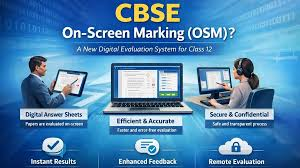
CBSE On-Screen Marking (OSM) Controversy and System History:
Context: Following public scrutiny over evaluation discrepancies in 13,000 answer sheets, the Education Secretary defended the On-Screen Marking (OSM) system.
-
- The Education Ministry clarified that the OSM digital evaluation platform is not a new tool and was first introduced in 2014.
- The disclosure came amid a major CBSE Class 12 evaluation dispute where manual re-checks had to be deployed.
- Globally, OSM platforms are standard practices used by premium bodies like Cambridge and the Institute of Chartered Accountants of India (ICAI).
- Under revised transparency protocols, students will now receive scanned copies of answer sheets prior to re-evaluation.
- The digital OSM workflow involves secure scanning of physical sheets, masking student identities, and distributing digital copies to evaluators.
- It is a critical component of the e-Governance in Education framework to reduce physical handling errors and marking biases.
- The system tracks evaluation patterns, ensuring examiners do not skip pages or leave questions un-evaluated.
- The human error element highlighted limitations in OCR (Optical Character Recognition) integration during manual tabulation entry.
- The initiative fits under the tech-driven educational reform pillar of the National Education Policy (NEP).
- To prevent financial exploitation of aggrieved students, the board has altered rules to make re-evaluations significantly cheaper.
(TH)
Spread the Word