Indian Polity & Governance
National Departmental Summit on Performance-Linked Capacity Building:
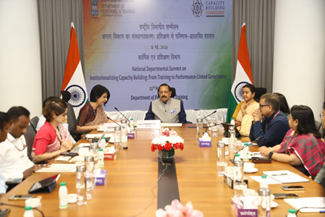
Content: The Department of Personnel and Training (DoPT) along with the Capacity Building Commission (CBC) hosted the National Departmental Summit on “Institutionalizing Capacity Building: From Training to Performance-linked Governance” on 15 May 2026.
-
- Mission karmayogi alignment: The entire structure of the summit is anchored in the foundational tenets of Mission Karmayogi.
- Vision 2047 target: The re-engineering of civil services training intends to fulfill administrative milestones required for Viksit Bharat 2047.
- Shifting paradigms: The core framework aims to push administrative culture away from rule-based workflows to role-based competencies.
- Unified performance framework: The first thematic area establishes interoperable models directly locking promotion tracks to capability assessments.
- Demand-responsive institutions: Training institutes across Centre and State levels will be restructured to match real-time field governance demands.
- Hyper-personalized learning: The platform will deploy Artificial Intelligence (AI) tools to craft custom upskilling paths for officials.
- State Cadre Re-alignment: State and UT civil services will sync their career-long training schedules directly with central Capacity Building Plans.
- Consultative groundwork: The framework absorbs structured inputs received from General Administration Departments nationwide during workshops.
- Digital learning convergence: High emphasis was placed on integrating institutional physical training with the online iGOT Karmayogi digital infrastructure.
- Actionable milestones: The summit finalized a comprehensive roadmap with strict timelines for transforming personnel management.
(PIB)
International Relations
Prime Minister Narendra Modi’s Strategic Visit to the UAE:
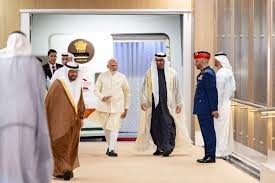
Content: Prime Minister Narendra Modi visited the United Arab Emirates (UAE) on 15 May 2026, holding high-level discussions with UAE President Sheikh Mohamed bin Zayed Al Nahyan. The visit focused on deepening the Comprehensive Strategic Partnership, boosting bilateral trade under the Comprehensive Economic Partnership Agreement (CEPA) framework, and reinforcing regional supply chains amidst global disruptions.
-
- Bilateral trade target: The two nations reaffirmed their target to double non-oil bilateral trade to US$ 200 billion by 2032 under the CEPA framework.
- Ceremonial welcome: Prime Minister Modi received a formal Guard of Honour upon landing in the UAE.
- Energy security: Discussions prioritized long-term collaboration in fuel security and diversifying energy trade away from volatile choke points.
- Supply chain resilience: A core objective was establishing resilient, integrated supply chains spanning agriculture, tech, and manufacturing.
- Investment channels: Mechanisms to fast-track sovereign wealth fund investments from the UAE into Indian infrastructure were reviewed.
- Geopolitical alignment: The leaders discussed the evolving security situation in West Asia, striving for common diplomatic pathways.
- Digital infrastructure collaboration: Joint efforts to integrate digital payment systems (like UPI-IPP linkages) were significantly progressed.
- Technology transfer: The partnership heavily emphasized deep tech, renewable green energy frameworks, and space exploration workflows.
- Strategic autonomy: The outreach underscores India’s active multi-alignment approach to maintain independent economic interests globally.
- People-to-People Ties: The meet acknowledged the contribution of the Indian diaspora and simplified mobility agreements for skilled professionals.
(PIB+TH)
West Asian Diplomatic Engagement: Iranian Foreign Minister Visits New Delhi:
Content: Iranian Foreign Minister Abbas Araghchi arrived in New Delhi on 15 May 2026 for diplomatic talks, asserting that India can assume a “greater role” in bringing stability to the conflict-torn West Asian region.
-
- Rejection of Military Options: Minister Araghchi emphasized during a press brief that a military framework cannot resolve regional geopolitical crises.
- Chabahar port gateway: Iran described the India-backed Chabahar Port as a golden gateway and urged New Delhi to accelerate its expansion.
- Strait of Hormuz Security: Iran claimed it remains committed to ensuring safe maritime corridors through the strait despite highly tense regional equations.
- Strategic autonomy pivot: The dialogue serves as a significant trial for India’s multi-directional foreign policy framework amidst global pressures.
- BRICS platform synergy: The talks converged with broader regional consensus discussions among emerging BRICS economies.
- Energy trade revitalization: Preliminary discussions touched upon structuring robust alternative financial mechanisms for payment clearances.
- Maritime escort dynamics: India maintained its preference to safeguard Indian merchant vessels via standalone navy operations (Operation Sankalp).
- Countering sanctions: discussions indirectly mapped out trade strategies designed to navigate unilateral western secondary sanctions.
- Regional connectivity hubs: Both sides explored extending the International North-South Transport Corridor (INSTC) to Central Asia.
- Diplomatic De-escalation: India urged peaceful dialogue to de-escalate maritime war threats to preserve standard shipping pathways.

(TH+IE)
BRICS Foreign Ministers Meet Outlines Trade Disruption Defenses:
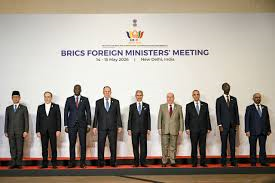
Content: The BRICS Foreign Ministers meeting commenced in New Delhi on 15 May 2026 with 11 member nations attending. The alliance collectively issued statements criticizing unilateral trade tariffs and protectionism that risk destabilizing emergent economies.
-
- Expanded Footprint: The high-level meeting marks active strategic coordination with 11 formal member countries participating in Delhi.
- Condemnation of Protectionism: Ministers targeted the rise of arbitrary tariff structures that directly distort international supply systems.
- Alternative settlement infrastructure: High focus was dedicated to developing non-dollar inter-bank payment systems for direct settlement.
- Condemnation of Terrorism: The collaborative forum officially issued a strong joint statement condemning the recent Pahalgam terror attack.
- Global south leadership: India leverage the session to present itself as a crucial diplomatic link for emerging trade economies.
- Multipolar trade architecture: The final resolutions strongly advocated for a reformed, transparent World Trade Organization (WTO) model.
- Secondary sanctions rejection: The alliance discussed joint mechanisms to legally insulate their firms from external secondary sanctions.
- Supply web diversification: The group agreed to build mutual logistical networks to handle emergency agricultural and medical shortfalls.
- Energy transition finance: The member states demanded affordable, non-conditional green technology transfers from western developed states.
- Geopolitical balancing: The meet highlights the bloc’s growing focus on managing direct economic security rather than acting as a purely political forum.
(IE+TH)
Economy
Launch of a Single Integrated Hub for Exporters to Drive $2 Trillion Target:
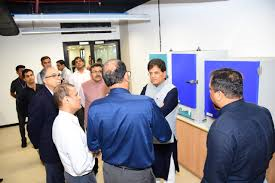
Content: Union Minister Piyush Goyal announced the operationalization of a Single Integrated Hub connecting 46 trade-related organizations. The move aims to slash administrative costs, eradicate operational bottlenecks, and exponentially boost export productivity to achieve India’s long-term export projections.
-
- Aggressive export goals: The integrated digital hub is structurally aligned to achieve India’s $1 trillion export target for the current fiscal year.
- Vision 2030: The initiative acts as a primary baseline tool to propel cumulative exports to $2 trillion by 2030.
- Organizational Consolidation: It bridges 46 distinct export-import regulatory bodies, ministries, and banking windows into one platform.
- Slashing friction costs: The primary design parameters intend to minimize transaction, procedural, and compliance-related logistical costs.
- Ease of Doing Business: It provides single-window clearances, eliminating redundant manual physical verification protocols for shipping cargo.
- Real-time Analytics: Exporters gain instant access to tracking, tariff validations, and global trade compliance criteria.
- MSME inclusion: Small-scale domestic manufacturers will receive direct access to international standard certification facilities via the hub.
- Regulatory compliance integration: It automatically syncs with the rules issued by the Directorate General of Foreign Trade (DGFT).
- Global market intelligence: The portal includes predictive data models mapping international demand shifts for specific Indian goods.
- Reduction in Delays: Turnaround times for processing export documentation are projected to decline by nearly 40%.
(PIB)
Global Economic Pressure: Fuel Prices Hiked by ₹3 Amid West Asia Crisis:
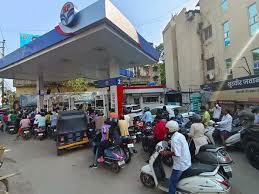
Content: Triggered by severe macroeconomic disruptions and geopolitical stress in West Asia, Indian state-owned Oil Marketing Companies (OMCs) hiked the retail prices of petrol and diesel by ₹3 per litre across all variants on 15 May 2026.
-
- Uniform price escalation: The sudden ₹3 hike affects all premium, regular, and high-octane automotive fuel types.
- Geopolitical cause: The primary reason is listed as severe crude supply chain volatility stemming from military conflicts involving Iran.
- Strait of Hormuz complication: Ongoing maritime security risks around the Strait of Hormuz have significantly heightened insurance and logistics costs.
- Imported inflation risk: Higher domestic fuel prices will directly fuel inflation across essential consumer items, food, and daily freight.
- Fiscal subsidy burden: The price surge creates immediate pressure on government balance sheets through fertilizer and public transit subsidies.
- Currency depreciation Co-relation: The hike coincides with the Indian Rupee sliding near the 95 per USD mark, raising overall import bills.
- Forex defense actions: The Reserve Bank of India (RBI) deployed billions to cushion the rupee, dropping reserves down to $690.69 billion.
- Transit costs impact: Public transport corporations (such as Maharashtra’s MSRTC) face severe operational deficits, hinting at passenger fare hikes.
- Vat modifications: in a counter-measure, states like Maharashtra selectively cut VAT on aviation turbine fuel to 7% to guard aviation networks.
- Opposition backlash: Political factions staged immediate countrywide protests, calling the move a heavy tax on ordinary households.
(TH+IE)
India Suspends Sugar Exports to Insure Domestic Food Security:
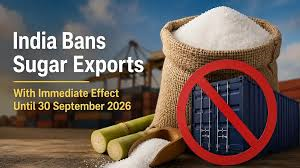
Content: In an unexpected regulatory shift, the Directorate General of Foreign Trade (DGFT) moved the export of sugar from the ‘restricted’ into the ‘prohibited’ category, effective until September 2026. The step ensures internal price stability against extreme weather anomalies.
-
- Total ban protocol: Sugar exports have been shifted completely into the prohibited category, stopping standard outward shipments.
- Duration of ban: The complete export freeze is scheduled to remain in effect until September 2026.
- India’s trade status: India is the second-largest exporter of sugar globally, making this internal ban a significant shock to international markets.
- Climate change factor: El Nino impacts and unpredictable monsoon shifts prompted defensive domestic stock hoarding.
- Inflation protection: The restriction seeks to isolate local consumer food prices from climbing international commodity price points.
- Sugarcane to Ethanol Diversion: The suspension helps maintain a predictable raw material supply for the national Ethanol Blending Programme (EBP).
- DGFT authority: The policy intervention was carried out via executive notifications issued by the Directorate General of Foreign Trade.
- Impact on Mills: Domestic sugar mills must reorient revenue targets toward local buyers rather than lucrative global trade.
- Agricultural resilience: The policy signals a rising state focus on securing domestic agrarian reserves against global geopolitical risks.
- Global sugar futures: International trade experts anticipate a steep upward movement in global sugar price benchmarks due to India’s absence.
(TH+IE)
Geography, Mapping, Ecology & Environment and DM
Climate-Tech Focus: WISE 2026 Summit Inaugurated:
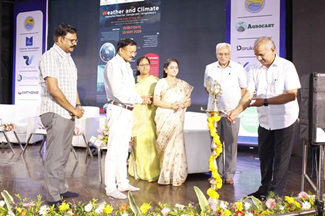
Content: The WISE 2026 (Weather & Climate Innovation Startup Enterprise) inauguration and specialized climate-tech startup platform commenced on 15 May 2026. The summit aims to build strong avenues to translate theoretical meteorological science data into practical business opportunities.
-
- Mainstream climate-tech: The meet declared climate-focused technology as a mainstream business imperative rather than a niche sustainability target.
- Ecosystem scale: The grand opening ceremony brought together over 400 major climate investors, academics, and startup ecosystem leaders.
- Targeted entrepreneurship: Over 100 prospective startup founders joined to pitch data-driven climate adaptations.
- Scientific anchor institutions: The summit features technical support from the National Centre for Medium Range Weather Forecasting (NCMRWF).
- IMD involvement: The India Meteorological Department (IMD) is providing historical weather database access to selected green innovators.
- Polar research synergy: Experts from the National Centre for Polar and Ocean Research (NCPOR) joined to guide sea-level rise models.
- Agricultural resilience partners: The International Crops Research Institute for the Semi-Arid Tropics (ICRISAT) is guiding dryland agritech ventures.
- Premier academic backing: Leading engineering minds from IIT Delhi, IIT Bombay, and IISER Pune are vetting the core technologies.
- Focus on Scalability: Main discussions focus heavily on finding affordable, local tools to track and counter urban heat island effects.
- Interdisciplinary nature: The event stresses that climate resilience can succeed only through combined hardware, policy, and market innovations.
(PIB)
Science & Technology
Private Sector Space Boom: Dhruva Space Secures ₹105 Crore for Project Garud:
Content: Hyderabad-based space startup Dhruva Space secured a substantial financial injection of ₹105 crore under the Research, Development & Innovation Fund (RDIF) to accelerate ‘Project Garud’. The project introduces massive domestic capabilities in production-line satellite engineering.
-
- Platform specialization: Project Garud aims to perfect a specialized, flat-pack 500 kg-class satellite platform.
- High-volume manufacturing: The technical architecture is engineered strictly for scalable, fast industrial assembly line manufacturing.
- Bridging system gaps: The spacecraft structure bridges the capacity gap between tiny experimental cubesats and massive conventional payloads.
- Flat-pack innovation: The unique flat-pack design allows efficient launch vehicle stacking, enabling multiple units to deploy in a single launch.
- Sovereign funding channel: The expansion is funded through a dedicated ₹105 crore infusion via the Research, Development & Innovation Fund (RDIF).
- Production projections: The operational goal targets assembly capacity of up to two satellites per day at peak output.
- Annual mass scale: The industrial process intends to output 500 to 600 complete operational satellites annually.
- Multi-mission compatibility: The standard core bus can carry payloads for Earth Observation, Telecom, and Intelligence gathering.
- National security applications: The mass satellite constellation setup directly supports real-time maritime and border surveillance grids.
- Indigenization milestone: The project marks an important step toward transforming India into a dominant global hub for commercial satellite exports.
(IE)
Spread the Word