
Economy
“Know Your Survey: A User Guide to ASUSE”:
-
- The National Statistics Office (NSO) under the Ministry of Statistics & Programme Implementation (MoSPI) released the publication titled “Know Your Survey: A User Guide to the Annual Survey of Unincorporated Sector Enterprises (ASUSE)” on 2 January 2026.
- Purpose of the Guide:
- It is the first-ever user-friendly guide dedicated to explaining the Annual Survey of Unincorporated Sector Enterprises (ASUSE) in simple, clear terms.
- Aims to improve understanding of survey concepts, methodology, data collection, validation, estimation, and quality assurance, enabling better interpretation and use of ASUSE results.
- Facilitates informed use of official statistics by policymakers, ministries, industry, researchers, academia and the general public.
- About ASUSE:
- ASUSE is a key official statistical survey that provides data on the unincorporated non-agricultural sector, which is a major employment generator, contributor to economic output, and part of domestic value chains.
- This sector includes small and medium enterprises, own-account enterprises, and informal businesses that are not formally incorporated but play significant roles in the economy.
- Significance for Policy & Economy:
- Helps policymakers and decision-makers understand economic contributions and performance of the informal non-agricultural sector.
- Enhances data literacy among users and boosts transparency and trust in official statistics.
- Strengthens the statistical ecosystem for evidence-based research and planning.

(PIB)
Swadeshi in Blue Revolution:
-
- CONTEXT: The Ministry of Fisheries, Animal Husbandry & Dairying stressed the importance of promoting indigenous fish species as part of India’s Blue Revolution strategy.
- Key focus:
- India’s aquatic ecosystems – freshwater, brackishwater and marine are home to over 2,800 indigenous fish and shellfish species.
- Current aquaculture is dominated by a few species (e.g., rohu, catla, mrigal, giant freshwater prawn), while mariculture remains nascent.
- The Department of Fisheries plans to prioritise indigenous species for aquaculture diversification based on economic value and regional importance.
- Priority indigenous species (examples):
- Fringed-lipped Carp, Olive barb, Pengba, Striped murrel, Pabda, Singhi
- Asian seabass, Pearlspot, Pompano, Mud crab, Indian prawn (Penaeus indicus), identified as high-potential candidates.
- Policy & institutional support:
- Initiatives under Pradhan Mantri Matsya Sampada Yojana (PMMSY),
- Pradhan Mantri Matsya Kisan Samridhi Sah-Yojana (PMMKSSY)
- Fisheries and Aquaculture Infrastructure Development Fund (FIDF) to improve seed, feed and technical knowledge dissemination.
- Collaboration with ICAR for genetic improvement and conservation of indigenous species.
- Significance:
- Blue revolution: Enhances aquaculture productivity, sustainability and ecosystem balance.

-
-
- Food & livelihood security: Supports local economies, fisher livelihoods and nutrition.
- Biodiversity conservation: Protects native aquatic species and ecosystems.
- Regional development: Encourages regional aquaculture clusters and employment generation.
-
(PIB)
Geography, Mapping, Ecology & Environment
Sirkeer Malkoha:
-
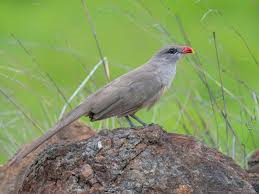
- Sirkeer Malkoha (Taccocua leschenaultii) is a non-parasitic cuckoo of the Cuculidae family, recently reported for the first time in Uttarkashi (Uttarakhand).
- It inhabits dry scrub forests and open woodlands, usually below 1500 m, forages on the ground, and builds its own nest.
- IUCN status: Least Concern.
(TOI)
Science & Technology
Inclusive Technology Business Incubators (i-TBIs):
-
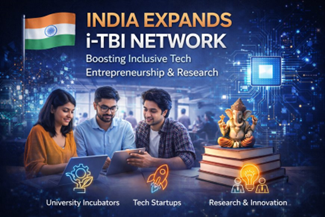
- i-TBIs are established by the Department of Science & Technology (DST) under the NIDHI (National Initiative for Developing and Harnessing Innovations) programme to promote innovation and entrepreneurship.
- 15 i-TBIs have been set up across universities and higher educational institutions to democratize technology and innovation beyond metropolitan cities.
- Key focus areas include knowledge-based startups, women-led enterprises, and inclusive innovation, especially from smaller towns and aspirational districts.
- i-TBIs provide end-to-end startup support such as ideation, prototyping, product development, mentoring, funding access, and industry collaboration.
- These incubators aim to transform universities into innovation hubs, supporting India’s shift from a technology consumer to a technology creator.

(PIB)
Personalities in news
Mannathu Padmanabhan:
-
- CONTEXT: On 2 January 2026, PM Modi paid tribute to Mannathu Padmanabhan on his birth anniversary and remembered him as a visionary social reformer dedicated to social service and uplifting society.
- Key Messages from the Prime Minister:
- Padmanabhan’s life was rooted in dignity, equality, and social reform.
- His pioneering work in health, education, and women’s empowerment continues to inspire society.
- The values he championed help guide efforts to build a just, compassionate, and harmonious society.
- Identity & contribution:
- Mannathu Padmanabhan (1878–1970) – Indian social reformer and freedom fighter from Kerala.
- Founder of the Nair Service Society (NSS) in 1914 to uplift the Nair community by promoting education, social equality, and legal rights.
- Advocated temple entry rights for all castes and worked for social justice and anti–untouchability causes.
- Played a key role in Kerala’s social reform movements, weakening caste orthodoxy and promoting progressive social change.
- Honoured by many as a champion of social reform and community mobilisation.

(PIB)
Spread the Word