
INDIAN POLITY & GOVERNANCE
Supreme Court Directs Institutionalisation of NTA Reforms and Audits Implementation of High-Powered Panels:
Context: A Supreme Court Bench comprising Justices P.S. Narasimha and Alok Aradhe directed the National Testing Agency (NTA) to file a comprehensive status affidavit detailing the implementation of structural reform recommendations submitted by the Dr. K. Radhakrishnan Committee and the Nandan Nilekani technological panel.
-
- Supreme Court Directive Peg: Hearing petitions on public examination security, the Supreme Court mandated the NTA and Union Government to submit a time-bound compliance matrix on institutionalizing systemic examination governance.
- Radhakrishnan Committee Mandate: The 7-member high-level expert committee headed by former ISRO Chairman Dr. K. Radhakrishnan recommended restructuring NTA from an ad-hoc outsourcing agency into a permanent, statutory, institutionalized testing authority.
- Technological Safeguards by Nilekani Panel: The Nandan Nilekani technological oversight panel proposed end-to-end digital encryption of question papers, biometric candidate authentication, AI-enabled remote proctoring, and GPS-tagged logistical tracking of test material.
- Public Examinations Act, 2024 Deterrence: Enforces statutory penal deterrence under the Public Examinations (Prevention of Unfair Means) Act, 2024, prescribing minimum 3 to 5 years imprisonment (up to 10 years for organized syndicates) and fines up to ₹1 crore with attachment of property under Section 10.
- Constitutional Guarantees under Article 14 & 21: Directly safeguards the Fundamental Right to equality of opportunity in public education (Article 14) and the right to a fair, non-arbitrary assessment process integral to the Right to Life and Livelihood under Article 21.
- Hybrid Computer-Based Testing (CBT) Transition: Phased transition towards hybrid computer-based testing models, multi-stage screening for massive national examinations, and localized dynamic test-center allocation to eliminate physical question paper leaks.
- Creation of Permanent Examination Cadre: Establishing a dedicated, permanent cadre of psychometric experts, test administrators, and cybersecurity evaluators to replace dependence on outsourced private service providers.
- Nodal Ministry & Institutional Governance: Administered by the Department of Higher Education, Ministry of Education (MoE).
- Governance & Public Trust Significance: Restores public credibility, institutional integrity, and meritocratic fairness in India’s higher educational entrance ecosystem.
(TH / IE)
SOCIETY & SOCIAL JUSTICE
Four-Way Kidney Swap Overcomes Statutory Incompatibilities under Human Organ Transplantation Act:
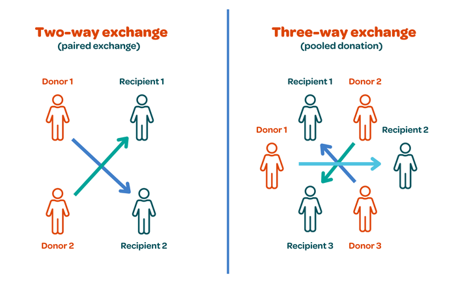
Context: A historic multi-center four-way paired kidney exchange (swap transplantation) across eight individuals successfully bypassed complex immunological and ABO-blood group barriers, highlighting the evolving jurisprudence under the Transplantation of Human Organs and Tissues Act (THOTA), 1994.
-
- Clinical & Social Milestone: Eight individuals across four unrelated families completed a simultaneous four-way paired kidney exchange, demonstrating how reciprocal organ swaps can save end-stage renal disease (ESRD) patients facing donor incompatibility.
- Statutory Framework under THOTA, 1994: Governed by the Transplantation of Human Organs and Tissues Act, 1994 (as amended in 2011) and the Transplantation of Human Organs and Tissues Rules, 2014, which explicitly permit and regulate ‘swap donations’ under Section 9(3A).
- Strict Prohibition on Commercial Dealing: Section 19 of THOTA imposes stringent criminal penalties, including imprisonment up to 10 years and heavy fines, for any commercial trafficking, organ trading, or monetary inducement.
- Institutional Clearance via Authorisation Committees: Every swap transplant requires mandatory scrutiny and prior statutory approval by State or Hospital Authorisation Committees to establish voluntary consent, emotional altruism, and complete absence of commercial transactions.
- National Registry under NOTTO: Operationalized through the National Organ and Tissue Transplant Organisation (NOTTO) under the Directorate General of Health Services (DGHS), Ministry of Health and Family Welfare, maintaining the National Paired Exchange Registry.
- Constitutional Right to Health: Advances the realization of the Right to Health as an intrinsic component of the Right to Life under Article 21, expanding access to life-saving medical procedures.
- National Organ Transplant Programme (NOTP): Integrates with the central sector NOTP scheme providing financial assistance to BPL patients and establishing State Organ and Tissue Transplant Organisations (SOTTOs) across India.
- Nodal Administrative Ministry: Ministry of Health and Family Welfare (MoHFW).
- Social Solidarity & Bio-Ethics: Exemplifies mutual social solidarity, dismantling familial genetic boundaries to create collaborative life-saving donor networks while upholding strict medical ethics.
(IE / TH)
INTERNATIONAL DEVELOPMENTS
India-Singapore Ministerial Roundtable Convenes to Accelerate Trade, Green Energy, and Semiconductor Corridors:
Context: Union Minister of Commerce and Industry Piyush Goyal and Union Finance Minister Nirmala Sitharaman led a 70-member high-level business delegation to Singapore on August 19, 2026, for the 4th India-Singapore Ministerial Roundtable (ISMR) and Business Roundtable to expand bilateral economic architecture.
-
- Ministerial Engagement Peg: The 4th India-Singapore Ministerial Roundtable (ISMR) was convened in Singapore from August 19 to 21, 2026, co-chaired by senior cabinet ministers from both nations to review the Comprehensive Strategic Partnership.
- Six Strategic Focus Pillars: High-level discussions centered on six priority pillars: Advanced Manufacturing & Semiconductors, Digital Technologies & AI, Green Hydrogen & Cross-Border Clean Energy, Healthcare & Life Sciences, Aviation & Maritime Logistics, and Skill Development.
- Foundational CECA Framework: Builds upon the landmark India-Singapore Comprehensive Economic Cooperation Agreement (CECA) signed in 2005—India’s first comprehensive bilateral trade and economic pact with any ASEAN member.
- Digital Financial Interoperability (UPI-PayNow): Leverages the live real-time cross-border payment linkage between India’s Unified Payments Interface (UPI) and Singapore’s PayNow to slash remittance costs and accelerate retail trade settlements.
- Semiconductor & Green Corridor Synergies: Collaboration between the India Semiconductor Mission (ISM) and Singapore’s semiconductor ecosystem for advanced packaging, testing, and developing Singapore as an off-taker for green ammonia exports from India.
- Act East Policy & ASEAN Gateway: Singapore serves as India’s premier gateway to the ASEAN region, accounting for over 25% of India’s total FDI equity inflows over the past two decades.
- APEDA FairPrice Agri-Food Initiative: Commerce Ministry engaged with major Singaporean retail chains like NTUC FairPrice to scale up branded exports of Indian organic millets, basmati rice, and processed horticulture.
- Nodal Ministries: Ministry of Commerce and Industry, Ministry of Finance, and Ministry of External Affairs (MEA).
- Indo-Pacific Strategic Significance: Bolsters resilient supply chains, enhances multilateral ASEAN connectivity, and reinforces rules-based maritime and commercial order across the Indo-Pacific.
(PIB / TH / LM)
ECONOMY
India’s Buffalo Meat Exports Reach $5-Billion Milestone Driven by Strict Sanitary Standards and Market Diversification:
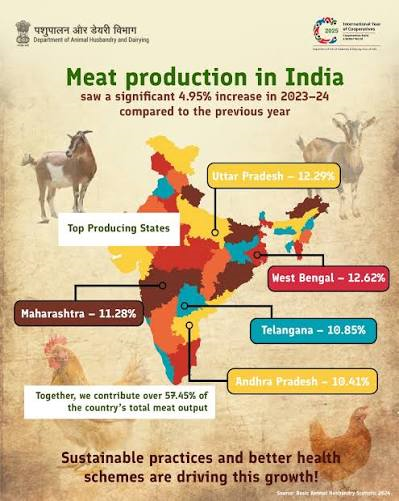
Context: Official agricultural trade data, revealed that India’s carabeef (bovine meat) exports crossed the landmark $5-billion threshold, propelled by APEDA accreditation, traceability systems, and rising demand across Southeast Asia and the Middle East.
-
- Export Milestone Peg: India’s buffalo meat (carabeef) exports registered robust double-digit growth to surpass $5 billion in annual value, cementing India’s position among the top two global bovine meat exporters alongside Brazil.
- APEDA Regulatory Oversight: Export facilities are regulated and accredited by the Agricultural and Processed Food Products Export Development Authority (APEDA) under the APEDA Act, 1985, enforcing stringent Hazard Analysis Critical Control Point (HACCP) standards.
- Foot-and-Mouth Disease (FMD) Free Status: Sanitary safety is guaranteed through the National Animal Disease Control Programme (NADCP), facilitating World Organisation for Animal Health (WOAH) recognized FMD-free zones with vaccination.
- Export Traceability via MeatNet: Operationalized through ‘MeatNet’, an online traceability and veterinary health certification system that monitors meat processing, ante-mortem/post-mortem inspections, and cold chain integrity.
- Strict Legislative Compliance: Complies with the Export (Quality Control and Inspection) Act, 1963 and the Prevention of Cruelty to Animals (Slaughter House) Rules, ensuring that only non-productive buffaloes (culled under state animal preservation laws) are processed, strictly prohibiting cow meat.
- Geographic Market Diversification: Shipments span over 70 destinations, led by Vietnam, Malaysia, Indonesia, Egypt, Saudi Arabia, UAE, and newly opened access in China and CIS nations.
- Foreign Exchange & Rural Economy: Generates crucial foreign exchange earnings that cushion the current account balance while creating upstream rural income for dairy farmers and livestock aggregators.
- Nodal Ministry & Authority: Department of Commerce, Ministry of Commerce and Industry, and Ministry of Fisheries, Animal Husbandry and Dairying.
- Macro-Agri Export Impact: Contributes substantially to the Foreign Trade Policy objective of scaling agricultural and processed food exports to $100 billion by 2030.
(IE / BS / PIB)
GEOGRAPHY
Government Issues National Agro-Ecological Roadmap for Makhana Cultivation in Wetland Floodplains of Mithila:
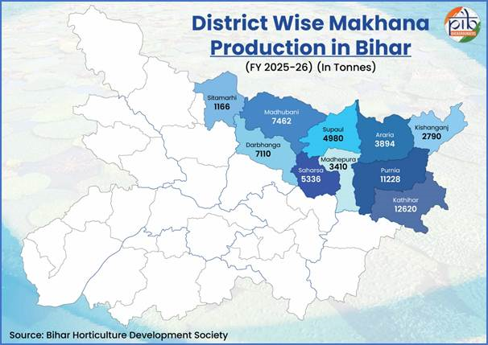
Context: On August 19, 2026, the Ministry of Agriculture and Farmers Welfare and PIB released a comprehensive national backgrounder on India’s Makhana (Euryale ferox) sector, highlighting the wetland agro-ecology, hydrology, and floodplain geomorphology of the Mithila region in North Bihar.
-
- Agro-Ecological Benchmark Peg: India produces over 85% of the world’s commercial makhana (fox nut / gorgon nut), with the Mithila floodplains of North Bihar (Madhubani, Darbhanga, Sitamarhi, Saharsa, Purnia, Katihar) accounting for ~90% of national output.
- Botanical Profile & Aquatic Habitat: Makhana (Euryale ferox) is an aquatic perennial macrophyte belonging to the family Nymphaeaceae, characterized by large floating prickly orbicular leaves and thorny fruit capsules cultivated in shallow perennial water bodies.
- Geomorphic Wetland Landscape (Chaurs & Mauns): Cultivated extensively in oxbow lakes (mauns), seasonal floodplain depressions (chaurs), and low-lying swampy wetlands created by the meandering drainage networks of the Kosi, Gandak, Bagmati, and Kamla-Balan rivers.
- Alluvial Soil Characteristics: Thrives in heavy clayey and silty-clay alluvial soils rich in organic matter and decayed plant biomass, requiring stagnant or slow-moving water depths of 1 to 1.5 metres.
- Geographical Indication (GI) Tag: Accorded the prestigious Geographical Indication (GI) tag as ‘Mithila Makhana’ under the Geographical Indications of Goods (Registration and Protection) Act, 1999, recognizing its distinct popping quality, texture, and regional terroir.
- Wetland Ecosystem Services: Makhana wetlands serve as vital natural sponges for flood attenuation during the monsoon, recharge shallow groundwater aquifers, and act as localized carbon sinks.
- Nutritional & Low-Glycaemic Value: Recognized as a global superfood with low glycaemic index, high antioxidant properties, essential amino acids (glutamine, leucine), calcium, magnesium, and zero trans-fat.
- Nodal Administrative Authorities: National Research Centre for Makhana (ICAR-NRCM, Darbhanga) under the Ministry of Agriculture and Farmers Welfare, supported by the PMFME and ODOP schemes of the Ministry of Food Processing Industries (MoFPI).
- Floodplain Sustainable Livelihoods: Integrates traditional water-based agriculture with ecological wetland preservation, transforming seasonal inundation hazards into high-value rural bio-economic assets.
(PIB / DTE)
SCIENCE & TECHNOLOGY
Multi-Way Paired Kidney Swaps Advance Through Algorithmic Human Leukocyte Antigen (HLA) Cross-Matching:
Context: A clinical breakthrough involving an eight-person four-way paired kidney donation highlighted the integration of computational immunological matching algorithms with Human Leukocyte Antigen (HLA) profiling and organ preservation technologies.
-
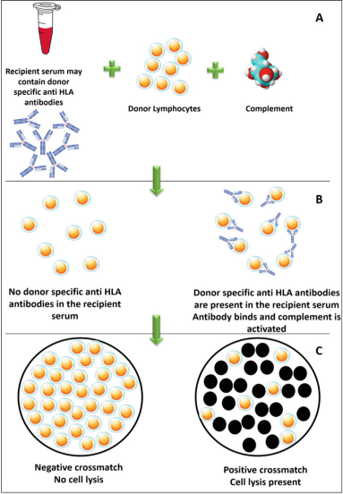
- Immunological Matching Innovation: The four-way paired swap utilized graph-theory-based optimization algorithms to match incompatible donor-recipient pairs simultaneously, circumventing positive complement-dependent cytotoxicity (CDC) cross-matches.
- Human Leukocyte Antigen (HLA) Complex: Evaluates Major Histocompatibility Complex (MHC) Class I (HLA-A, -B, -C) and Class II (HLA-DR, -DP, -DQ) genes on Chromosome 6, where higher allele matching minimizes acute allograft rejection.
- Overcoming ABO Blood Group Incompatibility: Paired exchange eliminates the necessity for high-risk, expensive desensitization protocols (such as plasmapheresis and rituximab) by matching blood group A, B, AB, and O pairs across different recipient-donor nodes.
- Panel Reactive Antibody (PRA) Screening: Employs Single Antigen Bead (SAB) Luminex assays to identify pre-existing donor-specific antibodies (DSA), determining calculated PRA scores for highly sensitized recipients.
- Normothermic Machine Perfusion (NMP): Organs during multi-center synchronized swaps are preserved using advanced normothermic machine perfusion circuits, pumping oxygenated red cells and nutrients to assess graft viability and reduce cold ischemia time.
- Digital Matching on Centralized NOTTO Platform: Integrates with NOTTO’s centralized allocation algorithm, ensuring tamper-proof, transparent mathematical matching without human discretion.
- Nodal Research & Clinical Coordination: Coordinated under the Indian Council of Medical Research (ICMR) and National Organ and Tissue Transplant Organisation (NOTTO).
- Biomedical & Healthcare Sovereignty: Broadens the living-donor transplant pool in India, reducing reliance on long deceased-donor waiting lists and significantly improving 10-year allograft survival rates.
(IE / TH)
INTERNAL SECURITY
Enforcement Directorate Intensifies Financial Asset Scrutiny Under PMLA’s Reverse Burden of Proof:
Context: The Enforcement Directorate (ED) executed multi-state financial attachment and search operations, underscoring the statutory mechanisms of ‘proceeds of crime’, Section 5 provisional attachments, and Section 24 evidentiary burdens under the Prevention of Money Laundering Act (PMLA), 2002.
-
- Enforcement Operations Peg: Multi-city search operations under Section 17 of PMLA in Delhi and Uttar Pradesh targeted shell companies, trusts, and illicit banking trails involved in laundering suspected public funds.
- Statutory Offence of Money Laundering: Section 3 of the PMLA, 2002 defines money laundering expansively to include any direct or indirect involvement in concealment, possession, acquisition, or use of ‘proceeds of crime’ and projecting it as untainted property.
- Scheduled / Predicate Offence Requirement: PMLA proceedings can only be initiated upon the foundation of a scheduled offence (listed under Part A, B, or C of the PMLA Schedule) registered by a primary law enforcement agency (Police, CBI, Customs).
- Provisional Attachment under Section 5: Empowers the Director or designated officers to issue provisional attachment orders of suspected properties for up to 180 days, subject to mandatory confirmation by the Adjudicating Authority under Section 8.
- Reverse Burden of Proof under Section 24: In a significant departure from standard criminal jurisprudence, Section 24 places the legal presumption and burden of proof upon the accused to prove that the alleged proceeds of crime are untainted.
- Admissibility of Statements under Section 50: Statements recorded before an ED Investigating Officer under Section 50 are deemed judicial proceedings and are legally admissible in court, as ED officers are not categorized as ‘police officers’ under Section 25 of the Indian Evidence Act / Bharatiya Sakshya Adhiniyam.
- Constitutional Validity in Vijay Madanlal Ruling: In Vijay Madanlal Choudhary v. Union of India (2022), the Supreme Court upheld the constitutional validity of PMLA provisions including twin bail conditions (Section 45), ECIR confidentiality, and Section 50 statements.
- Financial Action Task Force (FATF) Compliance: Aligns India’s anti-money laundering (AML) and countering the financing of terrorism (CFT) framework with FATF 40 Recommendations.
- Nodal Agency & Ministry: Directorate of Enforcement (ED), Department of Revenue, Ministry of Finance.
- Economic Security & Sovereign Integrity: Deters cross-border illicit financial flows, dismantles organized crime syndicates, and safeguards national financial stability.
(TH / IE)
MISCELLANEOUS
BRICS Environment Ministers Formally Reject European Union’s Carbon Border Adjustment Mechanism as Unilateral Green Trade Barrier:
Context: On August 19, 2026, the concluding declaration of the 12th BRICS Environment Ministers Meeting formally recorded unanimous opposition to the European Union’s Carbon Border Adjustment Mechanism (CBAM), characterizing unilateral carbon border tariffs as discriminatory measures violating international climate treaties.
-
- Joint Ministerial Declaration Peg: Ministers from BRICS member states (Brazil, Russia, India, China, South Africa, Egypt, Ethiopia, Iran, UAE, Saudi Arabia) jointly condemned unilateral cross-border carbon pricing instruments that penalize developing world manufacturing exports.
- Opposition to EU CBAM / Carbon Border Tax: The European Union’s CBAM imposes carbon tariffs on imports of energy-intensive goods (steel, aluminium, cement, fertilisers, electricity, hydrogen) entering the EU based on embedded emissions from 2026 onwards.
- Violation of UNFCCC CBDR-RC Principle: BRICS affirmed that unilateral trade measures violate the foundational principle of Common But Differentiated Responsibilities and Respective Capabilities (CBDR-RC) and Equity enshrined in Article 3.5 of the UNFCCC and the Paris Agreement.
- GATT 1994 & WTO Non-Discrimination: Developing nations highlighted that CBAM breaches General Agreement on Tariffs and Trade (GATT) principles, specifically Most Favoured Nation (Article I), National Treatment (Article III), and cannot be justified under GATT Article XX (General Exceptions) due to arbitrary extraterritorial discrimination.
- Economic Burden on Developing Nations: Estimates indicate CBAM will disproportionately impose billions of dollars in export tariffs on Global South producers who lack subsidized access to green hydrogen and renewable capital infrastructure.
- Call for Climate Finance Over Carbon Tariffs: Urged developed economies to fulfill their statutory obligations under the New Collective Quantified Goal (NCQG) on Climate Finance rather than erecting protectionist non-tariff barriers.
- Nodal Administrative Authorities: Ministry of Environment, Forest and Climate Change (MoEFCC) and Department of Commerce in diplomatic coordination with MEA.
- Global South Multilateral Solidarity: Unifies emerging economies against climate protectionism, defending fair multilateral trade while championing indigenous decarbonization pathways.
(IE / TH / PIB)
Spread the Word