
INDIAN POLITY & GOVERNANCE
Supreme Court Reaffirms Fundamental Right to Peaceful Protest and Contemplates Article 142 Relief for Students:
Context: A Supreme Court Bench headed by Chief Justice of India Surya Kant affirmed on August 18, 2026, that the fundamental right to protest and express peaceful dissent must be protected, indicating that the Court would consider invoking plenary powers under Article 142 to quash uncontroverted FIRs registered against student demonstrators.
-
- Constitutional Right to Peaceful Assembly: Article 19(1)(b) of the Constitution guarantees all citizens the fundamental right to assemble peacefully and without arms, subject only to reasonable restrictions under Article 19(3) on grounds of sovereignty, integrity, or public order.
- Judicial Rationale under Article 142: The Supreme Court highlighted that its extraordinary plenary jurisdiction under Article 142 (‘to do complete justice’) can be exercised to quash criminal proceedings and protect genuine students from disproportionate prosecution, distinguishing bona fide demonstrators from individuals with criminal antecedents.
- Proportionality in Police Action: Re-emphasized the constitutional doctrine of proportionality (Modern Dental College, 2016 and Puttaswamy, 2017), requiring that state enforcement measures during public demonstrations must be strictly necessary, least intrusive, and non-excessive.
- Precedents on Peaceful Dissent: Reaffirms landmark jurisprudence established in Anita Thakur v. Govt. of J&K (2016) and Mazdoor Kisan Shakti Sangathan (2018), where the apex court held that peaceful demonstration is an essential facet of participatory democracy.
- Supervisory & Investigative Directives: The Bench considered constituting a high-powered independent inquiry committee to examine allegations of excessive use of force, arbitrary detentions, and procedural non-compliance under the Bharatiya Nagarik Suraksha Sanhita (BNSS).
- Protection of Women & Vulnerable Demonstrators: The Court directed law enforcement authorities to ensure strict adherence to statutory arrest safeguards under Section 43 and Section 46 of the BNSS, preventing custodial abuse against female demonstrators and students.
- Balancing Public Order & Fundamental Freedoms: Acknowledged the legitimate sovereign duty of police personnel to protect public order while ensuring that administrative lapses do not lead to the chilling of constitutional democratic expression.
- Nodal Ministry & Law Enforcement Oversight: Public order and police are categorized under Entry 1 and Entry 2 of the State List (List II), with overarching national human rights and police reform oversight coordinated by the Ministry of Home Affairs (MHA).
- Constitutional Democracy Value: Upholds the sanctity of peaceful democratic dialogue, preventing the weaponization of criminal procedure against student citizens.
(TH / IE)
SOCIETY & SOCIAL JUSTICE
Central Government Assures Supreme Court on Full Validity of Existing Transgender Identity Cards:
Context: The Union Government gave a formal statutory assurance before a Supreme Court Bench headed by Chief Justice of India Surya Kant that all Transgender Identity Cards and Certificates issued under the Transgender Persons (Protection of Rights) Act, 2019 will continue to remain fully valid without requiring fresh re-certification under subsequent legislative amendments.
-
- Judicial Assurance Peg: Appearing before the Supreme Court on August 18, 2026, the Solicitor General clarified that existing Transgender Identity Certificates issued through the National Portal for Transgender Persons retain absolute legal validity and will not lapse or be invalidated.
- Statutory Framework under 2019 Act: Enacted under the Transgender Persons (Protection of Rights) Act, 2019, which prohibits discrimination against transgender persons in education, employment, healthcare, and public accommodations.
- Right to Self-Perceived Gender Identity: Section 4 of the 2019 Act recognizes the fundamental right of a transgender person to have their self-perceived gender identity acknowledged, codifying the historic Supreme Court mandate in NALSA v. Union of India (2014).
- Digital Certification via National Portal: Transgender certificates and identity cards are issued digitally without requiring physical appearance or mandatory surgical intervention through the National Portal for Transgender Persons, managed by the Ministry of Social Justice and Empowerment.
- Constitutional Protections: Anchored in the fundamental guarantees of equality before law (Article 14), prohibition of discrimination on grounds of sex/gender (Article 15), equality of opportunity in public employment (Article 16), and the right to life with human dignity (Article 21).
- SMILE Umbrella Scheme Linkage: Transgender beneficiaries holding valid identity cards gain direct access to the ‘SMILE’ (Support for Marginalized Individuals for Livelihood and Enterprise) scheme, including scholarship support, skill development, transgender shelter homes (‘Garima Greh’), and gender-affirmative health coverage under Ayushman Bharat.
- National Council for Transgender Persons (NCTP): Established as a statutory advisory body under Section 16 of the 2019 Act, chaired by the Union Minister for Social Justice and Empowerment, to monitor policies and address grievances.
- Nodal Administrative Ministry: Department of Social Justice and Empowerment, Ministry of Social Justice and Empowerment (MoSJE).
- Social Inclusion Impact: Prevents administrative harassment, protects bureaucratic continuity of legal gender recognition, and secures equal civic inclusion for India’s transgender community.
(TH / PIB)
INTERNATIONAL DEVELOPMENTS
India Hosts 12th BRICS Environment Ministers Meeting; Unveils Four Strategic Knowledge Compendiums:
Context: Under India’s BRICS 2026 Chairship, Union Minister for Environment, Forest and Climate Change Bhupender Yadav hosted the 12th BRICS Environment Ministers’ Meeting in New Delhi on August 18, 2026, unveiling four comprehensive knowledge compendiums on circular economy, forest fire management, coastal restoration, and Mission LiFE.
-
- Summit Milestone & Chairship Theme: The 12th BRICS Environment Ministers’ Meeting was convened at Bharat Mandapam, New Delhi, under India’s 2026 Chairship guided by the theme ‘Building Resilience and Innovation for Cooperation and Sustainability’.
- Launch of Four Knowledge Compendiums: Member nations jointly unveiled four knowledge products prepared by the BRICS Environment Working Group (EWG) covering: (1) Circular Economy & Resource Efficiency, (2) Sustainable Forest Management & Fire Control, (3) Coastal Ecological Restoration, and (4) Lifestyle for Environment (Mission LiFE).
- Voice of the Global South & Humanity First: India positioned the developmental priorities of the Global South at the center of the multilateral climate agenda, advocating for ‘Humanity First’, climate finance mobilization, and equitable technology transfer without green trade protectionism.
- Expansion of BRICS Geopolitical Footprint: Marks enhanced environmental policy coordination among both founding members (Brazil, Russia, India, China, South Africa) and newly integrated member states (including Egypt, Ethiopia, Iran, UAE, and Saudi Arabia).
- Mission LiFE Alignment: Promotes individual and community behavioral shifts towards demand-side environmental sustainability, integrating circular production models and resource recycling across emerging economies.
- Multilateral Convention Linkages: Reaffirms BRICS commitment to the United Nations Framework Convention on Climate Change (UNFCCC), the Paris Agreement (Common But Differentiated Responsibilities – CBDR-RC), and the Kunming-Montreal Global Biodiversity Framework.
- BRICS Joint Environmental Platform (JEP): Strengthens the operationalization of the BRICS Environmentally Sound Technology (BEST) Platform and the Clean Rivers Initiative to exchange localized technological solutions.
- Nodal Ministry: Ministry of Environment, Forest and Climate Change (MoEFCC) in institutional collaboration with the Ministry of External Affairs (MEA).
- Global Governance Impact: Elevates collective Global South bargaining power in multilateral climate negotiations, balancing environmental conservation with poverty eradication and energy access.
(PIB / TH)
ECONOMY
Commerce Ministry Releases Trade Pact Utilization Review Highlighting Surge in Preferential Exports:
Context: On August 18, 2026, the Ministry of Commerce and Industry released a comprehensive operational review titled ‘Signed, Sealed and Exporting’, highlighting accelerated utilization of India’s recent Free Trade Agreements (FTAs) including the India-UAE CEPA, India-Australia ECTA, and India-EFTA TEPA to drive merchandise exports toward $1 trillion by 2030.
-
- Trade Performance Review Peg: Official data released under the ‘Signed, Sealed and Exporting’ review showed a substantial jump in preferential export certificate issuance and double-digit growth in tariff-free shipments of gems & jewellery, engineering goods, textiles, and pharmaceuticals under active trade pacts.
- Active Trade Agreements Portfolio: Evaluated the operational impact of key bilateral and plurilateral pacts: Comprehensive Economic Partnership Agreement (CEPA) with UAE (2022), Economic Cooperation and Trade Agreement (ECTA) with Australia (2022), and the Trade and Economic Partnership Agreement (TEPA) with EFTA (Iceland, Liechtenstein, Norway, Switzerland – 2024).
- Rules of Origin & Value Addition Thresholds: Emphasizes strict enforcement of Rules of Origin (ROO) criteria (including Product Specific Rules – PSR and Change in Tariff Classification – CTC) to prevent third-party trade deflection and ensure genuine domestic value addition (DVA).
- Cushioning the Merchandise Trade Deficit: Preferential access to high-income markets provides crucial structural export diversification, counterbalancing elevated global crude oil prices (Brent crude crossing $91/barrel) and insulating the Current Account Deficit (CAD).
- Digital Trade Facilitation via e-CoO: Scaled up the electronic Certificate of Origin (e-CoO) portal, integrating customs systems via the National Single Window System (NSWS) to reduce administrative compliance transaction costs for MSME exporters.
- Review of Legacy FTAs (AITIGA & CEPA): Highlights ongoing negotiations for the comprehensive review of the ASEAN-India Trade in Goods Agreement (AITIGA) to eliminate non-tariff barriers and rectify inverted duty structures affecting domestic manufacturers.
- Foreign Trade Policy (FTP) 2023 Goals: Anchors India’s strategic roadmap to scale total exports to $2 trillion ($1 trillion merchandise and $1 trillion services) by 2030 through District Export Hubs, e-commerce exports, and trade settlement in Indian Rupees (INR).
- Nodal Department: Department of Commerce, Ministry of Commerce and Industry, in coordination with the Directorate General of Foreign Trade (DGFT) and the Central Board of Indirect Taxes and Customs (CBIC).
- Macroeconomic Significance: Enhances export competitiveness, deepens integration into Global Value Chains (GVCs), and strengthens India’s Balance of Payments resilience against external geopolitical shocks.
(PIB / BS / LM)
GEOGRAPHY
Raksha Mantri Flags Off NCC All-Girls High-Altitude Expedition Traversing Strategic Parang La Pass:
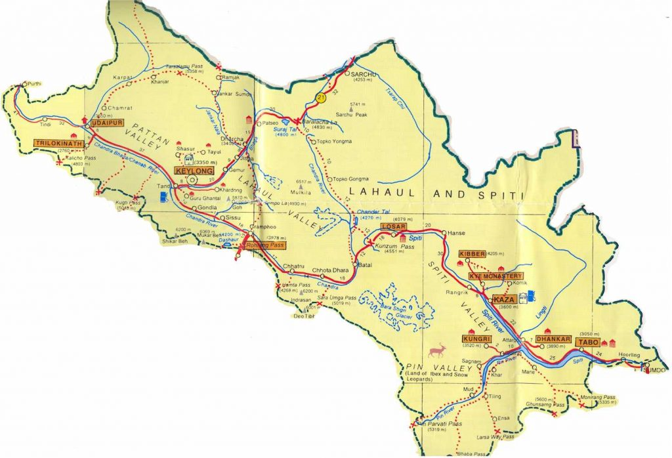
Context: On August 18, 2026, the Raksha Mantri flagged off the National Cadet Corps (NCC) All-India Girls High-Altitude Long Trek ‘Aparajita – Parang La 2026’, a 250-km expedition traversing the 5,578-metre (18,300 feet) Parang La Pass connecting the Spiti Valley of Himachal Pradesh with the Changthang plateau of Ladakh.

-
- Expedition Route & High-Altitude Benchmark: A 28-member all-girls NCC cadet team, led by women officers of the Army, Navy, and Air Force, commenced the 30-day, 250-km trek crossing the formidable Parang La Pass at an elevation of 5,578 metres (18,300 feet).
- Physiographic Linkage of Parang La: Parang La is a historic high-altitude mountain pass in the Trans-Himalayan Zanskar Range, serving as the traditional trade and migration route connecting Kaza/Kibber in the Spiti Valley (Himachal Pradesh) to Karzok village on the banks of Lake Tso Moriri in the Changthang plateau of Ladakh.
- Geomorphology of Spiti Valley: Characterized by cold desert terrain, permafrost, glaciated U-shaped valleys, and ancient sedimentary rock formations rich in marine fossils (the Spiti Shale formation of the Tethyan Himalaya).
- Drainage Dynamics of Pare Chu River: The trek traverses the remote gorge of the Pare Chu River—a unique transboundary Himalayan river that originates in Spiti, flows across the border into Tibet (China), and re-enters Indian territory in Ladakh before draining into Tso Moriri and the Spiti River basin.
- High-Altitude Wetland Ecosystem (Tso Moriri): Terminates near Tso Moriri, a designated Ramsar Wetland of International Importance situated at 4,522 metres, which provides a critical breeding ground for the endangered Black-necked Crane (Grus nigricollis) and Bar-headed Goose.
- Climatic & Glacial Hazards: Traverses steep moraines, crevasse-laden glaciers, and extreme cold environments subject to sudden blizzards, hypothermia risks, and Glacial Lake Outburst Floods (GLOFs).
- Strategic & National Integration Value: Reinforces border area awareness, geographical mapping, and national integration in border villages under the Vibrant Villages Programme (VVP).
- Nodal Organizations: National Cadet Corps (NCC), Directorate General of NCC under the Ministry of Defence, supported by the Indian Army High Altitude Warfare School (HAWS).
- Youth & Nari Shakti Projection: Showcases women-led extreme high-altitude exploration, developing endurance, disaster response skills, and physical fortitude in India’s frontier geography.
(PIB / TH)
SCIENCE & TECHNOLOGY
ISRO Prepares to Resume Satellite Launch Missions with Geo-Imaging Satellite GISAT-1A:
Context: The Indian Space Research Organisation (ISRO) announced preparations to resume orbital satellite launches with the upcoming launch of GISAT-1A (Geo-Imaging Satellite / EOS-03 replacement) aboard the GSLV-F12 launch vehicle from the Satish Dhawan Space Centre (SDSC-SHAR) in Sriharikota.
-
- Mission Objective & Launch Schedule: ISRO is scheduled to launch GISAT-1A (a state-of-the-art agile Earth Observation Satellite) into Geostationary Transfer Orbit (GTO) aboard the Geosynchronous Satellite Launch Vehicle (GSLV) equipped with an indigenous Cryogenic Upper Stage (CUS).
- Near Real-Time Geostationary Earth Observation: Operating from a fixed geostationary orbital slot at ~36,000 km altitude, GISAT-1A will provide continuous, high-temporal-resolution multispectral and hyperspectral imaging of the entire Indian landmass and surrounding oceans.
- Payload & Imaging Capabilities: Equipped with high-resolution multi-spectral cameras (visible and near-infrared) and a hyperspectral imager capable of capturing rapid synoptic images of cloud patterns, cyclone genesis, and land surface transformations every 30 minutes.
- Disaster Management & Early Warning: Delivers near real-time operational imagery for tracking severe weather anomalies, tropical cyclones in the Bay of Bengal and Arabian Sea, forest fires, flash floods, and cloudburst monitoring.
- Border Surveillance & Strategic Domain Awareness: Enhances national security through continuous monitoring of border frontiers, line of actual control (LAC) corridors, and maritime exclusive economic zones (EEZ).
- Cryogenic Upper Stage (CUS-12) Propulsion: Powered by the indigenously developed CE-7.5 cryogenic engine, utilizing liquid hydrogen (LH2) and liquid oxygen (LOX) at cryogenic temperatures to deliver high specific impulse in the vacuum of space.
- Launch Complex Infrastructure: Managed from the Satish Dhawan Space Centre (SDSC-SHAR), Sriharikota, under the operational umbrella of the Department of Space (DoS).
- Space Economy & Commercial Applications: Complements NewSpace India Limited (NSIL) and IN-SPACe initiatives to facilitate commercial geospatial downstream applications for agriculture, urban planning, and mineral exploration.
- Technological Sovereignty: Re-establishes India’s sovereign high-resolution geostationary imaging capabilities, ensuring continuous optical observation without reliance on foreign commercial satellite constellations.
(IE / TH)
INTERNAL SECURITY
Defence Ministry Notifies 6th Positive Indigenisation List of 405 Strategic Military Items:
Context: On August 18, 2026, the Department of Defence Production (DDP), Ministry of Defence, notified the 6th Positive Indigenisation List (PIL) comprising 405 strategically important defence items worth an estimated business potential of ₹3,070 crore, enforcing phased import embargoes to foster self-reliance under ‘Aatmanirbhar Bharat’.
-
- Notification Peg & Economic Scale: The Department of Defence Production (DDP) notified the 6th PIL containing 405 critical items (389 items for Defence Public Sector Undertakings – DPSUs and 16 items for the Indian Coast Guard), creating domestic procurement opportunities worth ₹3,070 crore.
- Item Profile & Technical Categorization: Encompasses complex Line Replaceable Units (LRUs), sub-systems, sub-assemblies, electronic components, radars, sonars, satellite communications, and High-Explosive Anti-Tank (HEAT) munitions.
- Coverage of Major Defense Platforms: Targets domestic indigenization across air platforms (ALH, LUH, Su-30MKI, LCA Tejas, and AL-31FP aero-engines), armored combat vehicles (T-72, T-90 Bhishma, and BMP-II), frontline warships, and missile systems (MRSAM, Konkurs-M, Invar).
- Phased Import Embargo Timelines: Imposes progressive, legally binding embargo dates beyond which the Armed Forces, DPSUs, and Indian Coast Guard are statutorily prohibited from procuring the listed items from foreign Original Equipment Manufacturers (OEMs).
- SRIJAN Defence Portal Integration: All 405 items are hosted on the SRIJAN Portal (srijandefence.gov.in), which has offered over 33,000 defense items to private domestic industry, MSMEs, and startups since its launch in 2020.
- Import Substitution Track Record: Over 15,700 defense items have been successfully indigenized under previous PILs over the last five years, generating domestic import substitution value exceeding ₹9,000 crore.
- Defence Acquisition Procedure (DAP 2020) Synergy: Integrates with the ‘Make-I’ (government-funded) and ‘Make-II’ (industry-funded) procurement routes and the Technology Development Fund (TDF) managed by DRDO.
- Nodal Ministry & Policy Wing: Formulated by the Department of Defence Production (DDP), Ministry of Defence (MoD).
- Strategic Defense Sovereignty: Shields India’s armed forces from vulnerable foreign supply chain chokepoints, insulates critical weapon systems against geopolitical embargoes, and transitions India into a global defense hardware manufacturing hub.
(PIB / TH)
MISCELLANEOUS
Supreme Court Issues Comprehensive National Directives on the Healthcare and Upkeep of Captive Elephants:
Context: In a landmark welfare ruling delivered on August 18, 2026, a Supreme Court Bench headed by Chief Justice of India Surya Kant issued nationwide mandatory directives for the establishment of specialized elephant clinics, periodic veterinary health audits, and stringent transfer regulations for captive elephants across India.
-
- Judicial Ruling Peg: A three-judge Supreme Court Bench headed by CJI Surya Kant, Joymalya Bagchi, and V. Mohana passed comprehensive welfare directives in Wildlife Rescue and Rehabilitation Centre v. Union of India, ruling that respect for temple traditions and divinity must extend equally to the physical health and humane care of captive elephants.
- Mandatory Elephant Clinics & Health Audits: Directed the Union Government and States to establish specialized, well-equipped ‘Elephant Clinics’ and made it legally compulsory for all captive elephant owners (temple trusts, private owners, circuses, and zoos) to subject elephants to periodic veterinary health examinations and maintain digital medical logbooks.
- Statutory Status under Wildlife (Protection) Act, 1972: The Asian Elephant (Elephas maximus) is classified as a Schedule I species under the Wildlife (Protection) Act, 1972, according it the highest level of legal protection against commercial trade, hunting, and exploitation.
- Captive Elephant Transfer Rules, 2024 Compliance: The Court ruled that inter-state or intra-state transportation of captive elephants is prohibited unless fully documented in accordance with statutory transfer rules, requiring prior genetic profiling, microchipping, and Chief Wildlife Warden approvals.
- Institutional Role of Project Elephant & Welfare Committees: Directed the Captive Elephant Health Care and Welfare Committee constituted under Project Elephant (launched in 1992 by MoEFCC) to audit captive elephant rehabilitation centers and submit periodic compliance status reports.
- Prevention of Cruelty to Animals Act, 1960: Enforces provisions under the Prevention of Cruelty to Animals Act, 1960, penalizing the use of spiked hobbles, heavy chaining, overworking during festival processions, and dehydration.
- IUCN & CITES International Status: The Asian Elephant is listed as Endangered on the IUCN Red List of Threatened Species and included in Appendix I of the Convention on International Trade in Endangered Species of Wild Fauna and Flora (CITES).
- Nodal Ministries & Statutory Wings: Coordinated by the Ministry of Environment, Forest and Climate Change (MoEFCC), State Forest Departments, and the Animal Welfare Board of India (AWBI).
- Bio-Ethical & Conservation Balance: Reconciles cultural and religious traditions with compassionate bio-ethics, setting a progressive national precedent for humane non-human animal rights and wildlife protection in India.
(TH / IE)
Spread the Word