
Indian Polity & Governance
Centre Issues Notice to Meta on Algorithmic Amplification of CSAM:
Context: The Ministry of Electronics and Information Technology (MeitY) ordered Meta Platforms Inc. to immediately disable all Instagram advertisements and algorithmic loops promoting Child Sexual Exploitation and Abuse Material (CSAM), citing violations that threaten its “safe harbour” protection.
-
- Dynamic Context: MeitY invoked emergency regulatory powers following an investigative report showing that algorithmic search optimizations on Instagram served paid advertisements redirecting users to illegal material.
- Safe Harbour Principle: Safe harbour is a legal provision protecting Intermediaries (like Meta, Google) from liability for third-party data or content hosted by them.
- Section 79 of the IT Act, 2000: Under Indian law, Section 79 provides this safe harbour shield, provided the intermediary maintains due diligence and expeditiously removes content upon receiving actual knowledge from government agencies.
- IT Rules, 2021 Linkage: The Information Technology (Intermediary Guidelines and Digital Media Ethics Code) Rules, 2021 mandate that intermediaries must remove CSAM or non-consensual nude images within 24 hours of a complaint.
- Grievance Redressal Mechanism: Intermediaries are statutorily required to appoint a Chief Compliance Officer, a Nodal Contact Person (24×7 coordination), and a Resident Grievance Officer, all residing in India.
- POCSO Act Connection: The Protection of Children from Sexual Offences (POCSO) Act, 2012 criminalizes the creation, storage, or distribution of CSAM, making it mandatory for platforms to report such materials.
- Algorithmic Liability: A growing legal shift in India highlights that when a platform’s recommendation engine promotes content via paid ads, it moves from a passive intermediary to an active publisher, nullifying Section 79 protection.
- The WhatsApp Username Twist: Concurrently, MeitY directed Meta to halt its WhatsApp username feature roll-out to safeguard against alphanumeric impersonation frauds under Section 66D of the IT Act (punishment for cheating by personation using computer resource).
- Global Alignment: This regulatory push aligns India with recent global child protection architectures like the UK Online Safety Act and Australia’s Online Safety Act.
- If an intermediary loses “safe harbour,” it can be prosecuted under the Indian Penal Code (now Bharatiya Nyaya Sanhita, BNS) and the POCSO Act as an abettor to the crime.
(TH/IE)
Ministry of Cooperation Celebrates 5th Foundation Day at Bharat Mandapam:
Context: On July 6, 2026, the Ministry of Cooperation marked its 5th Foundation Day at Bharat Mandapam, New Delhi, under the national theme “Sahakar Se Samriddhi” (Prosperity through Cooperation).
-
- Dynamic Context: The Ministry reviewed its flagship program of computerizing all Primary Agricultural Credit Societies (PACS) and launching the world’s largest cooperative grain storage plan in the cooperative sector.
- Creation of the Ministry: The dedicated Ministry of Cooperation was carved out on July 6, 2021, to streamline the cooperative movement, provide a separate administrative and legal framework, and improve the ease of doing business for multi-state cooperatives.
- Constitutional Status of Cooperatives: The 97th Constitutional Amendment Act of 2011 gave constitutional status and protection to cooperative societies in India.
- Article 19(1)(c): It made the right to form cooperative societies a Fundamental Right.
- Article 43B: Inserted into the Directive Principles of State Policy (DPSP), it directs the State to promote voluntary formation, autonomous functioning, democratic control, and professional management of cooperative societies.
- Part IXB added: The amendment added Part IXB to the Constitution, detailing the running of cooperative societies (Articles 243ZH to 243ZT).
- The Supreme Court’s Federalism Strike (2021): In Union of India v. Rajendra N. Shah, the SC struck down parts of Part IXB related to state cooperative societies because the amendment wasn’t ratified by half the state legislatures. Consequently, Part IXB now applies exclusively to Multi-State Cooperative Societies (MSCS).
- Seventh Schedule Allocation: “Cooperative Societies” is a subject under Entry 32 of the State List (List II) of the Seventh Schedule. However, “Multi-State Cooperative Societies” with objects not confined to one state fall under Entry 44 of the Union List (List I).
- What are PACS? Primary Agricultural Credit Societies are the grassroots, village-level institutions in the three-tier short-term cooperative credit structure in India, providing direct short-term crop loans to farmers.
- The administrative control of a cooperative society operating within a single state lies entirely with that state’s Registrar of Cooperative Societies, completely independent of the Central Ministry of Cooperation.
(PIB)
International Relations
9th Round of India-Peru Trade Agreement Concluded in Lima:
Context: Negotiators from India and Peru successfully concluded the 9th round of discussions for a Comprehensive Free Trade Agreement (FTA) in Lima, Peru, looking to diversify supply chains beyond the Asia-Pacific region.
-
- The talks focused on reducing tariff barriers for Indian pharmaceuticals, automobiles, and machinery, while Peru sought deeper market access for its minerals (gold, copper) and agricultural exports.
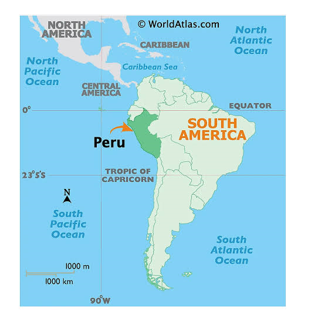
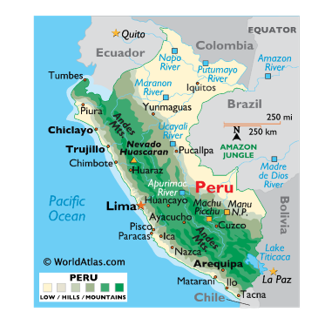
- Peru is situated on the western coast of South America. It is split into three main geographic zones: the Costa (dry desert coast), the Sierra (high Andes mountains), and the Amazonia (Amazon basin tropical rainforest).
-
- Highest Peak & Rivers: Its highest point is Mount Huascaran (6,768 m) in the Cordillera Blanca. Major river systems include the Ucayali and Maranon, which converge to form the Amazon River.
- Lake Titicaca: Located on the border of Peru and Bolivia in the Andes, it is renowned as the world’s highest navigable lake and South America’s largest freshwater lake by volume.
-
- The Atacama-Sechura Desert System: The Peruvian coast is dominated by the Sechura Desert, kept hyper-arid by the cold Humboldt (Peru) Ocean Current which suppresses precipitation.
- Peru is among the world’s top producers of copper, silver, and gold. For India, sourcing gold and critical minerals from Peru is crucial for domestic electronics manufacturing and clean energy transition.
- Trade Complementarity: India exports high-value manufactured items, textiles, and generic drugs to Peru, while importing raw commodities, creating a highly complementary trade profile.
- Rules of Origin: A sticky point in the FTA negotiations is the “Rules of Origin” the criteria needed to determine the national source of a product, ensuring third-party nations (like China) don’t route goods through Peru into India at lower duties.
- Peru is a founding member of the Pacific Alliance (alongside Chile, Colombia, and Mexico). Engaging deeply with Peru gives India an institutional gateway into the wider Latin American market.
- The cold Humboldt Current off Peru’s coast causes a massive marine upwelling system, making it one of the richest commercial fishing grounds on the planet, heavily influenced by El Niño southern oscillation cycles.
(PIB)
Economy
India-Israel Bilateral Investment Agreement (BIA) Enters into Force:
Context: The Ministry of Finance announced that the newly renegotiated India–Israel Bilateral Investment Agreement (BIA) formally entered into force on July 4, with implementation protocols commencing nationwide on July 6, 2026.
-
- Replacing an older, scrapped treaty, this BIA introduces a modern regulatory equilibrium designed to protect Israeli deep-tech and agritech capital investments while shielding India from predatory international litigation.
- The Shift in India’s BIT Strategy (Static Linkage): Following a wave of adverse international arbitration rulings (e.g., Vodafone, Cairn Energy) under older Bilateral Investment Treaties (BITs), India unilaterally terminated over 70 legacy treaties and issued a strict 2015 Model BIT.
- The “Exhaustion of Local Remedies” Clause: A central feature of India’s new treaties (including this Israel BIA) is that foreign investors must exhaust all domestic judicial and administrative remedies for at least 5 years before they can approach an international tribunal.
- Definition of ‘Investment’: Unlike older treaties that used a broad, asset-based definition, the new framework adopts an enterprise-based definition, meaning protection is granted only to real, operational businesses with long-term capital deployment in India, excluding short-term hot money.
- Exclusion of Taxation Matters: The BIA explicitly removes taxation, subsidies, government procurement, and national security measures from the scope of international arbitration, preventing foreign firms from challenging India’s sovereign tax policies.
- Most Favoured Nation (MFN) Clause Omission: To avoid “treaty shopping” where an investor uses favourable provisions from a third-party country’s treaty, India has structurally omitted or heavily restricted the traditional MFN clause in its recent BIAs.
- Investor-State Dispute Settlement (ISDS): Under the old model, companies could sue the Indian government directly at the International Centre for Settlement of Investment Disputes (ICSID). The new BIA heavily regulates ISDS pathways to preserve domestic policy space.
- Israel’s Investment Footprint: Israeli capital inflows in India are heavily concentrated in drip-irrigation systems (e.g., Mifalot models), semiconductor design centers, defense sub-component manufacturing, and desalination technologies.
- Fair and Equitable Treatment (FET): The treaty clarifies that FET provisions are tied strictly to customary international law standards regarding denial of justice, rather than open-ended interpretations by foreign tribunals.
- India is not a member of the World Bank’s International Centre for Settlement of Investment Disputes (ICSID) convention, on the grounds that its arbitration rules are structurally tilted in favour of developed-nation investors.
(IE)
Geography
Low-Pressure Area Over Bay of Bengal Intensifies into a Depression:
Context: On July 5, 2026, the India Meteorological Department (IMD) tracked a well-marked low-pressure area over the Bay of Bengal that rapidly intensified into a monsoon depression, making landfall between Chandbali (Odisha) and Digha (West Bengal).
-
- The system generated heavy precipitation across eastern India, prompting red and orange alerts, while simultaneously pulling the monsoon trough southwards to trigger active monsoon conditions over Maharashtra and Kerala.
- Mechanism of a Monsoon Depression: These are low-pressure systems over the Indian seas (predominantly the Bay of Bengal) that act as the primary rain-bearing engines of the Southwest Monsoon.
- Baroclinic Instability: Unlike tropical cyclones, monsoon depressions develop in environments with high vertical wind shear and are driven by baroclinic energy (temperature gradients) combined with latent heat release.
- IMD Criteria for Depression: A low-pressure area upgrades to a ‘Depression’ when the wind speed associated with the cyclonic circulation touches 17 to 27 knots (31 to 51 km/h).
- Spatial Tracks: They generally move west-northwestwards along the monsoon trough line, distributing rainfall across the Indo-Gangetic plains and Central India.
- The Role of Sea Surface Temperatures (SST): Anomalously high SSTs in the Bay of Bengal amplify evaporation rates, giving the system a higher core moisture budget and increasing the threat of sudden cloudbursts.
- Monsoon Trough Alignment: The positioning of the monsoon trough an elongated low-pressure zone extending from NW India to the Bay of Bengal determines whether the depression will cause widespread rain or dry spells.
- IMD Color-Coded Alerts: IMD uses four color codes: Green (No warning), Yellow (Be aware), Orange (Be prepared/updated), and Red (Take action/extreme threat).
- Geographical Landfall Sites: Chandbali (Odisha) and Digha (West Bengal) are located on the unstable, dynamic deltaic coastlines of eastern India, making them highly prone to storm surges.
- While tropical cyclones require low vertical wind shear to develop, monsoon depressions form despite high vertical wind shear because they are rooted within the broader tropical easterly jet stream.
(TH)
Ecology & Environment and DM
Discovery of New Plant Species ‘Canscora agni’ on Sus Hill:
Context: Researchers discovered a unique, fire-resilient plant species named Canscora agni located on Sus Hill within the Pune district of Maharashtra.
-
- Named Canscora agni due to its evolutionary adaptation to the recurrent, fire-prone micro-savanna patches of the Western Ghats’ eastern spurs.
- It belongs to the family Gentianaceae, a group of flowering plants known for possessing bioactive compounds often utilized in traditional pharmacology.
- Habitat Profile: Sus Hill is an urban basaltic plateau. These plateaus (locally called Sadas) exhibit extreme seasonal variations completely dry in summer and highly flushed with ephemeral flora in the monsoons.
- Pyrophytic Adaptation: The plant has evolved thick, woody rootstocks or specific seed-dormancy traits that allow it to withstand low-intensity grass fires, a trait rare among small herbs in Western India.
- Micro-Endemism: Basaltic plateaus of the Northern Western Ghats are hotspots for micro-endemism (species restricted to an extremely narrow geographic range), making them highly vulnerable to habitat fragmentation.
- The Threat Matrix: The primary threats to Canscora agni are infrastructure sprawl, invasive grass species, and unchecked stone-quarrying on the fringes of Pune.
- IUCN Assessment Criteria: Due to its restricted occupancy (found only in specific pockets of Sus Hill), researchers are proposing it to be classified as ‘Critically Endangered’ under the IUCN Red List criteria.
- Western Ghats Ecology: The Western Ghats is one of the four globally recognized Biodiversity Hotspots in India (the others being the Himalayas, Indo-Burma, and Sundaland).
- Gadgil vs. Kasturirangan Committees: Protection of these fragile plateau ecologies was a central bone of contention in the Madhav Gadgil (Western Ghats Ecology Expert Panel) and K. Kasturirangan reports on demarcating Ecologically Sensitive Areas (ESAs).
- Basaltic rock outcroppings (Sadas) look barren in summer, but they hold the highest density of endemic herbaceous plants in India, which complete their lifecycle rapidly during the monsoon months (ephemerals).
(TH)
Launch of ‘Swachh Hawa, Swasth Delhi’ Air Mitigation Action Plan:
Context: The Government of Delhi unveiled the comprehensive ‘Swachh Hawa, Swasth Delhi’ plan, a ₹8,300 crore, seven-year air pollution mitigation roadmap executed with technical and financial structural adjustment assistance from the World Bank.
-
- Commencing field implementation on July 6, 2026, the plan shifts the focus from emergency reactive steps (like the odd-even scheme) to structural airshed management, aiming to cut PM2.5 and PM10 concentrations by 45% over seven years.
- The Airshed Approach: An “airshed” refers to a geographical area where local topography and meteorological conditions trap or disperse pollutants uniformly. Pollution cannot be managed by political borders alone; it requires regional coordination across the entire Indo-Gangetic airshed (Delhi, Punjab, Haryana, UP).
- National Clean Air Programme (NCAP) Alignment: This plan is synchronized with India’s broader NCAP (launched in 2019), which aims to achieve a 20% to 30% reduction in particulate matter concentrations across designated non-attainment cities.
- The Graded Response Action Plan (GRAP): Delhi already operates under GRAP, a layered series of emergency institutional measures triggered sequentially depending on the severity of air quality degradation (Moderate-to-Poor, Very Poor, Severe, and Severe Plus).
- The CAQM Statutory Framework: Air pollution policy in the national capital region is overseen by the Commission for Air Quality Management (CAQM) in National Capital Region and Adjoining Areas, a powerful statutory body created in 2021 that supersedes all other state boards.
- Key Intervention – Secondary Organic Aerosols (SOA): A core technical focus of the new 7-year plan is suppressing secondary organic aerosols pollutants that form in the atmosphere through chemical reactions of volatile organic compounds (VOCs) emitted from vehicles and chemical plants.
- Transition to Green Infrastructure: The roadmap mandates replacing all municipal public transport buses with electric vehicles (EVs) by 2030 and installing mechanical dust-sweeping networks on all major traffic corridors.
- The Paddy Straw Management Pivot: Ahead of the winter season, the plan funds the localized deployment of bio-decomposers (like the Pusa bio-decomposer capsules developed by ICAR) to break down crop residue in situ, mitigating the stubble-burning spike.
- Financing via Carbon Credits: A portion of the World Bank-backed project will be amortized by issuing sovereign-backed carbon credits under India’s newly operationalized Carbon Credit Trading Scheme (CCTS).
- The Air (Prevention and Control of Pollution) Act, 1981, empowers State Pollution Control Boards to declare air pollution control areas and ban specific industrial fuels, establishing the legal foundation for municipal action plans.
(TH)
Science & Technology
ICMR’s ‘Medical Innovations Patent Mitra’ Platform:
Context: The National Medical Commission (NMC) issued an official advisory directing all medical colleges and bio-medical institutes across India to adopt the Indian Council of Medical Research’s (ICMR) ‘Medical Innovations Patent Mitra’ platform.
-
- The platform has been scale-up to offer 100% government-funded support for patent drafting, filing, and technology transfer for advanced biomedical research originating from indigenous labs.
- Platform Objective: It serves as an end-to-end handholding mechanism to convert clinical insights and academic medical research into commercialized, protected health technologies.
- NITI Aayog Collaboration: The initiative is executed in tandem with NITI Aayog, the Department of Pharmaceuticals (DoP), and is structurally supported by the DPIIT.
- Indian Patents Act, 1970: Patents in India are regulated under the Patents Act, 1970 (amended in 2005 to introduce product patents for pharmaceuticals).
- Section 3(d) Exclusion: Section 3(d) of the Indian Patent Act prevents the “evergreening” of patents by disallowing the patenting of a new form of a known substance unless it shows significantly enhanced therapeutic efficacy.
- TRIPS Agreement Alignment: The Patent Mitra platform aligns with India’s commitments under the WTO’s Trade-Related Aspects of Intellectual Property Rights (TRIPS) agreement while utilizing public health flexibilities.
- Under Section 84 of the Patents Act, India can issue compulsory licenses for patented medicines during public health emergencies to allow domestic production of cheaper generics.
- Technology Transfer Model: Patent Mitra acts as an intermediary between public medical universities and private pharmaceutical companies to ensure seamless commercialization.
- Funding Mechanism: Unlike traditional routes where institutions bear patent maintenance costs, this platform absorbs the entire lifecycle cost of domestic filing for selected public research.
- The Controller General of Patents, Designs and Trade Marks (CGPDTM), which regulates patents in India, falls under the Ministry of Commerce and Industry (DPIIT), not the Ministry of Health or Ministry of Science and Technology.
(PIB)
Internal Security
India Hosts BRICS Heads of Anti-Drug Agencies Meeting in Guwahati:
Context: Under India’s BRICS Chairship for 2026, the Narcotics Control Bureau (NCB) hosted the high-level BRICS Heads of Anti-Drug Agencies Meeting in Guwahati, Assam, starting July 6, 2026.
-
- The summit focused on combating the darknet-enabled maritime synthetic drug trade and mapping the influx of precursor chemicals across global illicit supply chains.
- The meeting prioritized tackling the drug syndicates operating via the Golden Triangle and the Golden Crescent, using the Northeast region as a key monitoring transit post.
- The Two Drug Corridors: India is geographically wedged between the world’s two largest illicit opium-producing zones: The Golden Crescent (Iran, Afghanistan, Pakistan) to the west, and the Golden Triangle (Myanmar, Laos, Thailand) to the east.
- Narcotics Control Bureau (NCB) Profile: Established in 1986 under the Narcotic Drugs and Psychotropic Substances (NDPS) Act, 1985, the NCB is India’s premier coordinating and enforcement agency for drug laws.
- Constitutional Mandate: Article 47 of the Directive Principles of State Policy (DPSP) explicitly directs the State to endeavor to bring about the prohibition of the consumption, except for medicinal purposes, of intoxicating drinks and of drugs which are injurious to health.
- The NDPS Act, 1985 (Strict Provisions): The act criminalizes the cultivation, production, possession, sale, purchase, and consumption of narcotic drugs. It features a stringent bail provision (Section 37), where the court must be satisfied that there are reasonable grounds to believe the accused is not guilty.
- International Conventions India Ratified: India is a signatory to the UN Convention on Narcotic Drugs (1961), the UN Convention on Psychotropic Substances (1971), and the UN Convention Against Illicit Traffic in Narcotic Drugs and Psychotropic Substances (1988).
- The Darknet and Crypto Nexus: A major focus area of BRICS anti-drug agencies is the deployment of Artificial Intelligence and blockchain analytics to disrupt anonymized marketplaces operating on Tor networks.
- SIMS Portal Concept: Domestically, India utilizes the Seizure Information Management System (SIMS), an online database maintained by the NCB for digitizing all drug seizure records across central and state law enforcement agencies.
- Despite its sweeping powers over narcotics enforcement, the NCB is administratively positioned under the Ministry of Home Affairs (MHA), not the Ministry of Health and Family Welfare or Finance.
(IE/PIB)
Spread the Word