
International Relations
PM’s State Visit to Seychelles & Vision MAHASAGAR:
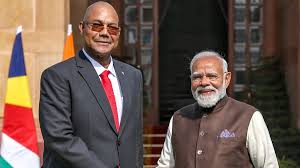
Context: PM Modi embarked on a historic three-day state visit to Seychelles (June 27–29, 2026) to attend the Golden Jubilee celebrations of Seychelles’ National Day as the Guest of Honour, marking the 50th anniversary of bilateral diplomatic relations.
-
- Historic address: The visit marks the first time an Indian Prime Minister will address the National Assembly of Seychelles.
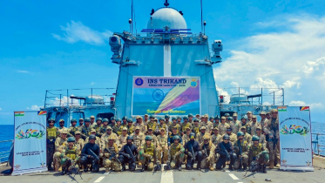
- Vision MAHASAGAR: Launched by the Indian Navy, MAHASAGAR stands for Mutual and Holistic Advancement for Security and Growth Across Regions. It is India’s institutional framework for high-level maritime interactions with Indian Ocean Littoral states.
-
- SAGAR vs. MAHASAGAR: While SAGAR (Security and Growth for All in the Region, 2015) is the overarching philosophical foreign policy doctrine, MAHASAGAR acts as an operational naval security mechanism to secure sea lines of communication (SLOCs).
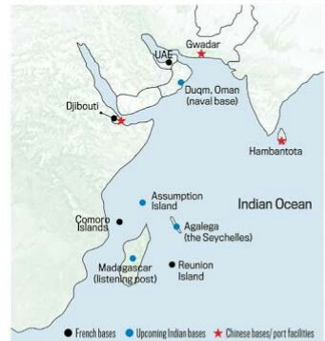
- Geographic location: Seychelles is an archipelago nation consisting of roughly 115 islands located in the western Indian Ocean, northeast of Madagascar and east of mainland Africa.
- Strategic base (assumption island): In 2015, India and Seychelles signed an agreement to jointly develop a naval facility on Seychelles’ Assumption Island to combat piracy and secure the Mozambique Channel.
-
- Joint military exercise: Lamitiye (meaning ‘Friendship’ in Creole) is the biennial joint military exercise conducted between the Indian Army and the Seychelles Defence Forces (SDF).
- Exclusive Economic Zone (EEZ) security: India has routinely gifted interceptor boats, naval fast attack crafts (FACs), and Dornier maritime surveillance aircraft to Seychelles to patrol its massive 1.3 million sq km EEZ.
- Indian Ocean Rim Association (IORA): Both India and Seychelles are active members of IORA, an intergovernmental organization established in 1997 to foster regional economic cooperation and maritime safety.
- Coastal Surveillance Radar System (CSRS): India has set up a functional network of operational radar stations across the islands of Seychelles to provide real-time Maritime Domain Awareness (MDA).
- The creole connection: A significant portion of the Seychelles population belongs to the Indo-Seychellois community, acting as a historical “living bridge” tracing back to plantation labourers shipped from South India during the colonial era.
(PIB+TH)
Economy
MSME Day 2026 & “Udyami Bharat” Platform Upgrades:
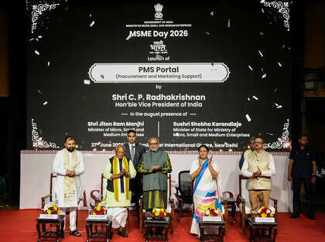
Context: The Vice President of India presided over the MSME Day 2026 – Udyami Bharat event at the Dr. Ambedkar International Centre, New Delhi, marking the annual United Nations MSME Day with the launch of several digital infrastructure upgrades.
-
- Statutory Criteria (MSMED Act, 2006): In India, MSMEs are defined under the Micro, Small and Medium Enterprises Development Act. The current composite criteria combine investment in plant/machinery and annual turnover:
- Micro: Investment up to ₹1 crore; Turnover up to ₹5 crores.
- Small: Investment up to ₹10 crores; Turnover up to ₹50 crores.
- Medium: Investment up to ₹50 crores; Turnover up to ₹250 crores.
- NSIC Upgrade: The National Small Industries Corporation (NSIC) was officially upgraded from a Schedule ‘B’ to a Schedule ‘A’ Central Public Sector Enterprise (CPSE), enhancing its financial and operational autonomy.
- Udyam registration portal: A fully paperless, self-declaration-based digital portal launched in 2020 that issues a permanent registration number and an “Udyam Registration Certificate” integrated with Income Tax and GSTIN systems.
- RAMP scheme: Raising and Accelerating MSME Performance (RAMP) is a World Bank-assisted Central Sector Scheme launched to improve access to markets, strengthen institutions, and enhance center-state MSME collaborations.
- CHAMPIONS portal: Standing for Creation and Harmonious Application of Modern Processes for Increasing the Output and National Strength, it is an ICT-based grievance redressal and handholding management system utilizing AI and machine learning.
- SAMBANDH & SAMADHAAN Portals:
- MSME Sambandh: Monitors the mandatory public procurement policy (minimum 25% from MSMEs by Central Ministries/CPSEs).
- MSME Samadhaan: Empowers micro and small entrepreneurs to file cases directly against delayed payments by buyers.
- Economic weight: The MSME sector is known as the “backbone of the Indian economy,” contributing roughly 30% to India’s GDP, over 45% to total manufacturing exports, and employing over 11 crore individuals.
- Emergency Credit Line Guarantee Scheme (ECLGS): Originally launched under the Atmanirbhar Bharat Abhiyan, it provides 100% collateral-free credit guarantees to financial institutions for extending emergency credit lines to stressed MSMEs.
- Priority Sector Lending (PSL) Linkage: Bank loans extended to Micro, Small, and Medium Enterprises are eligible for classification under the Priority Sector Lending guidelines issued by the Reserve Bank of India (RBI).
- Trade Receivables Discounting System (TReDS): An institutional institutionalized electronic platform authorized by the RBI that facilitates the discounting of trade receivables of MSMEs from corporate buyers through multiple financiers.
- Statutory Criteria (MSMED Act, 2006): In India, MSMEs are defined under the Micro, Small and Medium Enterprises Development Act. The current composite criteria combine investment in plant/machinery and annual turnover:
(PIB)
Geography
India Launches “Operation Amistad” for Venezuela:
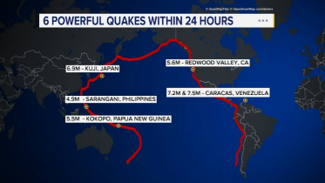
Context: India officially deployed two Indian Air Force (IAF) C-17 Globemaster aircraft under Operation Amistad to carry out a Humanitarian Assistance and Disaster Relief (HADR) mission to Venezuela following catastrophic 7.2 and 7.5 magnitude earthquakes.

-
- The mission scope: The operation delivered over 35 tons of emergency relief supplies, 6 tons of critical medical equipment, and an Indian Army field hospital unit (from the 60 Para Field Hospital).
- BHISHM Cubes: The mission successfully deployed two BHISHM (Bharat Health Initiative for Sahyog Hita and Maitri) Cubes, the world’s most compact, modular, AI-aided portable trauma hospital units designed under Project BHISHM.
- 60 para field hospital: This elite airborne medical unit of the Indian Army holds historical significance, having served globally in humanitarian crises, including the 1950 Korean War and the 2023 Turkey earthquake (Operation Dost).
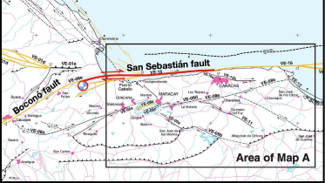
- Seismology of Venezuela: Venezuela is highly prone to earthquakes due to its location over the active boundary between the Caribbean Plate and the South American Plate, characterized by major strike-slip fault lines (Boconó, San Sebastián, and El Pilar).
-
- Bocono fault system: This structural lineament runs diagonally through the Venezuelan Andes and is historically responsible for the nation’s most destructive tectonic events.
-
- Geographic mapping: Venezuela is located on the northern coast of South America, bordered by Colombia to the west, Guyana to the east, and Brazil to the south. Its northern boundary is the Caribbean Sea.
- Orinoco river basin: Running through Venezuela, the Orinoco is one of the longest rivers in South America. The basin holds the Orinoco Belt, one of the world’s largest deposits of extra-heavy crude oil.
- Angel falls: Located in the Guiana Highlands of southeastern Venezuela, it is the world’s highest uninterrupted waterfall, dropping from the Auyán-tepui tabletop mountain into the Churun River.
- Bilateral diplomatic history: India and Venezuela established diplomatic ties in 1959. Venezuela was the first South American nation to establish an embassy in New Delhi.
- Global cartel membership: Venezuela is a founding member of OPEC (Organization of the Petroleum Exporting Countries), which was formed at the Baghdad Conference in 1960.
(TH+IE)
Escalation at the Strait of Hormuz & Geopolitical Instability:
Context: The short-lived ceasefire in West Asia collapsed following a series of uncoordinated drone attacks and subsequent US retaliatory airstrikes, putting the critical global shipping bottleneck of the Strait of Hormuz back into a highly volatile state.
-
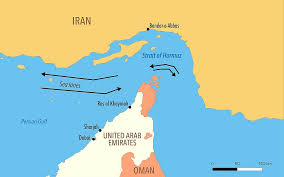
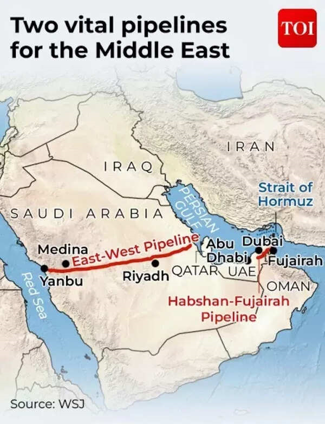
- The Strait of Hormuz is a strategically vital narrow waterway that connects the Persian Gulf (to its west) with the Gulf of Oman and the Arabian Sea (to its southeast).
-
- Littoral borders: The strait is geographically bounded by Iran on the northern/northeast coast and by Oman (the Musandam Peninsula exclave) and the United Arab Emirates (UAE) on the southern coast.
- Global oil chokepoint: It is regarded as the world’s most critical maritime choke-point for energy, with roughly one-fifth (20-21%) of the world’s total petroleum liquids consumption passing through it daily.
- Traffic Separation Scheme (TSS): Due to shallow waters, all large commercial ships navigating the strait are legally bound to follow a TSS, which splits incoming and outgoing ships into inbound and outbound shipping lanes, each just two miles wide, separated by a two-mile buffer zone.
- Territorial waters clash: The shipping lanes fall entirely within the territorial waters of Oman and Iran under the United Nations Convention on the Law of the Sea (UNCLOS).
- Transit passage regime: Under UNCLOS Part III, commercial and military vessels enjoy the right of transit passage through international straits, meaning continuous and expeditious transit, which cannot be suspended or impeded by littoral states during peacetime.
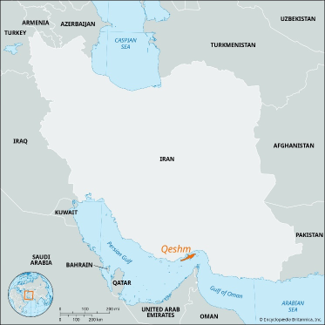
- Island geography: The strait contains several highly strategic islands controlled by Iran, including Qeshm (the largest island in the Persian Gulf), Hormuz Island, Larak, and the disputed Greater and Lesser Tunbs (claimed by UAE).
-
- Indian energy security dependency: India depends heavily on this chokepoint, as more than 60-65% of its crude oil imports and liquefied natural gas (LNG) supplies originate from the Persian Gulf suppliers (Iraq, Saudi Arabia, UAE) and must transit the strait.
- Operation sankalp: In response to recurring security threats to Indian-flagged commercial ships transiting through the Strait of Hormuz and Gulf of Oman, the Indian Navy deploys stealth frigates and continuous aerial surveillance under this dedicated security mission.
- Alternative bypass route (habshan-fujairah pipeline): The UAE operates the Abu Dhabi Crude Oil Pipeline which can transport oil from interior fields directly to the port of Fujairah on the Gulf of Oman, successfully bypassing the Strait of Hormuz chokepoint entirely.
(IE)
Science & Technology
WHO Investigation into Spurious Oxytocin & Maternal Deaths:
Context: Following an official inquiry from the World Health Organization (WHO), the Central Government of India demanded urgent medical investigative reports from Rajasthan regarding a sudden cluster of maternal deaths across state hospitals in Kota, Bikaner, and Jodhpur linked to post-operative septicemia and spurious oxytocin formulations.
-
- Biological classification: Oxytocin is a natural peptide hormone and neurotransmitter produced synthetically for clinical use, synthesized naturally by the hypothalamus and secreted into the bloodstream by the posterior pituitary gland.
- Primary clinical function: It is classified as an essential uterotonic drug used to stimulate uterine contractions during labour and, most critically, is the primary first-line treatment to prevent and manage Postpartum Haemorrhage (PPH), the leading cause of maternal mortality worldwide.
- The “love hormone” role: Beyond uterine function, oxytocin plays key physiological roles in stimulating lactation (milk ejection reflex) via mammary alveolar cell contraction, emotional bonding, social recognition, and maternal behaviour.
- The counterfeiting/misuse dilemma: Oxytocin is highly prone to illicit illegal manufacturing and widespread misuse in the dairy sector to artificially boost milk yield in cattle, and in agriculture to hasten the growth and size of vegetables like pumpkins and cucumbers.
- Veterinary hazards: Chronic off-label injection of oxytocin in milch animals leads to severe reproductive issues, reduces the lifespan of cattle, and contaminates the dairy supply chain.
- Regulatory Status in India: Under the Drugs and Cosmetics Rules, 1945, Oxytocin is categorized as a Schedule H drug, meaning it can legally be sold only on the retail prescription of a registered medical practitioner.
- Manufacturing restrictions: To counter veterinary misuse, the Indian government banned the import of Oxytocin and restricted domestic manufacturing to authorized state-run public sector undertakings (PSUs) like Karnataka Antibiotics & Pharmaceuticals Ltd (KAPL), though the absolute ban on private production was subjected to intense legal challenges.
- Post-operative septicemia mechanism: When spurious or non-sterile oxytocin formulations are injected intravenously post-delivery, it can cause immediate bacterial contamination of the bloodstream, leading to systemic inflammatory response syndrome (Sepsis) and multi-organ failure.
- CDSCO apex authority: The Central Drugs Standard Control Organisation (CDSCO), headed by the Drugs Controller General of India (DCGI), is India’s premier national regulatory body for pharmaceuticals and medical devices under the Ministry of Health and Family Welfare.
- Maternal Mortality Ratio (MMR) target: India aims to reduce its MMR to less than 70 deaths per 1,00,000 live births by 2030, aligning strictly with the United Nations Sustainable Development Goal (SDG) Target 3.1.
(IE)
Defence
Operation Sindoor and the Evolving Agniveer Framework:
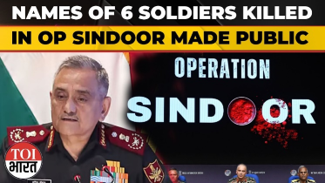
Context: The official release of the names of six Armed Forces personnel killed during Operation Sindoor (a sensitive border counter-infiltration operation) brought national attention back onto the operational employment, disability benefits, and insurance frameworks governing Agniveers serving on active combat frontlines.
-
- The agnipath scheme origin: Launched in 2022, the Agnipath scheme is a recruitment method for the Indian Armed Forces (Army, Navy, and Air Force) where selected candidates, known as Agniveers, are enrolled for a fixed tenure of four years.
- Retention threshold: Upon completing the four-year tenure, based on organizational requirements and merit-performance metrics, up to a maximum of 25% of each specific batch can be enrolled into the regular cadre of the Armed Forces.
- Seva nidhi package: On discharge after 4 years, Agniveers receive a one-time, lump-sum Seva Nidhi package, which consists of their monthly contribution matched equally by the government, along with accrued interest. Crucially, this package is completely exempt from Income Tax.
- Non-pensionable cadre: Agniveers enrolled under the scheme do not receive conventional lifelong pensions or gratuity benefits upon completing their four-year color service, a key point of difference from regular soldiers.
- Ex-Gratia and Battle Casualty Benefits: In the event of a sacrifice in the line of duty (Battle Casualty), the family of an Agniveer is legally entitled to a non-contributory insurance cover of ₹48 lakh, an ex-gratia payment of ₹44 lakh, and full pay for the unserved portion of their 4-year tenure, alongside the Seva Nidhi corpus.
- Constitutional power (defence): Defense of India and the Central Armed Forces fall exclusively under Entry 1 of the Union List in the Seventh Schedule of the Constitution, giving Parliament exclusive legislative control.
- The kargil review committee linkage: The structural concept of lowering the age profile of the fighting troops (“youthful profile”) was originally recommended by the Kargil Review Committee (2000) headed by K. Subrahmanyam to optimize the teeth-to-tail ratio of the army.
- Operational integration: Agniveers are integrated directly into existing combat arms, units, and regiments, subject to the Army Act, 1950, making them fully liable to standard military discipline and court-martial procedures.
- Directorate General of Resettlement (DGR) Role: The DGR under the Department of Ex-Servicemen Welfare coordinates with public sector banks, state governments, and corporate entities to secure lateral employment reservations for the 75% demobilized Agniveers.
- Distinction from CAPFs: Agniveers serve directly in the combat wings of the Ministry of Defence, distinct from the Central Armed Police Forces (CAPF) like the BSF, CRPF, and ITBP, which function under the administrative authority of the Ministry of Home Affairs.
(IE)
Internal Security
Indigenous Patrol Vessel ICGS Akshay Commissioned:
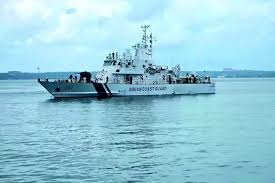
Context: The Indian Coast Guard (ICG) officially commissioned ICGS Akshay, the fifth vessel in an ongoing indigenous series of eight Fast Patrol Vessels (FPVs), built entirely by Goa Shipyard Limited (GSL) to strengthen coastal security networks.
-
- Design and Building Class: ICGS Akshay is an indigenously designed Fast Patrol Vessel equipped with advanced navigation, communication, and close-range surveillance systems.
- Primary operational role: The FPV is custom-designed for a wide array of coastal operations, including anti-smuggling, anti-poaching, fisheries protection, search and rescue (SAR), and maritime law enforcement patrols.
- Propulsion infrastructure: It is powered by an advanced water-jet propulsion system, enabling high-speed maneuverability in shallow coastal waters where deep-draft naval destroyers cannot safely operate.
- Indian coast guard identity: The ICG is an Armed Force of the Union established formally under the Coast Guard Act, 1978. It functions administratively under the Ministry of Defence.
- The Maritime Zones Act, 1976: The ICG derives its policing authority over India’s maritime boundaries from this act, which specifies jurisdictions across internal waters, Territorial Waters (up to 12 nautical miles), Contiguous Zone (up to 24 nautical miles), and the EEZ (up to 200 nautical miles).
- The 26/11 structural realignment: Post the 2008 Mumbai terror attacks, the Indian Coast Guard was designated as the apex central authority responsible for non-military coastal security in territorial waters, coordinating with State Marine Police forces.
- Make in India / Atmanirbhar Bharat: The ship features more than 70% indigenous content, significantly cutting down external dependency on hull structures and internal auxiliary machinery systems.
- Integration with IMAC: ICGS Akshay feeds real-time coastal radar data directly to the Information Management and Analysis Centre (IMAC) in Gurugram, which functions as the nodal hub for India’s National Command Control Communication and Intelligence Network (NC3I).
- Regional operations: The vessel will be placed under the administrative control of the Commander, Coast Guard Region (West), helping secure critical shipping traffic along the western seaboard.
- Pollution response mandate: Apart from standard security duties, the vessel is structurally modified to carry portable oil-spill dispersant equipment, reinforcing the ICG’s statutory role as the Central Coordinating Authority for marine oil spills in Indian waters.
(PIB)
History, Art & Culture
Ponduru Khadi:
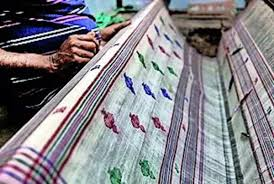
Context: On MSME Day 2026, it was officially highlighted that Ponduru Khadi, a historic textile handwoven in Andhra Pradesh, which earlier in 2026 was successfully accorded the Geographical Indication (GI) tag through the facilitation of the Khadi and Village Industries Commission (KVIC).
-
- Geographic origin: Ponduru Khadi is produced in the Ponduru village of Srikakulam district, Andhra Pradesh.
- Unique raw material: It is woven entirely using a rare variety of indigenous organic cotton known as Hill Cotton (Punasa Prathi), which is grown locally along the red hills of Srikakulam.
- The Single-Origin Fish-Bone Processing: The ginning (separation of seeds from cotton) is performed manually using the jawbone of a specific marine fish (the Valuga fish or wallago attu). The fine teeth of the bone remove minute impurities without damaging the fragile short-staple hill cotton fiber.
- Exceptional count: Due to meticulous hand-spinning using traditional wooden charkhas, the yarn count of Ponduru Khadi ranges between 100s and 120s count, making it incredibly lightweight, breathable, and durable.
- Gandhian heritage: Mahatma Gandhi visited Ponduru in 1921 and was so fascinated by the fineness of the fabric that he preferred it for his own dhotis and sent his son Devdas to study the spinning technique.
- GI act structure: Geographical Indications are registered in India under the Geographical Indications of Goods (Registration and Protection) Act, 1999, which is administered by the Controller General of Patents, Designs, and Trade Marks (CGPDTM).
- International compliance: The Indian GI Act is structured to comply with the obligations under the TRIPS Agreement (Trade-Related Aspects of Intellectual Property Rights) of the World Trade Organization (WTO).
- Validity period: A GI tag registration is valid for an initial period of 10 years, which can be renewed indefinitely for subsequent periods of 10 years each.
- KVIC Identity: The Khadi and Village Industries Commission is a statutory body formed under the Khadi and Village Industries Commission Act of 1956. It functions under the Ministry of Micro, Small and Medium Enterprises.
- Distinction from Other Textiles: Unlike standard commercial Khadi which uses long-staple cotton processed via heavy automated ginning mills, Ponduru Khadi remains one of the last surviving textiles globally processed entirely by hand from farm to fabric.
(PIB+TH)
Government Schemes & Initiatives in news
Agriculture Subsidy Probity & The PM-KSY Model:
Context: An investigative media expose regarding a Union Minister drawing a high-value ₹99-lakh state-administered horticulture subsidy for his personal cucumber farm ignited debate over the socio-economic targeting and governance guidelines of agricultural direct benefit transfer schemes.
-
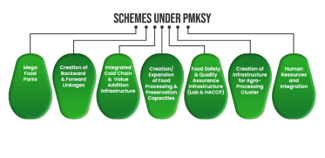
- The scheme framework: Large-scale commercial high-tech farming subsidies (such as poly-houses and shade-net cultivations) are administered via the Mission for Integrated Development of Horticulture (MIDH) and components of the Pradhan Mantri Krishi Sinchayee Yojana (PMKSY).
- MIDH structure: It is a Centrally Sponsored Scheme aimed at the holistic growth of the horticulture sector. Under it, the Central Government contributes 60% of the total outlay in general states, and 90% in North-Eastern and Himalayan states.
- PMKSY Per Drop More Crop (PDMC): This component focuses entirely on water-use efficiency at the farm level through micro-irrigation technologies (Drip and Sprinkler systems), which receive substantial financial subsidies based on landholding sizes.
- Constitutional provisions (agriculture): Under the Seventh Schedule of the Constitution of India, ‘Agriculture’ is entry 14 in the State List, while the management of central financial planning and price control falls under national developmental lists.
- Conflict of Interest & Code of Conduct: For public officials, the Code of Conduct for Ministers (administered by the Ministry of Home Affairs) dictates that Ministers must ensure no conflict arises between their public duties and private financial interests.
- Office of Profit Concept: Articles 102(1)(a) and 191(1)(a) of the Constitution bar MPs and MLAs from holding an “Office of Profit” under the government. However, receiving a generic financial benefit or subsidy available to the public under a legal scheme does not automatically disqualify a legislator unless an office of executive employment is held.
- Direct Benefit Transfer (DBT) Governance: DBT in agriculture utilizes the Aadhaar Authenticated AgriStack ID, connecting land records directly to PFMS (Public Financial Management System) to eliminate ghost beneficiaries.
- WTO Box Classifications:
- Amber Box: Distorted subsidies that affect production/trade (such as MSP and electricity/fertilizer subsidies).
- Blue Box: Amber box subsidies with conditions designed to reduce distortion (production limiting).
- Green Box: Subsidies that cause minimal or no trade distortion (e.g., agricultural research, pest control, and environment/horticulture conservation grants). The MIDH/Micro-irrigation equipment infrastructure components fall heavily inside the compliant Green Box or Developmental Box.
- Small and Marginal Farmers (SMFs): In India, operational holdings are classified based on size: Marginal (less than 1 hectare) and Small (1 to 2 hectares). SMFs constitute over 85% of India’s total farming community, making scheme targeting guidelines contentious when large landholders access maximum absolute caps.
- Financial audit mechanism: All spending and subsidy distributions managed by Central Ministries are subject to audit post-facto by the Comptroller and Auditor General of India (CAG) under Article 149 of the Constitution.
(IE)
Organisations in news
Conclusion of the 11th BRICS Energy Ministers’ Meeting:
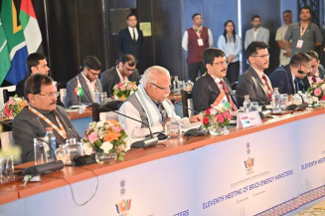
Context: Under India’s BRICS Chairship for 2026, the two-day 11th BRICS Energy Ministers’ Meeting successfully concluded in Gurugram, Haryana, focusing heavily on balancing energy transition with developmental equity for the Global South.
-
- The 2026 Theme: The overarching theme for India’s BRICS Presidency is Building for Resilience, Innovation, Cooperation, and Sustainability, while the dedicated energy track theme was titled “सर्वेषां ऊर्जम्” (Energy for All).
- Core priorities: India structured the collaborative BRICS energy agenda around three pillars: Energy Security & Sustainability, Energy Access & Equity, and Technology/Innovation sharing.
- BRICS expansion: Originally consisting of Brazil, Russia, India, China, and South Africa, the grouping underwent an expansion (BRICS+) welcoming new members: Egypt, Ethiopia, Iran, and the United Arab Emirates (UAE).
- Energy market share: With the inclusion of major oil giants like Russia, Iran, and the UAE, the expanded BRICS block accounts for more than 40% of global crude oil production and consumes over 35% of global energy.
- BRICS Energy Research Cooperation Platform (ERCP): Established during previous summits, the ERCP serves as the primary scientific arm to coordinate joint research in clean coal technologies, carbon capture, and electrical appliance standards.
- Gurugram agenda output: The meeting emphasized deploying collaborative grids, stabilizing critical mineral supply chains (Lithium, Cobalt, Nickel) needed for EV batteries, and promoting green hydrogen infrastructure.
- The New Development Bank (NDB): Headquartered in Shanghai, China, the NDB was established by BRICS during the 2014 Fortaleza Summit. It features an equal voting share structure where no single country holds veto power.
- Contingent Reserve Arrangement (CRA): A framework established alongside the NDB to provide additional liquidity protection to BRICS members against short-term balance of payments pressures.
- Global south leadership: India utilized the platform to oppose unilateral carbon border taxes (such as the EU’s CBAM), arguing they unfairly penalize developing nations during their fossil-fuel phasing periods.
- Bilateral Track: India hosted specific side events focused on raising international standards for electrical appliances to boost energy efficiency and reducing emission intensities from coal usage via Supercritical technology.
(PIB)
Spread the Word