Indian Polity & Governance
Judicial Intervention on Passport and OCI Status Rules:
Context: The Delhi High Court set aside a Ministry of Home Affairs (MHA) communication that had summarily rejected a journalist’s request to convert a Person of Indian Origin (PIO) card into an Overseas Citizenship of India (OCI) card.
-
- Legal Status Merger: The Government of India formally merged the PIO card scheme with the OCI card scheme in 2015, mandating all existing PIO holders to transition to the unified OCI database layout.
- Constitutional Citizenship Clariity: Article 9 of the Constitution of India strictly prohibits dual citizenship; hence, OCI does not confer actual Indian citizenship or political voting rights.
- Nodal Administering Ministry: The acquisition, regulation, and cancellation of OCI status fall entirely within the administrative jurisdiction of the Ministry of Home Affairs (MHA).
- Statutory Root Act: OCI card privileges and registration rules are legally governed under the explicit statutory provisions of the Citizenship Act, 1955.
- Rights Denied to OCI Holders: OCI cardholders cannot vote in public elections, hold constitutional offices (such as President, Vice President, or Supreme Court Judge), or purchase agricultural property in India.
- Rights Granted to OCI Holders: Registered OCI cardholders enjoy lifelong multiple-entry, multi-purpose visas to visit India and are exempt from registering with local Foreigners Regional Registration Officers (FRRO).
- Judicial Review Power: The High Court ruling reinforces that administrative rejections of OCI conversions are subject to strict judicial review under Article 226, ensuring conformity with natural justice.
- Cancellation Grounds: Under the Citizenship Act, the central government can cancel OCI registration if it is obtained by fraud, shows disaffection toward the Constitution, or threatens national sovereignty.
- Fundamental Rights Limitation: While OCI holders are granted parity with Non-Resident Indians (NRIs) in economic spheres, they do not enjoy equal protection under Article 16 regarding public employment.
(IE)
Economy
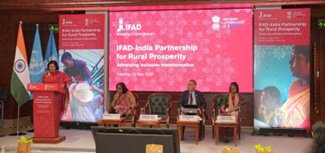
Launch of IFAD-India Country Strategic Opportunities Programme (COSOP) 2026–2033:
Context: The Department of Economic Affairs (DEA) and the International Fund for Agricultural Development (IFAD) launched the COSOP 2026–2033 framework at Bharat Mandapam, New Delhi.
-
- IFAD Institutional Status: IFAD functions as a specialized agency of the United Nations, established as an international financial institution in 1977 following the 1974 World Food Conference.
- Framework Lifespan: The implementation blueprint spans an eight-year operational horizon specifically designed to enhance rural incomes and smallholder climate resilience.
- Strategic Alignment: COSOP is mapped to converge with India’s long-term Viksit Bharat@2047 developmental vision, prioritizing inclusive rural economic growth.
- Two Core Priorities: The blueprint focuses on building social, economic, and climate-resilient farming models, alongside building knowledge systems to scale up models across the Global South.
- Co-financing Structure: IFAD programs utilize a mixed-finance model combining sovereign loans, direct grants, and domestic counterpart financing from central and state funds.
- Target Vulnerable Groups: Project interventions explicitly prioritize women smallholder farmers, scheduled castes, scheduled tribes, and landless rural laborers.
- Agro-Ecological Focus: The program targets climate-smart agriculture, soil health reconditioning, indigenous crop variety restoration, and micro-irrigation layout systems.
- South-South Cooperation Tool: India acts as both a major recipient of funding and a significant contributor of agricultural innovation sharing to other developing member countries.
- Nodal Ministry Partnership: The Department of Economic Affairs under the Ministry of Finance acts as the direct political and administrative anchor handling international IFAD allocations.
(PIB)
Geography, Mapping, Ecology & Environment and DM
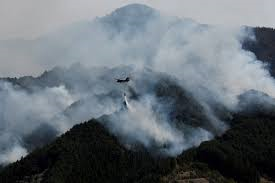
Global Wildfire and Extreme Heat Records:
Context: A comprehensive analysis by the World Weather Attribution (WWA) group, detailing that global fire outbreaks hit an unprecedented record high.
-
- Statistical Extent: Wildfires from January to April scorched over 150 million hectares of land worldwide, exceeding previous records by 20% due to acute climate anomalies.
- Double-Driven Climate Factor: The severe outbreak cycles were accelerated by the combined impacts of long-term anthropogenic climate change and the cyclical El Nino weather phenomenon.
- WWA Institutional Identity: World Weather Attribution is an international collaborative scientific research initiative that conducts rapid attribution studies to quantify how global warming alters the intensity and probability of extreme weather events.
- El Nino Climate Mechanism: El Nino involves the anomalous warming of sea surface temperatures in the central and eastern tropical Pacific Ocean, shifting global atmospheric circulation belts.
- Indian Monsoon Impact: Historically, El Nino weather patterns are strongly associated with weaker summer monsoons, deficient rainfall, and intense heatwave conditions across the Indian subcontinent.
- Carbon Sink Degradation: Large-scale forest fires convert vital terrestrial carbon sinks into massive active emitters of carbon dioxide, accelerating global warming feedback loops.
- Forest Fire Prevention Framework: In India, forest fire management is coordinated via the National Action Plan on Forest Fires (NAPFF), deployed through state forest departments using satellite-based real-time hotspot alerts.
- Wild Life Protection Aspect: Intense canopy fires cause severe habitat fragmentation and destruction, threatening endangered endemic species across biodiversity hotspots.
- Shortened School-Day Adaptations: Nations in vulnerable tropical belts, like Honduras, launched emergency adaptations including shortened school hours and virtual learning platforms to safeguard youth from extreme heat hazards.
(TH)
Science & Technology
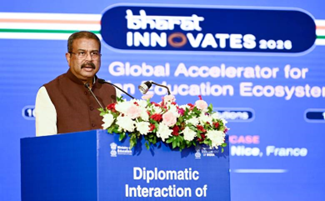
Bharat Innovates 2026 Initiative for Deep-Tech Startups:
Context: The Union Minister of Education addressed the diplomatic community at the Bharat Innovates 2026 international forum to attract global capital into India’s deep-tech research ecosystem.
-
- Core Definition of Deep-Tech: Deep technology refers to startups built on substantive, tangible scientific discoveries, advanced engineering innovations, and high-level research-driven intellectual property rather than standard digital app templates.
- Thematic Academic Collaborations: The initiative organizes over 100 deep-tech startups across 13 distinct thematic STEM domains, in partnership with more than 15 Indian Higher Educational Institutions (HEIs).
- Primary Strategic Objectives: The program aims to establish international research partnerships, facilitate global technology validation, unlock foreign venture capital, and build cross-border academic cooperation.
- Nodal Institutional Alignment: The program aligns with the draft National Deep Tech Startup Policy (NDTSP), which aims to significantly increase domestic R&D expenditure allocation.
- High Gestation Capital Need: Deep-tech startups are characterized by long development cycles, high initial capital requirements, and significant technological risks compared to traditional software enterprises.
- Strategic Frontline Sectors: The targeted fields include quantum computing, advanced synthetic biology, artificial intelligence architectures, space-tech telemetry, and new material nanotechnology.
- Intellectual Property (IP) Protection: A key pillar of the forum focused on strengthening patent regimes and commercializing academic research coming out of top Indian Institutes of Technology (IITs).
(PIB)
History, Art & Culture
Repatriation of Ancient Antiquities from the West:
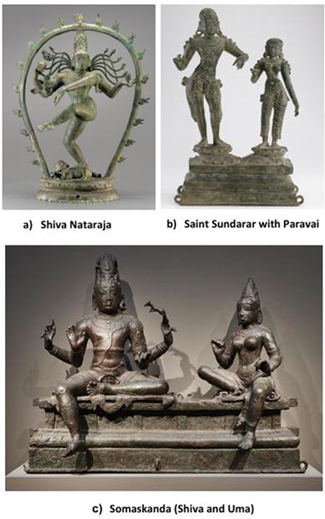
Context: Historic Chola and Vijayanagara-era bronzes, including Saint Sundarar and Somaskanda sculptures, successfully arrived in New Delhi following global repatriation protocols.
-
- Art History Classifications: The returned antiquities include a Shiva Nataraja bronze from the Chola period (circa 990 CE) and a 16th-century Vijayanagara bronze depicting Saint Sundarar with Paravai.
- Chola Bronze Technique: Classical Chola bronzes were created using the intricate cire perdue (lost-wax casting) metallurgical methodology, celebrated for fluid physical poses and iconic iconographies.
- Somaskanda Iconography: The Somaskanda sculpture depicts a classic representation of Lord Shiva sitting with his consort Uma (Parvati) and their infant child Skanda (Kartikeya).
- Three-Year Goodwill Loan: As a gesture of international cultural cooperation, India agreed to a temporary three-year museum exhibition arrangement for the Shiva Nataraja sculpture from 2025 to 2028 before its final installation.
- Domestic Statutory Framework: The recovery and regulation of stolen cultural heritage artifacts are governed by the Antiquities and Art Treasures Act, 1972.
- Definition of Antiquity: Under the 1972 Act, any article, object, or manuscript that has been in existence for not less than one hundred years is legally defined as an antiquity.
- UNESCO 1970 Convention: Repatriation processes rely internationally on the UNESCO Convention on the Means of Prohibiting and Preventing the Illicit Import, Export and Transfer of Ownership of Cultural Property.
- Archaeological Survey of India (ASI) Role: The ASI, under the Ministry of Culture, acts as the nodal expert authority tasked with verifying provenance records and receiving repatriated art treasures.
- Documentation History: The historical identities of these pieces were verified using archival photographic proofs captured at Tamil Nadu temples in the late 1950s.
(PIB)
Government Schemes
Launch of the SEHAT Mission:
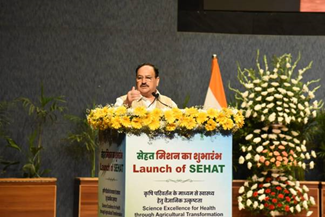
Context: The Union Ministers jointly launched the SEHAT Mission (Science Excellence for Health through Agricultural Transformation).
-
- Core Objective: The mission sets up the first formal convergence between India’s agriculture and health sectors to target malnutrition and the rising burden of non-communicable diseases.
- Inter-Ministerial Nodal Framework: The project is co-led by the Ministry of Agriculture and Farmers Welfare along with the Ministry of Health and Family Welfare to unify rural field infrastructure.
- Biofortification Strategy: SEHAT directly focuses on scaling the production, distribution, and consumption of climate-resilient, biofortified food crops across rural clusters.
- Nutri-Gardens Mandate: It provides technical support to set up community-led “Nutri-gardens” in Anganwadi centers to provide direct nutritional access to pregnant women and children.
- Target Diseases: The administrative framework targets dietary micro-nutrient deficiencies, anemia, diabetes, and cardiovascular health issues through dietary diversification.
- Krishi Vigyan Kendras (KVKs): KVKs are designated as front-line technical nodes to train local farmers in cultivating therapeutic and nutrient-dense crop varieties.
- ICMR Research Linkage: The Indian Council of Medical Research (ICMR) handles real-time monitoring and evaluates the biomedical effects of crop diversification on community health parameters.
- Self-Help Group (SHG) Leverage: It integrates local women’s SHGs under the National Rural Livelihoods Mission to handle the local processing and supply chains of biofortified grains.
(PIB)
PM E-DRIVE Scheme National Infrastructure Conference:
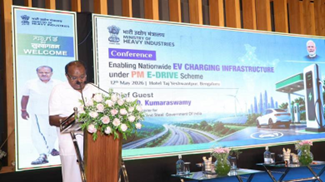
Context: The Ministry of Heavy Industries organized a key National Conference on EV Charging Infrastructure in Bengaluru to accelerate the PM E-DRIVE Scheme.
-
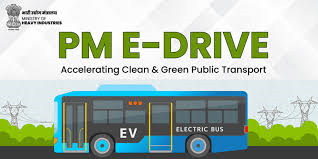
- Scheme Identity: The PM Electric Drive Revolution in Innovative Vehicle Enhancement (PM E-DRIVE) scheme succeeded the previous FAME India framework to drive transport electrification.
- Nodal Implementing Ministry: The scheme is administered under the regulatory and fiscal framework of the Ministry of Heavy Industries (MHI).
- Charging Infrastructure Focus: The conference focused on creating a standard grid layout, fast-charging networks, and widespread public charging points across metropolitan corridors.
- Affordable Clean Mobility: The primary target is to make electric vehicle ownership structurally affordable and highly accessible across both urban and rural India.
- Public-Private Partnership (PPP): The implementation model actively relies on financial subsidies to incentivize private energy firms to setup charging kiosks on public highways.
- Grid Integration Challenges: Discussions addressed the critical engineering balance needed between local electricity distribution grids and the sudden peak-load surges caused by fast-chargers.
- Decarbonization Linkage: The scheme serves as an operational pillar for India to honor its global COP commitments, targeting a reduction in carbon emission intensity by 45% by 2030.
- Battery Standardization: PM E-DRIVE frameworks strongly emphasize standardized battery safety norms, open-source charging protocols, and indigenous component sourcing.
(IE)
Bodies in news
Comprehensive Cancellation of NEET-UG 2026 and CBI Reference:
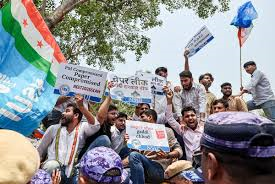
Context: The National Testing Agency (NTA) officially announced the complete cancellation of the NEET-UG 2026 examination following dynamic investigative inputs concerning paper leaks.
-
- Institutional Status of NTA: The NTA was established as a premier, autonomous, self-sustained testing organization registered under the Societies Registration Act, 1860, to conduct transparent entrance examinations.
- CBI Jurisdiction Enforced: The Union Government officially transferred the investigation to the Central Bureau of Investigation (CBI) for an exhaustive multi-state inquiry under the Delhi Special Police Establishment (DSPE) Act, 1946.
- SOG Coordination: The decision integrated raw evidentiary intelligence gathered by the Rajasthan Police’s Special Operations Group (SOG) regarding organized systemic leaks.
- Legal Act Application: The case brings under scrutiny the stringent penal provisions of the newly enacted Public Examinations (Prevention of Unfair Means) Act, which criminalizes institutional paper leaks and cheating cartels.
- Statutory Scope of NEET: The National Eligibility-cum-Entrance Test is mandated via statutory clauses under the National Medical Commission (NMC) Act, 2019, for all undergraduate medical seats.
- Single Windows System: NEET-UG acts as the single window administrative structure governing admissions to MBBS, BDS, AYUSH, and veterinary programs across all government and private colleges.
- Porous Cybersecurity Concerns: Highlighted structural vulnerabilities in the digital distribution networks, encryption frameworks, and storage methods of national test papers.
- Fundamental Right Nexus: The massive disruption interfaces directly with Article 14 (Equality before Law) and Article 21 (Right to Life and Livelihood) concerning fair educational selection access.
(TH)
Miscellaneous
National Florence Nightingale Awards 2026 Presentation:
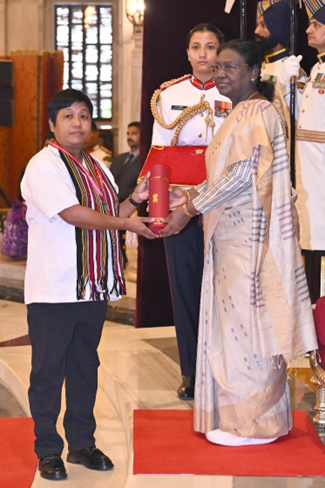
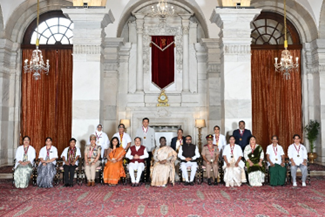
Context: On May 12, 2026, the President of India presented the National Florence Nightingale Awards for the year 2026 to nursing personnel at Rashtrapati Bhavan.
-
- Institutional Genesis: The Union Ministry of Health and Family Welfare instituted the prestigious award scheme in 1973 to acknowledge meritorious services rendered by nurses.
- Date Significance: The ceremony directly marks International Nurses Day, celebrated globally on May 12 to commemorate the birth anniversary of the pioneering British social reformer Florence Nightingale.
- Eligible Categories: The award recognizes dedicated personnel across three primary branches: Auxiliary Nurse Midwives (ANMs), Lady Health Visitors (LHVs), and Registered Nurses and Midwives.
- Award Composition: Each individual honor comprises a formal certificate of merit, a cash prize, and a commemorative medal recognizing selfless public health contributions.
- Selection Mechanism: Nominations are screened through state-level committees and subsequently finalized by a Central Selection Committee under the Ministry.
- Healthcare Contribution: The award emphasizes nursing leadership during emergency response management, immunization drives, and rural healthcare delivery layouts.
- Universal Health Coverage Link: The scheme aligns with India’s commitment to achieving Universal Health Coverage (UHC) under the Sustainable Development Goal 3 framework.
- Digital Integration Focus: Modern guidelines encourage honoring nursing staff who actively bridge technology gaps using digital platforms like the Ayushman Bharat Digital Mission (ABDM).
(PIB)
Spread the Word