
Rare-earth elements (REEs) are the “vitamins” of modern technology—required in small amounts but essential for the performance of everything from your smartphone to fighter jets and wind turbines.
Definition and Origin
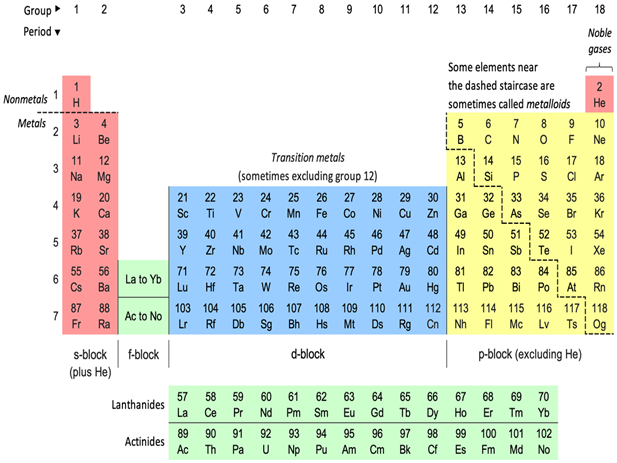
Definition: Rare-earth elements are a set of 17 metallic elements. This includes the 15 lanthanides (lanthanum to lutetium) plus scandium and yttrium, which are found in the same ore deposits and share similar chemical properties.
Origin of the Name: They were termed “rare” not because they are scarce in the Earth’s crust (cerium is more abundant than copper), but because they are rarely found in pure form or in concentrated “veins” like gold. Historically, “earth” was the term for an oxide; these elements were first identified as oxide powders that were incredibly difficult to isolate into pure metals.
The 17 Elements
Chemists divide these into two categories based on their atomic weight:
-
- Light REEs (LREEs): Lanthanum, Cerium, Praseodymium, Neodymium, Promethium, Samarium, Europium, Gadolinium, and Scandium.
- Heavy REEs (HREEs): Terbium, Dysprosium, Holmium, Erbium, Thulium, Ytterbium, Lutetium, and Yttrium. These are generally less common and more valuable.
China’s Dominance
As of early 2026, China remains the undisputed heavyweight of the rare-earth world. Its dominance isn’t just about what’s in the ground, but the “midstream” infrastructure to process it.
-
- Mine Production: China accounts for roughly 69% of global mine output (approx. 270,000 tonnes REO).
- Refining & Separation: This is the true bottleneck. China controls 90-91% of global refining capacity.
- Magnets: China produces about 94% of the world’s sintered rare-earth permanent magnets, which are critical for electric vehicle (EV) motors.
Other Countries’ Positions
While China leads, other nations are aggressively scaling up:
-
- United States: Currently the second-largest miner (approx. 13% share), primarily through the Mountain Pass mine. However, it still relies on overseas processing for many components.
- Australia: A major producer via Lynas Rare Earths, which operates one of the few significant separation plants outside China (in Malaysia).
- Japan: Though it lacks land-based mines, Japan is a pioneer in deep-sea mining. In January 2026, Japan launched a historic mission to extract REE-rich mud from 6,000 meters underwater near Minamitori Island.
- Vietnam and Brazil: Both hold massive reserves (over 20 million tonnes each) but are still in the early stages of building industrial-scale processing.
Strategies to Counter China’s Monopoly
Western and allied nations are using a “de-risking” strategy rather than a full “de-coupling”:
-
- Supply Chain Diversification: Investing in “friendly” jurisdictions (e.g., US-Australia partnerships) to build refineries that bypass Chinese territory.
- Strategic Stockpiling: Governments (including the US and Japan) are building national reserves to buffer against sudden export bans.
- Innovation and Recycling: Developing “REE-free” magnets and advanced recycling tech to recover neodymium and dysprosium from old hard drives and EV motors.
- Regulatory Support: Implementing “Price Floors” or subsidies to protect domestic miners from Chinese price manipulation.
India’s Efforts: Building the “REE Corridor”
India, holding roughly 6% of global reserves, has shifted from a passive exporter of raw sand to an aspiring value-chain player:
-
- Union Budget 2026: India recently introduced dedicated Rare Earth Corridors in four states: Andhra Pradesh, Kerala, Odisha, and Tamil Nadu.
- Manufacturing Incentives: In late 2025, India approved a 8 billion rupee scheme specifically to manufacture sintered rare-earth magnets, aiming for 6,000 tonnes of annual capacity.
- National Critical Mineral Mission: A 163 billion rupee mission launched in 2025 to oversee exploration, mining, and recycling, seeking to make India “Atmanirbhar” (self-reliant) in the green energy transition.
- IREL (India) Limited: The state-run entity is expanding its Odisha extraction plant and Kerala refining units to process domestic monazite sands more efficiently.
Some notable national reserves include China (44 million tonnes, MT), Brazil (21 MT), India (6.9 MT), Australia (5.7 MT), Russia (3.8 MT), Vietnam (3.5 MT), the US (1.9 MT), and Greenland (1.5 MT).
Spread the Word