
Indian Polity & Governance
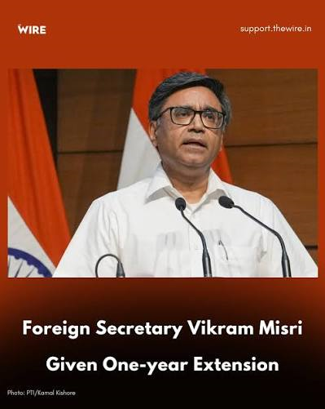
Financial Secretary Vikram Misri Granted Service Extension:
Context: The Appointments Committee of the Cabinet (ACC), headed by the Prime Minister, has officially approved a one-year service extension for senior diplomat and Foreign Secretary Vikram Misri, extending his tenure to ensure institutional continuity during current geopolitical shifts.
-
- The executive order: The Appointments Committee of the Cabinet exercised its executive powers to grant the extension, bypassing standard retirement timelines for the position.
- Tenure duration: The extension keeps Misri at the helm of the Ministry of External Affairs (MEA) for an additional year, through mid-2027.
- Administrative precedent: Extensions for high-ranking bureaucratic positions (like Foreign Secretary, Home Secretary, and Cabinet Secretary) are permitted under specific civil service rules on a case-by-case basis.
- Vikram misri’s profile: A seasoned 1989-batch Indian Foreign Service (IFS) officer, Misri has previously served as India’s Ambassador to China and as Deputy National Security Advisor (NSA).
- Role of ACC: The Appointments Committee of the Cabinet is the final authority for deciding top-tier management appointments across the Central Secretariat, public enterprises, and financial institutions.
- Rule modifications: Such extensions are systematically executed by invoking provisions within the Fundamental Rules, 1922, specifically tailored for senior defense and external affairs officials.
- Coordination with NSA: The extension preserves the close working relationship between the MEA and the National Security Council Secretariat (NSCS) on national security mandates.
- Cabinet Committees: The Appointments Committee of the Cabinet (ACC) is one of the most powerful Cabinet Committees. It is chaired by the Prime Minister, with the Union Home Minister serving as a key member.
- Constitutional Status: Cabinet Committees are extra-constitutional bodies established under the Rules of Business of the Government of India, created to reduce the workload of the executive Cabinet.
(TH)
International Relations
India-Japan Bilateral Strategic Roadmap & Agreements:
Context: PM Modi held intensive high-level bilateral talks with Japan’s representative Sanae Takaichi to finalize a comprehensive strategic roadmap.
The dialogue focused on accelerating manufacturing, expanding infrastructure partnerships, and securing critical supply chains. PM Modi highlighted a target to bring 10 trillion yen of Japanese investment into India by 2036.

-
- Investment target: India and Japan established an ambitious investment target aiming for 10 trillion yen (approximately ₹5.5 lakh crore) in Japanese investments into India over the next decade (by 2036).
- Key sectors covered: The comprehensive bilateral roadmap exchanges specific agreements across vital domains: defense production, artificial intelligence (AI) ecosystem development, critical mineral stockpiling, pharmaceuticals, and energy security.
- Strategic stockpiling: The core focus is on creating resilient supply chains for semiconductor raw materials and rare earth elements to buffer against unexpected geopolitical crises in West Asia and the Indo-Pacific.
- Geopolitical convergence: Both nations issued a joint statement deeply condemning cross-border terrorism originating from Pakistan and highlighted mutual concerns regarding the ongoing Ukraine conflict and West Asia maritime disruptions.
- Defense pact advancement: The meeting formally signed operational milestones under the existing India-Japan defense framework, exploring co-development of maritime surveillance technologies and drone systems.
- AI ecosystem roadmap: A new framework creates cooperative labs for generative AI engineering, ensuring secure data-sharing models between technologists in Tokyo and Bengaluru.
- Infrastructure commitments: Japan re-affirmed institutional and financial backing for India’s high-speed rail networks (Mumbai-Ahmedabad Bullet Train project) and dedicated freight corridors.
- Digital infrastructure links: The nations agreed to work on interoperability between India’s digital public infrastructure (DPI) and Japan’s advanced payment interfaces.
- Cultural underpinning: Takaichi underlined the civilizational bond of Buddhism, stating that the two nations must look to continuously build ties seamlessly “as brother and sister.”
- Institutional Framework: India and Japan share a “Special Strategic and Global Partnership.” They participate together in the Quad (alongside US and Australia) and the Supply Chain Resilience Initiative (SCRI).
- Joint Exercises: Key military exercises include Dharma Guardian (Army), SHINYUU Maitri (Air Force), and JIMEX (Navy), alongside the multilateral Malabar naval exercise.
(IE)
Economy
Cross-Border UPI Settlement Mechanism Launched:
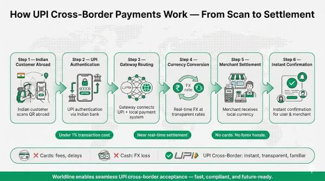
Context: The National Payments Corporation of India (NPCI) has entered into a strategic collaboration with HSBC India and JP Morgan Payments to launch a real-time Foreign Exchange (FX) settlement engine for cross-border Unified Payments Interface (UPI) transactions. This will significantly lower remittance costs and speed up retail currency trades.
-
- The partnership: NPCI’s international arm (NPCI International Payments Limited – NIPL) has integrated its systems with global banking giants HSBC and JP Morgan.
- Core function: The mechanism introduces an automated, instant Foreign Exchange (FX) conversion layer, enabling real-time settlements for individuals sending or receiving money across borders via UPI.
- UPI growth metrics: The announcement highlighted that UPI transaction volumes globally have nearly doubled to 48 million in FY 2025-26, up from 0.75 million in FY 2024-25.
- Transaction value: The financial value transacted through UPI reached a record ₹330.43 crore in FY 2026, demonstrating rapid structural adoption among retail users.
- Eliminating Pre-funding: Traditionally, cross-border remittance requires banks to maintain heavily funded nostro/vostro accounts; the new engine settles transactions instantly, minimizing trapped capital.
- Reduction in Remittance Cost: By avoiding multi-tiered intermediary correspondent banking networks, the real-time system is expected to slash retail remittance fees by up to 40%.
- Target demographics: The initial roll-out focuses on seamless peer-to-peer (P2P) international transfers and merchant payments for Indian tourists traveling abroad.
- Capital controls compliance: The software architecture automatically incorporates the Reserve Bank of India’s (RBI) Liberalised Remittance Scheme (LRS) limits and reporting standards.
- Financial inclusion impact: The move aligns with the G20 roadmap for enhancing cross-border payments by making them faster, cheaper, and more transparent.
- NPCI Structure: NPCI is an umbrella organization for operating retail payments and settlement systems in India. It is an initiative of the RBI and Indian Banks’ Association (IBA) under the provisions of the Payment and Settlement Systems Act, 2007.
- Company Status: It is incorporated as a “Not for Profit” Company under Section 8 of the Companies Act, 2013.
(PIB)
Ecology & Environment and DM
Environmental Clearance in Hasdeo Arand Forest:
Context: The Union Environment Ministry has granted formal environmental clearance for mining operations in the Kente Extension coal block located within the ecologically fragile Hasdeo Arand forest region in Chhattisgarh. The decision has reignited intense debates between industrial development needs and conservation networks.
-
- The Kente Extension coal block lies completely within the borders of the Hasdeo Arand region, widely referred to as the “lungs of Chhattisgarh.”
- Hasdeo Arand is one of the largest intact patches of contiguous dense forest lands in Central India, spanning over 1,500 square kilometers.
- Biodiversity repository: The forest serves as an incredibly vital migratory elephant corridor and acts as a protected habitat for rare flora and endangered fauna species under the Wildlife Protection Act.

-
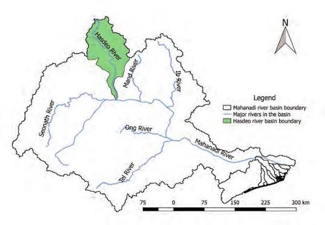
- Catchment protection: The Hasdeo forest canopy acts as the primary catchment zone for the Hasdeo River, which is a major tributary of the Mahanadi River system.
-
- Hasdeo bango dam risks: Environmentalists warn that intensive open-cast mining will permanently degrade the catchment, impacting water flow into the Hasdeo Bango reservoir, which irrigates lakhs of hectares of farmland.
- Tribal livelihoods: The region is home to significant populations of indigenous communities (particularly the Gond and local scheduled tribes) who depend heavily on minor forest produce.
- Legal hurdles crossed: The newly granted environmental clearance follows several rounds of litigation, forest advisory committee reviews, and statutory landscape management checks.
- Compensatory afforestation plan: The clearance mandates strict adherence to a multi-tiered compensatory afforestation framework, alongside designated funds for elephant corridor mitigation plans.
- Coal security argument: Proponents of the mining license state that tapping the Kente Extension block is crucial to meeting the expanding energy demand of domestic thermal power plants.
- Forest Clearance Mechanism: Forest clearance is governed by the Forest (Conservation) Act, 1980 (amended recently). The statutory body assessing these applications is the Forest Advisory Committee (FAC) under the MoEFCC.
- Panchayat Rights: Mining in Scheduled V areas requires consultation with Gram Sabhas under the PESA Act, 1996 and the Forest Rights Act (FRA), 2006, making consent a frequent point of constitutional debate.
(IE)
3rd Global Conclave on Plastic Recycling and Sustainability:
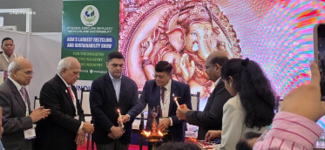
Context: The 3rd Global Conclave on Plastic Recycling and Sustainability (GCPRS) commenced on 3 July 2026 at Bharat Mandapam, New Delhi. The international conclave brings together industry leads, policy analysts, and scientists to establish strict metrics for a zero-waste plastic circular economy.
-
- The 3rd GCPRS serves as India’s premier international platform focused on scaling technologies for post-consumer plastic waste management.
- Hosted at Bharat Mandapam, the event includes an international exhibition displaying advanced chemical recycling machinery and biopolymer alternatives.
- Focus on EPR: Central to the discussions is the strict implementation of Extended Producer Responsibility (EPR) certificates across fast-moving consumer goods (FMCG) brands.
- Chemical Recycling vs. Mechanical: Panels highlighted the shift toward chemical recycling (pyrolysis), which breaks down complex multi-layered plastics into their base hydrocarbons, over basic mechanical downcycling.
- Microplastic hazard mitigation: The technical working groups introduced new baseline assessment standards to prevent microplastic accumulation in agricultural soil and urban water bodies.
- Informal sector integration: The conference unveiled a draft national framework aimed at formalizing waste-pickers, integrating them into digital EPR tracking loops.
- Bioplastics standard: The Bureau of Indian Standards (BIS) detailed upcoming certifications for certified biodegradable plastics to prevent greenwashing.
- Global treaty alignment: The discussions are timed to align domestic manufacturing standards with the evolving United Nations legally binding global treaty on plastic pollution.
- Speakers emphasized that transitioning to 100% recycled polymers could reduce the carbon footprint of the domestic packaging sector by nearly 35%.
- Domestic Rules: Plastic waste in India is regulated under the Plastic Waste Management Rules, 2016 (as amended).
- Key Provisions: These rules mandate the complete ban on identified Single-Use Plastics (SUPs) and require producers, importers, and brand owners to register under the centralized EPR portal managed by the Central Pollution Control Board (CPCB).
(PIB)
Science & Technology
Private Rocket Vikram-1 Prepares for “Mission Aagaman”:
Context: Skyroot Aerospace, India’s leading private space-tech enterprise, announced that its fully indigenous private orbital launch vehicle, Vikram-1, is on track for its milestone commercial orbital launch, codenamed “Mission Aagaman,” scheduled on or before August 4, 2026.

-
- Vikram-1 is a multi-stage, solid-fuel propelled orbital launch vehicle with liquid-propellant-based final stages for high-precision satellite placement.
- This mission represents a major milestone for India’s fully commercial, privately manufactured orbital launch vehicles carrying customer satellites.
- Payload capabilities: Vikram-1 is specifically optimized to lift small satellites (up to 500 kg) into Low Earth Orbits (LEO), catering to the global small-satellite launch market.
- Carbon composite body: The rocket architecture uses advanced carbon composite structures, reducing mass and improving structural efficiency.
- 3D-printed engines: The upper stages utilize Skyroot’s proprietary Raman engines, which feature fully 3D-printed injectors and regeneratively cooled thrust chambers.
- Launch site infrastructure: “Mission Aagaman” will liftoff using the specialized private launch infrastructure developed at ISRO’s Satish Dhawan Space Centre (SDSC) in Sriharikota.
- IN-SPACe facilitation: The mission is cleared and logistically supported by IN-SPACe, the single-window autonomous government nodal agency regulating private space activities.
- The payload fairing houses multiple small satellites from international and domestic firms, focused on IoT connectivity and earth observation.
- The launch builds directly on the success of the Vikram-S sub-orbital technology demonstrator flight completed by the firm in late 2022.
- Institutional Roles: IN-SPACe (Indian National Space Promotion and Authorization Centre) acts as the regulator and facilitator for private players. NSIL (NewSpace India Limited) is the commercial arm of ISRO tasked with commercializing space technologies.
- Propulsion Differences: Solid boosters provide high initial thrust but cannot be throttled or shut off once ignited, whereas liquid engines offer precise throttling and restarts.
(TH)
Security
INS Trikand Foils Piracy Attempt in Gulf of Aden:
Context: Deploying its proactive maritime security architecture, the Indian Navy’s stealth frigate INS Trikand successfully intervened and foiled a coordinated piracy attempt on a commercial merchant vessel transiting the high-risk waters of the Gulf of Aden.

-
- INS Trikand received a distress call from a commercial bulk carrier facing boarding attempts by armed pirates in skiffs.
- The warship immediately launched its integral armed helicopter and deployed its specialized Marine Commandos (MARCOS) to secure the merchant vessel.
- INS Trikand Profile: INS Trikand is a Talwar-class guided-missile stealth frigate built for the Indian Navy, equipped with advanced anti-shipping and anti-air weapon arrays.
- The operation took place inside the Gulf of Aden, a critical choke point connecting the Arabian Sea with the Red Sea via the Bab-el-Mandeb strait.
- Sea Lines of Communication (SLOCs): This corridor handles over 10-12% of global maritime trade volume, making its security central to international supply chains.
- The Navy acts as the primary “Net Security Provider” in the Western Indian Ocean Region (IOR), offering protection to both Indian-flagged and international vessels.
- India has maintained a continuous, independent naval warship presence in the Gulf of Aden for anti-piracy escorts since late 2008.
- The mission involved tracking via Indian military reconnaissance satellites and coordination with information fusion centers.
- The intercepted suspects were disarmed in accordance with the United Nations Convention on the Law of the Sea (UNCLOS) and Indian domestic maritime anti-piracy laws.
- Geographic Choke Points: Bab-el-Mandeb connects the Red Sea to the Gulf of Aden. It separates the Arabian Peninsula (Yemen) from Northeast Africa (Djibouti and Eritrea).
- Domestic Law: India passed the Maritime Anti-Piracy Act, 2022, which gives Indian authorities the jurisdiction to apprehend and prosecute pirates operating in international waters/High Seas.
(IE)
Government Schemes & Initiatives
Launch of PM-SETU Capacity Building Milestone:
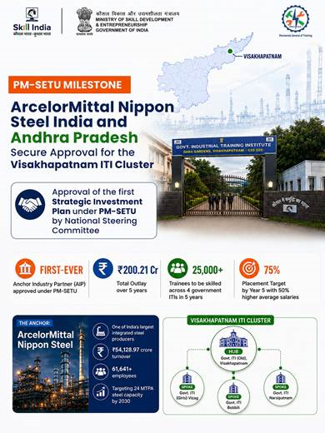
Context: The valedictory session of the five-day nationwide Training of Trainers Programme on Pedagogy was concluded on 3 July 2026 at the Central Staff Training and Research Institute (CSTARI), Kolkata. The program operates under the Ministry of Skill Development and Entrepreneurship’s flagship PM-SETU initiative.
-
- PM-SETU stands for Pradhan Mantri Skilling and Employability Training Upgradation
- Nodal Ministry: It is a flagship central sector initiative rolled out by the Ministry of Skill Development and Entrepreneurship (MSDE).
- Objective: The scheme targets the thorough modernization and structural transformation of India’s vocational training ecosystem to match global benchmarks.
- Target beneficiaries: The Kolkata pedagogical program successfully trained master instructors drawn from Government Industrial Training Institutes (ITIs) across Bihar, West Bengal, Assam, and Meghalaya.
- Curriculum upgradation: The training focuses on teaching methodologies, learner-centric design, digital assessment toolkits, and modern classroom simulators.
- ITI transformation: A key pillar of PM-SETU involves upgrading hardware infrastructure, setting up advanced labs, and introducing industry-vetted trade courses in ITIs.
- The scheme mandates formal tie-ups between local industrial houses and ITIs to guarantee apprenticeship opportunities and real-world exposure for students.
- PM-SETU is designed as a foundational labour-market intervention to build a future-ready, skilled workforce aligned with the Viksit Bharat 2047
- CSTARI’s Role: The Central Staff Training and Research Institute (CSTARI), Kolkata, serves as the premier research and training nodal center for executing these capacity-building curricula.
- Skill Ecosystem in India: Skill development policy is guided by the National Policy for Skill Development and Entrepreneurship.
- Constitutional Provisions: “Vocational and technical training of labour” falls under Entry 25 of the Concurrent List (List III) of the Seventh Schedule of the Constitution, giving both Centre and States jurisdiction.
(PIB)
Spread the Word