
About the Central Pay Commission (CPC)
-
- Pay commissions are set up in India by an executive order based on a Cabinet decision.
- The role of the CPC is to go into various issues of salary structures, retirement benefits and other service conditions of Central government employees, including defence personnel, and make suitable recommendations on the changes required.
- The first CPC was set up in 1946.
| Feature | Detail |
|---|---|
| Status | Non-Constitutional, Non-Statutory (Executive Body) |
| Authority | Union Cabinet (Department of Expenditure, Ministry of Finance) |
| Legal Nature | Advisory / Recommendatory (Not binding) |
| Interval | Generally every 10 years |
| Key Objective | Balance "Fair Compensation" with "Fiscal Sustainability" |
What are its terms of reference?
1. The Terms of Reference (TOR) of the pay commissions are finalised by the Union Cabinet.
2. The TOR of the 8th CPC requires it to consider certain factors while making its recommendations. They include
-
-
- Economic conditions of the country and the need for fiscal prudence;
- Need to ensure adequate resources for developmental expenditure and welfare measures;
- Unfunded cost of non-contributory pension schemes;
- Impact of recommendations on state government finances that usually adopt the recommendations of the cpc; and
- The prevailing emolument structure and working conditions available for central public sector undertakings and private sector employees.
-
THE 8TH CPC
-
- Constituted: In 2025 by the union cabinet
- Chairperson: Retired Justice Ranjana Prakash Desai.
- Key Members: Prof. Pulak Ghosh (IIM Bangalore) as a part-time member.
- Pankaj Jain (IAS) as Member-Secretary.
- Timeline: The commission was given 18 months to submit its report. While the effective date for the new pay scales is set for January 1, 2026, the actual implementation (payouts) usually happens later, with arrears paid retrospectively.
What does a Pay Commission actually do?
A Pay Commission is not a permanent body. It is typically set up every 10 years via an executive order. Its mandate includes:
1. Reviewing Pay Structures: Evaluating the basic pay, rank structures, and pay matrices for civil and defense personnel.
2. Allowances & Benefits: Recommending changes to House Rent Allowance (HRA), Dearness Allowance (DA), and medical benefits.
3. Pension Revision: Proposing updates to retirement benefits and family pensions.
4. Service Conditions: Examining working hours, leave rules, and promotional avenues (like the Modified Assured Career Progression or MACP).
| Pay Commission | Year Set Up | Chairman | Year Implemented | Minimum Basic Pay |
|---|---|---|---|---|
| 1st CPC | 1946 | Srinivasa Varadachariar | 1947 | ₹55 |
| 2nd CPC | 1957 | Jagannath Das | 1959 | ₹80 |
| 3rd CPC | 1970 | Raghubar Dayal | 1973 | ₹185 |
| 4th CPC | 1983 | P.N. Singhal | 1986 | ₹750 |
| 5th CPC | 1994 | Justice S. Ratnavel Pandian | 1996 | ₹2,550 |
| 6th CPC | 2006 | Justice B.N. Srikrishna | 2006 | ₹7,000 |
| 7th CPC | 2014 | Justice A.K. Mathur | 2016 | ₹18,000 |
| 8th CPC | 2025 | Justice Ranjana Prakash Desai | 2026 (Ref. Date) | Under Review |
Global vs. Indian Context
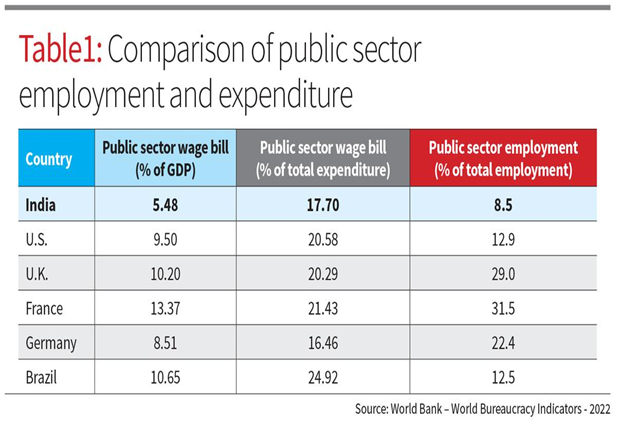
Globally, till the 1970s, the compensation system for the public sector was aimed at achieving equity by benchmarking them with similar roles in the private employment market. In the 1980s, efficiency replaced equity as the key principle in determining compensation. Starting with the 1990s, performance and incentives became the key principle while balancing them with affordability.
Why it matters now
The 8th CPC faces a unique challenge: the debate between the Old Pension Scheme (OPS) and the Unified Pension Scheme (UPS) / National Pension System (NPS). With a pension bill nearing ₹2.76 lakh crore,
The pension bill for the year 2025-26 is estimated at ₹2.76 lakh crore out of the total revenue expenditure of ₹39.44 lakh crore of the central government, the commission’s recommendations on “unfunded” pension liabilities will be one of its most scrutinized sections.
Legality of Pay Commission
The Central Pay Commission (CPC) is unique because it is not created under any specific Act of Parliament or Statute.
Instead, its creation is governed by executive power and specific administrative rules. Here is the legal and procedural breakdown:
1. Executive Power (Article 73)
The Pay Commission is created through an Executive Order issued by the Government of India. Under Article 73 of the Indian Constitution, the executive power of the Union extends to matters with respect to which Parliament has the power to make laws. Since the “Union Public Services” (Entry 70 of the Union List) is a central subject, the Cabinet uses its executive discretion to form a commission to review salaries.
2. Allocation of Business Rules, 1961
The actual administrative process is governed by the Government of India (Allocation of Business) Rules, 1961.
-
- Under these rules, the Department of Expenditure (within the Ministry of Finance) is the nodal agency responsible for the “General principles relating to the structure of regular scales of pay” and the “Constitution and Terms of Reference of the Pay Commission.”
3. Nature of the Body
Because it is not born from a “Law” (like the SEBI Act or the RTI Act), its legal status is:
-
- Ad Hoc (Temporary): It is dissolved once the report is submitted.
- Non-Statutory: It does not have the power to enforce its recommendations.
- Advisory: The government is not legally bound to accept the report. It can choose to modify or even ignore certain recommendations (though politically this is rare).