
Indian Polity & Governance
Supreme Court Observations on Delay by Governors in Granting Assent to Bills:
Context
The Supreme Court of India heard petitions concerning delays by certain Governors in granting assent to State legislation. The Court observed that indefinite delays undermine the functioning of elected legislatures, raising questions about the constitutional scheme governing the Governor’s powers over State Bills.
-
- The powers of the Governor with respect to State legislation are governed by Article 200.
- Under Article 200, the Governor has four options when a Bill is presented:
- Give assent
- Withhold assent
- Return the Bill (if it is not a Money Bill)
- Reserve the Bill for the consideration of the President.
- If the Governor returns the Bill and the State Legislature passes it again with or without amendments, the Governor must give assent, except when the Bill is reserved for the President.
- If the Governor reserves the Bill for the President, the procedure is governed by Article 201.
- The Constitution does not prescribe a specific time limit within which the Governor must act on a Bill.
- However, constitutional experts argue that the Governor is expected to act within a reasonable time, respecting the principle of responsible government.
- The issue also relates to the broader debate about the discretionary powers of Governors and their role as representatives of the Union.
- Similar disputes have arisen in states like Tamil Nadu, Kerala, and Punjab, where Governors delayed assent to certain Bills.
- The Supreme Court has previously emphasised that constitutional authorities must act in accordance with constitutional morality and federal principles.
(TH)
Parliamentary Standing Committees Review:
Context
Parliamentary Standing Committees reviewed several bills and departmental policies.
-
- Standing Committees are permanent committees of Parliament.
- There are 24 Department-related Standing Committees.
- They examine Demands for Grants of ministries.
- Members are drawn from both Lok Sabha and Rajya Sabha.
- Committee reports are recommendatory in nature.
- Committees improve legislative scrutiny.
- Chairpersons are appointed by the Speaker or Chairman of Rajya Sabha.
- Committee system was introduced in 1993.
- Committees reduce parliamentary workload.
(IE)
Economy
India’s Digital Payment Expansion:
Context
India’s digital payment ecosystem continues to expand through the Unified Payments Interface.
-
- UPI allows instant bank-to-bank transfers using mobile applications.
- It is operated by the National Payments Corporation of India.
- UPI works on Immediate Payment Service (IMPS) infrastructure.
- It supports interoperable digital payments.
- UPI transactions can be authorised using UPI PIN authentication.
- QR codes are widely used for merchant payments.
- Cross-border UPI partnerships are expanding globally.
- Digital payments reduce cash handling costs.
- UPI is part of India’s Digital Public Infrastructure framework.
- UPI adoption supports financial inclusion.
(ET)
RBI Liquidity Operations and Monetary Policy Management:
Context
The Reserve Bank of India monitored liquidity conditions in the banking system and conducted operations to ensure adequate availability of funds in financial markets. Such liquidity management is an important part of monetary policy transmission.
-
- The RBI manages liquidity through the Liquidity Adjustment Facility (LAF), which allows banks to borrow or lend money overnight.
- The repo rate is the rate at which commercial banks borrow funds from the RBI against government securities.
- The reverse repo rate is the rate at which the RBI borrows money from commercial banks.
- Open Market Operations (OMOs) involve the purchase and sale of government securities by the RBI in the open market.
- When the RBI purchases securities, liquidity increases in the banking system.
- When the RBI sells securities, liquidity is absorbed from the system.
- The Cash Reserve Ratio (CRR) requires banks to maintain a certain percentage of their deposits with the RBI as reserves.
- Liquidity conditions affect short-term interest rates, credit availability, and overall economic activity.
- Monetary policy in India is conducted by the Monetary Policy Committee (MPC) established under the RBI Act, 1934 (amended in 2016).
- The primary objective of monetary policy in India is inflation targeting, currently at 4% ± 2%.
(ET)
Geography, Mapping, Ecology & Environment and DM
Expansion of Offshore Wind Energy in India:
Context
The government reviewed progress in developing offshore wind energy projects along the Indian coastline.
-
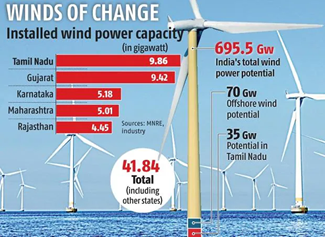
- Offshore wind farms are installed in sea areas close to coastlines.
- Offshore winds are generally stronger and more consistent than onshore winds.
- India’s first offshore wind projects are proposed near Gujarat and Tamil Nadu coasts.
- Offshore wind contributes to renewable energy diversification.
- Turbines are installed on fixed-bottom or floating platforms.
- Offshore wind requires subsea transmission infrastructure.
- It has higher installation cost but higher efficiency.
- Offshore wind can complement solar energy variability.
- Marine environmental impact assessments are required before project approvals.
- Offshore wind development is part of India’s clean energy transition strategy.
(PIB)
Global Efforts to Reduce Plastic Pollution:
Context
International discussions continued regarding the proposed global treaty on plastic pollution.
-
- Plastics are derived mainly from petrochemical feedstocks.
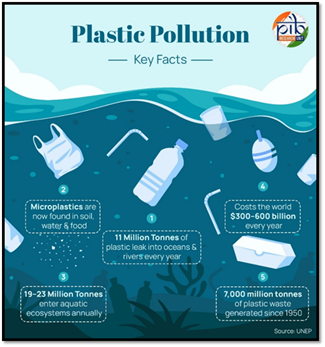
- Microplastics are plastic particles smaller than 5 mm.
- Microplastics have been detected in marine ecosystems and human food chains.
- Plastics degrade slowly due to high polymer stability.
- Single-use plastics contribute significantly to plastic waste generation.
- Marine plastic pollution affects coral reefs, fish and seabirds.
- Recycling rates for plastics remain relatively low globally.
- Plastic waste can transport invasive species and pollutants.
- Ocean currents concentrate plastic debris in garbage patches.
- Plastic waste reduction requires circular economy approaches.
(TH)
Arctic Sea Ice Decline:
Context
Scientists reported continued decline in Arctic sea ice extent.
-
- The Arctic Ocean is largely covered by sea ice during winter.
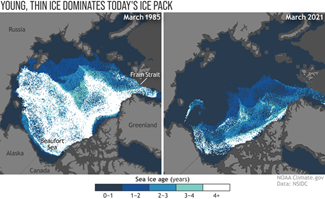
- Arctic sea ice extent has declined significantly in recent decades.
- Sea ice loss reduces surface albedo, increasing heat absorption.
- Arctic warming is occurring faster than the global average.
- Melting sea ice affects Arctic ecosystems.
- Sea ice decline may open new shipping routes.
- Arctic climate changes influence global atmospheric circulation.
- The Arctic Council promotes regional cooperation.
- Sea ice differs from glacial ice formed on land.
- Sea ice melt does not directly raise sea levels.
(TH)
India’s Wetland Conservation Initiatives:
Context
India emphasised conservation of wetlands under international environmental commitments.
-
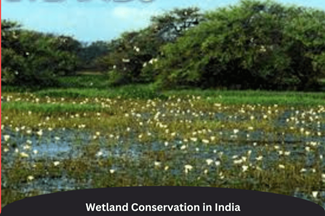
- Wetlands include marshes, swamps, lagoons and estuaries.
- They provide habitats for migratory birds.
- Wetlands regulate floods and water cycles.
- They store large amounts of organic carbon.
- India participates in the Ramsar Convention.
- Ramsar sites are wetlands of international importance.
- Wetland ecosystems support high biodiversity.
- Wetlands improve water purification and groundwater recharge.
- Wetland degradation occurs due to urbanisation and pollution.
- Conservation contributes to climate adaptation strategies.
(IE)
Science & Technology
Expansion of Private Participation in India’s Space Sector:
Context
The government highlighted the growing participation of private companies in India’s space sector following reforms aimed at opening the industry to non-governmental entities.
-
- India’s space programme is led by the Indian Space Research Organisation.
- Space sector reforms introduced a regulatory body called IN-SPACe.
- IN-SPACe acts as an independent nodal agency to authorise and promote private space activities.
- The commercial arm of ISRO is NewSpace India Limited, which handles commercial launches and satellite services.
- Private companies can now develop satellites, launch vehicles, and space-based applications.
- Space sector reforms aim to increase India’s share in the global space economy.
- Satellite applications include communication, navigation, weather forecasting, and disaster management.
- India’s first satellite Aryabhata was launched in 1975.
- India has developed several launch vehicles including PSLV, GSLV, and LVM3.
- Expansion of the space ecosystem is expected to boost innovation and start-ups in space technology.
(PIB)
Advances in Quantum Computing Research:
Context
Researchers highlighted progress in quantum computing, which is expected to revolutionize computing power and solve complex problems beyond the capability of classical computers.
-
- Quantum computers use quantum bits (qubits) instead of classical bits.
- Classical bits exist in either 0 or 1, whereas qubits can exist in superposition.
- Quantum computing relies on principles such as:
- Superposition
- Entanglement
- Quantum interference.
- Entangled particles remain correlated even when separated by large distances.
- Quantum computers can potentially solve complex optimization and cryptography problems.
- They may transform fields such as drug discovery, climate modelling and materials science.
- Quantum computing also poses challenges to current encryption systems.
- Many countries are investing heavily in national quantum missions.

(TH)
History, Art & Culture
Archaeological Discovery of Ancient Settlement:
Context
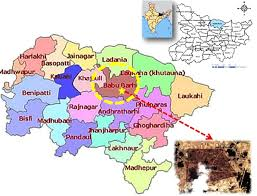
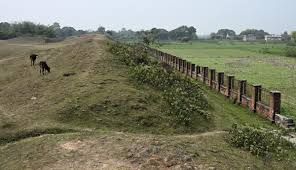
The Archaeological Survey of India granted fresh approval to conduct excavations at Balirajgarh in Madhubani district of Bihar to explore the buried layers of what may have been the ancient capital of the Videha/Mithila region. The excavation aims to uncover evidence related to early urbanisation and civilisation in the Mithila region.
-
- Archaeology studies material remains of past human societies.
- Excavations help reconstruct economic, social and cultural practices.
- Techniques used include:
- Carbon dating
- Stratigraphy
- Remote sensing.
- Carbon-14 dating helps determine the age of organic remains.
- Stratigraphy studies layers of soil deposits to determine chronological order.
- Archaeological discoveries help identify ancient trade networks and settlement patterns.
- Artefacts include pottery, tools, ornaments and structural remains.
- Archaeological evidence contributes to understanding early urbanisation and agriculture.
(IE)
Spread the Word